


26 Sep MP HC Sealed Report on Mihir Bhoj’s Caste Identity: UPSC & PCS Analysis
✎ The case exemplifies the intersection of historical inquiry, constitutional morality, and public representation, highlighting the judiciary's role in resolving disputes involving national heritage and identity.
Subject Relevance — Where This Topic Fits
- GS Paper I — Indian History: Ancient and Medieval Periods | GS Paper II — Constitutional Framework and Judicial Process
- Prelims: Mihir Bhoj, Pratihara Dynasty, Gurjara-Pratihara, High Court of Madhya Pradesh, Constitutional morality, Public monuments and identity, Historical evidence and historiography
- Essay: The interface between historical evidence and social identity, Constitutional morality in public representation
Quick Revision: The case exemplifies the intersection of historical inquiry, constitutional morality, and public representation, highlighting the judiciary’s role in resolving disputes involving national heritage and identity.
Why is this in the news?
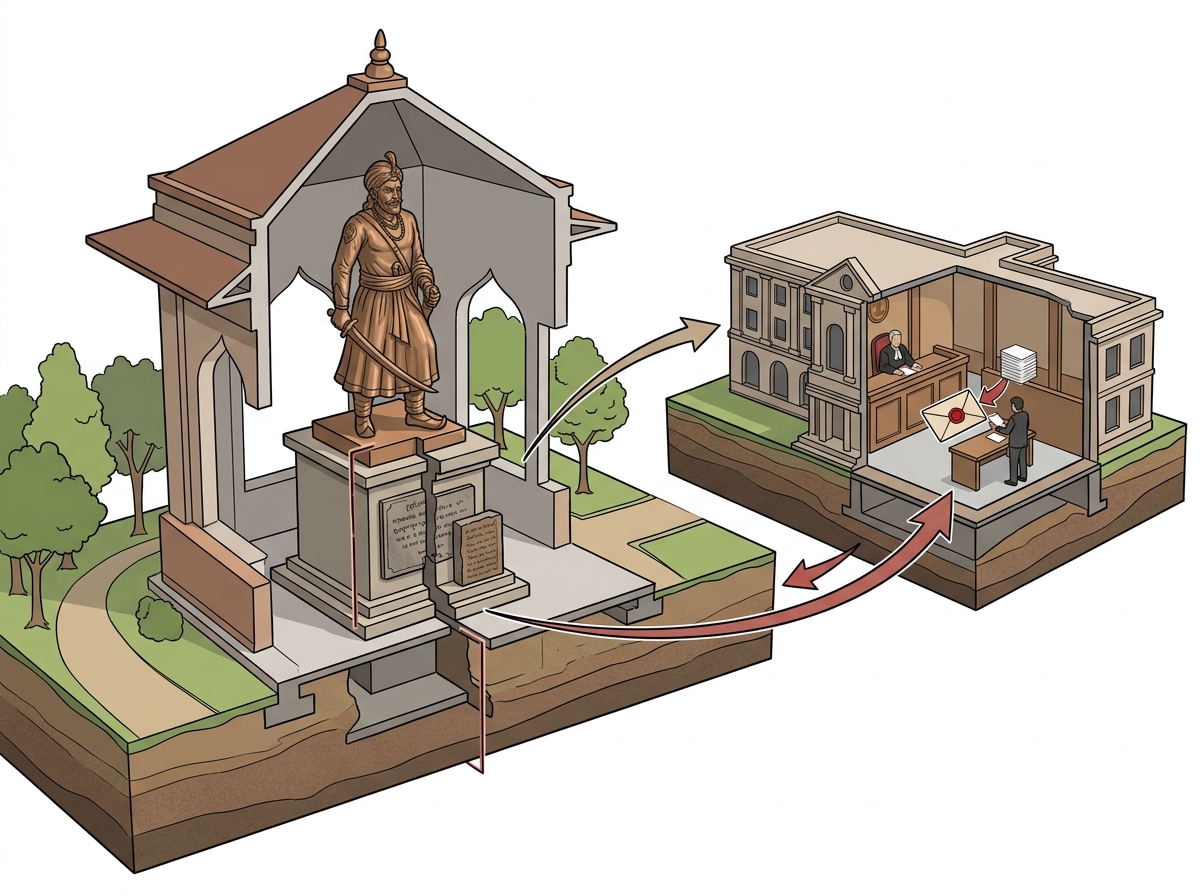
The Madhya Pradesh High Court’s Gwalior Bench is currently examining a sealed report submitted by a judicial committee constituted to investigate the caste identity of Emperor Mihir Bhoj, a ruler of the Gurjara-Pratihara dynasty. The controversy arose from the inscription of the word ‘Gurjar’ on a plaque beneath a statue of Mihir Bhoj, leading to a public interest litigation that questioned the constitutional propriety of associating a national historical figure with a specific caste in a publicly funded monument.
Background
- Emperor Mihir Bhoj (c. 836–885 CE) was a prominent ruler of the Gurjara-Pratihara dynasty, which dominated northern India during the early medieval period.
- The Gurjara-Pratihara dynasty is historically recognised for its role in resisting Arab invasions from Sindh and for its patronage of art, architecture, and literature.
- In 2021, a public interest litigation was filed in the Madhya Pradesh High Court challenging the inscription of ‘Gurjar’ on a plaque beneath a statue of Mihir Bhoj in Gwalior, Madhya Pradesh.
- The committee included officials from the administrative and police departments, as well as authorised representatives from the Gurjar and Kshatriya communities, to ensure impartiality.
- The case raises questions about the constitutional principle of secularism and the appropriateness of associating a historical figure with a specific caste in a publicly funded monument.
What is the Gurjara-Pratihara Dynasty and the Caste Identity of Mihir Bhoj?
- The term ‘Gurjara’ in the dynasty’s name refers to a geographical region (Gurjara-desha) and not necessarily to a caste identity, though it has been historically linked to the Gurjar community.
- The caste identity of historical figures is often contested due to the fluidity of caste categories in ancient and medieval India, where social hierarchies were not rigidly defined as in later periods.
- Public monuments and inscriptions funded by the state must adhere to the principle of secularism and avoid privileging any particular social group, as mandated by constitutional morality.
- Historical evidence for caste identities in ancient India is often derived from epigraphic records, literary sources, and inscriptions, which may not always provide conclusive clarity.
- The role of the judiciary in adjudicating historical and social disputes underscores the need for evidence-based reasoning and adherence to constitutional principles.
Key Features
| Feature | Significance |
|---|---|
| High Court-constituted Committee | Ensures a neutral, evidence-based examination of historical claims, balancing societal sensitivities with constitutional principles. |
| Sealed Report Submission | Protects the integrity of findings until judicial review, preventing premature public speculation or bias. |
| Historical and Archaeological Evidence | Forms the empirical basis for assessing claims of caste identity, ensuring conclusions are grounded in verifiable sources. |
| Constitutional Question | Raises the issue of whether public funds may be used to attribute a specific caste identity to a national figure on a public monument. |
| Societal Representation in Committee | Includes authorised representatives from both communities to ensure fairness and reduce bias in evidence evaluation. |
Why it Matters
Historical and Cultural
- The case examines the contested caste identity of Emperor Mihir Bhoj, a figure of significance in medieval Indian history and Rajput lineage narratives.
- It underscores the role of public monuments in shaping collective memory and identity, particularly for communities claiming historical lineage.
- The resolution may influence future disputes over the attribution of caste identities to historical figures in public spaces.
Legal and Judicial
- Demonstrates the judiciary’s role in resolving disputes involving historical interpretation, societal claims, and constitutional propriety.
- Highlights the use of sealed reports to preserve the sanctity of judicial processes until formal adjudication.
- Reinforces the principle that public institutions must act in accordance with constitutional values, even in matters of historical identity.
Administrative and Governance
- Showcases the process of forming high-level committees with multi-stakeholder representation to address complex societal issues.
- Illustrates the intersection of governance, historical research, and public representation in resolving identity-based disputes.
Challenges
1. Balancing Historical Claims with Constitutional Principles
- Determining the authenticity of historical claims without privileging one community’s narrative over another.
- Ensuring that public funds are not used to endorse a specific caste identity on national monuments.
- Mitigating the risk of communal tensions arising from the judicial resolution of identity-based disputes.
UPSC Link: GS-I: Indian Culture
2. Ensuring Neutrality and Fairness in Committee Proceedings
- Avoiding bias in the selection and evaluation of historical evidence presented by both communities.
- Maintaining transparency while protecting the integrity of the committee’s findings until judicial review.
- Addressing potential conflicts of interest among committee members representing different societal groups.
UPSC Link: GS-II: Judiciary
3. Public Perception and Societal Impact
- Managing public expectations and preventing misinformation during the pendency of the case.
- Ensuring that the judicial outcome is accepted by both communities to avoid long-term social divisions.
- Balancing the need for historical accuracy with the sensitivities of communities claiming lineage.
UPSC Link: GS-I: Social Issues
Challenges — UPSC Perspective
| Issue | Concern |
|---|---|
| Historical Authenticity | Disputes over primary sources and interpretations of medieval texts and inscriptions. |
| Constitutional Propriety | Whether public monuments should attribute caste identities to historical figures. |
| Communal Harmony | Risk of exacerbating tensions between communities claiming lineage. |
| Evidence Evaluation | Ensuring impartial assessment of archaeological and literary evidence by the committee. |
| Judicial Neutrality | Maintaining fairness in the adjudication process without favouring any societal group. |
Way Forward
- The High Court may direct the release of the committee’s findings after thorough judicial scrutiny to ensure transparency.
- A public awareness campaign may be initiated to explain the judicial process and the criteria used for evaluating historical claims.
- The government may consider issuing guidelines for the attribution of identities on public monuments to prevent future disputes.
- Historical research institutions and universities could be engaged to provide expert inputs on the authenticity of claims.
- Community leaders from both sides may be encouraged to participate in dialogues to foster mutual understanding and reduce tensions.
- The judiciary may explore the establishment of a permanent mechanism for resolving identity-based disputes involving historical figures.
- A review of existing statutes and regulations governing public monuments may be undertaken to align them with constitutional principles.
UPSC Value Addition
Keywords for Mains Answer-Writing
Historical identity disputes · Constitutional morality · Public representation of historical figures · Judicial review of historical claims · Caste identity and historical narratives · Sealed judicial reports · High Court directives · Committee on historical evidence · Constitutional values in public art · Role of judiciary in historical controversies
Constitutional & Policy Linkages
- {‘Article 14’: ‘Equality before law and equal protection of laws.’}
- {‘Article 15’: ‘Prohibition of discrimination on grounds of religion, race, caste, sex, or place of birth.’}
- {‘Article 25’: ‘Freedom of conscience and free profession, practice, and propagation of religion.’}
- {‘Article 26’: ‘Freedom to manage religious affairs subject to public order, morality, and health.’}
- {‘Article 51A’: ‘Fundamental duties, including promoting harmony and the spirit of common brotherhood.’}
Concept Flow
Public installation of Emperor Mihir Bhoj’s statue with caste attribution (2021) → Dispute escalates between communities → Public Interest Litigation filed in High Court → Court constitutes a multi-stakeholder committee → Committee examines historical, archaeological, and literary evidence → Committee submits sealed report to High Court → Judicial review of report and evidence → Court delivers judgment on constitutional propriety and historical authenticity → Resolution influences future disputes and public monument policies.
Prelims Practice Questions
Q1. Consider the following statements regarding the role of the judiciary in historical controversies:
1. The judiciary can constitutionally intervene in disputes over the historical identity of public figures.
2. The judiciary may direct the formation of expert committees to examine historical claims.
3. The judiciary is empowered to seal reports submitted to it to prevent public disclosure.
4. The judiciary can mandate the removal of caste or community labels from public representations of historical figures.
How many of the above statements are correct?
- Only one
- Only two
- Only three
- All
Answer: All — Statements 1, 2, and 3 are correct as the judiciary can intervene in public interest matters, form expert committees, and seal reports for confidentiality. Statement 4 is incorrect as the judiciary does not mandate removal but examines the constitutional validity of such representations.
Q2. Assertion (A): The Indian judiciary has the power to review the historical accuracy of claims made by communities regarding the identity of public figures.
Reason (R): The judiciary derives this power from its constitutional mandate to protect fundamental rights and ensure constitutional morality.
Options:
A. Both A and R are true, and R is the correct explanation of A.
B. Both A and R are true, but R is not the correct explanation of A.
C. A is true, but R is false.
D. A is false, but R is true.
Answer: ? — The judiciary can review historical claims in public interest matters, and its power stems from its constitutional role to uphold fundamental rights and constitutional morality. Thus, both A and R are true, and R correctly explains A.
Q3. Which of the following best describes the purpose of a ‘sealed report’ submitted to the High Court in the context of the Mihan Bhoj case?
A. To ensure the confidentiality of sensitive historical evidence.
B. To prevent the public disclosure of interim findings during ongoing judicial proceedings.
C. To allow the judiciary to deliberate on the report without external influence.
D. To comply with the constitutional requirement of secrecy in judicial matters.
- A
- B
- C
- D
Answer: B — A sealed report is submitted to the court to prevent public disclosure of its contents until the judicial process is complete, ensuring fairness and confidentiality during proceedings.
Mains Practice Question
✍ The public representation of historical figures through statues and inscriptions often becomes a site of contestation among communities claiming shared heritage. In light of the recent sealed report submitted to the Madhya Pradesh High Court regarding the caste identity of Emperor Mihir Bhoj, critically examine the role of the judiciary in adjudicating historical identity disputes. (15 Marks)
Approach: MODEL-ANSWER SKELETON:
1. **Introduction (2 marks)**
– Define historical identity disputes and their socio-political significance.
– Highlight the constitutional framework governing public representations (Art. 14, 15, 19(1)(a), 25, 26).
– Mention the specific context: Mihir Bhoj case, High Court directive, and sealed report.
2. **Judicial Role in Historical Disputes (5 marks)**
– **Constitutional Morality and Public Interest**: Cite Art. 51A (Fundamental Duties) and the Supreme Court’s emphasis on constitutional values in *Ramesh Prabhoo v. P.K. Kunte* (1996) and *S.R. Bommai v. Union of India* (1994).
– **Judicial Review**: Discuss the power of the judiciary to intervene in public interest matters (Art. 226, 32). Reference the *S.P. Gupta v. Union of India* (1981) case on PIL.
– **Expert Committees**: Explain the judiciary’s role in forming expert committees to examine historical claims (e.g., *Ashoka Kumar Thakur v. Union of India*, 2008 on caste-based reservations).
3. **Balancing Competing Claims (4 marks)**
– **Neutrality and Fairness**: Discuss the need for the judiciary to remain neutral while adjudicating claims rooted in historical narratives (cite *M. Nagaraj v. Union of India*, 2006 on reservations and historical injustices).
– **Sealed Reports**: Explain the purpose of sealed reports in ensuring confidentiality and preventing premature public disclosure (reference *State of U.P. v. Raj Narain*, 1975 on judicial secrecy).
– **Constitutional Values vs. Community Sentiments**: Weigh the tension between community sentiments (Art. 25, 26) and constitutional values (Art. 14, 15).
4. **Challenges and Limitations (3 marks)**
– **Historical Ambiguity**: Acknowledge the difficulty in establishing historical truths (cite debates on Ashoka’s identity or Shivaji’s caste).
– **Judicial Overreach**: Discuss concerns about the judiciary encroaching on the domain of historians and scholars.
– **Implementation**: Highlight the challenges in implementing judicial directives on public representations (e.g., statue removals or name changes).
5. **Conclusion (1 mark)**
– Summarize the judiciary’s role as a neutral arbiter in balancing historical claims with constitutional values.
– Emphasize the need for a nuanced approach that respects both heritage and constitutional morality.
Source: amarujala.com
Madhya Pradesh PCS (MPPSC) — State PCS Practice
Prelims: As per the sealed report submitted by the committee to the High Court of Madhya Pradesh regarding the caste of Emperor Mihir Bhoj, which of the following is correct?
- The committee concluded that Mihir Bhoj belonged to the Kshatriya (Rajput) community.
- The committee concluded that Mihir Bhoj belonged to the Gurjar community.
- The committee did not provide a definitive conclusion on Mihir Bhoj’s caste.
- The committee’s report is still under judicial review and not made public.
Answer: The committee’s report is still under judicial review and not made public. — The committee submitted a sealed report to the High Court, and its contents remain undisclosed as the matter is under judicial scrutiny.
Mains: Discuss the socio-political significance of the ongoing judicial examination of Emperor Mihir Bhoj’s caste identity in the context of Madhya Pradesh’s tribal and cultural heritage. Highlight how such historical debates influence contemporary identity politics and governance in the state.
Generated by AanyaAi for educational purpose.
Related guides on our sites
- Sociology vs History
- Best PSIR optional coaching for upsc
- Best sociology optional coaching for upsc
- Which is best sociology optional coaching for upsc

- Himachal CM Sukhu: All Doctor Vacancies to be Filled by March - September 27, 2026
- कैसे पुलिस की AI तकनीक पहचान कर रही है अस्पष्ट शवों को - September 27, 2026
- Jai Jyoti: 106 km Bisalpur Pipeline to End Jaipur Water Crisis - September 27, 2026

No Comments