


26 Sep UPSC Alert: Pension Split Policy Raises Hardship Concerns for Elderly in AP
✎ The proposed split in social security pension payouts in Andhra Pradesh highlights the governance challenge of balancing digital inclusion with equitable access, particularly for elderly and tribal beneficiaries in remote areas.
Subject Relevance — Where This Topic Fits
- GS Paper II — Governance, Welfare Schemes for Vulnerable Sections | GS Paper III — Issues relating to Poverty and Hunger
- Prelims: National Social Assistance Programme (NSAP), Direct Benefit Transfer (DBT), Doorstep Delivery of Pensions, SNA-SPARSH System, Andhra Pradesh High Court Judgment on Social Security Pensions
- Essay: Social Security as a Pillar of Inclusive Governance
Quick Revision: The proposed split in social security pension payouts in Andhra Pradesh highlights the governance challenge of balancing digital inclusion with equitable access, particularly for elderly and tribal beneficiaries in remote areas.
Why is this in the news?
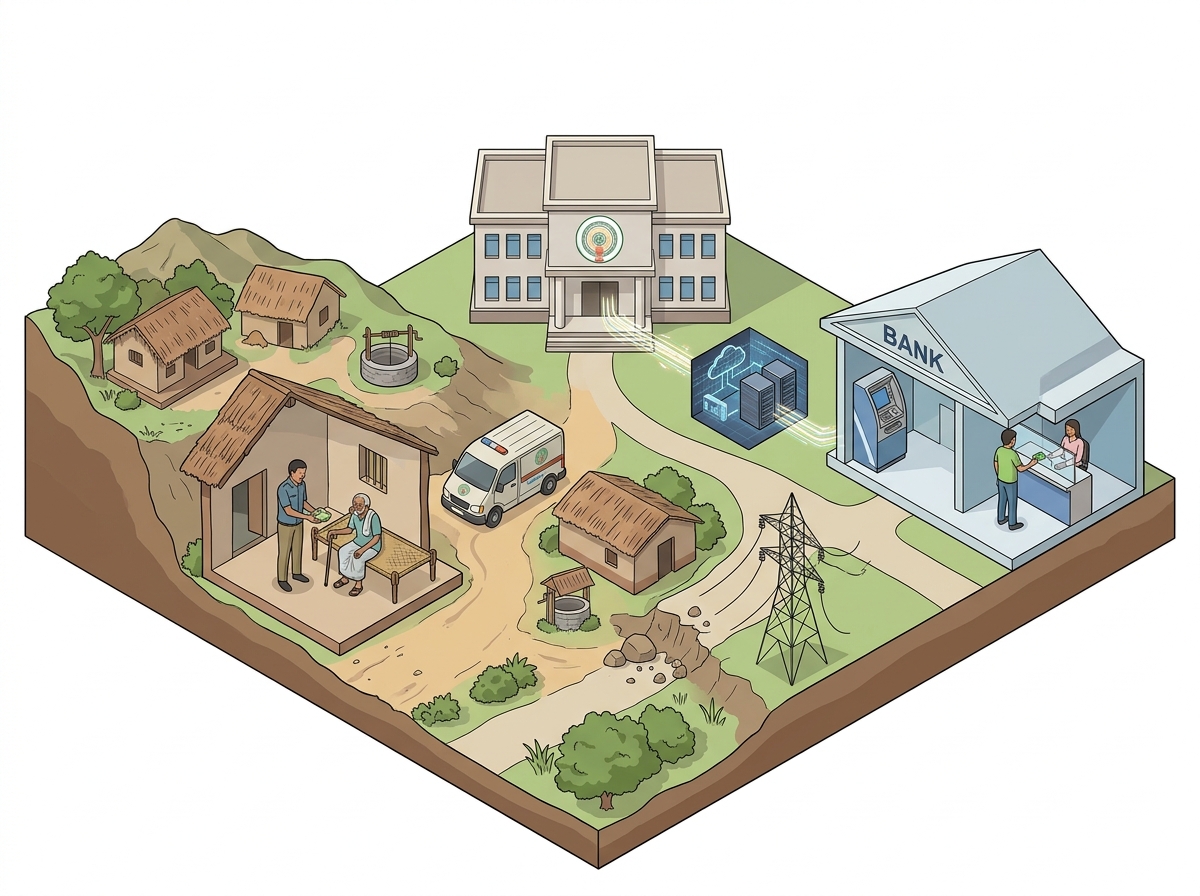
The Andhra Pradesh government’s proposal to split social security pension payouts between doorstep delivery and Direct Benefit Transfer (DBT) has sparked concerns from rights groups regarding access, equity, and administrative feasibility. The proposed split, affecting over 9.34 lakh beneficiaries, including 2.11 lakh elderly pensioners aged 80 and above, raises questions about the practical challenges faced by marginalised communities, particularly in tribal and remote areas with limited banking infrastructure. The issue underscores the tension between digital governance initiatives and the need for inclusive welfare delivery mechanisms.
Background
- The National Social Assistance Programme (NSAP), launched in 1995, provides social security pensions to the elderly, widows, and persons with disabilities under the Ministry of Rural Development.
- Andhra Pradesh is a significant beneficiary of NSAP, with a substantial portion of its social security expenditure co-funded by the Centre and the State.
- The State government’s proposal to split pension payouts arises from the implementation of the SNA-SPARSH system, which integrates NSAP disbursements with Direct Benefit Transfer (DBT) mechanisms.
- Doorstep delivery of pensions has been a long-standing practice in several Indian states to ensure accessibility for elderly and rural beneficiaries who face challenges in accessing banking services.
- The Andhra Pradesh High Court, in a 2021 judgment, emphasised the State’s obligation to ensure that social security pensions reach the poor and needy without procedural hurdles.
- Tribal and remote areas in Andhra Pradesh, such as the Paderu Integrated Tribal Development Agency region, face significant barriers to banking access, including limited infrastructure and high transaction costs.
What is the proposed split in social security pension payouts?
- Under the proposed system, social security pensioners in Andhra Pradesh would receive a portion of their pension via doorstep delivery (cash) and the remainder through Direct Benefit Transfer (DBT) into their bank accounts.
- For elderly pensioners aged 60–79, the split would be ₹3,800 (doorstep) and ₹200 (DBT); for widows aged 40–79, it would be ₹3,700 (doorstep) and ₹300 (DBT); and for those aged 80 and above, ₹500 would be transferred via DBT.
- The Centre’s share of the pension, amounting to approximately ₹27.64 crore monthly (₹332 crore annually), would be routed directly into beneficiaries’ accounts under the SNA-SPARSH system.
- The State government retains the responsibility for doorstep delivery of the remaining pension amount, which is currently disbursed in cash.
- The proposal aims to streamline pension disbursement by leveraging digital payment systems but risks creating administrative confusion and access barriers for vulnerable groups.
- Rights groups argue that splitting payments could lead to logistical challenges, particularly in areas with poor banking infrastructure, and may increase the financial burden on beneficiaries who incur costs to access their DBT-linked funds.
- The SNA-SPARSH system is part of the broader Direct Benefit Transfer (DBT) framework, which seeks to reduce leakages and improve transparency in welfare disbursements.
- The proposal reflects a broader tension between the push for digital governance and the need to ensure equitable access to welfare benefits for marginalised communities.
Key Features
| Feature | Significance |
|---|---|
| Split pension payout mechanism | Divides social security pension into doorstep cash and Direct Benefit Transfer (DBT) components, altering traditional delivery methods. |
| Doorstep delivery component | Ensures physical cash reaches beneficiaries, particularly critical for elderly and those in remote areas with limited banking access. |
| Direct Benefit Transfer (DBT) component | Routes Centre’s share of pensions directly into beneficiaries’ bank accounts via SNA-SPARSH system, reducing administrative delays. |
| National Social Assistance Programme (NSAP) | Central scheme providing social security pensions to elderly, widows, and disabled individuals, with shared funding between Centre and States. |
| SNA-SPARSH system | Digital platform for disbursing NSAP funds, enabling real-time tracking and direct transfers to beneficiaries’ accounts. |
Why it Matters
Economic
- Alters the fiscal dynamics of pension disbursement by introducing a dual-channel system, potentially increasing transaction costs for beneficiaries in remote areas.
- May reduce leakage and corruption by digitising a portion of payments, though physical cash delivery retains its own vulnerabilities.
- Centre’s share of ₹27.64 crore monthly (₹332 crore annually) represents a small fraction of State’s total pension expenditure (~1%), but its withdrawal from doorstep delivery could strain local administrative capacities.
Social
- Impacts over 9.35 lakh beneficiaries in Andhra Pradesh, with disproportionate hardship for 2.11 lakh elderly pensioners aged 80+, who face mobility and banking access challenges.
- Rural and tribal communities, particularly in Paderu Integrated Tribal Development Agency area, bear higher transaction costs (₹200–₹400 per visit) to access banked funds, exacerbating financial exclusion.
- Risks undermining the principle of ‘universal coverage’ under NSAP by fragmenting payments, potentially leading to confusion and reduced uptake among marginalised groups.
Administrative
- Introduces operational complexity by requiring coordination between State agencies (for doorstep delivery) and central systems (for DBT), increasing administrative burden.
- May lead to duplication of efforts, as State governments must maintain both physical and digital disbursement mechanisms simultaneously.
- Raises questions about the scalability of doorstep delivery in remote areas, where last-mile connectivity and infrastructure remain inadequate.
Legal
- Invokes the Andhra Pradesh High Court’s 2021 judgment on social security pensions, which emphasised the need for unobstructed and dignified access to benefits for the poor and needy.
- Potential conflict between State’s constitutional obligation to ensure welfare (Article 41) and Centre’s policy of digitising welfare transfers under DBT frameworks.
Challenges
1. Financial Exclusion and Transaction Costs
- Beneficiaries in remote areas incur high costs (₹200–₹400 per visit) to access banked funds, negating the intended benefit of the split payout system.
- Elderly pensioners, particularly those aged 80+, face mobility constraints, making physical visits to banks or post offices impractical or unsafe.
- Limited banking infrastructure in tribal and rural areas exacerbates exclusion, as DBT relies on functional bank accounts and digital literacy.
UPSC Link: GS-II: Welfare schemes for vulnerable sections
2. Operational Fragmentation
- Dual disbursement channels (doorstep + DBT) create administrative redundancies, increasing the risk of errors, delays, or misallocation of funds.
- State governments must maintain parallel systems for physical and digital payments, straining limited administrative resources.
- Lack of synchronisation between State and Centre systems could lead to mismatches in payment records or beneficiary confusion.
UPSC Link: GS-II: Mechanisms, laws, institutions and Bodies constituted for the protection and betterment of these sections
3. Legal and Policy Ambiguity
- The split payout mechanism may contravene the spirit of the Andhra Pradesh High Court’s 2021 judgment, which prioritised seamless access to pensions.
- Unclear division of responsibilities between State and Centre in ensuring uninterrupted pension delivery, raising questions about fiscal federalism.
- No explicit provision in NSAP guidelines for splitting payments, leaving room for interpretation and potential disputes.
UPSC Link: GS-II: Government policies and interventions for development in various sectors
4. Digital Divide and Exclusion Risks
- DBT relies on digital infrastructure and financial literacy, which are unevenly distributed across rural and tribal regions, deepening inequalities.
- Elderly beneficiaries may lack the digital skills or access to devices required to utilise DBT components effectively.
- Physical cash delivery, while inclusive, is vulnerable to leakage, misappropriation, or delays due to logistical constraints.
UPSC Link: GS-II: Issues relating to development and management of Social Sector/Services relating to Health, Education, Human Resources
5. Fiscal Sustainability Concerns
- State governments may face increased costs to maintain doorstep delivery infrastructure, particularly in remote areas, offsetting savings from DBT.
- Centre’s withdrawal of its share from doorstep delivery could shift the financial burden entirely to States, straining their welfare budgets.
- Long-term sustainability of the dual system is uncertain, given the potential for administrative inefficiencies and beneficiary dissatisfaction.
UPSC Link: GS-III: Indian Economy and issues relating to planning, mobilization, of resources
Challenges — UPSC Perspective
| Issue | Concern |
|---|---|
| High transaction costs for beneficiaries | Beneficiaries in remote areas spend ₹200–₹400 per visit to access banked funds, negating the benefit of DBT. |
| Mobility constraints for elderly pensioners | Pensioners aged 80+ face difficulties in accessing physical cash or bank services due to age-related limitations. |
| Administrative duplication | State governments must maintain parallel systems for doorstep delivery and DBT, increasing operational complexity. |
| Legal ambiguity | Split payout mechanism may conflict with Andhra Pradesh High Court’s 2021 judgment on seamless pension access. |
| Digital divide | DBT components exclude beneficiaries lacking digital literacy or access to banking infrastructure in rural/tribal areas. |
| Fiscal federalism concerns | Unclear division of responsibilities between State and Centre may lead to disputes over funding and implementation. |
Government Initiatives — Must-Memorise for Prelims
- National Social Assistance Programme (NSAP)
Way Forward
- Conduct a pilot study in high-risk tribal and remote areas to assess the impact of split payouts on beneficiary welfare and administrative feasibility.
- Strengthen last-mile banking infrastructure in rural and tribal regions through the Pradhan Mantri Jan Dhan Yojana (PMJDY) and India Post Payments Bank (IPPB) to reduce transaction costs.
- Develop a unified digital platform integrating doorstep delivery records with DBT transactions to ensure real-time tracking and transparency.
- Clarify the division of responsibilities between the State and Centre under NSAP to avoid fiscal and administrative ambiguities.
- Enhance financial literacy programmes for elderly beneficiaries to enable effective utilisation of DBT components.
- Explore alternative models, such as bulk cash transfers to local self-government bodies for doorstep delivery, to reduce State-level administrative burdens.
- Institutionalise grievance redressal mechanisms to address beneficiary complaints and ensure timely resolution of payment issues.
UPSC Value Addition
Keywords for Mains Answer-Writing
Social Security Pensions · National Social Assistance Programme (NSAP) · Direct Benefit Transfer (DBT) · Doorstep Delivery of Pensions · Adivasi and Tribal Welfare · Financial Inclusion · Governance Challenges in Pension Delivery · Federalism and Pension Policy · Constitutional Right to Social Security · Public Policy and Implementation Gaps · Andhra Pradesh High Court Judgments on Pensions · SNA-SPARSH System · Social Sector Schemes and Beneficiary Hardships
Concept Flow
Policy shift towards DBT under NSAP → Proposal to split pension payouts into doorstep cash and DBT components → Concerns raised by rights groups over exclusion risks → Impact on elderly and remote beneficiaries → Legal scrutiny under welfare jurisprudence → Administrative and fiscal challenges → Need for stakeholder consultations and pilot studies.
Prelims Practice Questions
Q1. Consider the following statements regarding the National Social Assistance Programme (NSAP) in India:
1. NSAP is a centrally sponsored scheme providing social security pensions to the elderly, widows, and persons with disabilities.
2. The scheme is implemented by the Ministry of Rural Development.
3. The SNA-SPARSH system is used for the direct transfer of pension amounts to beneficiaries’ bank accounts.
4. NSAP pensions are entirely funded by the Central Government with no state contribution.
How many of the above statements are correct?
- Only one
- Only two
- Only three
- All
Answer: Only three — Statements 1, 2, and 3 are correct. Statement 4 is incorrect as NSAP is a centrally sponsored scheme, implying shared funding between the Centre and States.
Q2. Assertion (A): The Direct Benefit Transfer (DBT) mechanism for pension disbursement ensures greater financial inclusion for marginalised sections.
Reason (R): DBT reduces leakages and delays in pension delivery by transferring funds directly to beneficiaries’ bank accounts.
Options:
A. Both A and R are true, and R is the correct explanation of A
B. Both A and R are true, but R is NOT the correct explanation of A
C. A is true, but R is false
D. A is false, but R is true
Answer: ? — Both A and R are true. DBT does enhance financial inclusion and reduce leakages, but the assertion and reason are not causally linked in all contexts, especially in areas with limited banking access.
Q3. Match the following pension categories under the National Social Assistance Programme (NSAP) with their respective eligibility criteria:
Column I (Pension Category) Column II (Eligibility Criteria)
1. Old Age Pension A. Individuals aged 40-79
2. Widow Pension B. Individuals aged 60-79
3. Disability Pension C. Individuals aged 80 and above
4. Indira Gandhi National Old Age Pension Scheme (IGNOAPS) D. Individuals with 40% or more disability
Options:
A. 1-B, 2-A, 3-D, 4-C
B. 1-C, 2-A, 3-D, 4-B
C. 1-B, 2-A, 3-C, 4-D
D. 1-A, 2-B, 3-D, 4-C
Answer: ? — Correct matching: 1-B (Old Age Pension: 60-79), 2-A (Widow Pension: 40-79), 3-D (Disability Pension: 40% or more disability), 4-C (IGNOAPS: 80 and above).
Mains Practice Question
✍ The proposal to split social security pension payouts between doorstep delivery and Direct Benefit Transfer (DBT) raises critical governance and equity concerns. Critically examine the potential challenges such a bifurcation poses to the effective delivery of social security pensions, with particular reference to marginalised communities. Also, analyse the constitutional and legal framework governing social security in India. (15 Marks)
Approach: MODEL-ANSWER SKELETON:
1. **Introduction**: Define social security pensions and the NSAP; state the objective of ensuring dignity and financial security for vulnerable groups.
2. **Governance Challenges**:
– **Accessibility**: Limited banking infrastructure in tribal and remote areas; high transaction costs (cite LibTech India study data).
– **Operational Complexity**: Confusion for beneficiaries due to dual payment modes; administrative burden on local bodies.
– **Financial Hardship**: Additional costs for beneficiaries to access DBT (transport, documentation, etc.).
3. **Legal and Constitutional Framework**:
– **Directive Principles**: Article 41 (Right to Public Assistance) and Article 42 (Just and Humane Conditions of Work).
– **Judicial Precedents**: Reference Andhra Pradesh High Court judgment (2021) on ensuring seamless delivery of pensions to the poor and needy.
– **Right to Life**: Article 21 (expanded via judicial interpretation to include right to livelihood and dignity).
4. **Federalism and Policy Coordination**:
– Role of Centre-State coordination under NSAP; shared funding mechanisms.
– Need for state-level interventions to mitigate hardships (e.g., state bearing Centre’s share in vulnerable areas).
5. **Comparative Perspective**:
– Examples of successful doorstep delivery models (e.g., MGNREGA wage payments in some states).
– Lessons from other welfare schemes (PM-KISAN, Ujjwala) where DBT has been effective but required robust last-mile delivery.
6. **Way Forward**:
– Strengthening last-mile delivery infrastructure (banking correspondents, mobile ATMs).
– Phased integration of DBT with adequate grievance redressal mechanisms.
– Ensuring beneficiary awareness and capacity-building.
**Balanced View**: Acknowledge the Centre’s intent to reduce leakages via DBT, but highlight the need for context-sensitive implementation to avoid exclusion of marginalised groups.
Source: The Hindu
Generated by AanyaAi for educational purpose.
Related guides on our sites
- Current affairs for upsc 2026
- Best sociology optional coaching for upsc
- Which is best sociology optional coaching for upsc
- Best economics optional coaching for upsc

- पेंशन भुगतान में विभाजन से बुजुर्गों को मुश्किल, अधिकार समूहों की चिंता - September 26, 2026
- UPSC Alert: Pension Split Policy Raises Hardship Concerns for Elderly in AP - September 26, 2026
- पीएम स्मृति चिह्न ई-नीलामी 2026: ओडिशा की सांस्कृतिक विरासत का अनूठा प्रदर्शन - September 26, 2026

No Comments