


05 Nov Fisheries Dept’s Special Campaign 6: Governance Reforms
✎ Special Campaign 6, guided by DARPG, successfully enhanced administrative efficiency, grievance redressal, and record management in the Department of Fisheries, institutionalising cleanliness and promoting optimal resource…
Subject Relevance — Where This Topic Fits
- GS Paper II — Governance, Transparency and Accountability, Citizens Charters | GS Paper III — Environment and Ecology (E-waste Management)
- Prelims: Special Campaign 6, Department of Fisheries, DARPG, Public Grievance Redressal, Record Management, E-waste Management, Swachhta Abhiyan, Digitalisation of Government Processes
- Essay: Administrative Reforms and Good Governance, Leveraging Technology for Efficient Public Service Delivery
Quick Revision: Special Campaign 6, guided by DARPG, successfully enhanced administrative efficiency, grievance redressal, and record management in the Department of Fisheries, institutionalising cleanliness and promoting optimal resource utilisation.
Why is this in the news?
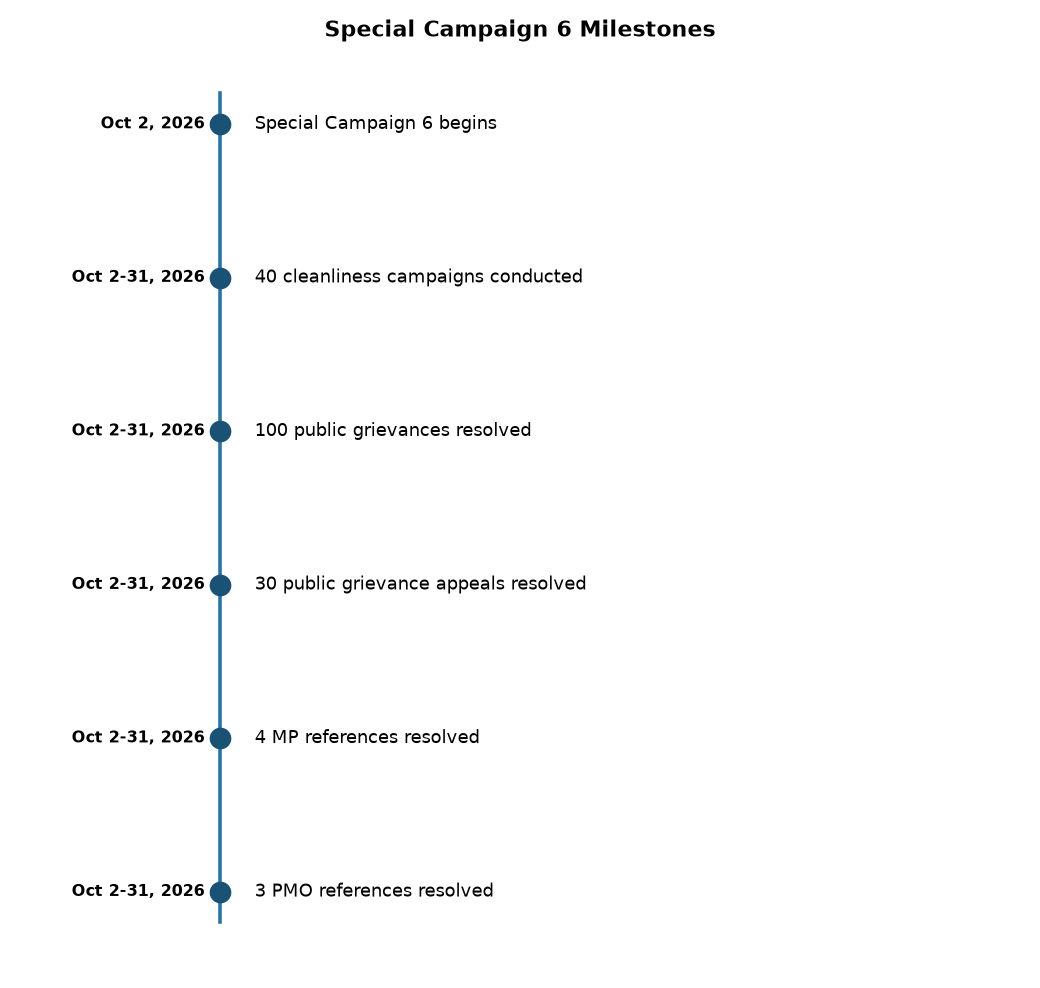
The Department of Fisheries, under the Ministry of Fisheries, Animal Husbandry and Dairying, successfully concluded Special Campaign 6, an initiative guided by the Department of Administrative Reforms and Public Grievances (DARPG). Conducted from October 2 to October 31, 2026, the campaign aimed at institutionalising cleanliness, reducing pendency in government offices, improving record management, and promoting efficient utilisation of office space and resources, thereby demonstrating a commitment to efficient and citizen-centric governance.
Background
- The Special Campaign series is an annual initiative undertaken by various government ministries and departments under the guidance of the Department of Administrative Reforms and Public Grievances (DARPG).
- The primary objective of these campaigns is to enhance administrative efficiency, promote good governance practices, and ensure a citizen-friendly work environment within government offices.
- Key focus areas typically include institutionalising cleanliness (Swachhta), reducing the backlog of public grievances and appeals, improving record management through review and weeding out of physical files, and optimising the use of office space.
- The campaigns also often involve efforts towards digitisation of records and processes, as well as responsible disposal of e-waste and other scrap materials.
- These initiatives align with the broader government agenda of ‘Minimum Government, Maximum Governance’ and aim to foster a culture of accountability and transparency.
- The successful implementation of such campaigns contributes to a more streamlined, productive, and responsive administrative machinery, ultimately benefiting citizens through improved public service delivery.
Key Aspects of Special Campaign 6 and its Outcomes
- Special Campaign 6 was a comprehensive initiative focused on improving various facets of administrative functioning within the Department of Fisheries.
- A significant achievement was the successful completion of 40 cleanliness campaigns, underscoring the commitment to institutionalising Swachhta (cleanliness) within the department’s premises.
- In the domain of grievance redressal, all 100 public grievances and 30 public grievance appeals were resolved, alongside the disposal of 4 references from Members of Parliament and 3 from the Prime Minister’s Office, demonstrating enhanced responsiveness.
- Extensive efforts were made in record management and digitisation, with 800 physical files reviewed and 745 files weeded out, leading to improved administrative processes and reduced clutter.
- The campaign also addressed e-file management, resulting in the closure of 25 out of 45 e-files submitted for review, indicating progress in digital record-keeping.
- Efficient utilisation of office space was achieved through the disposal of scrap, which freed up approximately 1,150 square feet of office area.
- An e-waste management drive was conducted, leading to the disposal of 308 items of electronic and electrical equipment, promoting environmental responsibility.
- The department effectively utilised social media platforms, sharing over 120 posts across various channels to raise public awareness about the campaign’s activities and departmental initiatives.
Key Features
| Feature | Significance |
|---|---|
| Institutionalisation of Swachhta | Aims to embed cleanliness as an ongoing administrative practice rather than a periodic activity, fostering a hygienic and productive work environment. |
| Reduction of Pendency | Focuses on expeditious resolution of public grievances, parliamentary references, and Prime Minister’s Office references, enhancing citizen-centric governance. |
| Improved Record Management | Involves systematic review, weeding out, and digitisation of physical and e-files, leading to streamlined administrative processes and efficient information retrieval. |
| Optimisation of Office Space | Achieved through the disposal of scrap and e-waste, contributing to a clutter-free workspace and better utilisation of government assets. |
| Public Outreach and Awareness | Utilisation of social media platforms to disseminate information about departmental initiatives, fostering transparency and public engagement. |
Why it Matters
Governance and Administration
- Enhances administrative efficiency by reducing the backlog of files and grievances, leading to faster decision-making and service delivery.
- Promotes transparency and accountability within government departments through systematic record management and timely grievance redressal.
- Fosters a culture of cleanliness and orderliness in public offices, aligning with broader national initiatives for improved public spaces.
Resource Management
- Optimises the utilisation of physical office space and resources by disposing of obsolete records and e-waste, reducing operational costs.
- Contributes to environmental sustainability through responsible e-waste management and reduction of physical clutter.
Citizen-Centricity
- Strengthens public trust in government by ensuring prompt resolution of citizen complaints and appeals.
- Demonstrates commitment to responsive governance by addressing references from elected representatives and the highest executive office.
Challenges
1. Sustaining Momentum
- Maintaining the institutionalised cleanliness and efficiency standards beyond the campaign period requires continuous monitoring and embedded practices.
- Preventing the re-accumulation of pending cases and obsolete records necessitates regular review mechanisms and proactive measures.
UPSC Link: Governance: Transparency & Accountability
2. Digital Transformation Integration
- Ensuring seamless integration of digitised records with existing administrative workflows and IT infrastructure.
- Addressing potential challenges related to data security, privacy, and accessibility of digitised information.
UPSC Link: E-governance: Applications, Models
3. Behavioural Change
- Cultivating a sustained behavioural shift among government personnel towards maintaining cleanliness and efficient file management.
- Overcoming resistance to change in established administrative routines and practices.
UPSC Link: Ethics in Public Administration
4. Resource Allocation
- Allocating adequate human and financial resources for ongoing record management, grievance redressal, and cleanliness initiatives.
- Ensuring that the focus on these administrative improvements does not detract from core departmental functions.
UPSC Link: Government Budgeting & Planning
Challenges — UPSC Perspective
| Issue | Concern |
|---|---|
| Intermittent Campaigns | Risk of administrative efficiency and cleanliness reverting to previous levels once special campaigns conclude, necessitating perpetual vigilance. |
| Digital Divide and Infrastructure | Challenges in ensuring uniform digitisation and e-file management across all departmental units, particularly those with limited IT infrastructure. |
| Training and Capacity Building | Need for continuous training of staff on updated record management protocols, grievance redressal mechanisms, and digital tools. |
| Data Archiving and Retrieval | Ensuring long-term preservation, secure storage, and efficient retrieval of vast volumes of digitised and physical records. |
| Public Awareness and Participation | Sustaining citizen engagement and awareness regarding grievance redressal channels and departmental initiatives for effective feedback. |
Way Forward
- Implement a robust, continuous monitoring and evaluation framework to track the institutionalisation of cleanliness and efficiency standards.
- Integrate administrative reforms, including record management and grievance redressal, into the regular performance appraisal system for government employees.
- Invest in advanced digital infrastructure and provide ongoing training to staff for effective e-governance and digitised record management.
- Establish dedicated cells or nodal officers within departments to ensure sustained focus on grievance redressal and parliamentary references.
- Develop and implement a comprehensive policy for systematic archiving and periodic review of physical and e-files to prevent future pendency.
- Leverage technology for predictive analytics to identify potential bottlenecks in administrative processes and proactively address them.
- Foster inter-departmental collaboration and knowledge sharing of best practices in administrative reforms and public service delivery.
UPSC Value Addition
Keywords for Mains Answer-Writing
Administrative Reforms · Public Grievance Redressal · Record Management · Swachhta Abhiyan · E-governance · Citizen-Centric Governance · Resource Optimisation · Digital India · Transparency · Accountability
Concept Flow
Special Campaign 6 initiated by DARPG → Department of Fisheries participates with specific targets → Focus on Swachhta, grievance redressal, record management → Achieves targets in cleanliness, complaint resolution, file weeding → Results in improved administrative efficiency and space utilisation → Contributes to enhanced citizen-centric governance and accountability
Prelims Practice Questions
Q1. Consider the following statements regarding ‘Special Campaign 6’:
1. It was organised under the guidance of the Department of Administrative Reforms and Public Grievances (DARPG).
2. Its primary objective was to institutionalise cleanliness and reduce pendency in government offices.
3. The Department of Fisheries successfully disposed of all public grievances and appeals received during the campaign.
How many of the above statements are correct?
- Only one
- Only two
- Only three
- None
Answer: Only three — Statement 1 is correct as the campaign was guided by DARPG. Statement 2 is correct as institutionalising cleanliness and reducing pendency were key objectives. Statement 3 is correct as the Department of Fisheries reported disposing of all 100 public grievances and 30 public grievance appeals.
Q2. Which of the following initiatives aligns with the objectives of ‘Special Campaign 6’ regarding efficient resource utilisation and waste management?
1. Review and weeding out of physical files.
2. Disposal of e-waste.
3. Optimisation of office space.
Select the correct answer using the code given below:
- 1 and 2 only
- 2 and 3 only
- 1 and 3 only
- 1, 2 and 3
Answer: 1, 2 and 3 — All three initiatives — review and weeding out of physical files, disposal of e-waste, and optimisation of office space — are explicitly mentioned as components of Special Campaign 6 aimed at efficient resource utilisation and waste management within government offices.
Mains Practice Question
✍ The ‘Special Campaigns’ by government departments aim to enhance administrative efficiency and promote citizen-centric governance. Examine the significance of such campaigns in institutionalising cleanliness, improving record management, and expediting public grievance redressal. (15 Marks)
Approach: MODEL-ANSWER SKELETON:
1. Introduction: Briefly define ‘Special Campaigns’ in the context of administrative reforms and their overarching goal of improved governance.
2. Significance in Institutionalising Cleanliness:
– Swachhta Abhiyan: Link to broader national initiatives.
– Workplace Environment: Impact on productivity and morale.
– Resource Optimisation: Reduction of clutter, better space utilisation.
3. Significance in Improving Record Management:
– Physical Files: Review, weeding out, and digitisation efforts.
– E-Files: Streamlining digital records and reducing pendency.
– Archival Practices: Ensuring proper preservation and accessibility of important documents.
4. Significance in Expediting Public Grievance Redressal:
– Timely Resolution: Specific targets for grievance and appeal disposal.
– Accountability: Mechanism for tracking and addressing citizen concerns.
– Trust Building: Enhancing public confidence in government machinery.
5. Broader Impact on Citizen-Centric Governance:
– Transparency and Accountability: How these campaigns foster better governance.
– Digital Transformation: Role of e-governance and social media in outreach.
– Efficiency and Productivity: Overall improvements in government functioning.
6. Challenges and Way Forward: Briefly mention any potential challenges (e.g., sustainability, behavioural change) and suggest measures for long-term impact.
7. Conclusion: Reiterate the importance of continuous administrative reforms for effective public service delivery.
Source: PIB (Press Information Bureau)
Generated by AanyaAi for educational purpose.
Related guides on our sites
- Best PSIR optional coaching for upsc
- Best PSIR optional teacher for upsc
- Best teacher of PSIR optional for upsc
- Best PSIR optional coaching in delhi for UPSC

- NAMASTE Scheme: Enhancing Sanitation Workers’ Livelihoods & Safety - November 14, 2026
- एमएसएमई का विशेष अभियान 6.0: स्वच्छता और लंबित मामलों का निपटारा - November 14, 2026
- Sea Vigil-26: Coastal Defence Drills Off Visakhapatnam - November 14, 2026

No Comments