


11 Nov AQI Limitations & India’s Air Pollution Crisis Explained
✎ The Air Quality Index (AQI) is a crucial indicator of air quality, but its current calculation methodology in India may understate combined pollutant risks and exclude certain harmful chemicals, necessitating a more comprehensive…
Subject Relevance — Where This Topic Fits
- GS Paper I — Geography (Environmental Geography) | GS Paper II — Governance (Government Policies and Interventions) | GS Paper III — Environment (Environmental Pollution and Degradation, Environmental Impact Assessment) | GS Paper III — Science and Technology (Developments and their Applications and Effects in Everyday Life)
- Prelims: Air Quality Index (AQI), Central Pollution Control Board (CPCB), Particulate Matter (PM2.5, PM10), Carcinogenic chemicals (benzene, arsenic, nickel), Temperature inversions, Indo-Gangetic Plains, Crop burning, Chronic Obstructive Pulmonary Disease (COPD)
- Essay: Environmental Degradation and Public Health: Challenges and Solutions for India, Sustainable Development and the Imperative of Clean Air, Data-Driven Governance: The Role of Accurate Environmental Monitoring in Policy Formulation
Quick Revision: The Air Quality Index (AQI) is a crucial indicator of air quality, but its current calculation methodology in India may understate combined pollutant risks and exclude certain harmful chemicals, necessitating a more comprehensive approach to accurately assess and manage air pollution.
Why is this in the news?
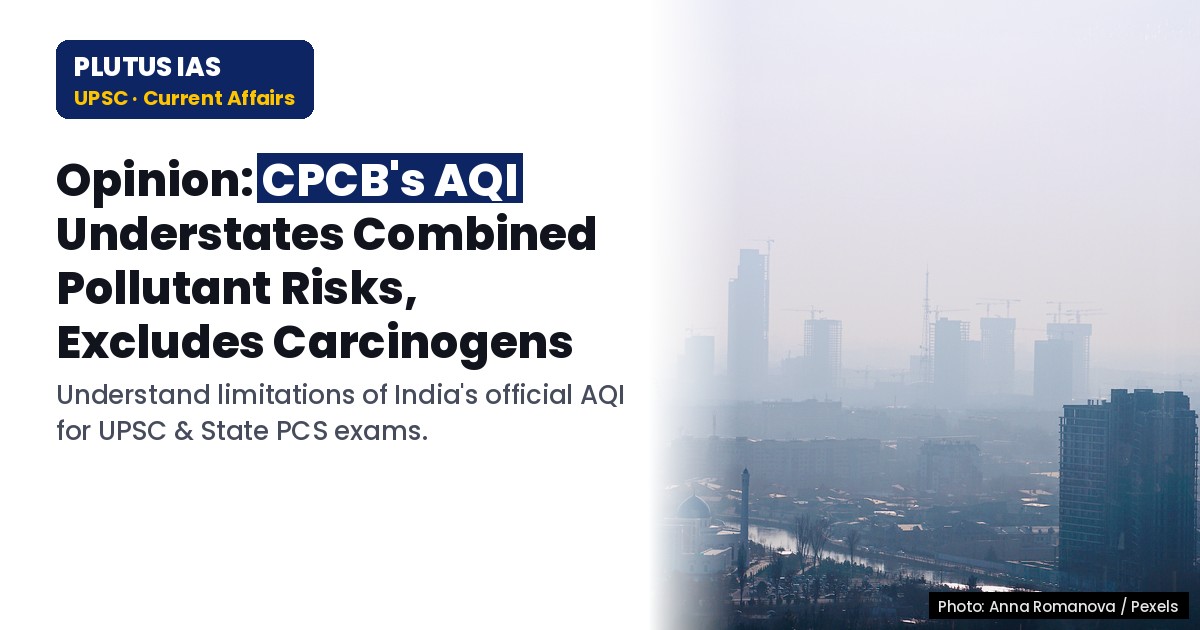
Recent analyses highlight critical limitations in India’s official Air Quality Index (AQI) calculation methodology, particularly concerning its representation of combined pollutant risks and the exclusion of several carcinogenic chemicals. The issue gains prominence during autumn in North India, exacerbated by factors such as crop burning, specific geographical conditions of the Indo-Gangetic plains, and meteorological phenomena like temperature inversions, which collectively contribute to severe air pollution episodes and underscore the urgent need for a more comprehensive approach to air quality assessment and management.
Background
- Air pollution in India, particularly in the Indo-Gangetic plains, is a persistent environmental and public health challenge, intensifying during the post-monsoon and winter months due to a combination of anthropogenic activities and meteorological factors.
- The World Health Organization (WHO) and various international reports consistently rank Indian cities among the most polluted globally, indicating a widespread and severe problem across the country.
- Crop residue burning, vehicular emissions, industrial activities, and biomass combustion are identified as major contributors to air pollution, leading to elevated levels of particulate matter and other harmful gases.
- The Central Pollution Control Board (CPCB) is the apex national body responsible for air quality monitoring and assessment in India, operating under the Ministry of Environment, Forest and Climate Change.
- The health burden of air pollution in India is substantial, with studies linking it to a significant number of premature deaths and a wide range of debilitating diseases, including respiratory illnesses, cardiovascular conditions, and neurological disorders.
- Government initiatives like the National Clean Air Programme (NCAP) have been launched to address air pollution, aiming for a 20-30% reduction in PM2.5 and PM10 concentrations by 2024, with 2017 as the base year.
What is the Air Quality Index (AQI)?
- The Air Quality Index (AQI) is a tool for effectively communicating air quality status to the public in a simple and understandable manner.
- In India, the AQI is calculated by the Central Pollution Control Board (CPCB) and provides a single number that reflects the overall air quality for a specific location and time.
- The Indian AQI system considers eight key pollutants: Particulate Matter (PM2.5), Particulate Matter (PM10), Nitrogen Dioxide (NO2), Sulphur Dioxide (SO2), Carbon Monoxide (CO), Ozone (O3), Ammonia (NH3), and Lead (Pb).
- The AQI is determined by the pollutant with the highest ‘sub-index’ value, meaning it represents the pollutant that poses the greatest risk at that particular time, potentially understating the cumulative risk from multiple pollutants.
- AQI values are categorized into six levels, each associated with a specific health impact: Good (0-50), Satisfactory (51-100), Moderately Polluted (101-200), Poor (201-300), Very Poor (301-400), and Severe (401-500).
- A significant limitation highlighted is the capping of AQI values at 500, which can mask the true severity of extreme pollution events by not reflecting actual pollutant concentrations beyond this threshold.
- The current AQI framework in India does not include several carcinogenic chemicals such as benzene, arsenic, and nickel, which are known to be present in the atmosphere and pose significant health risks.
- Data blind spots, such as missing hourly readings or insufficient monitoring stations, can lead to an inaccurate representation of average air quality, particularly by omitting peak pollution periods.
Key Features
| Feature | Significance |
|---|---|
| AQI Calculation Methodology | The official Air Quality Index (AQI) in India is determined by the pollutant with the highest sub-index, potentially understating the cumulative health risks from multiple pollutants. |
| Limited Pollutant Inclusion | The current AQI calculation in India considers eight pollutants (PM2.5, PM10, NO2, SO2, CO, O3, NH3, Pb), omitting other carcinogenic substances such as benzene, arsenic, and nickel. |
| AQI Value Capping | AQI values are capped at 500, which can obscure the true severity of extreme pollution episodes, as readings significantly above this threshold are still represented as 500. |
| Data Gaps and Averaging | Instances of missing data from monitoring stations and the practice of 24-hour averaging can dilute peak pollution levels and misrepresent actual air quality conditions. |
| Seasonal Pollution Spikes | North India experiences exacerbated air pollution, particularly around Diwali and during winter, due to factors like crop burning, geographical conditions of the Indo-Gangetic plains, prevailing wind patterns, and temperature inversions. |
| Health Burden of Air Pollution | Air pollution is a significant contributor to mortality and morbidity in India, linked to various health conditions including respiratory infections, COPD, stroke, heart disease, hypertension, and diabetes. |
Why it Matters
Public Health Implications
- Air pollution is a leading cause of premature deaths and a wide range of diseases, including respiratory illnesses, cardiovascular diseases, and metabolic disorders, imposing a substantial burden on public health infrastructure.
- Vulnerable populations, such as young children and older adults, are disproportionately affected by air pollution-related health issues, leading to increased healthcare expenditures and reduced quality of life.
- The distinctive Indian pattern of COPD in non-smokers, often linked to biomass smoke, highlights specific domestic challenges in public health.
Environmental Governance and Policy
- Inadequate AQI reporting mechanisms and data blind spots hinder effective policy formulation and implementation for air pollution control.
- The omission of certain hazardous pollutants from the official AQI framework indicates a gap in comprehensive environmental monitoring and regulatory oversight.
- The persistent high levels of air pollution across various regions of India underscore the need for more robust and integrated environmental management strategies.
Socio-Economic Impact
- The health toll from air pollution translates into significant economic losses due to decreased productivity, increased healthcare costs, and premature mortality.
- Agricultural practices like crop burning contribute to air pollution, creating a complex challenge that balances agricultural livelihoods with environmental protection.
- The global recognition of Indian cities among the most polluted impacts international perception and potential foreign investment, alongside domestic quality of life.
Challenges
1. Incomplete Air Quality Monitoring
- The current AQI framework does not include all carcinogenic chemicals, leading to an incomplete assessment of air quality risks.
- Data gaps from monitoring stations and the averaging of readings can mask severe pollution events, providing a misleading picture of air quality.
UPSC Link: Environmental Pollution & Degradation
2. Underestimation of Health Risks
- The methodology of representing AQI by the worst sub-index pollutant can understate the combined health impact of multiple pollutants.
- Capping AQI values at 500 prevents an accurate representation of extreme pollution levels, potentially leading to complacency or inadequate response.
UPSC Link: Health & Human Development
3. Sources of Air Pollution
- Diverse sources such as vehicular emissions, industrial activities, biomass burning, and agricultural practices (e.g., crop burning) contribute to complex air pollution challenges.
- Geographical factors and meteorological conditions in regions like the Indo-Gangetic plains exacerbate pollution trapping, making mitigation difficult.
UPSC Link: Environmental Geography
4. Policy Implementation and Enforcement
- Despite existing regulations, progress in reducing air pollution has stalled, indicating challenges in effective policy implementation and enforcement.
- Addressing the socio-economic dimensions of pollution sources, such as providing alternatives for crop residue management, remains a significant hurdle.
UPSC Link: Government Policies & Interventions
Challenges — UPSC Perspective
| Issue | Concern |
|---|---|
| Limited Pollutant Coverage in AQI | Exclusion of carcinogenic chemicals like benzene, arsenic, and nickel from the official AQI framework leads to an incomplete assessment of health risks. |
| AQI Calculation Method | Representing AQI by the worst sub-index pollutant can understate the cumulative health impact of multiple pollutants, potentially misleading the public and policymakers. |
| Data Gaps and Averaging | Missing data from monitoring stations and the practice of 24-hour averaging can dilute peak pollution levels and misrepresent the actual severity of air quality, especially during extreme events. |
| AQI Value Capping | Capping AQI values at 500 prevents an accurate depiction of extreme pollution episodes, as readings significantly above this threshold are still reported as 500, obscuring the true extent of the problem. |
| Persistent High Pollution Levels | Despite efforts, air pollution levels remain stubbornly high across India, indicating a need for more effective and comprehensive mitigation strategies. |
| Health Burden | The significant increase in deaths and diseases attributable to air pollution highlights the urgent need for improved air quality management and public health interventions. |
Way Forward
- Expand the scope of pollutants monitored and included in the AQI calculation to encompass all major hazardous and carcinogenic substances.
- Revise the AQI calculation methodology to better reflect the combined health risks from multiple pollutants, possibly through a weighted average or cumulative risk assessment.
- Enhance the density and operational efficiency of air quality monitoring networks, ensuring comprehensive data collection and minimizing data gaps.
- Implement dynamic reporting mechanisms that accurately reflect peak pollution levels, potentially by removing the AQI value cap or providing real-time, uncapped data.
- Strengthen inter-sectoral coordination among agriculture, industry, transport, and urban development ministries to address diverse sources of air pollution comprehensively.
- Promote public awareness and education campaigns on the health impacts of air pollution and individual actions for mitigation.
- Invest in research and development for cleaner technologies and sustainable practices across all polluting sectors, including agriculture and industry.
- Develop and enforce stricter emission standards for vehicles and industries, coupled with robust monitoring and compliance mechanisms.
UPSC Value Addition
Keywords for Mains Answer-Writing
Air Quality Index (AQI) · Air pollution health impacts · Pollutant measurement limitations · PM2.5 and PM10 · Central Pollution Control Board (CPCB) · Indo-Gangetic Plains air pollution · Carcinogenic air pollutants · Data blindspots in air quality monitoring · National Clean Air Programme (NCAP) · Environmental Protection Act, 1986
Constitutional & Policy Linkages
- {‘article’: ‘Article 21’, ‘note’: ‘Right to clean environment’}
- {‘article’: ‘Article 48A’, ‘note’: ‘Protection and improvement of environment’}
- {‘article’: ‘Article 51A(g)’, ‘note’: ‘Duty to protect natural environment’}
Concept Flow
Anthropogenic activities (vehicular emissions, industrial discharge, biomass burning) release pollutants. → Pollutants accumulate in atmosphere, exacerbated by geography and meteorology. → Air Quality Index (AQI) measures pollution, but with methodological limitations. → Incomplete AQI data and underestimation of risks lead to misleading public perception. → Exposure to high pollution causes severe health impacts and increased mortality. → Persistent health burden necessitates comprehensive policy and monitoring reforms.
Prelims Practice Questions
Q1. Consider the following statements regarding the Air Quality Index (AQI) in India:
1. The AQI in India is calculated based on the amounts of eight pollutants.
2. Benzene, arsenic, and nickel are currently included in the calculation of India’s official AQI.
3. The official AQI value is represented by the pollutant with the worst sub-index.
How many of the above statements are correct?
- Only one
- Only two
- Only three
- None
Answer: Only two — Statement 1 is correct: The AQI in India is calculated based on eight pollutants (PM2.5, PM10, NO2, SO2, CO, O3, NH3, and Lead). Statement 2 is incorrect: Benzene, arsenic, and nickel are not currently included in the official AQI calculation. Statement 3 is correct: The official AQI is indeed represented by the pollutant with the worst sub-index, which can understate combined risks.
Q2. Which of the following pollutants are associated with the burning of diesel, coal, and petrol?
1. Nitrogen Dioxide
2. Sulphur Dioxide
3. Carbon Monoxide
4. Ozone
Select the correct answer using the code given below:
- 1 and 2 only
- 1, 2 and 3 only
- 3 and 4 only
- 1, 2, 3 and 4
Answer: 1, 2 and 3 only — Nitrogen dioxide, sulphur dioxide, and carbon monoxide are directly associated with the combustion of fossil fuels like diesel, coal, and petrol. Ozone is a secondary pollutant formed from reactions involving other pollutants in the presence of sunlight, not directly emitted from these sources.
Mains Practice Question
✍ Critically examine the limitations of India’s current Air Quality Index (AQI) methodology in accurately reflecting air pollution levels and their health impacts. Discuss the policy implications of these limitations for effective air quality management. (15 Marks)
Approach: MODEL-ANSWER SKELETON:
1. Introduction: Briefly define AQI and its purpose in India (CPCB, 8 pollutants).
2. Limitations of AQI Methodology:
a. Limited pollutant coverage: Exclusion of carcinogenic chemicals like benzene, arsenic, nickel.
b. ‘Worst sub-index’ representation: Understates combined risk of multiple pollutants.
c. Capping of AQI values: AQI capped at 500, masking extreme pollution episodes (e.g., PM2.5 readings far exceeding 380 still capped at 500 sub-index).
d. Data blindspots and averaging: Missing station data, exclusion of worst hourly readings from 24-hour averages, dilution of peak pollution.
e. Geographical limitations: Focus on urban centres, potentially neglecting rural or industrial areas.
3. Health Impacts (as per news): Mention the significant health burden (deaths, COPD, stroke, heart disease, hypertension, diabetes) linked to air pollution, emphasizing how current AQI limitations may obscure the full extent of this crisis.
4. Policy Implications:
a. Misleading public perception: Inaccurate AQI can lead to complacency or underestimation of risk.
b. Inadequate policy formulation: Policies based on incomplete data may not target all critical pollutants or pollution sources effectively.
c. Resource allocation: Misguided allocation of resources if the true extent and nature of pollution are not captured.
d. Need for comprehensive monitoring: Emphasize the necessity for expanding the list of monitored pollutants, improving data collection reliability, and refining the AQI calculation methodology.
e. Strengthening existing frameworks: Reference relevant acts like the Environment (Protection) Act, 1986, and schemes like the National Clean Air Programme (NCAP) and suggest improvements based on identified limitations.
5. Conclusion: Summarize the need for a more robust and comprehensive air quality monitoring and reporting system to facilitate evidence-based policy interventions and protect public health.
Source: The Indian Express
Generated by AanyaAi for educational purpose.
Related guides on our sites
- How to prepare for GS paper 1 for UPSC CSE mains exam
- Best UPSC coaching for IFOS exam
- Best geography optional coaching
- Best geography optional coaching

- AQI Limitations & India’s Air Pollution Crisis Explained - November 11, 2026
- CII पार्टनरशिप समिट: भारत की वैश्विक आर्थिक भूमिका - November 11, 2026
- Garh Ganga Mela: Yogi’s Directives for ‘Mini Kumbh’ - November 11, 2026

No Comments