


14 Nov A Landmark Diplomatic Engagement: Strategic Outcomes of PM Modi’s 2025 Bhutan Visit
This article covers “Daily Current Affairs” and From A Landmark Diplomatic Engagement: Strategic Outcomes of PM Modi’s 2025 Bhutan Visit
SYLLABUS MAPPING
GS- 2- International Relations- A Landmark Diplomatic Engagement: Strategic Outcomes of PM Modi’s 2025 Bhutan Visit
FOR PRELIMS
What new agreements were signed during PM Modi’s 2025 visit to Bhutan?
FOR MAINS
What were the main achievements of PM Modi’s 2025 State Visit to Bhutan?
Why in the News?
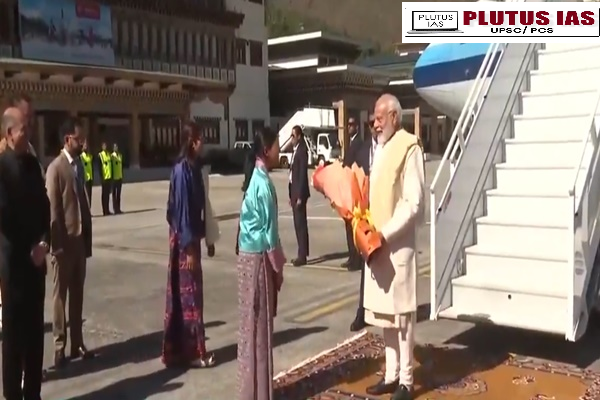
At the invitation of His Majesty Jigme Khesar Namgyel Wangchuck, King of Bhutan, Prime Minister Narendra Modi undertook a two-day State Visit to Bhutan on 11–12 November 2025. The visit coincided with Bhutan’s celebrations of the 70th Birth Anniversary of His Majesty the Fourth Druk Gyalpo, where PM Modi was honoured as the Guest of Honour at the national event in Changlimithang. He also participated in the Global Peace Prayer Festival and paid respects to the Holy Piprahwa Relics of Lord Buddha brought from India for public veneration.
Key Highlights of the Visit
1. High-Level Interactions
PM Modi was granted audiences with:
His Majesty The King of Bhutan
His Majesty the Fourth Druk Gyalpo
Interacted with Bhutanese Prime Minister Dasho Tshering Tobgay
Their discussions covered:
Bilateral development cooperation
hydropower and energy security
connectivity and trade
new sectors such as STEM, fintech, digital payments, and space
regional and global issues
Bhutan also expressed deep condolences over the Delhi explosion (10 November 2025), demonstrating mutual solidarity during crises.
India–Bhutan Relations: Key Outcomes
| Theme / Area | Key Highlights | Significance |
|---|---|---|
| 1. Development Partnership & Bhutan’s 13th Five Year Plan | • India reaffirmed full support for Bhutan’s 13th FYP. • Support to Economic Stimulus Programme, flagship projects, community-centred initiatives. • Bhutan appreciated India’s role in socio-economic transformation. |
Strengthens traditional partnership; ensures Bhutan’s stable development trajectory. |
| 2. Support for Gelephu Mindfulness City | • India expressed full support for the visionary Gelephu Mindfulness City. • Announcement: new Immigration Check Post at Hatisar, Assam for smoother movement. |
Integrates Bhutan into regional value chains; enhances cross-border mobility and investments. |
| 3. Hydropower Cooperation | Punatsangchhu-II (1020 MW) inaugurated jointly; Bhutan begins exporting power to India. Punatsangchhu-I (1200 MW) construction resumes. India announces ₹40 billion Line of Credit for energy projects. |
Hydropower is the backbone of India–Bhutan ties; boosts regional energy security and Bhutan’s revenue. |
| 4. Connectivity & Infrastructure | Land: Darranga ICP operational (Nov 2024); progress on new ICPs. Waterways: Jogigopha IWT & MMLP operational (Mar 2025). Rail: MoU & Steering Committee for Gelephu–Kokrajhar and Samtse–Banarhat rail links. Supplies: Institutionalised supply of essentials & fertilisers. |
Enhances physical connectivity; opens Bhutan’s first rail lines; strengthens trade, tourism, and logistics. |
| 5. Cooperation in Emerging Sectors | STEM: Indian teachers strengthening Bhutan’s education ecosystem. Fintech: Phase II of UPI integration for seamless digital payments. Space: Progress under Joint Plan of Action (remote sensing, disaster management). |
Positions Bhutan for future-ready growth; deepens digital, space and educational collaboration. |
| 6. Cultural & People-to-People Linkages | • Public veneration of Piprahwa Relics. • Consecration of Royal Bhutan Temple in Rajgir. • Land allocated in Varanasi for Bhutanese temple & guesthouse. |
Reinforces civilisational ties; boosts tourism, spiritual links, and cultural diplomacy. |
| 7. New MoUs Signed | Renewable Energy – collaboration between MENR (Bhutan) & MNRE (India). Health Sector Cooperation between Ministries of Health. Mental Health Linkages – PEMA Secretariat & NIMHANS. |
Broadens cooperation into human development, social welfare, and healthcare. |
Strategic Significance of the Visit
1. Diplomatic and Strategic Dimension: Reinforces India’s “Neighbourhood First” and “Act East” policies.Strengthens Bhutan’s role as a buffer and trusted partner in the Himalayan region. Counters external influence by deepening economic and cultural integration.
2. Economic Integration: Boosts energy security through hydropower trade. Enables Bhutan’s smooth transition to a sustainable, self-reliant digital and green economy. Enhances connectivity for trade, mobility, and regional value chains.
3. Cultural & Civilizational Bonds: Celebrations related to the Buddha relics and the Bhutanese temples strengthen India’s Buddhist diplomacy. Reaffirms generations of cultural continuity between the two nations.
4. People-Centric Cooperation: Digital payments, STEM education, health cooperation, and essential supplies directly impact citizens. UPI linkage and teacher/nurse contributions enhance daily connectivity and mutual goodwill.
Way Forward
1. Accelerate Connectivity Projects: Fast-track rail links, ICPs, and multimodal corridors to deepen trade, tourism, and regional integration.
2. Strengthen Sustainable Energy Cooperation: Ensure timely completion of hydropower projects, diversify into solar and green hydrogen, and enhance cross-border energy trade.
3. Advance Digital & Fintech Integration: Expand UPI interoperability, digital public infrastructure cooperation, cybersecurity collaboration, and tech skilling.
4. Promote Collaboration in Emerging Technologies: Jointly develop capabilities in AI, space technology, disaster management, and STEM research.
5. Enhance People-to-People and Cultural Diplomacy: Build Buddhist heritage circuits, promote cultural exchanges, and improve cross-border mobility.
6. Expand Development Partnership in Social Sectors: Support Bhutan’s education, healthcare, mental health, and community development priorities under the 13th FYP.
7. Support Bhutan’s Economic Diversification: Assist in developing tourism, start-up ecosystems, agri-value chains, and sustainable industries to reduce reliance on hydropower.
Conclusion
Prime Minister Modi’s State Visit to Bhutan in November 2025 reaffirmed the time-tested, special friendship between the two nations, rooted in trust, mutual respect, and shared cultural heritage. With significant outcomes in hydropower, connectivity, digital integration, renewable energy, health, and cultural cooperation, the visit has set the foundation for a new era of India-Bhutan partnership. Both sides reaffirmed the tradition of regular high-level exchanges, ensuring that bilateral relations remain strong, forward-looking, and resilient in a rapidly changing regional and global landscape.
Prelims question:
Q. Consider the following:
1. The Punatsangchhu-II Hydroelectric Project is the first joint hydropower project between India and Bhutan.
2. The Gelephu Mindfulness City is a Bhutanese initiative supported by India, including the establishment of an Immigration Check Post at Hatisar in Assam.
3. Under India–Bhutan cooperation, Phase II of UPI integration will allow Bhutanese visitors to make digital payments in India using local mobile applications.
How many of the above statements are correct?
(a) Only one
(b) Only two
(c) All three
(d) None
Answer: B
Mains Question:
Q. India and Bhutan share a unique partnership rooted in trust, mutual respect, and deep cultural ties. In this context, critically examine the strategic significance of Prime Minister Narendra Modi’s November 2025 State Visit to Bhutan.
(250 words)

- Europe’s AI Rules May Become India’s Opportunity - August 14, 2026
- Transparency as the Foundation of Trust in Medicine - August 14, 2026
- A Timely Reset for the Food Security Act: From Foodgrain Security to Nutrition Security - August 13, 2026

No Comments