


17 Sep Air Pollution & Suicide Risk: UPSC Current Affairs for Prelims Mains 2026
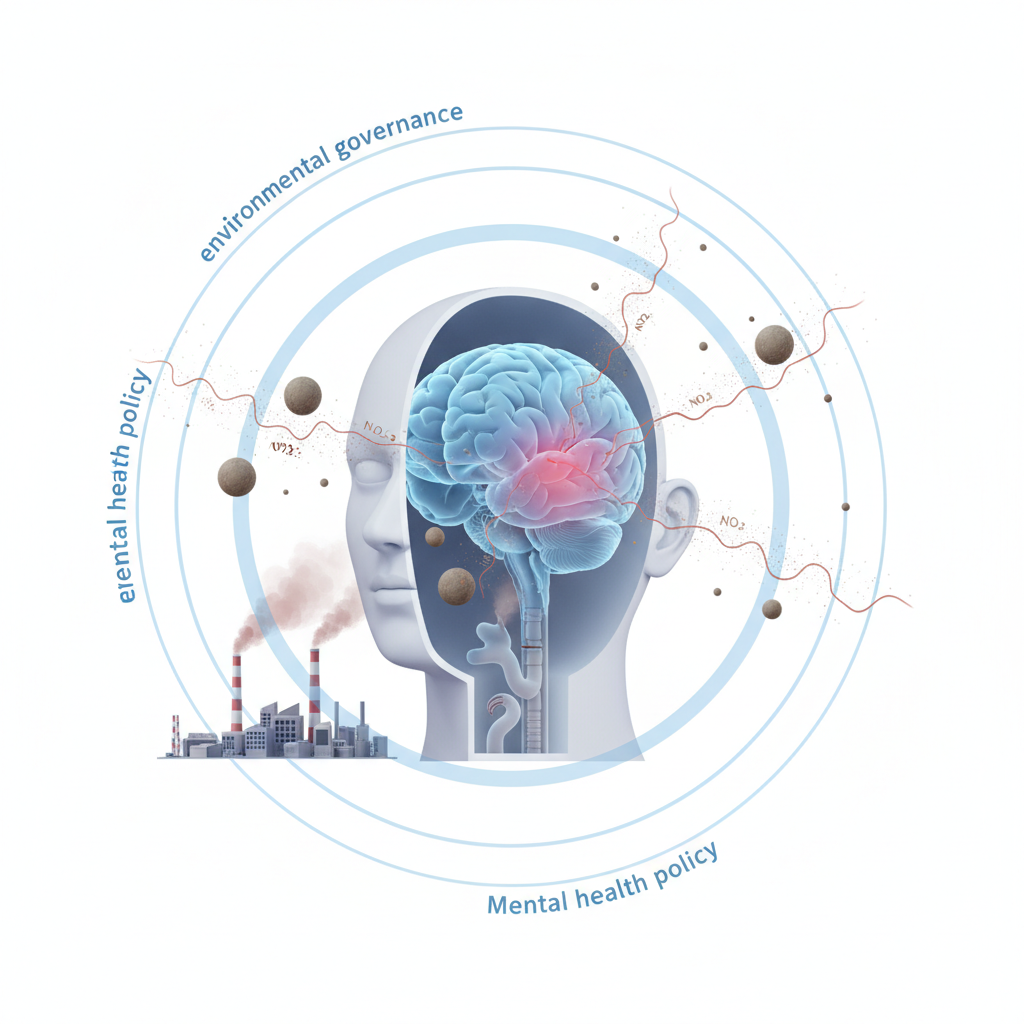
✎ Air pollutants such as PM2.5, PM10, and NO2 are neurotoxic and may increase suicide risk by inducing systemic inflammation, oxidative stress, and neurotransmitter dysfunction, necessitating their inclusion in suicide prevention…
Subject Relevance — Where This Topic Fits
- GS Paper II — Governance, Constitution, Polity, Social Justice and International Relations (Environmental Governance) | GS Paper III — Environment, Disaster Management and Climate Change
- Prelims: PM2.5, PM10, NO2, Air Quality Index (AQI), National Clean Air Programme (NCAP), Mental Health Care Act 2017, Sustainable Development Goals (SDG 3, SDG 11), Epidemiological transition, Non-communicable diseases (NCDs), Public health surveillance
- Essay: Environmental degradation and human well-being: A paradox of progress, The invisible burden: How air pollution shapes public health and societal resilience
Quick Revision: Air pollutants such as PM2.5, PM10, and NO2 are neurotoxic and may increase suicide risk by inducing systemic inflammation, oxidative stress, and neurotransmitter dysfunction, necessitating their inclusion in suicide prevention and environmental health policies.
Why is this in the news?
A meta-analysis published in the *Journal of Epidemiology and Community Health* has established statistically significant associations between exposure to ambient air pollutants—particularly PM2.5, PM10, and NO2—and increased risks of suicide, attempted suicide, and suicidal ideation. The study synthesises data from 29 independent research works and underscores the need to integrate environmental health into suicide prevention frameworks, highlighting a critical intersection between environmental governance and mental health policy.
Background
- Suicide remains a leading cause of death globally, with over 700,000 annual fatalities, as per WHO estimates (2023). India accounts for approximately 12% of global suicides, with mental health disorders and psychosocial stressors being primary contributors.
- While traditional risk factors such as socioeconomic deprivation, substance abuse, and mental illness are well-documented, the role of environmental exposures—particularly air pollution—has received limited systematic attention in public health discourse.
- The Lancet Commission on Pollution and Health (2017) estimated that air pollution contributes to 6.7 million premature deaths annually, with neurological and psychiatric impacts emerging as significant pathways.
- The Mental Health Care Act, 2017, mandates rights-based mental health services but does not explicitly integrate environmental health determinants into suicide prevention strategies.
- Emerging research suggests that chronic exposure to neurotoxic pollutants (e.g., lead, arsenic) may impair cognitive function and emotional regulation, potentially exacerbating vulnerability to suicidal behaviour.
What is the relationship between air pollution and suicide risk?
- Air pollution encompasses a mixture of particulate matter (PM2.5, PM10), gaseous pollutants (NO2, SO2, O3), and trace metals (lead, arsenic), all of which possess neurotoxic potential.
- Particulate matter (PM2.5 and PM10) can penetrate the blood-brain barrier, inducing systemic inflammation and oxidative stress, which may disrupt neurotransmitter pathways (e.g., serotonin, dopamine) linked to mood regulation.
- Nitrogen dioxide (NO2), a traffic-related pollutant, has been associated with increased hospital admissions for psychiatric disorders, suggesting a plausible biological mechanism for elevated suicide risk.
- Short-term exposure to high PM2.5 levels (e.g., during smog episodes) has been correlated with a transient rise in suicide rates, while long-term exposure to NO2 and PM2.5 shows cumulative adverse effects on mental health.
- Noise pollution, another environmental stressor, may exacerbate psychological distress by disrupting circadian rhythms and increasing cortisol levels, thereby compounding vulnerability to suicidal ideation.
- The study’s meta-analysis reveals that while effect sizes are modest, the consistency of associations across diverse geographical and demographic contexts strengthens the causal plausibility of the link.
- Public health interventions targeting air quality improvement (e.g., NCAP, urban greening) may yield co-benefits for mental health by reducing exposure to neurotoxic pollutants.
- The interplay between environmental and socioeconomic factors (e.g., urbanisation, poverty) necessitates a multi-sectoral approach to suicide prevention, integrating environmental governance with mental health services.
Key Features
| Feature | Significance |
|---|---|
| Particulate Matter (PM2.5 & PM10) | Elevated exposure linked to increased risk of suicidal ideation and death by suicide, with PM2.5 showing statistically significant short-term and long-term associations in meta-analysis. |
| Nitrogen Dioxide (NO2) | Long-term exposure demonstrates a positive correlation with suicide risk, highlighting the need for integrated air quality management in mental health policies. |
| Neurological Effects of Pollutants | Heavy metals (e.g., arsenic, lead) in air and water may induce chronic inflammation and nerve damage, impairing brain function and stress resilience, thereby influencing mood disorders. |
| Environmental Noise and Light Pollution | Disruption of circadian rhythms due to traffic noise and artificial light may elevate stress levels, indirectly contributing to heightened suicide risk. |
| Meta-Analytical Evidence | Systematic review of 29 studies establishes a robust, though modest, association between air pollution and suicide-related outcomes, underscoring environmental factors as modifiable risk variables. |
Why it Matters
Public Health Implications
- Suicide prevention strategies must incorporate environmental health determinants, particularly air quality management, to address modifiable risk factors beyond conventional clinical interventions.
- The study challenges the traditional biomedical model of suicide risk by integrating ecological and socio-environmental dimensions, necessitating a multi-sectoral public health approach.
- Mental health policies should align with environmental regulations (e.g., National Clean Air Programme) to mitigate cumulative risks from air pollution and associated stressors.
Policy and Governance
- Urban planning and transport policies must prioritise reduction of PM2.5, PM10, and NO2 emissions to address both respiratory and mental health outcomes in high-density areas.
- Inter-ministerial coordination between the Ministry of Environment, Forest and Climate Change and the Ministry of Health and Family Welfare is essential to integrate air quality indices with mental health surveillance systems.
- Local governments should incorporate air pollution mitigation into city-level suicide prevention action plans, leveraging data from real-time air quality monitoring networks.
Research and Evidence Gaps
- Further longitudinal studies are required to disentangle the confounding effects of socio-economic variables, climate extremes, and air pollution on suicide risk.
- Causal mechanisms linking specific pollutants to neurobiological pathways (e.g., inflammation, oxidative stress) remain under-explored and warrant targeted biomedical research.
- The study’s modest effect sizes suggest that while environmental factors are relevant, they operate within a complex interplay of biological, psychological, and social determinants.
Challenges
1. Attribution and Causation
- Distinguishing the independent effect of air pollution from co-occurring stressors (e.g., socio-economic deprivation, climate events) poses a methodological challenge in establishing causality.
- Standardised metrics for measuring mental health outcomes in relation to environmental exposures are lacking, complicating cross-study comparisons and policy formulation.
UPSC Link: GS Paper 3: Environment vs Health
2. Implementation Gaps in Urban Governance
- Fragmented institutional mandates between environmental and health authorities hinder cohesive action on air pollution and mental health integration.
- Limited fiscal and technical capacity in municipal bodies to enforce air quality standards and integrate mental health interventions within urban planning frameworks.
UPSC Link: GS Paper 2: Governance
3. Public Awareness and Stigma
- Low public awareness of the mental health impacts of air pollution may reduce demand for policy interventions or behavioural changes aimed at reducing exposure.
- Stigma surrounding mental health and suicide discourages reporting and data collection, impeding evidence-based policy design.
UPSC Link: GS Paper 4: Ethics
4. Data Integration and Surveillance
- Absence of real-time, granular data linking air quality metrics with mental health outcomes at the district or city level limits the design of targeted interventions.
- Lack of standardised reporting protocols for suicide-related data across states hinders national-level analysis and policy evaluation.
UPSC Link: GS Paper 3: Science & Tech
Challenges — UPSC Perspective
| Issue | Concern |
|---|---|
| Causal Ambiguity | Difficulty in isolating the independent impact of air pollution from confounding socio-economic and environmental factors in suicide risk models. |
| Institutional Fragmentation | Lack of convergence between environmental and health ministries hinders holistic policy responses to air pollution and mental health. |
| Data Silos | Absence of integrated databases linking air quality indices with mental health outcomes, impeding evidence-based policymaking. |
| Urban Planning Deficits | Inadequate integration of air pollution mitigation strategies into city master plans, exacerbating exposure risks in vulnerable populations. |
| Resource Constraints | Limited technical and financial capacity in local governments to implement and monitor air quality and mental health interventions. |
Way Forward
- Strengthen inter-ministerial coordination between the Ministry of Environment, Forest and Climate Change and the Ministry of Health and Family Welfare to develop integrated air quality and mental health action plans.
- Expand real-time air quality monitoring networks and link them with mental health surveillance systems to enable data-driven policy interventions.
- Incorporate air pollution mitigation strategies into urban planning frameworks, including zoning regulations and transport policies, to reduce exposure risks in high-density areas.
- Launch public awareness campaigns to educate communities on the mental health impacts of air pollution and promote behavioural changes to minimise exposure.
- Conduct longitudinal studies to disentangle the confounding effects of socio-economic factors, climate extremes, and air pollution on suicide risk, ensuring robust causal inference.
- Enhance capacity-building programmes for municipal bodies to integrate mental health considerations into urban governance and service delivery.
- Develop standardised protocols for reporting suicide-related data and air quality metrics to enable cross-regional analysis and policy evaluation.
UPSC Value Addition
Keywords for Mains Answer-Writing
Air pollution and public health · Mental health and environmental determinants · Suicide risk factors · Particulate matter PM2.5 and PM10 · Nitrogen dioxide (NO2) and neurological effects · Environmental epidemiology · Public health interventions for suicide prevention · Intersection of environmental and mental health · Modifiable risk factors in mental health · Epidemiological meta-analysis · Chronic inflammation and brain function · Environmental justice and health disparities · Sustainable Development Goals (SDG 3.4) · WHO guidelines on air quality · Neurotoxicity of heavy metals · Climate change and mental health
Concept Flow
Exposure to air pollutants (PM2.5, PM10, NO2) → Neurological effects (inflammation, oxidative stress) → Impaired brain function and stress resilience → Increased risk of depression and anxiety → Elevated suicidal ideation and behaviour → Air pollution events (e.g., smog episodes) → Disruption of circadian rhythms (via noise/light pollution) → Heightened stress levels → Exacerbation of mental health vulnerabilities → Increased suicide risk → Long-term environmental degradation (e.g., heavy metal exposure) → Chronic neurobiological damage → Mood disorders and cognitive impairment → Cumulative suicide risk → Policy response (e.g., air quality regulations) → Reduction in pollutant levels → Mitigation of neurological and psychological effects → Decline in suicide-related outcomes → Data integration (air quality + mental health metrics) → Evidence-based policymaking → Targeted interventions in high-risk areas → Improved public health outcomes
Prelims Practice Questions
Q1. Consider the following statements regarding the relationship between air pollution and mental health:
1. Short-term exposure to PM2.5 is statistically associated with an increased risk of death by suicide.
2. Long-term exposure to nitrogen dioxide (NO2) has been linked to higher suicide risk.
3. Noise pollution has been definitively proven to cause suicidal ideation.
How many of the above statements are correct?
- Only one
- Only two
- All three
- None
Answer: Only two — Statements 1 and 2 are correct as per the meta-analysis cited in the study. Statement 3 is incorrect because the study suggests a *possible* link between noise pollution and suicidal ideation, but it is not definitively proven.
Q2. Assertion (A): Exposure to particulate matter PM2.5 and PM10 is linked to neurological effects such as chronic inflammation and nerve damage.
Reason (R): These pollutants can impair brain function and influence mood and stress resilience.
- Both A and R are true, and R is the correct explanation of A.
- Both A and R are true, but R is NOT the correct explanation of A.
- A is true, but R is false.
- A is false, but R is true.
Answer: Both A and R are true, and R is the correct explanation of A. — Both the assertion and reason are true, and the reason correctly explains the assertion based on the neurological pathways described in the study.
Q3. Match the following air pollutants with their primary sources:
Column I (Pollutant) Column II (Primary Source)
1. PM2.5 A. Combustion of fossil fuels
2. PM10 B. Vehicle exhaust emissions
3. Nitrogen dioxide (NO2) C. Industrial processes and construction
4. Sulphur dioxide (SO2) D. Burning of coal and oil in power plants
Select the correct match:
- 1-A, 2-B, 3-C, 4-D
- 1-B, 2-C, 3-A, 4-D
- 1-C, 2-A, 3-B, 4-D
- 1-D, 2-C, 3-B, 4-A
Answer: 1-B, 2-C, 3-A, 4-D — PM2.5 and PM10 are primarily from vehicle exhaust emissions (B) and construction/industrial activities (C). Nitrogen dioxide (NO2) is mainly from combustion of fossil fuels (A), while sulphur dioxide (SO2) is from burning coal and oil in power plants (D).
Mains Practice Question
✍ Critically examine the role of environmental exposures—particularly air pollution—as modifiable risk factors in mental health outcomes such as suicide and suicidal ideation. Substantiate your argument with reference to recent epidemiological evidence and discuss the implications for public health policy in India. (15 Marks)
Approach: MODEL-ANSWER SKELETON:
1. **Introduction (2 marks)**
– Define environmental exposures (air pollution, noise, light) and their classification as modifiable risk factors.
– State the linkage between environmental determinants and mental health, citing the WHO framework on social determinants of health.
2. **Epidemiological Evidence (4 marks)**
– Summarise the meta-analysis findings: PM2.5, PM10, NO2, and their statistical association with suicide risk (short-term and long-term exposure).
– Highlight the neurological mechanisms: chronic inflammation, nerve damage, and impaired brain function (e.g., hippocampal damage, neurotransmitter disruption).
– Reference the role of heavy metals (arsenic, lead) in neurotoxicity and their potential contribution to mood disorders.
3. **Causation and Confounders (3 marks)**
– Discuss the challenges in establishing causation: confounding factors (socio-economic status, weather extremes, urbanisation).
– Explain the Bradford Hill criteria for causality in environmental epidemiology (e.g., temporality, biological plausibility).
– Acknowledge limitations: effect sizes are small, and meta-analyses may not fully decouple pollution from confounders.
4. **Public Health Policy Implications (4 marks)**
– Align with SDG 3.4 (reduce premature mortality from non-communicable diseases and promote mental health).
– Reference WHO Air Quality Guidelines (2021) for PM2.5 (annual mean: 5 µg/m³) and NO2 (annual mean: 10 µg/m³).
– Discuss India-specific interventions: National Clean Air Programme (NCAP), Graded Response Action Plan (GRAP), and urban planning reforms.
– Propose multi-sectoral strategies: integration of mental health services with environmental health monitoring, community-based interventions, and intersectoral coordination (MoHFW, CPCB, state governments).
5. **Conclusion (2 marks)**
– Emphasise the need for further research to establish causality and quantify burden in India.
– Argue for a rights-based approach to environmental justice, ensuring vulnerable populations (urban poor, industrial workers) are prioritised in policy design.
Source: orissapost.com
Generated by AanyaAi for educational purpose.
Related guides on our sites
- Current affairs for upsc 2026
- How to prepare for GS paper 1 for UPSC CSE mains exam
- Best UPSC coaching for IFOS exam
- Best geography optional coaching

- वायु प्रदूषण से बढ़ सकता है आत्महत्या का जोखिम: अध्ययन - September 17, 2026
- Air Pollution & Suicide Risk: UPSC Current Affairs for Prelims Mains 2026 - September 17, 2026
- मोदी ने सेमीकॉन इंडिया में 7.8% विकास और सेमीकंडक्टर क्रांति का ऐलान किया - September 17, 2026

No Comments