


02 Dec Building Farm-to-Market Efficiency: The Vision of the ICCVAI Scheme
This article covers “Daily Current Affairs” and From Building Farm-to-Market Efficiency: The Vision of the ICCVAI Scheme
SYLLABUS MAPPING
GS-3 – Food Processing and Related Industries-Building Farm-to-Market Efficiency: The Vision of the ICCVAI Scheme
FOR PRELIMS
What is food irradiation?
FOR MAINS
What are the key challenges in expanding irradiation infrastructure in India?
Why in the News?
Food processing has been in the news due to renewed focus on modernising India’s agri-food sector, promoting value addition, and reducing post-harvest losses. Recent government initiatives, rising investments, and technological innovations—such as automation, cold-chain expansion, and 3D food printing—are transforming the sector rapidly. Additionally, discussions around food safety, nutrition enhancement, and India’s aim to become a global food processing hub have highlighted the importance of advanced processing techniques like pasteurisation, sterilisation, fermentation, and irradiation. The sector is also gaining attention for its role in boosting farmers’ incomes, supporting MSMEs, creating jobs, and ensuring year-round availability of safe, nutritious, and affordable foods for consumers.
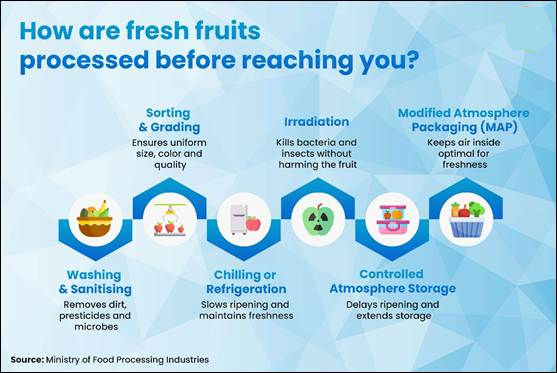
What is Food Irradiation?
Exposing fruits to a controlled dose of ionising radiation that kills bacteria, mould, and insects, and extends shelf life without making the fruit ‘radioactive’ or unsafe.
Among the various methods of food processing, food irradiation has emerged as an important technique due to its strong scientific validation and proven safety record. Foods processed by radiation have undergone thorough assessment in national and international laboratories, with studies showing no toxicological, nutritional, or microbiological issues. Its safety has also been endorsed by several reputed scientific bodies and associations, including the American Medical Association, the American Gastroenterological Association, the American Dietetic Association, and the Institute of Food Technologists.
In India, food irradiation is used to preserve and process commodities such as potatoes, onions, spices, mangoes, cereals, pulses, and oilseeds. This technique offers several benefits, including:
a. Preventing sprouting in potatoes, onions, and other tubers
b. Increasing the shelf life of fruits and vegetables
c. Eliminating insect infestations
d. Reducing microbial contamination
e. Fulfilling quarantine and export requirements
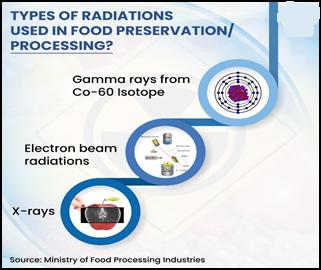
In food irradiation, three types of radiation sources are used depending on the application:
Q. With reference to food irradiation in India, consider the following statements:
1. Food irradiation makes food radioactive and is therefore restricted for use only in non-edible items.
2. In India, Cobalt-60 used for irradiation facilities is supplied by the Board of Radiation and Isotope Technology (BRIT).
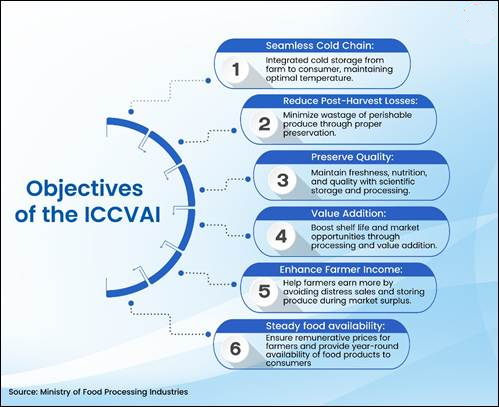
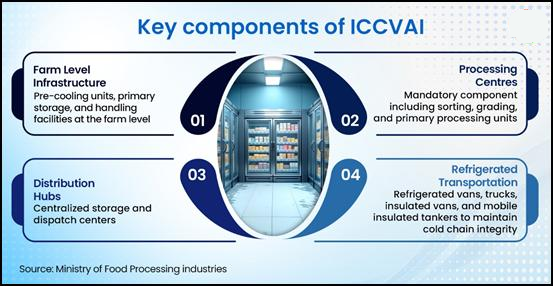
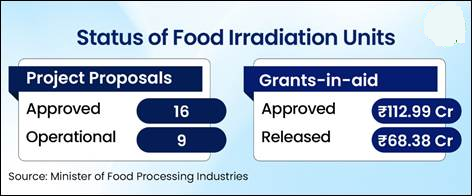
3. Under the ICCVAI component of PMKSY, financial assistance is available for establishing multiproduct food irradiation units.
4. Food irradiation is mandatory for all export-oriented agricultural commodities.
Which of the statements given above are correct?
(a) 2 and 3 only
(b) 1 and 4 only
(c) 1, 2 and 4 only
(d) 1, 2 and 3
Answer: A
Mains Question:
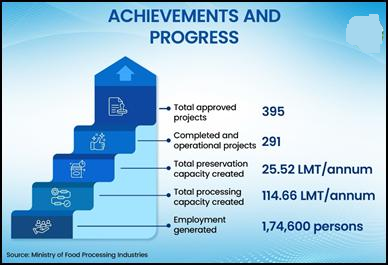
Q. Discuss the significance of food irradiation in India and evaluate the role of the ICCVAI scheme under PMKSY in expanding irradiation infrastructure for reducing post-harvest losses.
(250 words)

- RBI’s Shrinking Real-Rate Cushion Amid Rising Inflation and Strong Demand - September 21, 2026
- India’s NGOs at a New Funding Crossroads - September 21, 2026
- Deep-Sea Discovery, Environmental Responsibility - September 19, 2026

No Comments