


08 Aug CBI Files Chargesheet in Kerala LIFE Mission Scam: Key Accused Named
✎ The Wadakkanchery LIFE Mission case exemplifies how foreign-funded public housing projects can become vehicles for corruption when procurement norms, FCRA compliance, and institutional accountability are compromised…
Subject Relevance — Where This Topic Fits
- GS Paper II — Governance, Transparency and Accountability | GS Paper III — Government Budgeting and Public Expenditure Management
- Prelims: LIFE Mission, Foreign Contribution (Regulation) Act, 2010, CBI, Vigilance and Anti-Corruption Bureau (VACB), Habitat Technology Group, FCRA, Public Procurement Policy, Benami Transactions (Prohibition) Act, 1988
- Essay: Ethical Governance vs. Political Expediency: Lessons from the LIFE Mission Scandal, Public Trust in Institutions: The Role of Oversight in Preventing Corruption
Quick Revision: The Wadakkanchery LIFE Mission case exemplifies how foreign-funded public housing projects can become vehicles for corruption when procurement norms, FCRA compliance, and institutional accountability are compromised, necessitating robust multi-agency oversight and transparent governance.
Why is this in the news?
The Central Bureau of Investigation (CBI) has filed a preliminary chargesheet in the Wadakkanchery LIFE Mission case, implicating six individuals, including officials and private contractors, in large-scale financial irregularities amounting to ₹9.5 crore in a flood-relief housing project funded by the UAE Red Crescent. The case underscores systemic failures in public procurement, regulatory oversight, and institutional accountability, making it a critical study in governance and anti-corruption mechanisms for UPSC aspirants.
Background
- The LIFE Mission was launched by the Kerala government in 2018 to rehabilitate victims of the devastating floods that year, with ₹21 crore from the UAE Red Crescent for constructing apartment complexes and a healthcare facility.
- A complaint by former Wadakkanchery MLA Anil Akkara led to the registration of the case under the Foreign Contribution (Regulation) Act, 2010 (FCRA), alleging violations of foreign funding norms and corruption.
- The CBI’s investigation revealed that the project was awarded to firms controlled by Santhosh Eappen—Unitac Builders and Sane Ventures—bypassing established government norms and empanelled agencies like the Habitat Technology Group.
- The chargesheet alleges a conspiracy to siphon off ₹4.5 crore as commissions and kickbacks, while Mr. Eappen diverted another ₹5 crore as unlawful profit share, inflating project costs and reducing the number of housing units from 203 to 140.
- A parallel investigation by the Kerala Vigilance and Anti-Corruption Bureau (VACB) is ongoing, indicating multi-agency scrutiny of the alleged malfeasance.
What is the LIFE Mission and the Wadakkanchery Corruption Case?
- The LIFE Mission (Livelihood Inclusion and Financial Empowerment) is a flagship housing scheme of the Kerala government, launched post-2018 floods to provide permanent housing for flood-affected families using funds from domestic and international sources, including the UAE Red Crescent.
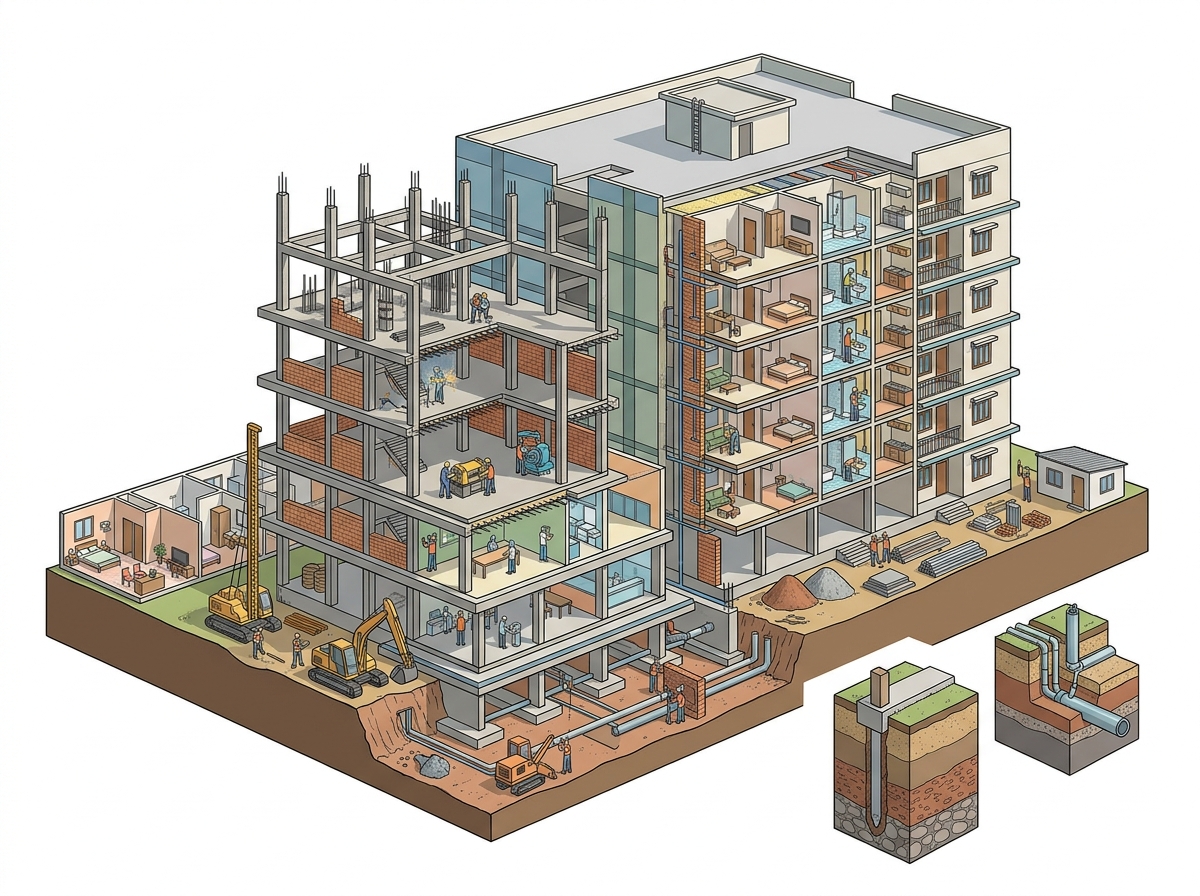
- The Wadakkanchery project, located in Thrissur district, was envisaged as a model rehabilitation initiative with provisions for 140 housing units and a healthcare facility.
- The CBI’s preliminary chargesheet identifies Santhosh Eappen (first accused) and his construction firm Sane Ventures (second accused) as central to the alleged conspiracy.
- The accused include former UAE Consulate employees—Sandeep Nair, P.S. Sarith, and Swapna Suresh.
- The chargesheet highlights violations of the Foreign Contribution (Regulation) Act, 2010, by allegedly routing foreign funds through unauthorised channels and misusing them for personal gain, a grave offence under Indian law.
- Only around ₹10 crore of the ₹21 crore was utilised for construction, resulting in the reduction of housing units and denial of benefits to flood victims.
- The case exemplifies the risks of weak institutional oversight in public-private partnerships (PPPs), particularly in disaster relief and rehabilitation projects, where speed often compromises due diligence.
- The exclusion of M. Sivasankar (Principal Secretary to the former Chief Minister) and U.V. Jose (former LIFE Mission CEO) from the initial chargesheet does not preclude their indictment in supplementary filings, pending further evidence from the VACB.
Key Features
| Feature | Significance |
|---|---|
| Preliminary Chargesheet by CBI | Initiates formal legal proceedings against accused individuals and entities, establishing prima facie evidence of financial irregularities and conspiracy in the LIFE Mission project. |
| Alleged Diversion of Funds | Approximately ₹9.5 crore (₹4.5 crore as commissions and ₹5 crore as unlawful profit) allegedly siphoned off from the project’s ₹21 crore budget, inflating costs and reducing actual construction expenditure to ₹10 crore. |
| Reduction in Housing Units | Project beneficiaries lost 63 housing units (from 203 to 140) due to financial mismanagement, exacerbating the housing shortage for 2018 flood victims. |
| Parallel Investigations | Concurrent probes by the CBI and the Vigilance and Anti-Corruption Bureau (VACB) indicate systemic oversight failures and the need for inter-agency coordination in tackling corruption. |
| Foreign Funding Compliance | Violations of the Foreign Contribution (Regulation) Act (FCRA) alleged, as ₹21 crore from the UAE Red Crescent was allegedly misused, raising questions about transparency in foreign-funded projects. |
Why it Matters
Economic Governance
- Exposes systemic vulnerabilities in public procurement and fund utilisation, particularly in disaster rehabilitation projects funded by international agencies.
- Highlights the economic cost of corruption in terms of diverted resources, delayed relief, and reduced welfare outcomes for vulnerable populations.
- Underscores the need for robust financial auditing and real-time monitoring of externally funded development projects.
Administrative Accountability
- Demonstrates the failure of institutional checks and balances, including empanelled agencies and project oversight mechanisms, in preventing malfeasance.
- Raises questions about the role of government officials in collusion with private entities, particularly in awarding contracts bypassing established norms.
- Emphasises the importance of whistle-blower protections and independent investigative agencies in uncovering corruption.
Social Justice
- Illustrates the direct impact of corruption on marginalised communities, as flood-affected beneficiaries were denied promised housing due to financial irregularities.
- Highlights the ethical imperative of transparent and equitable resource allocation in disaster relief and rehabilitation programmes.
- Reinforces the constitutional mandate under Article 38 (Directive Principles of State Policy) for equitable distribution of resources.
Judicial and Investigative Integrity
- Showcases the role of the judiciary in initiating legal proceedings and the CBI in investigating high-profile corruption cases.
- Underscores the need for supplementary chargesheets to ensure comprehensive justice, as additional evidence may emerge from parallel investigations.
- Highlights the importance of judicial independence in holding public officials and private entities accountable for malpractices.
Challenges
1. Institutional Corruption in Public Projects
- Systemic failures in procurement processes, including bypassing empanelled agencies and awarding contracts to favoured firms.
- Lack of transparency in fund utilisation, with significant discrepancies between allocated budgets and actual expenditure.
- Collusion between government officials, private contractors, and foreign entities, undermining public trust in governance.
UPSC Link: GS-II: Governance, Transparency & Accountability
2. Regulatory Compliance in Foreign-Funded Projects
- Violations of the Foreign Contribution (Regulation) Act (FCRA) in the utilisation of foreign funds, raising concerns about misuse and lack of oversight.
- Inadequate mechanisms for monitoring and auditing funds received from international agencies, particularly in disaster relief contexts.
- Need for stricter compliance with FCRA and other financial regulations to prevent exploitation of foreign aid for corrupt purposes.
UPSC Link: GS-II: Government Policies & Interventions
3. Judicial and Investigative Delays
- Prolonged investigations and supplementary chargesheets may delay justice for affected beneficiaries, exacerbating their socio-economic vulnerabilities.
- Parallel probes by multiple agencies (CBI, VACB) can lead to overlapping jurisdictions, causing inefficiencies and potential conflicts.
- Urgent need for streamlined investigative processes to ensure timely resolution of corruption cases.
UPSC Link: GS-II: Role of Civil Services in Governance
4. Social Impact of Corruption
- Loss of trust in government schemes, particularly those aimed at disaster relief and rehabilitation, due to perceived or actual corruption.
- Long-term socio-economic consequences for beneficiaries, including homelessness, financial distress, and psychological trauma.
- Erosion of public confidence in institutions, leading to reduced participation in welfare programmes and civic engagement.
UPSC Link: GS-II: Welfare Schemes & Social Justice
5. Ethical Governance in Public Service
- Need for stronger ethical frameworks and codes of conduct for public officials to prevent collusion with private entities.
- Importance of whistle-blower protections and incentives for reporting corruption without fear of retribution.
- Role of civil society and media in exposing corruption and holding authorities accountable.
UPSC Link: GS-IV: Ethics in Governance
Challenges — UPSC Perspective
| Issue | Concern |
|---|---|
| Bypassing Established Procurement Norms | Undermines fair competition, increases risk of favouritism, and compromises project quality and cost-efficiency. |
| Misuse of Foreign Funds | Violates FCRA, erodes international trust, and diverts resources meant for disaster relief to corrupt purposes. |
| Collusion Among Stakeholders | Facilitates large-scale financial irregularities, including kickbacks and inflated project costs, at the expense of public welfare. |
| Delayed Investigations | Prolongs injustice for beneficiaries, exacerbates socio-economic vulnerabilities, and undermines public confidence in governance. |
| Lack of Transparency in Project Execution | Obscures financial mismanagement, reduces accountability, and hinders effective monitoring of project outcomes. |
Way Forward
- Strengthen procurement processes by mandating competitive bidding and empanelling credible agencies for disaster relief projects.
- Enhance transparency in fund utilisation through real-time digital monitoring, third-party audits, and public disclosure of expenditure.
- Establish a dedicated anti-corruption unit within the LIFE Mission to oversee project implementation and investigate irregularities promptly.
- Amend the Foreign Contribution (Regulation) Act to include stricter monitoring mechanisms for foreign-funded projects, particularly in disaster relief.
- Implement whistle-blower protection laws with robust safeguards to encourage reporting of corruption without fear of retaliation.
- Conduct regular training programmes for government officials on ethical governance, conflict-of-interest policies, and anti-corruption measures.
- Ensure timely completion of supplementary chargesheets and judicial proceedings to deliver justice to affected beneficiaries.
- Promote public awareness campaigns to educate communities about their rights under welfare schemes and mechanisms for reporting corruption.
UPSC Value Addition
Keywords for Mains Answer-Writing
LIFE Mission Kerala · Foreign Contribution (Regulation) Act, 2010 · Corruption in Public Projects · CBI chargesheet · Vigilance and Anti-Corruption Bureau · Public-Private Partnership (PPP) in Housing · Rehabilitation of Flood Victims · Foreign Contribution (Regulation) Act, 2010 violations · Kickbacks and Commissions in Public Procurement · Judicial Review of Executive Decisions
Constitutional & Policy Linkages
- Article 38: Directive Principle promoting welfare of the people and equitable distribution of resources.
- Article 39: Directive Principle ensuring equal pay for equal work and preventing concentration of wealth.
Concept Flow
2018 Kerala Floods → Requirement for rehabilitation housing → LIFE Mission project launched → ₹21 crore funding from UAE Red Crescent → Project awarded to Unitac Builders bypassing norms → Financial irregularities and cost inflation → Diversion of ₹9.5 crore as kickbacks and unlawful profits → Only ₹10 crore utilised for construction → Reduction in housing units from 203 to 140 → Beneficiaries deprived of promised housing → Complaint filed under FCRA → CBI investigation initiated → Preliminary chargesheet filed → Six accused named, including officials and contractors → Parallel VACB probe underway → Supplementary chargesheet expected → Legal proceedings initiated.
Prelims Practice Questions
Q1. Consider the following statements regarding the LIFE Mission case in Kerala:
1. The project was funded by the UAE Red Crescent.
2. The CBI has filed a chargesheet naming six accused, including a former UAE Consulate employee.
3. The project was awarded to firms controlled by the first accused, bypassing government norms.
4. The total funds utilised for construction were ₹21 crore.
How many of the above statements are correct?
- Only one
- Only two
- Only three
- All four
Answer: Only three — Statements 1, 2, and 3 are correct. Statement 4 is incorrect as only ₹10 crore of the ₹21 crore was utilised for construction.
Q2. Assertion (A): The Foreign Contribution (Regulation) Act, 2010, is designed to regulate the acceptance and utilisation of foreign contributions or donations by individuals, associations, or companies.
Reason (R): The Act aims to prevent foreign interference in India’s domestic affairs and ensure transparency in the utilisation of foreign funds.
Options:
A. Both A and R are true, and R is the correct explanation of A.
B. Both A and R are true, but R is not the correct explanation of A.
C. A is true, but R is false.
D. A is false, but R is true.
- A
- B
- C
- D
Answer: A — Both A and R are true, and R correctly explains A. The FCRA, 2010, regulates foreign contributions to ensure transparency and prevent foreign interference.
Q3. Match the following entities involved in the LIFE Mission case with their roles:
Column I
1. Santhosh Eappen
2. Swapna Suresh
3. Sandeep Nair
4. M. Sivasankar
Column II
A. Managing Partner, Unitac Builders
B. Former UAE Consulate employee
C. Principal Secretary to the former Chief Minister
D. Former LIFE Mission CEO
Options:
1. 1-A, 2-B, 3-D, 4-C
2. 1-A, 2-B, 3-C, 4-D
3. 1-B, 2-A, 3-D, 4-C
4. 1-A, 2-D, 3-B, 4-C
- 1
- 2
- 3
- 4
Answer: 1 — 1-A (Santhosh Eappen is the managing partner of Unitac Builders), 2-B (Swapna Suresh is a former UAE Consulate employee), 3-D (Sandeep Nair is the former LIFE Mission CEO), 4-C (M. Sivasankar is the Principal Secretary to the former Chief Minister).
Mains Practice Question
✍ The LIFE Mission case in Kerala exemplifies systemic vulnerabilities in public-private partnerships (PPPs) and the enforcement of the Foreign Contribution (Regulation) Act, 2010. Critically evaluate the institutional and legal mechanisms that failed to prevent corruption in this case. Also, suggest measures to strengthen transparency and accountability in such projects. (15 Marks)
Approach: MODEL-ANSWER SKELETON:
1. **Context and Background (2 marks)**:
– Briefly outline the LIFE Mission project: its objectives (rehabilitation of 2018 flood victims), funding (₹21 crore from UAE Red Crescent), and alleged corruption (siphoning of ₹4.5 crore, inflated project costs, reduced housing units from 203 to 140).
– Mention the role of the CBI and Vigilance and Anti-Corruption Bureau.
2. **Institutional Failures (5 marks)**:
– **Public-Private Partnership (PPP) Governance**: Lack of transparent bidding processes, bypassing empanelled agencies (e.g., Habitat Technology Group), and collusion between private firms and public officials.
– **Role of the CBI and State Agencies**: Delayed investigation, preliminary chargesheet excluding key figures (e.g., M. Sivasankar, U.V. Jose), and reliance on supplementary chargesheets.
– **Political Oversight**: Alleged involvement of high-ranking officials (e.g., Principal Secretary to the Chief Minister) and the political fallout for the state government.
3. **Legal and Regulatory Gaps (4 marks)**:
– **Foreign Contribution (Regulation) Act, 2010 (FCRA)**: Violation of provisions related to utilisation of foreign funds, lack of due diligence in monitoring fund flow, and weak enforcement mechanisms.
– **Public Procurement Laws**: Non-compliance with norms such as the General Financial Rules (GFR) and the absence of robust anti-corruption clauses in PPP agreements.
– **Judicial and Quasi-Judicial Mechanisms**: Limited proactive judicial intervention in monitoring fund utilisation and project execution.
4. **Suggested Reforms (4 marks)**:
– **Strengthening PPP Frameworks**: Mandatory transparency in bidding, third-party audits, and inclusion of anti-corruption clauses with penal provisions.
– **FCRA Compliance**: Real-time monitoring of foreign funds, mandatory disclosure of utilisation, and strict penalties for violations.
– **Institutional Reforms**: Empowering anti-corruption bodies (e.g., CBI, Vigilance Bureau) with greater autonomy and resources; establishing independent oversight committees for high-value projects.
– **Judicial and Legislative Measures**: Fast-track courts for corruption cases, mandatory time-bound investigations, and amendments to strengthen FCRA enforcement.
5. **Conclusion (1 mark)**:
– Emphasise the need for a multi-pronged approach combining legal, institutional, and systemic reforms to prevent such corruption in future public projects.
Source: The Hindu
Generated by AanyaAi for educational purpose.

- आंध्र प्रदेश में चार नए पुलिस आयुक्तालयों को कैबिनेट की मंजूरी, जानिए क्या होंगे फायदे - September 23, 2026
- Andhra Pradesh to get 4 new Police Commissionerates: Key UPSC insights - September 23, 2026
- AI आधारित ‘HEADS’ से भारत में अवसाद जांच में क्रांति: जानिए कैसे होगा मदद - September 23, 2026

No Comments