


27 Jul Centre Introduces Anti-Paper Leak Bill in Lok Sabha: Key Provisions Explained
Relevance for UPSC & State PCS: Polity
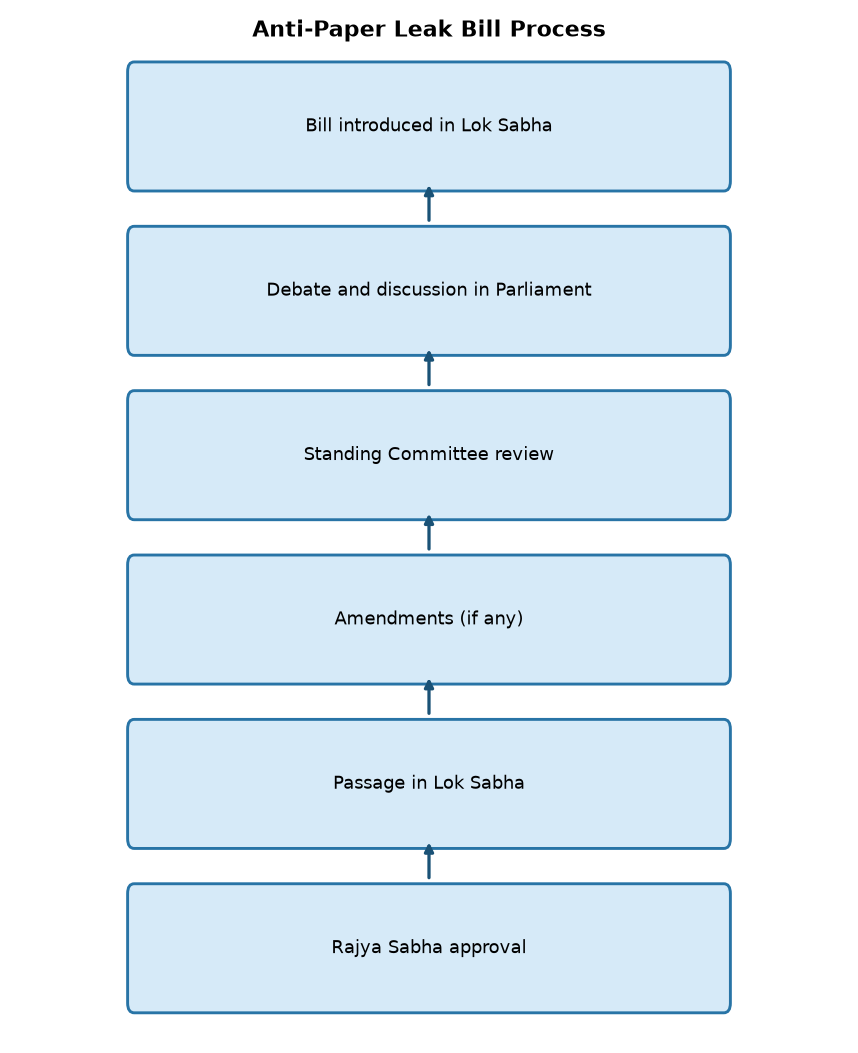
The Centre has introduced a stringent anti-paper leak Bill in the Lok Sabha to curb malpractices in competitive examinations, reflecting growing concerns over the integrity of India’s examination system. The proposed legislation, titled the *Public Examinations (Prevention of Unfair Means) Bill, 2024*, seeks to impose severe penalties, including imprisonment up to 10 years and fines up to ₹1 crore, for offenders involved in paper leaks, cheating, or organized malpractices. The Bill defines offenses broadly, covering not just candidates but also examination authorities, service providers, and even accomplices, ensuring accountability across the entire examination ecosystem. This move aligns with the government’s broader push for transparency and fairness in public examinations, following multiple high-profile leaks in recent years, such as those affecting the NEET-UG and UGC-NET exams.
For UPSC and State PCS aspirants, this Bill holds significant relevance as it directly impacts the examination process they rely on for career advancement. The introduction of such legislation underscores the government’s commitment to safeguarding meritocracy in recruitment and admissions, a core principle in civil services examinations. Aspirants must stay informed about the Bill’s provisions, as any amendments or enforcement mechanisms could influence examination conduct, security protocols, and even the syllabus or evaluation processes in the long term. Additionally, understanding the legal framework around examination malpractices can help aspirants navigate ethical dilemmas, such as the temptation to resort to unfair means in a highly competitive environment.
The Bill’s emphasis on stringent penalties also raises questions about its implementation and potential unintended consequences. Critics argue that while the intent is noble, the harsh punishments might disproportionately affect marginalized candidates or lead to a culture of fear rather than fairness. For State PCS aspirants, who often face regional disparities in examination infrastructure and resources, the Bill’s effectiveness will depend on how well it addresses systemic vulnerabilities, such as inadequate exam centers or digital vulnerabilities. UPSC aspirants, in particular, should monitor debates in Parliament and expert analyses on the Bill, as its final form could set a precedent for future reforms in higher education and recruitment policies.
From a governance perspective, the Bill reflects the Centre’s proactive stance on institutional integrity, a theme frequently tested in UPSC’s Ethics and Polity papers. Questions on administrative ethics, corruption, and the role of technology in ensuring transparency could draw from this legislative initiative. State PCS aspirants preparing for general studies papers should also note how such laws interact with state-level examination bodies, as coordination between the Centre and states will be crucial for its success. The Bill’s passage and subsequent enforcement will be a case study in balancing deterrence with due process, offering valuable insights for aspirants aiming to understand the intersection of law, governance, and public trust.
Source: Business Standard
Practice Questions
Q1. What is the primary objective of the ‘anti-paper leak Bill’ introduced by the Centre in the Lok Sabha?
- To provide financial assistance to candidates appearing for competitive exams
- To impose stricter penalties on individuals involved in paper leaks and malpractices in examinations
- To increase the number of examination centers across the country
- To introduce online examinations for all government recruitment tests
Answer
To impose stricter penalties on individuals involved in paper leaks and malpractices in examinations — The anti-paper leak Bill aims to curb malpractices in competitive examinations by introducing stringent penalties for those involved in paper leaks and other forms of cheating.
Q2. Which legislative body did the Centre introduce the anti-paper leak Bill in?
- Rajya Sabha
- Lok Sabha
- President’s Secretariat
- Supreme Court
Answer
Lok Sabha — The Bill was introduced in the Lok Sabha, which is the lower house of the Indian Parliament.
Generated by AanyaAi for educational purpose.


No Comments