


27 Jul Centre Introduces Anti-Paper Leak Bill in Lok Sabha: Key Provisions Explained
Relevance for UPSC & State PCS: Polity
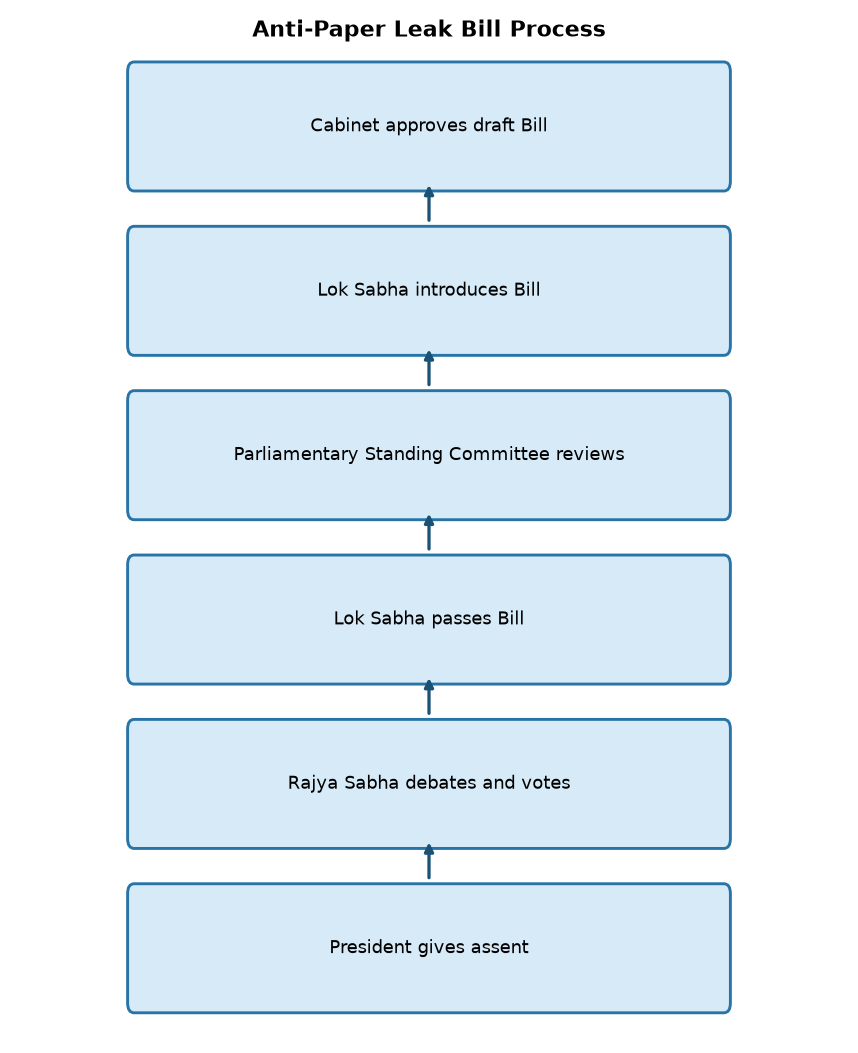
The Centre has introduced the Public Examinations (Prevention of Unfair Means) Bill, 2024, in the Lok Sabha to address the growing menace of paper leaks and malpractices in competitive examinations, including those conducted by the Union Public Service Commission (UPSC) and state public service commissions (PCS). The bill proposes stringent penalties, including imprisonment of up to 10 years and fines up to ₹1 crore, for individuals and organized groups involved in leaking question papers or facilitating malpractices. The move comes amid repeated incidents of paper leaks in exams like the NEET-UG and the Civil Services Examination, which have eroded public trust in the examination system. By criminalizing such acts, the government aims to deter unethical practices and ensure the integrity of examinations that serve as gateways to prestigious government jobs.
For UPSC aspirants, this bill holds significant relevance as it seeks to safeguard the sanctity of the Civil Services Examination, one of the most competitive exams in the country. Paper leaks in UPSC exams not only disrupt the careers of thousands of candidates but also undermine the credibility of the selection process. The proposed law, if enacted, will strengthen the legal framework against such malpractices, ensuring a level playing field for all aspirants. Additionally, the bill’s provisions on organized crime syndicates involved in paper leaks could lead to better investigative mechanisms, reducing the chances of collusion between exam authorities and unscrupulous elements.
State PCS aspirants, who often face similar challenges in their respective examinations, will also benefit from the bill’s stringent provisions. Many state-level exams have been plagued by paper leaks, particularly in states like Bihar, Uttar Pradesh, and Rajasthan, where such incidents have become alarmingly frequent. The bill’s focus on punishing not just the immediate offenders but also those who aid and abet such crimes—including service providers and intermediaries—could help curb the nexus of corruption and malpractice in these exams. This would ensure that deserving candidates are not deprived of opportunities due to systemic failures.
The introduction of this bill reflects the government’s commitment to restoring faith in the examination system, which is crucial for maintaining the meritocratic ethos of civil services recruitment. For both UPSC and state PCS aspirants, the bill serves as a reassurance that the system is evolving to address their concerns about fairness and transparency. However, the effectiveness of the law will depend on its implementation and the ability of investigative agencies to crack down on organized crime networks involved in paper leaks. Aspirants should stay informed about the bill’s progress and its potential impact on examination processes, as it could shape the future landscape of competitive exams in India.
Source: Business Standard
Practice Questions
Q1. Which legislative body introduced the ‘Anti-Paper Leak Bill’ to address examination malpractices in India?
- Rajya Sabha
- Lok Sabha
- President’s Secretariat
- Supreme Court
Answer
Lok Sabha — The ‘Anti-Paper Leak Bill’ was introduced in the Lok Sabha, as mentioned in the given current-affairs story.
Q2. What is the primary objective of the ‘Anti-Paper Leak Bill’ introduced in the Lok Sabha?
- To promote paper leaks for transparency
- To impose stricter penalties for examination malpractices
- To reduce the number of competitive exams
- To encourage digital exams only
Answer
To impose stricter penalties for examination malpractices — The bill aims to introduce tougher penalties for those involved in paper leaks and examination malpractices, as indicated by its title.
Generated by AanyaAi for educational purpose.


No Comments