


19 Sep Cross-Border Drug Drones from Pakistan: Rising Internal Security Challenge for India
This article covers “Daily Current Affairs” and Topic details ” From Cross-Border Drug Drones from Pakistan: Rising Internal Security Challenge for India
SYLLABUS MAPPING:
GS-3- Internal Security- Cross-Border Drug Drones from Pakistan: Rising Internal Security Challenge for India
FOR PRELIMS
Why is border security crucial for India’s internal stability?
FOR MAINS
What steps has the Government of India taken to combat cross-border narcotics smuggling?
Why in the News?
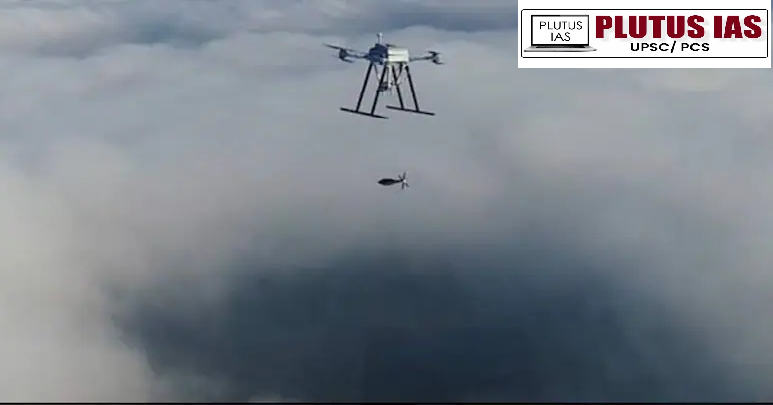
The NCB Annual Report 2024 highlighted a sharp rise in cross-border narcotics smuggling, especially through drones from Pakistan. Drone-related cases spiked to 179 in 2024 from just 3 in 2021, mainly along the Punjab border, with Rajasthan and J&K also affected. Seizure of synthetic drugs rose six-fold between 2019–24 (11,994 kgs in 2024), while maritime trafficking surged with 10,564 kgs seized. Released by Union Home Minister Amit Shah at the 2nd National Conference of ANTFs, the report also flagged new synthetic drugs like mescaline and a rise in injectable drug abuse, posing a serious internal security challenge.
Security in Border Areas
1. Porous Borders and Monitoring Challenges: India shares long land borders with Pakistan, Bangladesh, Nepal, Myanmar, and China, making them difficult to monitor fully. Example: The Indo-Nepal border allows free movement, often exploited for smuggling and human trafficking.
2. Cross-Border Smuggling & Narco-Terrorism: Trafficking of drugs, arms, and fake currency fuels internal security threats. Example: Drone-based heroin smuggling from Pakistan into Punjab has risen sharply (179 cases in 2024).
3. Geographical Vulnerabilities: Difficult terrain such as deserts in Rajasthan, riverine borders in Assam, and dense forests in the Northeast complicates patrolling and fencing. Coastal belts are vulnerable to maritime smuggling.
4. Technological and Surveillance Gaps: Limited deployment of anti-drone systems, AI-based surveillance, radars, and night-vision equipment. Smugglers use GPS-enabled drones, encrypted communications, and maritime routes to bypass detection.
5. Coordination Among Agencies: Multiple agencies—BSF, Coast Guard, NCB, Customs, and State Police—operate along borders but coordination is often weak, delaying joint operations. Example: Drug consignments along the Gujarat coast in 2023 were intercepted late due to coordination gaps.
6. Local Community and Youth Involvement: Vulnerable local populations in border districts are sometimes recruited by cartels for drug transport or smuggling due to unemployment. Example: Punjab youth often act as receivers of drone-dropped consignments
Why is Border Security important?
1. Prevents Narco-Terrorism and Extremist Financing: Drug trafficking across borders funds militant and extremist activities. Example: In J&K, heroin smuggling is used by terror outfits to finance operations.
2. Safeguards National Sovereignty and Territorial Integrity: Strong borders deter infiltration and encroachment by hostile neighbors. Prevents illegal settlements and encroachments in sensitive zones.
3. Ensures Internal Stability and Law & Order: Prevents spillover of insurgency and separatist movements into hinterland. Helps reduce communal tensions and organized crime linked to cross-border cartels.
4. Protects Youth from the Drug Menace: Narco-smuggling targets vulnerable border youth as consumers and carriers. Leads to rising addiction, health crises, and loss of productive workforce.
5. Secures Border Communities and Local Economies: Border villages often face infiltration, smuggling, and violence. Strong border security boosts trust, livelihood opportunities, and regional development.
6. Prevents Illegal Trade and Economic Losses: Smuggling of drugs, fake currency, gold, and arms destabilizes the economy. Undermines formal trade, customs revenues, and financial security.
7. Strengthens India’s Global Image and Regional Security Role: Effective border management shows India’s capability to handle transnational crime. Enhances cooperation with neighbors and global bodies (e.g., UNODC, BIMSTEC, Colombo Security Conclave).
Major Border Areas Threatening Internal Security
1. Punjab–Pakistan Border: Drone drops of heroin and arms fuel narco-terrorism; Amritsar and Tarn Taran are hotspots.
2. Western Rajasthan: Smugglers exploit vast desert terrain in Barmer and Jaisalmer for infiltration.
3. Jammu & Kashmir: Terror outfits fund operations through heroin smuggling (“narco-terrorism”).
4. Northeast (India–Myanmar Border): Part of the ‘Death Triangle’, the border sees methamphetamine and yaba tablets smuggled into Mizoram and Manipur.
5. Coastal States (Gujarat, Kerala, Tamil Nadu): Large consignments (over 3,000 kg of heroin seized off Gujarat coast in 2021) show vulnerability of sea routes.
6. Indo-Nepal & Indo-Bangladesh Borders: Free movement agreements often aid illegal trade, fake currency, and drug trafficking.
7. Andaman & Nicobar Islands: Its location in the Indian Ocean Region (IOR) makes it attractive for international drug syndicates.
Government Initiatives / Policies
1. NCORD (Narco Coordination Centre): Created in 2016 to strengthen coordination; holds state and district-level meetings to plug gaps.
2. National NDPS Policy (2012): Balances supply reduction with rehabilitation of addicts.
3. Anti-Drone Systems: DRDO-developed systems now deployed in Punjab and Rajasthan sectors.
4. Awareness Programs: Nasha Mukt Bharat Abhiyan covers over 270 districts to reduce demand.
5. Maritime Security: Coastal radar chains (46 stations) linked with the Navy & Coast Guard; post-2008 Mumbai attacks, surveillance was upgraded.
6. PITNDPS Act: Use expanded in 2024—531 detention orders issued, compared to just 93 in 2020.
7. International Cooperation: India works with UNODC, Colombo Security Conclave, and BIMSTEC to monitor regional narcotics routes.
Challenges in Border Areas
1. Technological Gap: Drones with long-range payloads often go undetected due to a lack of 24×7 AI surveillance grids.
2. Difficult Terrain: Patrolling Indo-Myanmar’s hilly forests or Brahmaputra riverine border is resource-intensive.
3. Cross-Border Cartels: Cartels in Pakistan and Myanmar are directly linked to terror financing in India.
4. Local Youth Involvement: Punjab’s rising drug addiction provides a ready network for smugglers.
5. Corruption & Collusion: Some lower-level security personnel have been caught assisting smugglers.
6. Judicial Delays: NDPS cases drag for years; conviction rate remains low (~30%).
7. Geopolitical Factors: Instability in Afghanistan (Golden Crescent) pushes heroin into Indian markets.
Way Forward
1. Technology-Driven Security: Deploy AI-based radars, anti-drone systems, satellite monitoring in vulnerable states like Punjab and Rajasthan.
2. Strengthening Forces: Increase BSF and Coast Guard manpower; provide night-vision drones and armored vehicles.
3. Integrated Coastal Security Scheme: Engage fishing communities as “eyes and ears” of coastal policing.
4. Regional Cooperation: Enhance joint operations under Colombo Security Conclave and share intelligence with BIMSTEC partners.
5. Community Engagement: Launch rehabilitation programs in Punjab and Northeast to cut demand and reduce local support for traffickers.
6. Legal Reforms: Fast-track NDPS cases with special courts to create deterrence.
7. Employment Schemes: Expand skill development and jobs in border districts (e.g., Punjab’s border belt, NE states) to curb youth recruitment by cartels.
Conclusion
Border security is not merely about protecting territorial integrity but also about ensuring internal stability. The alarming rise of narco-terrorism through drones and maritime routes highlights a dangerous shift in the nature of cross-border threats. To counter this, India requires a whole-of-government as well as a whole-of-society approach, where technology-driven surveillance, inter-agency coordination, and international partnerships play a central role. At the same time, addressing socio-economic vulnerabilities in border districts is essential to reduce local facilitation of smuggling networks. A balanced strategy that integrates supply reduction, demand reduction, and rehabilitation measures is crucial to tackle the drug menace holistically.
Prelims question:
Q. Recently, the Narcotics Control Bureau (NCB) Annual Report 2024 highlighted a sharp rise in the use of drones for drug smuggling from Pakistan. In this context, consider the following statements:
1. More than 150 drone-based drug smuggling cases were reported along the India–Pakistan border in 2024.
2. Punjab was the most affected state in India by drone-borne narcotics trafficking.
3. Synthetic drug seizures in India increased nearly six times between 2019 and 2024.
Which of the statements given above are correct?
(a) 1 and 2 only
(b) 2 and 3 only
(c) 1 and 3 only
(d) 1, 2 and 3
Answer: D
Mains Question:
Q. “Drone-based cross-border smuggling of narcotics poses a new dimension of threat to India’s internal security.” Discuss with reference to recent trends reported by the Narcotics Control Bureau (UPSC 2024).
(250 words)

- Re-evaluating India’s Climate Strategy Beyond the Victim Narrative - September 5, 2026
- Bringing Perimenopause and Mid-Life Healthcare Out of the Neglect Bin - September 5, 2026
- Rebalancing India’s Bilateral Investment Treaties & Addressing Democratic Deficits - September 5, 2026

No Comments