


04 Nov e-DAR and iRAD Systems: A Digital Push for Road Safety and Accident Prevention in India
This article covers “Daily Current Affairs” and From e-DAR and iRAD Systems: A Digital Push for Road Safety and Accident Prevention in India
SYLLABUS MAPPING
GS-2 – Governance Policies & Government Policies- e-DAR and iRAD Systems: A Digital Push for Road Safety and Accident Prevention in India
FOR PRELIMS
What is the e-DAR system and why is it important?
FOR MAINS
What is the significance of the e-DAR and iRAD systems in improving road safety management in India?
Why in the News?
The Ministry of Road Transport and Highways (MoRTH) is set to release black spot data for 2023 and 2024 based on its Electronic Detailed Accident Report (e-DAR) and Integrated Road Accident Database (iRAD) systems. This marks a significant step toward using real-time, digital, and geo-tagged data to curb road accidents and fatalities across India.
Background: India’s Road Safety Challenge
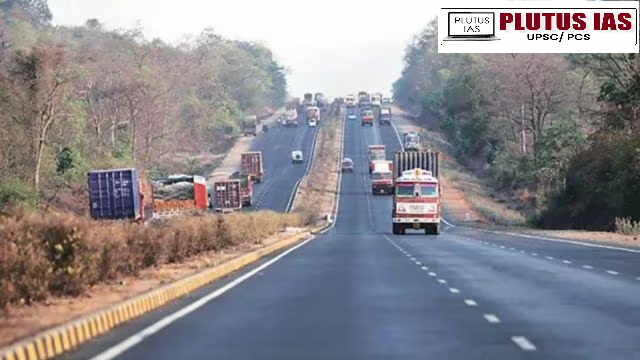
India records one of the highest road accident fatalities globally. According to the Ministry of Road Transport and Highways (MoRTH) Report 2023, over 1.68 lakh deaths and 4.6 lakh accidents were recorded in 2022 alone. Despite continuous awareness campaigns and engineering interventions, the number of “black spots”—critical stretches prone to frequent accidents—remains a major concern.
To strengthen evidence-based interventions, MoRTH initiated the iRAD project and its operational tool, e-DAR, to digitize road accident reporting and streamline the data collection process from the ground level.
Understanding Black Spots
A black spot on a National Highway (NH) refers to a 500-metre stretch where:
Five or more accidents causing deaths or grievous injuries, or
Ten or more fatalities
occur within a three-year period.
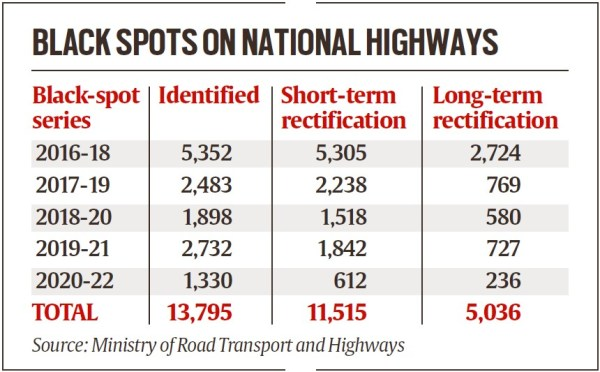
Under the last assessment (2020–2022), 1,330 critical stretches were identified. Between 2016 and 2022, MoRTH identified 13,795 black spots, out of which long-term rectification has been completed for 5,036.
About the e-DAR / iRAD System
1. Objective: To create a real-time, geo-tagged, digital database of road accidents, facilitating precise analysis, accountability, and preventive planning.
2. Development: iRAD was developed by the Indian Institute of Technology Madras (IIT Madras) with support from the World Bank. It was rolled out in phases between 2021 and 2022 across Indian states.
3. How It Works:
When an accident occurs, first responders (police) use a mobile app or tablet to enter details.
The accident is geo-tagged and uploaded in real time to the national server.
The data includes parameters like vehicle type, road condition, lighting, weather, injury severity, and victim details.
The system is integrated with hospital databases, insurance portals, and transport authorities for seamless information sharing.
4. Integration with e-DAR: e-DAR acts as an operational layer, capturing detailed information digitally and helping the Transport Research Wing (TRW) of MoRTH validate and analyse data received from state departments.
Recent Developments and Data Insights
* The 2023–24 black spot data will be based fully on the e-DAR/iRAD system—first time India will rely on digital data for such mapping.
* Discrepancies between TRW and e-DAR data have dropped to less than 5%, down from much higher levels earlier.
* In 2024, a variance of 18,069 accidents (3.96%) and 7,020 fatalities (4.3%) was recorded between TRW and e-DAR datasets.
* The highest discrepancies were reported from Punjab and Jharkhand, but coordination between the Road Safety Cell, Chief Engineers, and state police is helping bridge data gaps.
Significance of the Initiative
1. Data Accuracy and Transparency: Real-time data entry minimizes manual errors and delays. Ensures transparency and traceability in reporting and analysis.
2. Evidence-Based Policy Making: Enables MoRTH and state governments to map accident-prone zones precisely, prioritizing funds for road design corrections.
3. Integration Across Agencies: Links data across police, transport, hospitals, and insurance for holistic road safety management.
4. Efficient Black Spot Rectification: Helps plan engineering interventions like improved signage, lighting, and road geometry corrections based on precise data.
5. Supports Vision Zero: Aligns with India’s commitment to reduce road fatalities by 50% by 2030, in line with the UN Decade of Action for Road Safety.
Challenges and Data Discrepancies
1. Variation in State Reporting: Some states still rely on manual records or inconsistent digital entries, leading to under-reporting (e.g., Punjab’s e-DAR data showed only 533 deaths compared to 4,759 reported by TRW).
2. Capacity and Infrastructure Gaps: Limited availability of trained personnel and devices in rural areas.
3. Inter-departmental Coordination: Synchronization between police, hospitals, and transport departments remains uneven.
4. Delayed Data Validation: Physical validation by the TRW slows down final analysis.
5. Need for Public Data Access: While the database is comprehensive, public and researcher access remains restricted.
Government Efforts to Strengthen Road Safety
1. Engineering Interventions: Rectification of black spots, installation of crash barriers, and improved road signage.
2. Education and Awareness: Road Safety Weeks, mass awareness campaigns, and inclusion of road safety in school curriculum.
3. Enforcement: Stricter penalties under the *Motor Vehicles (Amendment) Act, 2019.
4. Emergency Response: launch of 112 Emergency Response Support System and integration with hospital networks.
5. Technology Integration: GPS-based vehicle tracking, automatic number plate recognition, and digital monitoring of over-speeding and lane violations.
Way Forward
1. 100% Integration of e-DAR Across States: Ensure all police stations and hospitals use the digital system uniformly.
2. Data Sharing and Public Dashboards: Create open, anonymized dashboards for research, policy feedback, and citizen awareness.
3. Regular Black Spot Audits: Conduct bi-annual audits to monitor progress in rectification and casualty reduction.
4. Capacity Building: Continuous training for police, engineers, and healthcare workers in using the system effectively.
5. Linking with Smart Mobility: Integrate e-DAR and iRAD data with Intelligent Transport Systems (ITS) and urban traffic management platforms for proactive prevention.
Conclusion
The introduction of e-DAR and iRAD systems marks a crucial technological shift in India’s road safety governance. By combining real-time data, geo-tagging, and inter-departmental integration, the initiative has the potential to transform road safety planning from a reactive to a proactive model. To truly realise the goal of “Zero Fatalities, Safe Roads,” India must ensure robust implementation, consistent data validation, and transparent dissemination of findings, ensuring that every accident counts not just in statistics, but in saving lives.
Prelims question:
Q. With reference to India’s road safety management, consider the following statements:
1. The Integrated Road Accident Database (iRAD) project is implemented by IIT Madras with World Bank support.
2. Under the existing system, a 500-metre highway stretch is designated as a black spot if at least ten accidents occur within a one-year period.
3. The e-DAR platform enables real-time geo-tagged reporting of accidents by police.
Which of the statements given above are correct?
(a) 1 and 3 only
(b) 2 and 3 only
(c) 1 and 2 only
(d) 1, 2, and 3
Answer: A
Mains Question:
Q. Discuss how the e-DAR and iRAD systems can transform India’s road safety ecosystem. Examine the challenges in implementation and suggest measures to ensure real-time, accurate, and integrated accident reporting
(250 words)

- Europe’s AI Rules May Become India’s Opportunity - August 14, 2026
- Transparency as the Foundation of Trust in Medicine - August 14, 2026
- A Timely Reset for the Food Security Act: From Foodgrain Security to Nutrition Security - August 13, 2026

No Comments