


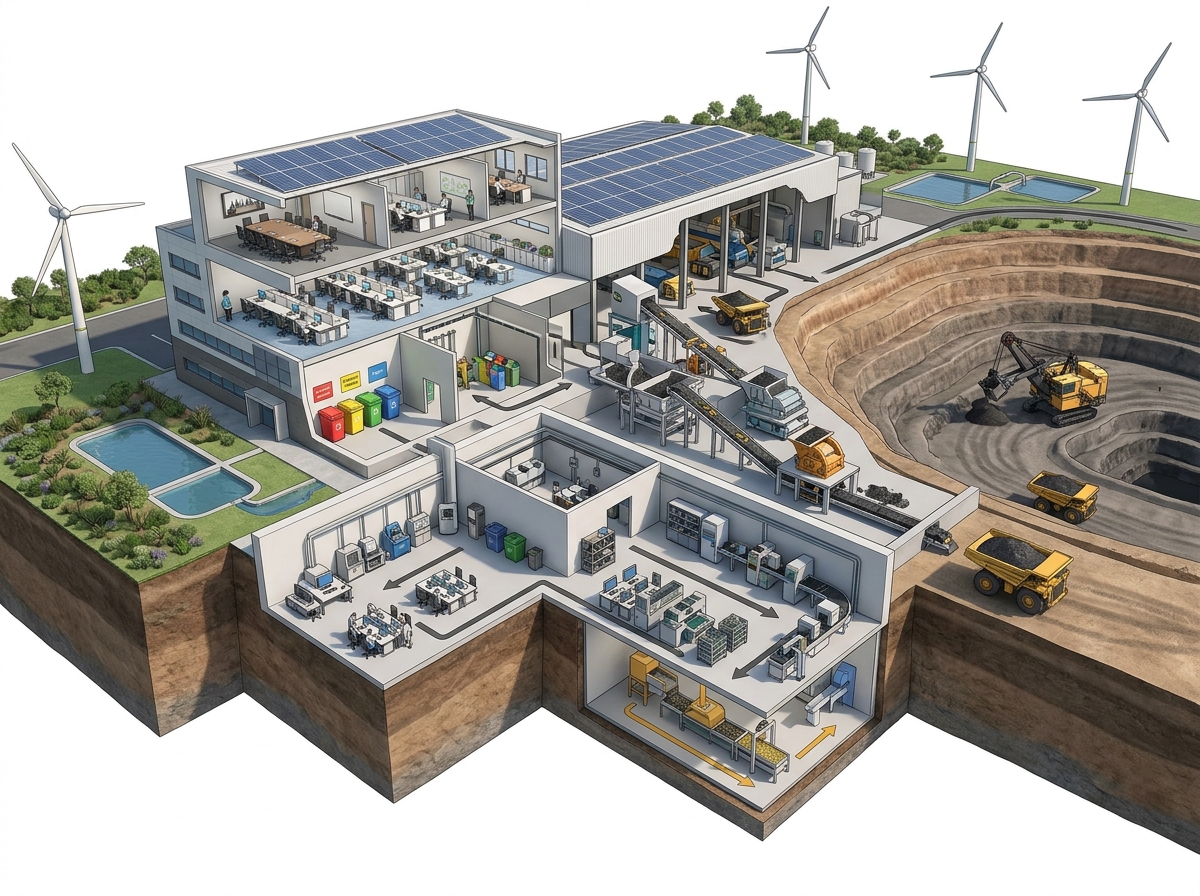
04 Sep ECL Launches Special Campaign 6.0 to Boost Cleanliness & Efficiency
✎ Special Campaign 6.0 by ECL integrates e-waste management, digitalisation, space optimisation, and grievance redressal under DARPG’s 'Waste to Wealth' and Ministry of Coal’s e-waste management frameworks, to be implemented in two…
Subject Relevance — Where This Topic Fits
- GS Paper II — Governance, Transparency and Accountability | GS Paper III — Environment, Sustainable Development and Resource Management | GS Paper III — E-Governance and Digital Transformation
- Prelims: Public Sector Undertakings (PSUs), E-waste Management Rules, 2022, Administrative Reforms and Public Grievances (DARPG), Coal India Limited (CIL), Digital India Mission, Sustainable Development Goals (SDGs) 12 and 13
- Essay: The role of public sector enterprises in achieving India’s sustainability and digital transformation goals, Institutionalising efficiency: From compliance to culture in governance
Quick Revision: Special Campaign 6.0 by ECL integrates e-waste management, digitalisation, space optimisation, and grievance redressal under DARPG’s ‘Waste to Wealth’ and Ministry of Coal’s e-waste management frameworks, to be implemented in two phases from September to October 2026.
Why is this in the news?
Eastern Coalfields Limited (ECL), a subsidiary of Coal India Limited, launched Special Campaign 6.0 on 4 September 2026 under the thematic guidance of the Department of Administrative Reforms and Public Grievances (DARPG) and the Ministry of Coal. The campaign focuses on workplace cleanliness, sustainability, operational efficiency, and the systematic management of electronic waste (e-waste), with a structured two-phase implementation plan from 15 September to 31 October 2026. This initiative aligns with national priorities on waste-to-wealth conversion, digital transformation, and citizen-centric governance, and reflects the broader framework of administrative reforms in public sector undertakings.
Background
- The Department of Administrative Reforms and Public Grievances (DARPG) has been conducting Special Campaigns since 2016 to promote cleanliness, reduce pendency, and enhance efficiency in government offices.
- The theme ‘Waste to Wealth’ under DARPG’s Special Campaigns emphasises the conversion of waste materials into economically valuable resources through systematic collection, segregation, and recycling.
- The Ministry of Coal has mandated e-waste management as a priority area for coal PSUs.
- Eastern Coalfields Limited (ECL), headquartered in Dhanbad, Jharkhand, is a major coal-producing PSU under Coal India Limited (CIL), contributing significantly to India’s energy security.
- Public Sector Undertakings (PSUs) in India are increasingly adopting digital governance initiatives to improve transparency, reduce paperwork, and enhance service delivery.
- Sustainable development goals (SDGs), particularly SDG 12 (Responsible Consumption and Production) and SDG 13 (Climate Action), guide PSUs in integrating environmental stewardship into operational practices.
What is Special Campaign 6.0 by Eastern Coalfields Limited (ECL)?
- Special Campaign 6.0 is a time-bound, mission-mode initiative launched by ECL to enhance workplace cleanliness, promote sustainability, and improve operational efficiency across its organisation.
- The campaign is structured around four key focus areas: e-waste management, reduction of pending public grievances, space optimisation, and digitalisation of processes.
- E-waste management under the campaign involves the systematic collection, segregation, and responsible disposal of electronic waste generated within ECL’s offices and operational units.
- Reduction of pending public grievances includes the timely resolution of appeals, references, and communications received from Members of Parliament, state governments, and other stakeholders, ensuring citizen-centric governance.
- Space optimisation focuses on identifying and disposing of obsolete, unused, or redundant items occupying valuable office space, thereby improving resource utilisation and workplace functionality.
- Digitalisation efforts aim to transition ECL towards paperless, environmentally friendly work practices by leveraging digital tools and platforms, reducing administrative delays and environmental footprint.
- The campaign is divided into two phases: a preparation phase (15 September to 30 September 2026) for planning and capacity-building, followed by an implementation phase (2 October to 31 October 2026) for execution and monitoring.
- The initiative underscores ECL’s commitment to the principles of ‘Do It Today, Impact Tomorrow’, fostering a culture of proactive problem-solving and continuous improvement in governance and operations.
Key Features
| Feature | Significance |
|---|---|
| E-waste Management | Addresses systematic collection, segregation, and disposal of electronic waste to reduce environmental pollution and promote circular economy principles within the organisation. |
| Pending Case Reduction | Ensures timely disposal of public grievances, appeals, references, and communications to enhance administrative efficiency and citizen satisfaction. |
| Space Optimisation | Identifies and disposes of redundant, non-functional, or obsolete items to free up valuable office space for productive utilisation. |
| Digitalisation | Promotes paperless and eco-friendly workplace practices, reducing resource consumption and improving operational efficiency through technology adoption. |
Why it Matters
Operational Efficiency
- Streamlines workflows by integrating digital tools, reducing manual processes, and enhancing decision-making speed.
- Optimises physical and digital infrastructure, leading to cost savings and improved resource allocation.
- Aligns with the ‘Do It Today, Impact Tomorrow’ policy to ensure immediate actions yield long-term benefits.
Environmental Sustainability
- Reduces carbon footprint through responsible e-waste disposal and adoption of eco-friendly practices.
- Supports India’s commitments under international environmental agreements (e.g., Basel Convention) on hazardous waste management.
- Promotes a culture of sustainability within the organisation, influencing stakeholders and industry peers.
Administrative Reforms
- Enhances transparency and accountability in public grievance redressal mechanisms.
- Strengthens institutional capacity for proactive governance and citizen-centric service delivery.
- Demonstrates the efficacy of structured campaigns in achieving multi-dimensional organisational goals.
Challenges
1. E-waste Collection and Segregation
- Ensuring complete and accurate segregation of hazardous vs. non-hazardous e-waste components.
- Managing logistics for safe transportation and storage of e-waste to prevent environmental contamination.
- Training staff on updated protocols for handling electronic waste in compliance with regulatory standards.
UPSC Link: Environmental Pollution (Prevention & Control) Act, 1986
2. Public Grievance Redressal
- Balancing speed of disposal with thoroughness to avoid hasty or incorrect resolutions.
- Integrating digital platforms with legacy systems to ensure seamless tracking and reporting.
- Addressing systemic delays in inter-departmental coordination for multi-stakeholder grievances.
UPSC Link: Right to Information Act, 2005
3. Space and Resource Optimisation
- Overcoming resistance to disposal of ‘useful’ but underutilised assets due to perceived future utility.
- Ensuring compliance with procurement policies while liquidating redundant inventory.
- Balancing aesthetic workplace design with functional space utilisation.
UPSC Link: General Financial Rules, 2017
4. Digital Transformation
- Addressing cybersecurity risks associated with increased digitalisation and paperless workflows.
- Ensuring interoperability between legacy and modern IT systems for data integrity.
- Managing resistance to change among employees accustomed to traditional processes.
UPSC Link: Digital Personal Data Protection Act, 2023
Challenges — UPSC Perspective
| Issue | Concern |
|---|---|
| Regulatory Compliance | Adhering to evolving e-waste management rules and environmental standards. |
| Stakeholder Coordination | Ensuring alignment between internal departments and external agencies (e.g., state governments, MPs). |
| Data Security | Protecting sensitive information during digital transformation and disposal of redundant records. |
| Resource Allocation | Balancing financial and human resources between campaign priorities and core operational tasks. |
Way Forward
- Conduct mandatory training sessions for all employees on e-waste segregation, digital tools, and grievance redressal protocols.
- Establish a dedicated task force to monitor progress during the preparation (15–30 Sep 2026) and implementation (2–31 Oct 2026) phases.
- Develop a real-time dashboard to track key performance indicators (KPIs) such as e-waste collected, grievances resolved, and space optimised.
- Collaborate with external agencies (e.g., CPCB, SPCBs) for certification and validation of e-waste disposal processes.
- Incentivise departments achieving milestones through recognition or small rewards to foster competitive participation.
- Integrate the campaign’s learnings into ECL’s annual sustainability and operational efficiency reports for transparency.
- Conduct post-campaign audits to assess long-term impact on environmental metrics and administrative efficiency.
UPSC Value Addition
Keywords for Mains Answer-Writing
Eastern Coalfields Limited (ECL) · Special Campaign 6.0 · e-waste management · waste to wealth · operational efficiency · public grievances redressal · digitisation in PSUs · sustainable workplace practices · Ministry of Coal · Department of Administrative Reforms and Public Grievances (DARPG) · corporate sustainability · resource optimisation in public sector undertakings · electronic waste disposal · space optimisation in offices · PM Gati Shakti · National Clean Air Programme (NCAP) · Extended Producer Responsibility (EPR) · Circular Economy · Digital India Mission · Sustainable Development Goals (SDGs) 2030
Concept Flow
Initiation of Special Campaign 6.0 → Identification of key focus areas (e-waste, grievances, space, digitalisation) → Formulation of a two-phase action plan (preparation and implementation) with clear timelines and responsibilities → Execution of targeted interventions (training, audits, digital tools) to address identified challenges → Monitoring and evaluation through KPIs and stakeholder feedback to ensure adherence to objectives → Outcome: Enhanced operational efficiency, reduced environmental footprint, and improved public service delivery
Prelims Practice Questions
Q1. Consider the following statements regarding Special Campaign 6.0 launched by Eastern Coalfields Limited (ECL):
1. The campaign is aligned with the Government of India’s theme ‘Waste to Wealth’ and focuses on e-waste management.
2. The campaign includes four key areas: e-waste management, reduction of pending cases, space optimisation, and digitisation.
3. The implementation phase of the campaign will be conducted from 15 September to 30 September 2026.
4. The campaign aims to enhance operational efficiency and sustainability within the organisation.
How many of the above statements are correct?
- Only one
- Only two
- Only three
- All four
Answer: Only three — Statements 1, 2, and 4 are correct. Statement 3 is incorrect because the implementation phase is scheduled from 2 October to 31 October 2026, not 15 September to 30 September 2026.
Q2. Assertion (A): The Special Campaign 6.0 launched by Eastern Coalfields Limited (ECL) is primarily focused on enhancing operational efficiency through digitisation.
Reason (R): Digitisation in public sector undertakings is mandated by the Department of Administrative Reforms and Public Grievances (DARPG) under the ‘Waste to Wealth’ initiative.
- Both A and R are true, and R is the correct explanation of A.
- Both A and R are true, but R is NOT the correct explanation of A.
- A is true but R is false.
- A is false but R is true.
Answer: A is true but R is false. — Assertion (A) is true as the campaign includes digitisation as one of its key areas. However, Reason (R) is not the correct explanation of (A) because while digitisation is a component of the campaign, the primary focus is broader, encompassing e-waste management, pending case reduction, and space optimisation.
Q3. Match the following initiatives with their respective objectives under Special Campaign 6.0:
Column I (Initiative) | Column II (Objective)
———————————————–|————————————————
A. E-waste Management | 1. Reduction of pending public grievances
B. Space Optimisation | 2. Systematic collection and disposal of e-waste
C. Reduction of Pending Cases | 3. Optimal utilisation of office space
D. Digitisation | 4. Promotion of paperless and eco-friendly practices
- {‘A’: 2, ‘B’: 3, ‘C’: 1, ‘D’: 4}
- {‘A’: 1, ‘B’: 4, ‘C’: 2, ‘D’: 3}
- {‘A’: 3, ‘B’: 1, ‘C’: 4, ‘D’: 2}
- {‘A’: 4, ‘B’: 2, ‘C’: 3, ‘D’: 1}
Answer: {‘A’: 2, ‘B’: 3, ‘C’: 1, ‘D’: 4} — The correct matching is: A-2 (E-waste Management aims at systematic collection and disposal of e-waste), B-3 (Space Optimisation focuses on optimal utilisation of office space), C-1 (Reduction of Pending Cases targets pending public grievances), D-4 (Digitisation promotes paperless and eco-friendly practices).
Mains Practice Question
✍ Critically examine the significance of Special Campaign 6.0 launched by Eastern Coalfields Limited (ECL) in the context of sustainable workplace practices and operational efficiency. How far does this campaign align with the broader national initiatives such as the ‘Waste to Wealth’ mission and the Digital India Mission? (15 Marks)
Approach: MODEL-ANSWER SKELETON:
1. **Introduction (2 Marks)**
– Define Special Campaign 6.0 and its objectives as outlined by ECL.
– Contextualise within the broader framework of the ‘Waste to Wealth’ mission (launched under DARPG) and the Digital India Mission.
2. **Key Components of the Campaign (4 Marks)**
– **E-waste Management**: Explain the systematic collection, segregation, and disposal of electronic waste, linking it to the Extended Producer Responsibility (EPR) framework under the E-Waste (Management) Rules, 2022.
– **Reduction of Pending Cases**: Discuss the importance of timely redressal of public grievances, referencing the Right to Information (RTI) Act, 2005, and the role of the Department of Administrative Reforms and Public Grievances (DARPG).
– **Space Optimisation**: Highlight the need for optimal utilisation of office space, linking it to the PM Gati Shakti National Master Plan for multi-modal connectivity.
– **Digitisation**: Emphasise the transition to paperless and eco-friendly practices, aligning with the Digital India Mission’s objectives.
3. **Alignment with National Initiatives (5 Marks)**
– **Waste to Wealth Mission**: Discuss how the campaign embodies the mission’s principles by promoting circular economy practices and resource optimisation.
– **Digital India Mission**: Explain how digitisation initiatives under the campaign contribute to the mission’s goals of digital inclusion, transparency, and efficiency in governance.
– **Sustainable Development Goals (SDGs)**: Link the campaign to SDG 12 (Responsible Consumption and Production) and SDG 9 (Industry, Innovation, and Infrastructure).
4. **Challenges and Limitations (2 Marks)**
– Discuss potential challenges such as resistance to change, resource constraints, and the need for continuous monitoring and evaluation.
5. **Conclusion (2 Marks)**
– Summarise the campaign’s significance in promoting sustainability and operational efficiency.
– Provide a forward-looking statement on the scalability of such initiatives across other public sector undertakings (PSUs).
Source: PIB (Press Information Bureau)
Generated by AanyaAi for educational purpose.
Related guides on our sites
- Best PSIR optional coaching for upsc
- Best PSIR optional teacher for upsc
- Best teacher of PSIR optional for upsc
- Best PSIR optional coaching in delhi for UPSC


No Comments