

Exercise Harimau Shakti 2024–25: A Strategic Boost to India–Malaysia Military Partnership

Exercise Harimau Shakti 2024–25: A Strategic Boost to India–Malaysia Military Partnership

This article covers “Daily Current Affairs” and From Exercise Harimau Shakti 2024–25: A Strategic Boost to India–Malaysia Military Partnership

SYLLABUS MAPPING 

GS-2 – International Relations- Exercise Harimau Shakti 2024–25: A Strategic Boost to India–Malaysia Military Partnership

FOR PRELIMS

What benefits does India gain from participating in joint military exercises like Harimau Shakti?

FOR MAINS

What is Exercise Harimau Shakti and why is it important for India?

Why in the News?

The joint military exercise Harimau Shakti 2024–25 between the Indian Army and the Malaysian Army has commenced at Bentong Camp, Malaysia (2–15 December 2024). A parallel engagement, the 5th edition of the drill, is also underway at the Mahajan Field Firing Range, Rajasthan (5–18 December 2024). Together, these exercises mark a significant broadening of defence cooperation between the two countries and signal an expanding horizon of operational readiness in sub-conventional and jungle warfare domains.
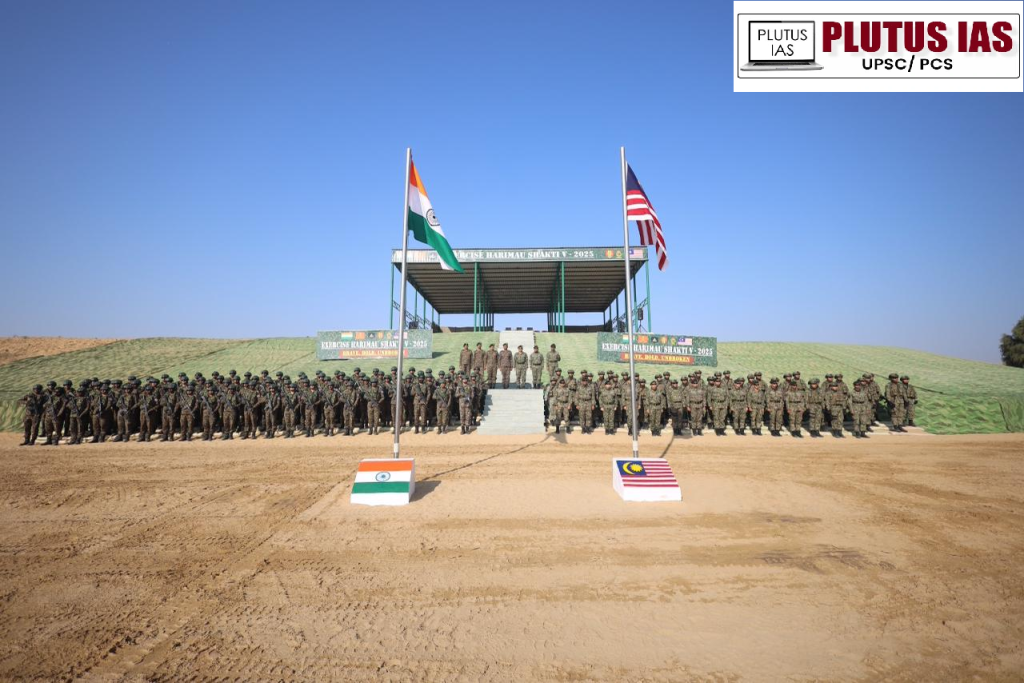
Background and Evolution of Harimau Shakti

1. Launched in 2012, Harimau Shakti is an annual bilateral military exercise.
2. Conducted alternately in India and Malaysia.
3. Focuses on enhancing counter-terrorism, jungle warfare, UN Peacekeeping (Chapter VII) operations, and tactical synergy.
4. The 2023 edition took place in Umroi Cantonment, Meghalaya.

The exercise forms a key pillar of the growing India–Malaysia defence relationship, supporting India’s Act East Policy and Malaysia’s commitment to regional stability under ASEAN frameworks.

Harimau Shakti 2024 – Malaysia Edition (Bentong Camp)

Category Details
Dates 2–15 December 2024
Location Bentong Camp, Malaysia
Indian Contingent Battalion of the Mahar Regiment
Terrain Focus Dense tropical jungle operations

Two-Phase Structure

Phase Focus Areas Key Activities
Phase I – Cross-Training & Familiarisation Interoperability, basic jungle skills, communication • Joint lessons, demonstrations and tactical exchanges
• Survival techniques in dense jungle
• Movement, stealth, camouflage, terrain reading
• Communication drills and small-team coordination
Phase II – Tactical Field Exercise Full-scale scenario-based operations, counter-terror & stabilisation tasks • Anti-MT ambush
• Port/harbour capture drills
• Reconnaissance & surveillance patrols
• Ambush, area domination & area assault
• Neutralising terrorists in fortified areas
• Simulated UN Chapter VII operations (humanitarian + peace enforcement)

Harimau Shakti 2024 – India Edition (Mahajan Field Firing Range)

Category Details
Dates 5–18 December 2024
Location Mahajan Field Firing Range, Rajasthan (India)
Indian Army Contingent Troops from the Dogra Regiment
Malaysian Contingent 25th Battalion, Royal Malaysian Army
Terrain Focus Semi-desert terrain suitable for high-intensity sub-conventional operations

Core Training Components

Training Component Description / Objective
Cordon-and-search missions To isolate an area and systematically trace hostile elements
Search-and-destroy operations Neutralisation of identified threats with precision drills
Heliborne insertion & landing Rapid deployment of troops behind enemy lines or critical zones
Casualty evacuation (CASEVAC) Extraction of injured personnel in hostile and semi-desert conditions
Securing landing zones/helipads Establishing safe helicopter access points under threat conditions
Yoga & combat reflex shooting Enhancing mental resilience, agility, and quick-response firing
AMAR (Army Martial Arts Routine) Close combat training for high-risk engagements

Strategic and Operational Importance of Harimau Shakti 2024

Dimension Key Elements Impact / Significance
a. Building Interoperability • Understanding each other’s TTPs
• Communication protocols
• Command-and-control mechanisms
• Planning & execution styles
• Smooth coordination in joint missions
• Faster decision-making
• Effective combined operations in real deployments
b. Enhancing Counter-Terrorism Capabilities • Anti-insurgency operations
• CQB drills
• Tracking terror cells
• Rapid stabilisation missions
• Better preparedness for modern terror threats in forests, hills & wetlands
• Improved precision and mobility in sub-conventional warfare
c. UN Peacekeeping Relevance (Chapter VII) • Peace enforcement
• Neutralisation of armed non-state actors
• Use of force to restore order
• Civilian protection & humanitarian corridors
• Alignment with UN protocols for high-risk missions
• Increased readiness for deployments in Africa and Asia
• Improves professionalism in multinational operations
d. Strengthening India’s Act East & Indo-Pacific Vision • Malaysia’s strategic location near Strait of Malacca & South China Sea
• Maritime security cooperation
• HADR coordination
• Supports freedom of navigation & regional stability
• Enhances Indo-Pacific security network
• Improves coordination on transnational crime & maritime challenges
e. Boost to Bilateral Relations • Trust building
• Strategic alignment
• Defence technology cooperation
• Military-diplomatic dialogue
• Strengthens India–Malaysia partnership
• Expands defence, trade, maritime and diaspora links
• Reinforces long-term strategic cooperation

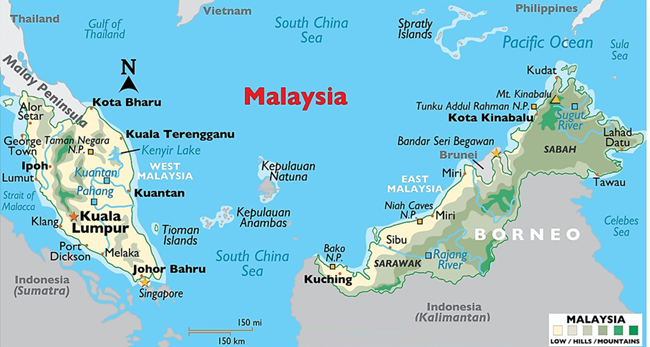
Malaysia: Quick Facts

Region: Southeast Asia
Geography:
Peninsular Malaysia – connected to mainland Asia (border with Thailand)
East Malaysia – on Borneo island (borders with Indonesia & Brunei)
Capital: Kuala Lumpur
Currency: Malaysian Ringgit (MYR)
Groupings: ASEAN, EAS, APEC
Malaysia’s strategic geography amplifies the importance of defence exercises with India.

Significance for India

Category Key Points Why It Matters
A. Military Preparedness 1. Exposure to diverse terrains – tropical jungles (Malaysia) & semi-desert (Rajasthan).
2. Strengthens India’s counter-terrorism doctrine for sub-conventional threats.
3. Enhances small-team operations, CQB and precision coordination.
4. Improves troop adaptability to multi-terrain & high-stress warfare.
5. Enables exchange of TTPs for modern conflict zones.
• Improves operational readiness across terrains.
• Builds tactical flexibility and better mission execution.
• Enhances capability for asymmetric warfare.
B. Diplomacy Through Defence 1. Acts as a force multiplier of India’s defence diplomacy.
2. Projects India as a reliable Indo-Pacific security provider.
3. Deepens strategic trust with Malaysia, a key ASEAN nation.
4. Supports Act East Policy by expanding regional defence partnerships.
• Strengthens geopolitical influence.
• Improves strategic depth in Southeast Asia.
• Enhances deterrence and regional cooperation.
C. Capacity Building 1. Improves preparedness for overseas deployments.
2. Enhances standards for UN Peacekeeping under Chapter VII.
3. Builds capability for HADR missions.
4. Boosts interoperability for multinational operations.
5. Provides realistic training for global conflict/civil crisis scenarios.
• Aligns India with global operational norms.
• Expands India’s role in peacekeeping & crisis response.
• Strengthens international cooperation capabilities.

Conclusion 

Exercise Harimau Shakti 2024–25 reflects the maturity, depth and expanding scope of India–Malaysia defence cooperation. By combining high-intensity jungle warfare, UN peacekeeping drills and sub-conventional operations across two terrains, the exercise enhances operational readiness, strengthens interoperability, and contributes to broader regional stability in the Indo-Pacific. Its steady evolution into a sophisticated joint training platform underlines both nations’ shared commitment to combating terrorism, maintaining peace, and deepening defence partnership under a cooperative strategic framework.

Prelims question:

Q. Consider the following statements regarding Exercise Harimau Shakti:

1. It is a bilateral military exercise between India and Malaysia focusing primarily on jungle warfare and UN Chapter VII operations.
2. The 2024–25 edition is being conducted simultaneously in Malaysia and India.
3. The Dogra Regiment represented India in the Malaysia phase of the exercise.
4. Harimau Shakti is conducted annually and alternately in India and Malaysia.
How many of the above statements are correct?
(a) Only one
(b) Only two
(c) Only three
(d) All four

Answer: C

Mains Question:

Q. Exercise Harimau Shakti has emerged as a significant pillar of India–Malaysia defence cooperation. Discuss its evolution, key components of the 2024–25 edition, and its strategic importance for India, especially in the context of the Indo-Pacific and UN peacekeeping obligations.

                                                                                                                                                                                                                                                                                                                                                                                                                                                                                                                                                                                                                                                                                               (250 words)

No Comments

Post A Comment
