


22 Jul Factors Controlling Landform Development
Factors Controlling Landform Development – UPSC Geography Optional
Introduction
Landform development is a dynamic process shaped by both internal and external forces acting upon the Earth’s surface. These geomorphic processes are governed by a complex interaction of geological, climatic, structural, and anthropogenic factors. A deep understanding of these factors is essential for aspirants of UPSC Geography Optional, as they form the foundation of Geomorphology—one of the core areas of Paper 1.
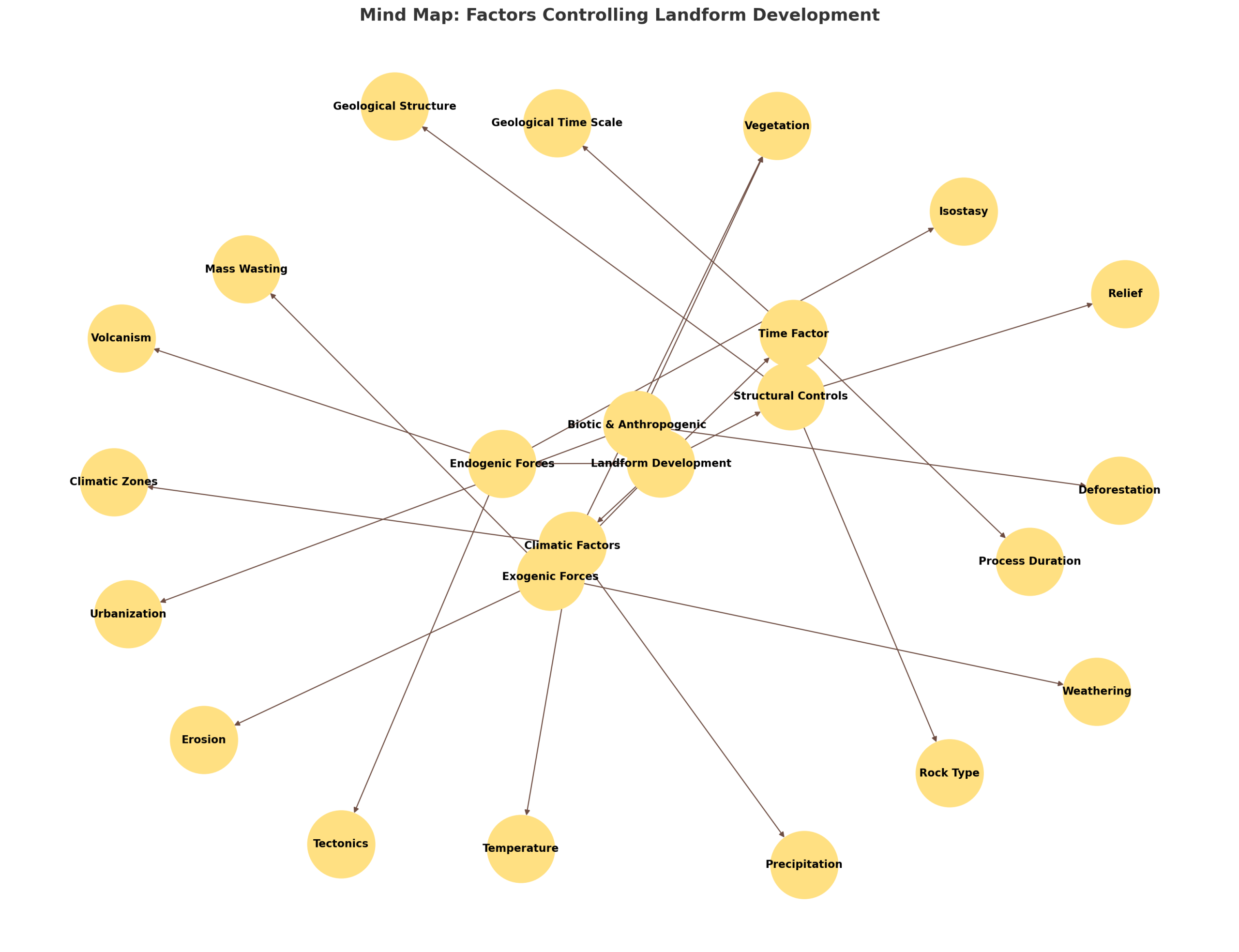
1. Endogenic Forces
Endogenic or internal forces originate from within the Earth and significantly influence landform development. These include:
- Tectonic Movements: Folding and faulting create mountains, rift valleys, and plateaus. The Himalayas and the Great Rift Valley are classic examples.
- Volcanism: Volcanic eruptions lead to the formation of volcanic cones, plateaus, and calderas. The Deccan Plateau in India is a result of fissure volcanism.
- Isostatic Adjustments: Vertical movements due to loading/unloading of materials (glacial rebound) lead to crustal balancing and influence landform elevations.
2. Exogenic Forces
These forces act on the surface and contribute to the degradation of landforms.
Weathering
- Mechanical: Disintegration without chemical change due to temperature changes (frost action, exfoliation).
- Chemical: Decomposition of rocks via hydration, oxidation, carbonation.
- Biological: Root penetration, burrowing animals, and organic acids breaking down rock structures.
Erosion and Deposition
Erosion involves the removal and transport of weathered material, followed by deposition.
- Fluvial (Rivers): Valleys, canyons, deltas, floodplains.
- Glacial: U-shaped valleys, cirques, moraines, fjords.
- Aeolian (Wind): Dunes, yardangs, loess deposits.
- Marine: Cliffs, stacks, beaches, wave-cut platforms.
Landform Development, Geomorphology
Mass Wasting
Gravity-induced movement of rock/debris: landslides, rockfalls, mudflows, and slumping.
3. Climatic Factors
Climate determines the intensity and frequency of geomorphic processes.
- Precipitation: Influences erosion, river discharge, and mass movement. Heavy rainfall accelerates denudation.
- Temperature: Governs freeze-thaw cycles in cold climates, thermal expansion in deserts.
- Humidity and Vegetation: Affect chemical weathering, soil formation, and slope stability.
- Climatic Zones:
- Arid: Wind erosion dominant, forming dunes and desert pavements.
- Humid tropical: Chemical weathering dominates; thick lateritic soils develop.
- Glacial: Frost action, plucking, abrasion shape rugged terrain.
4. Structural Controls
The nature and arrangement of rock structures directly affect landform evolution.
- Rock Type: Resistance to erosion varies (granite vs shale). Karst landforms occur in limestone.
- Geological Structures: Folding, faulting, jointing determine erosion patterns and drainage.
- Slope and Relief: Steeper slopes promote faster erosion, while gentle slopes foster deposition.
5. Biotic and Anthropogenic Factors
Living organisms, including humans, significantly alter landscapes.
- Vegetation: Slows down erosion, promotes soil retention and slope stabilization.
- Human Impact:
- Deforestation: Exposes soil to erosion and landslides.
- Mining and Quarrying: Cause artificial landform changes and slope instability.
- Urbanization: Leads to alteration of natural drainage and increase in erosion/deposition.
6. Time Factor
- Geological Time Scale: Landform development is a slow process observable over millions of years.
- Process Duration: Continuous exposure to processes like erosion or uplift determines final landform shape.
- Sequential Development: Youth, maturity, and old stages in Davisian model or cycle of erosion by rivers, glaciers, etc.
Important Models and Theories
- William Morris Davis: Cycle of erosion (youth, maturity, old age).
- W. Penck: Emphasized slope development and parallel retreat.
- Hack’s Dynamic Equilibrium: Landforms adjust continuously to maintain equilibrium with processes.
Previous Year Questions (PYQs) – UPSC Geography Optional
- 2022: Discuss the role of exogenic and endogenic forces in the evolution of landforms.
- 2020: How do climate and lithology influence the development of landforms?
- 2018: Evaluate the Davisian model of landform evolution in the context of fluvial landscapes.
- 2016: Examine the role of structure in landform development.
Probable Questions for UPSC Mains 2025
- How do human activities contribute to the modification of natural landforms?
- Examine the interplay between endogenic and exogenic forces in shaping the earth’s surface.
- Compare and contrast the models of Davis and Penck regarding slope evolution.
- Assess the role of time and structure in controlling the development of fluvial landforms.
Visual Aid
📊 Download Infographic
Conclusion
Landform development is a result of the continuous interaction between the Earth’s internal and external processes. Understanding the controlling factors—ranging from tectonics to climate, structure, and time—is crucial for comprehending landscape evolution. For UPSC aspirants, mastery of these concepts not only helps in Paper 1 (Physical Geography) but also enhances clarity in related topics of environment and disaster management.

- DDWS Conducts Regional Review of Jal Jeevan Mission 2.0 at IIM Bangalore - October 8, 2026
- आयुष्मान भारत: स्वास्थ्य सुरक्षा का मजबूत कवच, जानिए कैसे मिल रहा लाभ - October 8, 2026
- Assam CM to inaugurate NE regional workshop under Sadhana 2026 series - October 7, 2026

No Comments