


14 Aug FCRA Amendment Bill 2026: Why Sent to JPC? Key Facts for UPSC & State PCS
FCRA Amendment BillJoint Parliamentary CommitteeOpposition objectionsParliamentary scrutiny✎ A Joint Parliamentary Committee (JPC) is a temporary, bipartisan committee formed by Parliament to scrutinise contentious bills or issues, with its recommendations carrying significant weight in shaping legislative outcomes.
Subject Relevance — Where This Topic Fits
- GS Paper II — Polity and Governance (Parliamentary Committees, Accountability of Executive) | GS Paper III — Economy (Foreign Contributions, NGOs, Transparency in Funding)
- Prelims: Foreign Contribution (Regulation) Act (FCRA), 2010, Joint Parliamentary Committee (JPC), Parliamentary Standing Committees, NGO regulation, Transparency in foreign funding
- Essay: The balance between national security and civil society autonomy in regulatory governance, Parliamentary oversight and the efficacy of committee-based scrutiny in lawmaking
Quick Revision: A Joint Parliamentary Committee (JPC) is a temporary, bipartisan committee formed by Parliament to scrutinise contentious bills or issues, with its recommendations carrying significant weight in shaping legislative outcomes.
Why is this in the news?
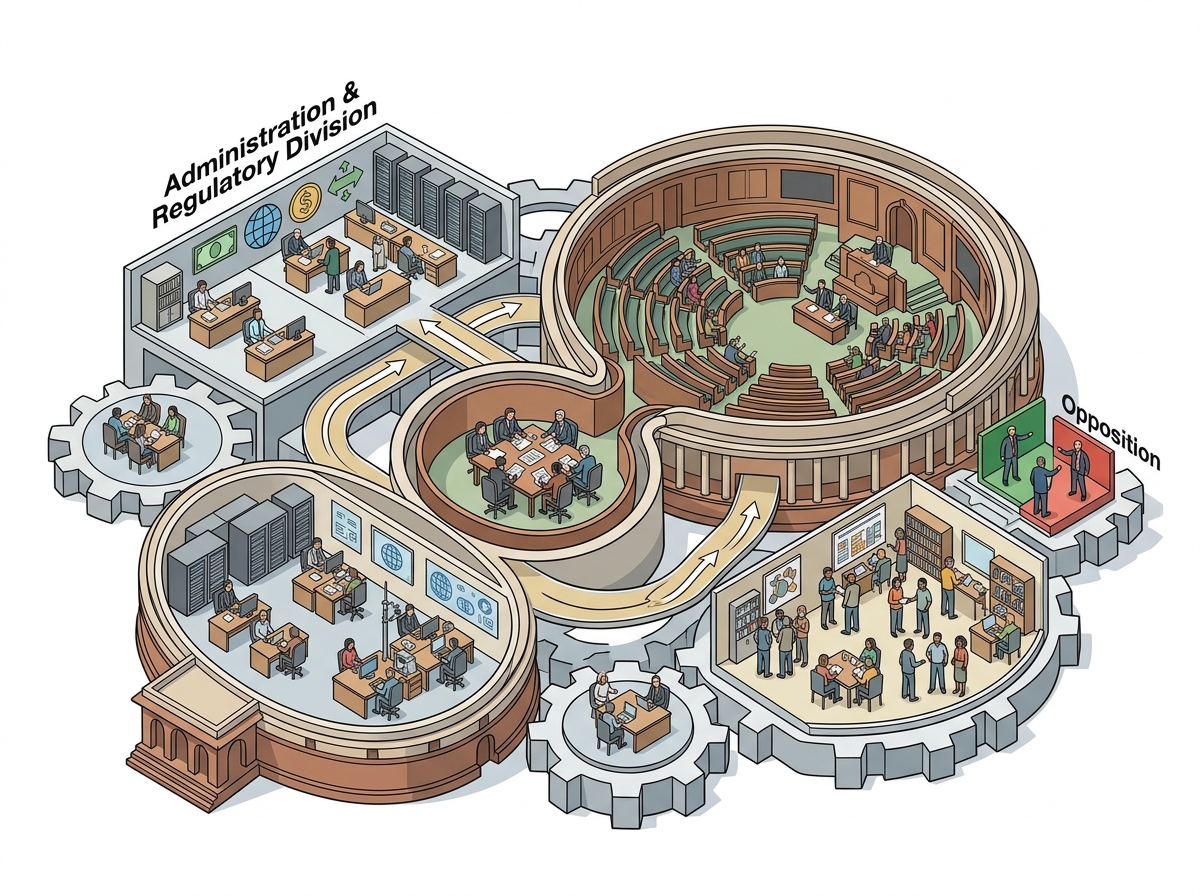
The Foreign Contribution (Regulation) Amendment Bill, 2026, which seeks to amend the Foreign Contribution (Regulation) Act, 2010, has been referred to a Joint Parliamentary Committee (JPC) following objections from the Opposition and demands for broader scrutiny. This development underscores the procedural role of JPCs in examining contentious legislative proposals and highlights the intersection of regulatory governance, parliamentary oversight, and civil society participation in India’s legislative process.
Background
- The Foreign Contribution (Regulation) Act, 2010, regulates the receipt and utilisation of foreign contributions by individuals, associations, and companies in India, with the stated objective of ensuring transparency and preventing the misuse of foreign funds for activities detrimental to national security or public order.
- The FCRA Amendment Bill, 2026, introduces provisions that have sparked debate regarding their potential impact on civil society organisations, including restrictions on the use of foreign funds for administrative expenses and enhanced scrutiny of NGOs receiving foreign contributions.
- Parliamentary committees, including Joint Parliamentary Committees (JPCs), are institutional mechanisms designed to scrutinise legislative proposals, conduct detailed examinations of bills, and recommend amendments based on evidence and stakeholder consultations.
- The referral of the FCRA Amendment Bill to a JPC follows a pattern observed in recent years, where contentious bills—such as those related to data protection, farm laws, and electoral reforms—have been subjected to committee scrutiny to address concerns raised by Members of Parliament and stakeholders.
- The JPC framework is enshrined in the Rules of Procedure and Conduct of Business in Parliament, which provide for the formation of ad-hoc committees to examine specific issues or bills in depth.
What is a Joint Parliamentary Committee (JPC) and how does it function?
- A Joint Parliamentary Committee (JPC) is an ad-hoc committee constituted by the Parliament of India to examine a specific bill, policy, or issue in depth, involving members from both the Lok Sabha and the Rajya Sabha.
- The formation of a JPC requires a motion to be passed in one House of Parliament and the concurrence of the other House, ensuring bipartisan participation in the scrutiny process.
- The strength and composition of a JPC are determined by the Parliament, with members typically selected based on their expertise, experience, and representation across political parties to ensure balanced deliberation.
- The Chairperson of a JPC is usually a senior member from the ruling party or coalition, though the selection is based on parliamentary convention rather than constitutional mandate, and the role is non-partisan in nature.
- JPCs are tasked with examining the provisions of a bill in detail, inviting stakeholders—including government officials, experts, and civil society representatives—for evidence-based consultations, and submitting a report with recommendations to the Parliament.
- The timeline for a JPC’s work is fixed, often aligned with the parliamentary session schedule, and its report is presented to the House that initiated the committee, followed by discussion and possible action on the bill.
- The referral of a bill to a JPC is a procedural mechanism to address concerns raised during the legislative process, particularly when the bill’s provisions have significant implications for constitutional rights, economic activities, or public policy.
Key Features
| Feature | Significance |
|---|---|
| Foreign Contribution (Regulation) Amendment Bill, 2026 | Proposes amendments to the Foreign Contribution (Regulation) Act, 2010, aiming to enhance transparency, accountability, and national security in the receipt and utilisation of foreign funds by NGOs, trusts, and other entities. |
| Joint Parliamentary Committee (JPC) | A temporary ad-hoc committee comprising members from both Lok Sabha and Rajya Sabha, tasked with detailed scrutiny of the Bill to address concerns raised by stakeholders and ensure comprehensive examination. |
| Provisions on Foreign Funding | Introduces stricter conditions for receiving foreign contributions, including prior government approval for certain categories, limits on administrative expenses, and enhanced reporting requirements. |
| Opposition to the Bill | Criticism from opposition parties and civil society groups over potential impact on non-governmental organisations, particularly those working in sensitive or minority-focused domains, citing concerns over autonomy and operational freedom. |
| Parliamentary Scrutiny Mechanism | Highlights the role of parliamentary committees in legislative scrutiny, ensuring multi-dimensional review before enactment of laws affecting public interest and governance. |
Why it Matters
Governance and Accountability
- Strengthens regulatory oversight of foreign contributions to prevent misuse for activities detrimental to India’s sovereignty, public order, or national security.
- Enhances transparency by mandating stricter disclosure norms and audit requirements for recipient entities.
- Aligns with global best practices in regulating foreign funding to non-state actors while balancing civil society autonomy.
Legislative Process
- Demonstrates the use of Joint Parliamentary Committees (JPCs) as a mechanism for detailed, cross-party scrutiny of contentious legislation.
- Ensures multi-stakeholder consultation through committee hearings, reports, and recommendations before finalisation of the Bill.
- Reflects the Parliament’s role in addressing public concerns through structured deliberation and evidence-based policymaking.
Civil Society and Rights
- Raises critical questions about the balance between regulatory oversight and the operational independence of NGOs, especially those engaged in advocacy, human rights, or minority welfare.
- Highlights the need for safeguards to prevent overreach that could stifle legitimate civil society activities.
- Underscores the importance of inclusive dialogue with civil society stakeholders during legislative scrutiny.
National Security
- Aims to mitigate risks associated with foreign funding influencing domestic institutions, public discourse, or electoral processes.
- Introduces mechanisms to monitor and restrict foreign contributions that may compromise national interests or democratic integrity.
- Reinforces the state’s capacity to regulate external financial influences on domestic organisations.
Challenges
1. Balancing Regulation and Autonomy
- Risk of over-regulation stifling legitimate civil society activities critical for democratic governance and social development.
- Potential for subjective interpretation of ‘national interest’ or ‘public order’ leading to arbitrary enforcement.
- Need to ensure that amendments do not disproportionately impact smaller NGOs or grassroots organisations with limited administrative capacity.
UPSC Link: GS-II: Role of Civil Society in Governance
2. Operational Challenges for NGOs
- Increased compliance burden due to stricter reporting, audit, and prior approval requirements for foreign contributions.
- Possible delays in fund disbursement and project implementation due to bureaucratic approval processes.
- Financial constraints for NGOs relying heavily on foreign funding, particularly in sectors like education, healthcare, and human rights.
UPSC Link: GS-II: Challenges Faced by NGOs in India
3. Parliamentary Scrutiny and Consensus
- Ensuring bipartisan consensus in JPC deliberations to avoid politicisation of the legislative process.
- Addressing divergent views on the scope and intent of the amendments to prevent legislative gridlock.
- Balancing the urgency of enacting reforms with the need for thorough, evidence-based scrutiny.
UPSC Link: GS-II: Parliament-Structure, Functioning, Conduct of Business
4. Implementation and Enforcement
- Developing robust institutional mechanisms for real-time monitoring and enforcement of FCRA provisions.
- Training and capacity-building for enforcement agencies to ensure consistent and fair application of the law.
- Addressing jurisdictional overlaps between FCRA authorities and other regulatory bodies (e.g., Income Tax, RBI).
UPSC Link: GS-II: Mechanisms for Transparency and Accountability
5. Stakeholder Engagement
- Ensuring meaningful consultation with civil society, academia, and industry stakeholders during the drafting and scrutiny phases.
- Addressing concerns raised by marginalised communities or minority groups about potential discrimination in enforcement.
- Preventing the misuse of regulatory powers to target specific organisations or ideologies.
UPSC Link: GS-II: Citizen Participation and Civil Society
Challenges — UPSC Perspective
| Issue | Concern |
|---|---|
| Over-Regulation | Risk of stifling legitimate civil society activities and reducing operational freedom for NGOs. |
| Compliance Burden | Increased administrative and financial burden on NGOs due to stricter reporting and approval requirements. |
| National Security vs. Autonomy | Potential conflict between enhancing security oversight and preserving civil society autonomy. |
| Politicisation of Scrutiny | Risk of JPC deliberations becoming politicised, delaying or diluting the legislative process. |
| Implementation Gaps | Likelihood of enforcement agencies lacking the capacity or resources to effectively implement the amended provisions. |
| Minority and Marginalised Groups | Concerns about disproportionate impact on organisations serving minority or marginalised communities. |
Way Forward
- Conduct extensive consultations with civil society organisations, legal experts, and enforcement agencies to refine the Bill’s provisions and address concerns.
- Develop clear, objective guidelines for the interpretation of ‘national interest’ and ‘public order’ to prevent arbitrary enforcement.
- Establish a dedicated grievance redressal mechanism for NGOs to address compliance-related challenges and disputes.
- Enhance capacity-building initiatives for enforcement agencies, including training on FCRA provisions and digital monitoring tools.
- Ensure transparency in the JPC’s deliberations by publishing minutes, evidence, and dissenting notes to foster public trust.
- Introduce sunset clauses or periodic reviews to assess the impact of the amendments and make necessary adjustments.
- Promote awareness campaigns among NGOs to educate them about the amended provisions and compliance requirements.
- Encourage collaboration between FCRA authorities and other regulatory bodies to streamline enforcement and reduce bureaucratic delays.
UPSC Value Addition
Keywords for Mains Answer-Writing
Foreign Contribution Regulation Act (FCRA), 2010 · Foreign Contribution Regulation (Amendment) Bill, 2026 · Joint Parliamentary Committee (JPC) · Parliamentary committees · Parliamentary scrutiny of legislation · Transparency in foreign funding · Civil society organisations (CSOs) · Sovereignty and national security · Parliamentary democracy · Legislative process in India · Role of Parliament in law-making · Checks and balances in governance
Constitutional & Policy Linkages
- Article 19(1)(c) – Freedom of Association (subject to reasonable restrictions under Article 19(4))
- Article 21 – Right to Livelihood and Professional Freedom (impacted by regulatory restrictions)
- Article 29 – Protection of Interests of Minorities (potential implications for minority-focused NGOs)
- Article 30 – Right of Minorities to Establish and Administer Educational Institutions (affected by funding restrictions)
Concept Flow
Introduction of the FCRA Amendment Bill 2026 in Parliament → Opposition from civil society and political parties citing concerns over autonomy and operational freedom → Decision to refer the Bill to a Joint Parliamentary Committee (JPC) for detailed scrutiny → JPC formation with members from both Lok Sabha and Rajya Sabha → Public hearings, evidence collection, and stakeholder consultations by the JPC → JPC submits report with recommendations to Parliament → Parliamentary debate and voting on the amended Bill → Presidential assent and enactment of the amended FCRA, 2010
Prelims Practice Questions
Q1. Consider the following statements regarding the Foreign Contribution Regulation Act (FCRA), 2010:
1. It regulates the acceptance and utilisation of foreign contributions by individuals, associations, and companies in India.
2. The Act mandates that foreign contributions must be utilised only for the purposes for which they were received.
3. The Act prohibits the transfer of foreign contributions to any other person or organisation.
4. The Act applies to all foreign contributions received in India, including those from Indian citizens residing abroad.
How many of the above statements are correct?
- Only one
- Only two
- Only three
- All four
Answer: All four — Statements 1, 2, and 3 are correct as per the FCRA, 2010. Statement 4 is incorrect because the Act does not apply to foreign contributions received from Indian citizens residing abroad.
Q2. Assertion (A): A Joint Parliamentary Committee (JPC) is a permanent committee of Parliament that examines all bills before they are introduced in the House.
Reason (R): The formation of a JPC requires a resolution passed by both Houses of Parliament and is constituted for a specific purpose and duration.
In the context of the above two statements, which one of the following is correct?
- Both A and R are true, and R is the correct explanation of A.
- Both A and R are true, but R is not the correct explanation of A.
- A is true, but R is false.
- A is false, but R is true.
Answer: ? — Assertion (A) is false because a JPC is a temporary committee constituted for a specific purpose and duration, not a permanent committee. Reason (R) is true as the formation of a JPC requires a resolution passed by both Houses of Parliament.
Q3. Match the following parliamentary committees with their respective functions:
Column I (Committee) | Column II (Function)
— | —
A. Public Accounts Committee | 1. Examines the appropriation and finance accounts of the Union Government
B. Estimates Committee | 2. Scrutinises the functioning of government ministries and departments
C. Committee on Public Undertakings | 3. Examines the estimates of expenditure for various ministries
D. Joint Parliamentary Committee | 4. Investigates specific matters of public importance referred by Parliament
Select the correct match:
- A-1, B-3, C-2, D-4
- A-2, B-1, C-3, D-4
- A-3, B-2, C-1, D-4
- A-4, B-3, C-2, D-1
Answer: A-1, B-3, C-2, D-4 — A-1: Public Accounts Committee examines the appropriation and finance accounts. B-3: Estimates Committee examines the estimates of expenditure. C-2: Committee on Public Undertakings scrutinises the functioning of government undertakings. D-4: Joint Parliamentary Committee investigates specific matters of public importance.
Mains Practice Question
✍ The referral of the Foreign Contribution Regulation (Amendment) Bill, 2026 to a Joint Parliamentary Committee (JPC) underscores the significance of parliamentary scrutiny in the legislative process. Critically examine the role and functioning of a JPC in the Indian parliamentary system. Also, analyse how such committees contribute to the balance of power between the legislature and the executive in law-making. (15 Marks)
Approach: MODEL-ANSWER SKELETON:
1. **Definition and Constitutional Basis**:
– Define a JPC as a ad-hoc committee constituted for a specific purpose, comprising members from both Houses of Parliament (Lok Sabha and Rajya Sabha).
– Reference: Rule 274 of the Rules of Procedure and Conduct of Business in the Lok Sabha and corresponding rules in the Rajya Sabha.
2. **Formation and Composition**:
– Formation requires a motion adopted by one House and agreed to by the other.
– Members are nominated by the Speaker of Lok Sabha and Chairman of Rajya Sabha in proportion to party strength.
– Example: The JPC on the 2G spectrum scam (2010) had 30 members from Lok Sabha and 15 from Rajya Sabha.
3. **Functions and Powers**:
– Investigate specific matters referred by Parliament, including bills, policies, or administrative failures.
– Powers include summoning witnesses, requisitioning documents, and examining evidence under oath.
– Submit a report with recommendations to Parliament, which may or may not be binding.
4. **Role in Legislative Scrutiny**:
– Enhances deliberative democracy by allowing detailed examination of bills beyond the limited time available on the floor of the House.
– Provides a platform for cross-party consensus-building on contentious issues.
– Example: The JPC on the Pegasus spyware issue (2021) examined concerns related to surveillance and privacy.
5. **Balance of Power: Legislature vs. Executive**:
– Acts as a check on the executive by subjecting government actions to parliamentary oversight.
– However, its recommendations are advisory; the executive retains final authority over policy implementation.
– Example: The JPC on the Bofors scandal (1987) led to significant reforms in defence procurement processes.
6. **Critique and Limitations**:
– Time-bound nature may limit thoroughness; reports may be delayed or ignored by the executive.
– Political polarisation can hinder consensus-building within the committee.
– Example: The JPC on the Rafale deal (2018) faced criticism for its perceived lack of objectivity.
7. **Conclusion**:
– JPCs play a crucial role in enhancing transparency, accountability, and public trust in the legislative process.
– While not a panacea for all governance challenges, they serve as a vital instrument for parliamentary democracy in India.
Source: amarujala.com
Generated by AanyaAi for educational purpose.

- Gurugram’s groundwater extraction exceeds limit by 212%; HC seeks ban - October 4, 2026
- स्वतंत्रता सेनानी श्यामजी कृष्ण वर्मा की जन्म जयंती पर पीएम का श्रद्धांजलि - October 4, 2026
- KWML’s Feasibility Reports for Water Metro in 18 Cities: UPSC & PCS Insights - October 3, 2026

No Comments