


15 May Flash Floods Devastate Somalia: 17 Lives Lost
This article covers “Daily Current Affairs” and the Topic Flash Floods Devastate Somalia: 17 Lives Lost
SYLLABUS MAPPING:
GS-3- Disaster Management- Flash Floods Devastate Somalia: 17 Lives Lost
FOR PRELIMS
What is a flash flood? What are the main reasons for flash floods in India?
FOR MAINS
Why are flash floods increasing in India? What steps should be taken to manage them better?
Why in the News?
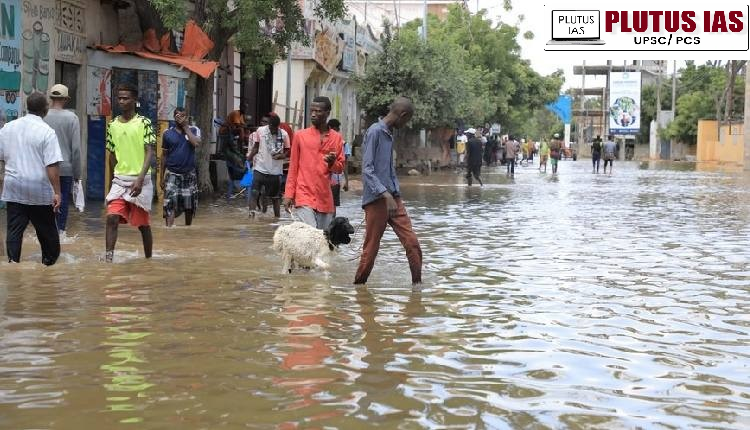
In Somalia, at least 17 people have been killed and more than 84,000 others displaced due to flash floods following torrential rains across the country since mid-April. The UN Office for the Coordination of Humanitarian Affairs said an assessment conducted by disaster management officials has revealed extensive damage to infrastructure and an urgent need for assistance to affected people. The UN agency said the Somali government has formed a committee that includes federal ministers and regional officials to respond to the flooding crisis. Somalia, a country with nearly two-thirds of the population that depends on agriculture for their livelihoods, has experienced extreme climate shocks in the past, including prolonged dry seasons causing drought and heavy rains leading to flooding.
What is a flash flood?
A flash flood is a sudden and intense flood that occurs within a short period, typically within six hours of heavy rainfall or the sudden release of water, such as from a dam break or glacier melt. It is characterized by a rapid rise in water levels, which can quickly overwhelm rivers, streams, and dry areas. Flash floods are especially dangerous because they occur with little warning and can sweep away people, vehicles, and structures. They are more common in arid or hilly regions where the ground cannot absorb water quickly. Poor drainage systems and deforestation can also worsen their impact. Due to their speed and unpredictability, flash floods pose serious risks to life and property.
NDMA guideline
1. Early Warning Systems: Implementing robust forecasting and real-time monitoring systems to provide timely alerts to communities at risk.
2. Community Awareness and Preparedness: Educating the public about flood risks and promoting community-based disaster preparedness plans.
3. Infrastructure Resilience: Ensuring that critical infrastructure, such as dams and levees, are designed and maintained to withstand extreme flood events.
4. Land Use Planning: Regulating development in flood-prone areas to minimize exposure and vulnerability.
5. Emergency Response Planning: Developing and regularly updating emergency response plans, including evacuation routes and shelters.
Reason for flash flood
1. Intense or Prolonged Rainfall: Sudden, heavy downpours in a short period can overwhelm soil absorption and drainage capacity, triggering flash floods.
2. Cloudbursts: A cloudburst is a sudden, very heavy rainfall event over a localised area, which can dump large volumes of rain in a matter of minutes.
3. Topography and Terrain: Steep, hilly, or mountainous regions accelerate water runoff, making these areas more prone to flash floods.
4. Poor Drainage Systems: Urban areas with inadequate or clogged drainage are highly vulnerable, as water cannot flow away quickly.
5. Dam or Glacier Lake Outbursts: Sudden releases of water from breached dams or melting glacial lakes (GLOFs) can cause catastrophic flash floods downstream.
6. Deforestation and Land Use Changes: Reduced vegetation cover leads to decreased soil absorption, increasing surface runoff and flood risk.
7. Climate Change: Changing weather patterns have led to an increase in extreme rainfall events, contributing to the frequency and severity of flash floods.
Consequences of India’s vulnerability to flash floods
1. Loss of Life and Livelihoods: Flash floods often strike with little warning, leading to significant casualties and displacement, especially in vulnerable rural and urban communities.
2. Damage to Infrastructure: Roads, bridges, railways, power lines, and water supply systems are frequently damaged or destroyed, disrupting connectivity and essential services.
3. Agricultural Losses: Farmlands are inundated, destroying standing crops, livestock, and stored grains, leading to food insecurity and financial distress for farmers.
4. Urban Flooding and Health Hazards: In cities, clogged drains and poor urban planning worsen flash flood impacts, increasing the spread of waterborne diseases and contamination of drinking water.
5. Environmental Degradation: Floodwaters erode soil, degrade riverbanks, and disturb ecosystems. Siltation and debris also damage aquatic habitats and wetlands.
6. Economic Burden: The cumulative damage leads to high economic costs due to loss of productivity, reconstruction, relief measures, and insurance claims.
7. Displacement and Migration: Frequent flooding events force temporary or permanent displacement, straining urban resources and increasing vulnerability in relief camps or resettlement areas.
Impact of flash floods in India
1. Human Casualties and Displacement: Flash floods often occur without warning, leading to loss of lives and large-scale displacement. Vulnerable groups, such as those living in low-lying or poorly constructed housing, are at the greatest risk.
2. Damage to Infrastructure: Critical infrastructure such as roads, bridges, railways, power lines, and dams is frequently damaged or destroyed. This not only incurs huge repair costs but also disrupts transportation, communication, and electricity supply.
3. Agricultural Loss: Flash floods wash away standing crops, erode fertile topsoil, and damage irrigation infrastructure. This leads to food shortages, rural distress, and long-term income loss for farmers.
4. Urban Flooding: In cities, poor drainage systems and unplanned construction exacerbate the effects of flash floods. Waterlogging, property damage, and traffic disruptions become common, especially in metros like Mumbai, Chennai, and Delhi.
5. Public Health Risks: Stagnant water from floods creates breeding grounds for mosquitoes and spreads waterborne diseases like cholera, dengue, and leptospirosis. Contaminated water sources pose severe health risks.
6. Environmental Damage: Floods cause soil erosion, loss of biodiversity, and degradation of riverbanks and wetlands. They also carry industrial and domestic waste into water bodies, polluting ecosystems.
7. Economic Loss: The combined effect of infrastructure damage, agricultural losses, and relief operations puts a strain on public finances and slows down regional economic growth.
Conclusion
Flash floods are among the most dangerous and rapidly occurring natural disasters, posing a significant threat to both life and property. The recent devastation in Somalia highlights the urgent need for global attention to climate-induced disasters. In India, frequent flash floods caused by erratic rainfall, unplanned urbanisation, deforestation, and climate change have had profound human, economic, and environmental impacts. While the NDMA guidelines offer a strong framework for disaster preparedness and response, their effective implementation at local levels remains crucial. Strengthening early warning systems, community awareness, sustainable development, and climate resilience strategies will be key to reducing the vulnerability and enhancing the adaptive capacity of flood-prone regions.
Download Plutus IAS Current Affairs (Eng) 15th May 2025
Prelims Questions
Q. With reference to flash floods, consider the following statements:
1. Flash floods usually occur within six hours of intense rainfall.
2. Deforestation has no direct impact on the frequency of flash floods.
3. Poor urban drainage systems can worsen the effects of flash floods.
4. Flash floods are more common in flat plains than hilly areas.
Which of the statements given above is/are correct?
(a) 1 and 3 only
(b) 2 and 4 only
(c) 1, 3, and 4
(d) 1, 2, and 3
Answer: A
Mains Questions
Q.Flash floods are becoming increasingly frequent and destructive in India due to climatic and anthropogenic factors. Discuss the causes and consequences of flash floods in India.
(250 words, 15 marks)

- Europe’s AI Rules May Become India’s Opportunity - August 14, 2026
- Transparency as the Foundation of Trust in Medicine - August 14, 2026
- A Timely Reset for the Food Security Act: From Foodgrain Security to Nutrition Security - August 13, 2026

No Comments