Atal Bihari Vajpayee: Architect of Modern Democratic Governance
Shri Atal Bihari Vajpayee (1924–2018) served as India’s Prime Minister on three occasions and had a distinguished parliamentary career spanning over four decades. Rising from humble beginnings in Gwalior, he became a mass leader admired across political lines. Awarded the Padma Vibhushan (1992) and Bharat Ratna (2015), his governance philosophy blended economic reforms with social sensitivity.
As Prime Minister, Vajpayee laid the foundations of modern infrastructure-led growth through initiatives such as the National Highways Development Project, rural connectivity expansion, telecom reforms, and strategic economic liberalisation. His commitment to women’s empowerment, social equality, and democratic values earned him the title of “Best Parliamentarian” in 1994. His legacy continues to guide India’s emphasis on transparent, accountable, and citizen-focused governance.
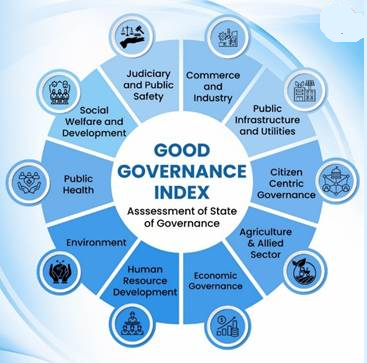
Conceptual Framework of Good Governance
According to the United Nations, good governance is participatory, consensus-oriented, accountable, transparent, responsive, effective, efficient, equitable, inclusive, and rule of law–based. These principles ensure that institutions function in a manner that serves citizens’ interests, protects rights, and promotes sustainable development. India’s governance framework increasingly reflects these principles through institutional reforms, digital transformation, decentralisation, and performance-based evaluation mechanisms.
Measuring Governance Performance: The Good Governance Index
To translate the idea of good governance into measurable outcomes, the Department of Administrative Reforms and Public Grievances (DARPG) launched the Good Governance Index (GGI) on 25 December 2019. The Index evaluates governance performance across States and Union Territories using 58 citizen-centric indicators across 10 key sectors.
Categorisation of States and Union Territories (DARPG)
| Group A States |
Group B States |
North-East & Hill States |
Union Territories |
| Andhra Pradesh |
Bihar |
Arunachal Pradesh |
Andaman & Nicobar Islands |
| Goa |
Chhattisgarh |
Assam |
Chandigarh |
| Gujarat |
Jharkhand |
Himachal Pradesh |
Dadra & Nagar Haveli |
| Haryana |
Madhya Pradesh |
Jammu & Kashmir |
Daman & Diu |
| Karnataka |
Odisha |
Manipur |
Lakshadweep |
| Kerala |
Rajasthan |
Meghalaya |
Delhi |
| Maharashtra |
Uttar Pradesh |
Mizoram |
Puducherry |
| Punjab |
West Bengal |
Nagaland |
|
| Tamil Nadu |
|
Sikkim |
|
| Telangana |
|
Tripura |
|
|
|
Uttarakhand |
|
Sector-Wise Dimensions of Good Governance
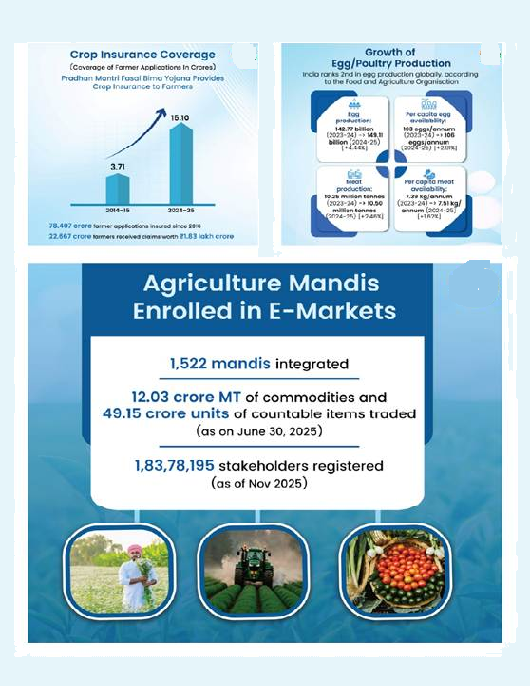
1. Agriculture and Allied Sectors: Indicators include growth in agriculture, food grains, horticulture, milk, meat and poultry production, crop insurance coverage, and integration of mandis with the e-NAM platform—strengthening farmer incomes and market access.
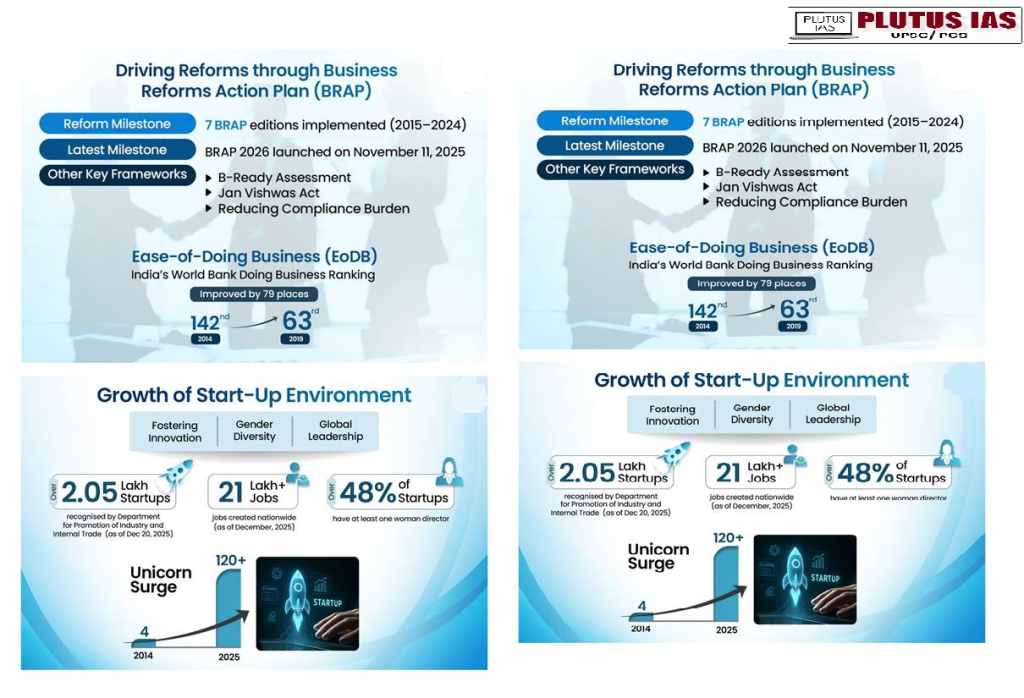
2. Commerce and Industry: Governance improvements are seen in Ease of Doing Business, MSME formalisation through Udyam registration, GST enrolment, industrial growth, and the startup ecosystem—driving entrepreneurship and job creation.
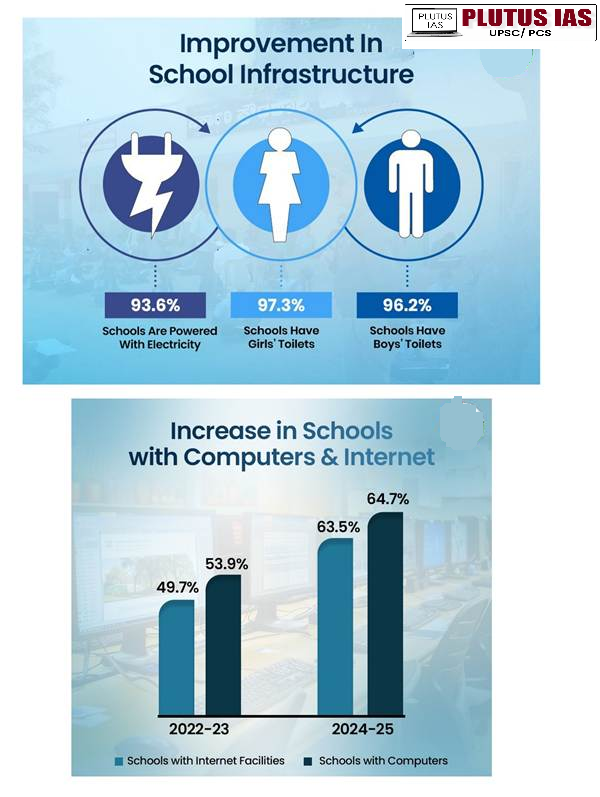
3. Human Resource Development: Progress is measured through education quality, retention rates, gender parity, SC/ST enrolment, digital access in schools, skill training, and placement outcomes, aligning with demographic dividend objectives.
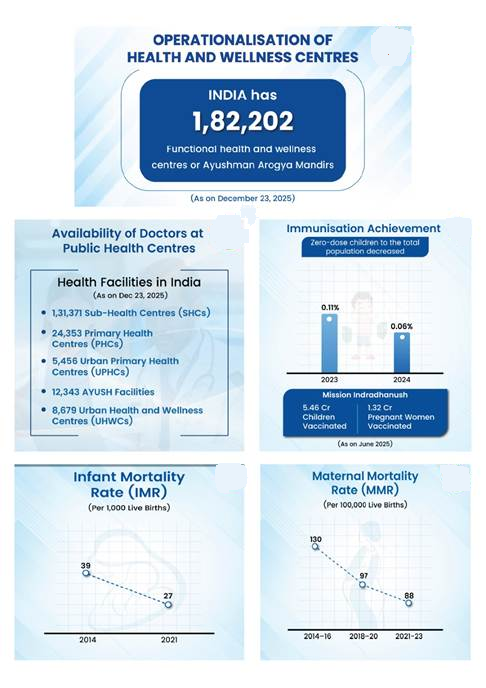
4. Public Health: Key indicators include operationalisation of Health and Wellness Centres, doctor availability, MMR, IMR, immunisation coverage, and hospital bed availability—strengthening universal health access.
5. Public Infrastructure and Utilities: Governance outcomes are visible in potable water access, rural connectivity, LPG coverage, energy availability, power consumption, and urban waste management—enhancing quality of life.
6. Economic Governance: Indicators such as per capita GSDP growth, fiscal deficit management, tax revenue mobilisation, and debt sustainability reflect macroeconomic prudence and fiscal responsibility.
7. Social Welfare and Development: Progress is tracked through sex ratio at birth, health insurance coverage, employment generation, housing for all, women’s economic empowerment, inclusion of SCs, STs, OBCs and minorities, financial inclusion, and Aadhaar-linked welfare delivery.
8. Judiciary and Public Safety: Governance efficiency is reflected in conviction rates, police availability, women representation in police forces, and case disposal rates in courts and consumer forums.
9. Environment: Environmental governance is assessed through changes in forest cover, waste recycling ratios, land degradation levels, and renewable energy capacity—aligning governance with sustainability goals.
10. Citizen-Centric Governance: Indicators include Right to Services legislation, grievance redressal effectiveness, and online service delivery—placing citizens at the core of administration.
Governance Reforms and Capacity Building in 2025
1. In 2025, DARPG strengthened governance capacity through multiple initiatives:
2. 28th National Conference on e-Governance, Visakhapatnam, focused on Civil Service and Digital Transformation and adopted the Visakhapatnam Declaration aligned with Viksit Bharat 2047.
3. IIAS–DARPG Conference (New Delhi) brought global best practices to India, marking India’s leadership in administrative reforms.
4. State Collaborative Initiative (SCI) Scheme promoted AI-enabled governance platforms, real-time dashboards, and service delivery innovation across states and UTs.
Conclusion
Good Governance Day 2025 reaffirms India’s commitment to accountable, transparent, inclusive, and citizen-centric governance, inspired by the vision of Atal Bihari Vajpayee. The Good Governance Index has emerged as a powerful institutional tool to measure outcomes, identify best practices, and promote competitive federalism. As India advances towards Viksit Bharat 2047, strengthening governance through innovation, digital transformation, and inclusive policies will remain central to achieving equitable, sustainable, and participatory development.
Prelims question:
Q. With reference to the Good Governance Index (GGI), consider the following statements:
1. The Good Governance Index was launched by the Department of Administrative Reforms and Public Grievances (DARPG) on Good Governance Day.
2. The Index assesses governance performance using more than 50 indicators across 10 sectors.
3. States and Union Territories are ranked together without any categorisation to ensure uniform benchmarking.
4. Citizen-centric governance and environmental sustainability are included as assessment dimensions.
Which of the statements given above are correct?
(a) 1, 2 and 4 only
(b) 1 and 3 only
(c) 2 and 3 only
(d) 1, 2, 3 and 4
Answer: A






No Comments