


21 Sep Gwalior to host Asia’s 1st Telecom Manufacturing Zone: ₹5,500 Cr Investment & 18K Jobs
✎ Telecom Manufacturing Zones (TMZs) are industrial clusters designed to localise telecom equipment production, reduce import dependence, and generate employment under the Atmanirbhar Bharat initiative.
Subject Relevance — Where This Topic Fits
- GS Paper III — Economy: Industrial Policy, Manufacturing Sector, Investment Promotion, Employment Generation | GS Paper II — Government Policies and Interventions for Development
- Prelims: Telecom Manufacturing Zones (TMZ), Counter Magnet Cities, Production-Linked Incentive (PLI) Scheme, National Industrial Corridor Development Programme, Make in India
- Essay: Industrialisation and Employment: Pathways to Inclusive Growth, Balanced Regional Development: Counter Magnet Cities and Industrial Clusters
Quick Revision: Telecom Manufacturing Zones (TMZs) are industrial clusters designed to localise telecom equipment production, reduce import dependence, and generate employment under the Atmanirbhar Bharat initiative.
Why is this in the news?
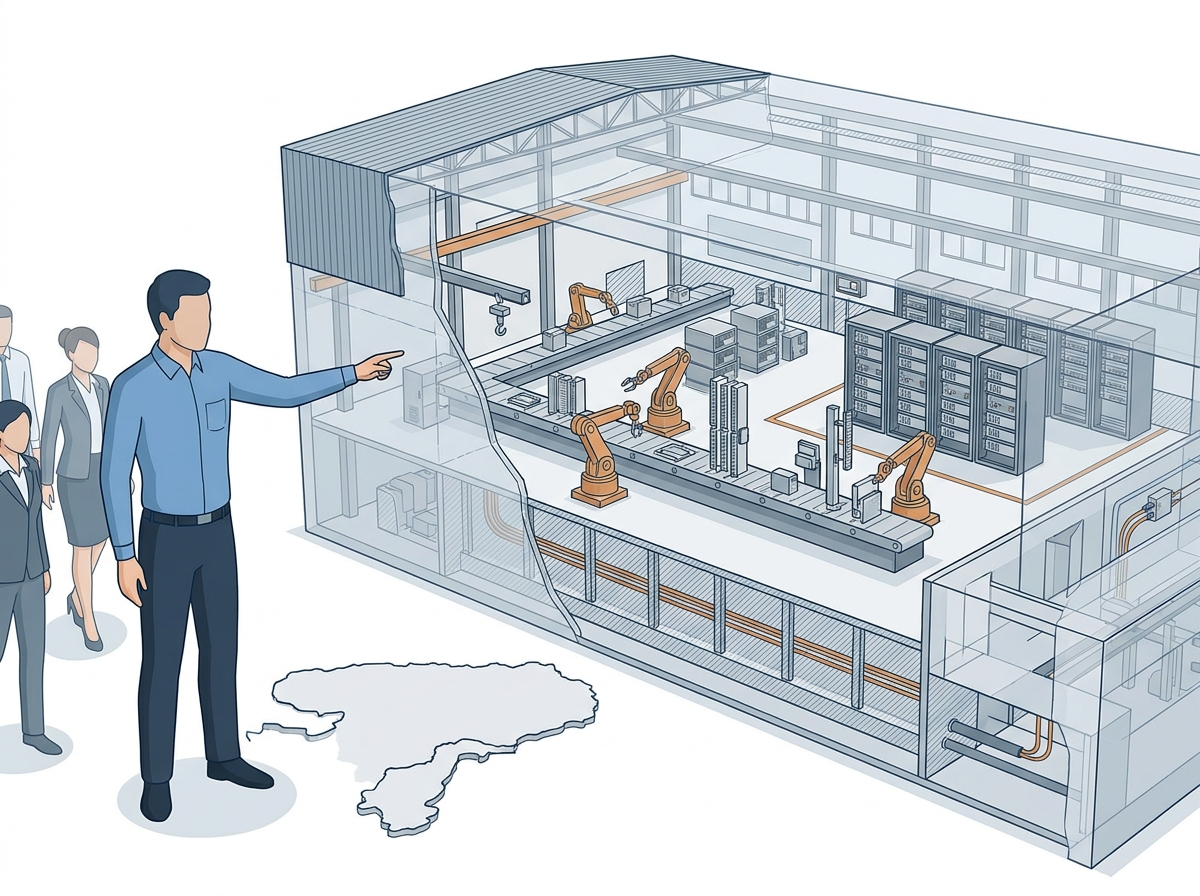
The Union Minister of Communications and Development of North Eastern Region, Shri Jyotiraditya Scindia, inspected the designated site for a telecom manufacturing zone (TMZ) in Gwalior, Madhya Pradesh. The proposed TMZ, envisaged to attract ₹5,500 crore in investments and generate over 18,000 direct and indirect jobs, marks a significant step in India’s efforts to localise telecom equipment production and reduce import dependence. The development aligns with the broader policy framework of promoting industrial corridors and counter-magnet cities to foster balanced regional growth.
Background
- India’s telecom sector is the second-largest in the world by subscriber base, yet a substantial share of telecom equipment is imported, particularly from China, South Korea, and the USA.
- The Government of India, through the Department of Telecommunications (DoT), has been promoting indigenous manufacturing under initiatives such as the Production-Linked Incentive (PLI) Scheme for Telecom and Networking Products, launched in 2021 with a budgetary outlay of ₹12,195 crore.
- The concept of Counter Magnet Cities (CMCs) was introduced in the National Capital Region (NCR) Plan-2021 to decentralise industrial growth and reduce pressure on the National Capital Territory (NCT) of Delhi.
- Gwalior, designated as a Counter Magnet City under the Shri Madhavrao Scindia Counter Magnet City (SADA) initiative, aims to develop as an alternative industrial hub with dedicated zones for high-tech manufacturing.
- The proposed TMZ in Gwalior is being developed on approximately 170 acres of land, divided between the SADA industrial area and an IT Park, with the first phase targeting 24 global firms.
- Madhya Pradesh and the central government have jointly designed an incentive package for investors, including land lease subsidies, electricity tariff concessions, employment-linked incentives, and green manufacturing incentives.
What is a Telecom Manufacturing Zone (TMZ)?
- A TMZ is a dedicated industrial zone established to promote the localised production of telecom equipment, including mobile handsets, base stations, optical fibre cables, and networking devices.
- TMZs are part of India’s broader strategy to achieve self-reliance (Atmanirbhar Bharat) in critical sectors, reducing import dependency and enhancing export competitiveness.
- The TMZ in Gwalior is envisaged as Asia’s first dedicated telecom manufacturing zone, serving as a model for similar initiatives in other regions.
- The zone will host a complete industrial ecosystem, including R&D centres, testing laboratories, component suppliers, and ancillary industries, fostering backward and forward linkages.
- Investments in TMZs are expected to generate both direct employment (manufacturing, R&D, logistics) and indirect employment (support services, housing, retail), thereby contributing to regional socio-economic development.
- The TMZ aligns with the National Industrial Corridor Development Programme (NICDP), which aims to develop 11 industrial corridors across India, including the Delhi-Mumbai Industrial Corridor (DMIC) and the Amritsar-Kolkata Industrial Corridor (AKIC).
- The zone will leverage India’s demographic dividend by skilling the local workforce in advanced manufacturing, electronics assembly, and telecom technologies.
Key Features
| Feature | Significance |
|---|---|
| Asia’s first dedicated Telecom Manufacturing Zone (TMZ) in Gwalior | Establishes India as a global hub for telecom equipment production, reducing import dependence and enhancing self-reliance in critical infrastructure. |
| Proposed investment of ₹5,500 crore by 24 companies | Signals strong private sector confidence, potentially transforming Gwalior into a high-value industrial cluster with multiplier effects on ancillary industries. |
| Direct and indirect employment generation of 18,000+ jobs | Addresses regional unemployment, promotes skill development, and stimulates local economic activity through backward and forward linkages. |
| 170 acres of land identified in two phases (SADA and IT Park) | Ensures phased scalability; first phase (170 acres) supports immediate industrialisation, while additional land allocation allows future expansion. |
| Common Testing Lab facility with ₹500 crore allocation | Reduces compliance costs for manufacturers by providing unified certification infrastructure, accelerating time-to-market for telecom products. |
Why it Matters
Economic Impact
- Catalyses industrialisation in Madhya Pradesh, aligning with the state’s counter-magnet city strategy for Gwalior.
- Enhances India’s position in global telecom supply chains, particularly for 5G and emerging technologies.
- Promotes ancillary industries (components, logistics, services) through cluster-based development.
- Boosts export potential of telecom equipment, contributing to India’s trade balance.
Strategic Importance
- Reduces reliance on imported telecom hardware, strengthening national security in critical infrastructure.
- Supports Digital India and Atmanirbhar Bharat initiatives by fostering indigenous manufacturing capabilities.
- Aligns with global trends in reshoring manufacturing, particularly in high-tech sectors.
Policy and Governance
- Demonstrates Centre-State coordination in industrial policy, leveraging state-level incentives (e.g., land leasing, power subsidies).
- Highlights the role of the Department of Telecommunications in facilitating sector-specific industrial zones.
- Showcases the efficacy of investment summits and MoUs in attracting FDI for targeted industries.
Employment and Human Capital
- Creates high-skilled jobs in telecom engineering, manufacturing, and R&D, addressing youth unemployment in the region.
- Encourages vocational training and upskilling through industry-academia partnerships.
- Generates indirect employment in services, retail, and transportation sectors.
Challenges
1. Infrastructure Bottlenecks
- Ensuring uninterrupted power supply and robust logistics for high-tech manufacturing units.
- Developing supporting infrastructure (roads, water, waste management) to sustain industrial operations.
- Balancing rapid industrialisation with environmental sustainability, particularly in land-use planning.
UPSC Link: GS-III: Industrial Infrastructure
2. Regulatory and Compliance Hurdles
- Streamlining approvals for land acquisition, environmental clearances, and telecom equipment certification.
- Harmonising state-level policies with central regulations to avoid procedural delays.
- Ensuring compliance with global quality standards (e.g., ISO, ITU) for telecom products.
UPSC Link: GS-II: Centre-State Relations
3. Skill Gap and Labour Market Challenges
- Addressing the mismatch between industry demand for skilled labour and local workforce capabilities.
- Designing targeted skilling programmes in collaboration with telecom manufacturers.
- Retaining talent in the region to prevent brain drain to metropolitan industrial hubs.
UPSC Link: GS-III: Employment and Skill Development
4. Market and Competitiveness Risks
- Mitigating competition from established global telecom manufacturing hubs (e.g., China, Vietnam).
- Ensuring cost-competitiveness of Indian-made telecom equipment against subsidised imports.
- Sustaining investor confidence amid global economic uncertainties and supply chain disruptions.
UPSC Link: GS-III: Industrial Policy and FDI
5. Environmental and Social Sustainability
- Implementing green manufacturing practices to align with India’s climate commitments.
- Managing land-use conflicts and ensuring fair compensation for displaced communities.
- Monitoring industrial pollution to prevent degradation of local ecosystems.
UPSC Link: GS-III: Environmental Governance
Challenges — UPSC Perspective
| Issue | Concern |
|---|---|
| Land acquisition delays | Potential litigation and compensation disputes may slow project timelines. |
| Power supply reliability | Industrial zones require 24/7 power; grid instability could deter investors. |
| Skilling mismatch | Existing workforce may lack specialised telecom manufacturing skills, requiring upskilling investments. |
| Regulatory fragmentation | Divergent state and central policies may create compliance complexities for investors. |
| Environmental compliance | Strict adherence to pollution norms may increase operational costs for manufacturers. |
| Global competition | Established telecom hubs offer lower production costs, posing pricing challenges for Indian firms. |
Government Initiatives — Must-Memorise for Prelims
- Telecom Manufacturing Clusters (TMC) Scheme (proposed under the Production-Linked Incentive (PLI) framework for telecom and networking products)
- Madhya Pradesh Industrial Investment Promotion Policy (2023)
- SADA (Shri Madhavrao Scindia Counter Magnet City) Development Plan
Way Forward
- Fast-track environmental clearances and land acquisition for the TMZ to meet investor timelines.
- Establish a dedicated skill development centre in Gwalior in partnership with telecom manufacturers.
- Develop a robust logistics and power infrastructure plan, including dedicated industrial corridors.
- Monitor and address regulatory bottlenecks through a single-window clearance system for investors.
- Promote R&D collaborations between telecom manufacturers and Indian academic institutions.
- Ensure transparent allocation of land parcels to prevent speculative delays.
- Conduct periodic reviews of the TMZ’s progress to align with global market demands.
- Integrate the TMZ with state and national digital infrastructure projects for seamless connectivity.
UPSC Value Addition
Keywords for Mains Answer-Writing
Telecom Manufacturing Zones (TMZ) · Production-Linked Incentive (PLI) Scheme for Telecom · Make in India in Electronics and Telecommunication · Counter Magnet Cities (CMCs) · Land Pooling Policy for Industrial Development · Direct and Indirect Employment Generation · Telecom Equipment Manufacturing Ecosystem · Central Sector Schemes for Industrial Promotion · State Incentives for Manufacturing · Public-Private Partnership (PPP) in Infrastructure · Green Manufacturing and Sustainability in Telecom · Union Budget Allocations for Telecom Sector · Department of Telecommunications (DoT) Initiatives · Madhya Pradesh Industrial Policy 2023 · Asian Leadership in Telecom Manufacturing
Concept Flow
Policy Vision: Atmanirbhar Bharat and Digital India drive the push for indigenous telecom manufacturing. → Institutional Framework: Department of Telecommunications (DoT) and Madhya Pradesh government collaborate to establish the TMZ. → Investment Mobilisation: Investment summits and MoUs attract private sector participation (₹5,500 crore commitment). → Infrastructure Development: Land allocation, power, and testing labs create enabling conditions for manufacturing. → Employment Generation: Direct and indirect jobs stimulate local economic growth and skill development. → Supply Chain Integration: Ancillary industries emerge, strengthening India’s telecom ecosystem. → Global Integration: TMZ positions India as a competitive player in the global telecom supply chain.
Prelims Practice Questions
Q1. Consider the following statements regarding the proposed Telecom Manufacturing Zone (TMZ) in Gwalior:
1. The TMZ in Gwalior is envisaged as Asia’s first dedicated telecom manufacturing zone.
2. The project is expected to generate over 18,000 direct and indirect employment opportunities.
3. The first phase of the TMZ will be developed on 170 acres of land, with 90 acres allocated in the Sagar-Ambikapur Counter Magnet City (SADA) and 70 acres in an IT Park.
4. The TMZ is being established under the aegis of the National Manufacturing Policy, 2011.
How many of the above statements are correct?
- Only one
- Only two
- Only three
- All four
Answer: All four — Statements 1, 2, and 3 are correct as per the PIB release. Statement 4 is incorrect because the TMZ is not explicitly linked to the National Manufacturing Policy, 2011; it is a Central Sector initiative under the Department of Telecommunications.
Q2. Assertion (A): The Telecom Manufacturing Zone (TMZ) in Gwalior is being developed as a counter magnet city to decentralise industrial activity from metropolitan regions.
Reason (R): The establishment of TMZ aligns with the broader policy objective of promoting balanced regional development through the creation of industrial clusters in tier-II and tier-III cities.
In the context of the above two statements, which one of the following is correct?
- Both A and R are true, and R is the correct explanation of A.
- Both A and R are true, but R is not the correct explanation of A.
- A is true, but R is false.
- A is false, but R is true.
Answer: Both A and R are true, but R is not the correct explanation of A. — The assertion (A) is correct as the TMZ is part of the Counter Magnet Cities (CMCs) initiative to decentralise industry. The reason (R) is also correct and directly explains the assertion, as CMCs aim to reduce pressure on metropolitan areas and promote regional balance.
Q3. Match the following pairs related to industrial development policies in India:
Column I (Policy/Scheme)
A. Production-Linked Incentive (PLI) Scheme for Telecom
B. Land Pooling Policy
C. Counter Magnet Cities (CMCs)
D. National Manufacturing Policy, 2011
Column II (Objective/Feature)
1. Encourages large-scale land consolidation for industrial development
2. Aims to promote manufacturing in non-metropolitan regions
3. Provides financial incentives for production in designated sectors
4. Focuses on greenfield industrial corridors and skill development
Select the correct match:
- A-3, B-1, C-2, D-4; A-1, B-3, C-4, D-2; A-4, B-2, C-3, D-1; A-2, B-4, C-1, D-3
- answer_letter_indexed_option_numbered_1_to_4_above_listed_in_options_array:0
- explain_using_full_pairs_only_in_explain_field:
Answer: A-3, B-1, C-2, D-4; A-1, B-3, C-4, D-2; A-4, B-2, C-3, D-1; A-2, B-4, C-1, D-3 —
Mains Practice Question
✍ The establishment of Asia’s first dedicated Telecom Manufacturing Zone (TMZ) in Gwalior represents a strategic shift in India’s industrial policy towards promoting self-reliance in critical sectors. Critically examine the significance of this initiative in the context of India’s broader Make in India and Atmanirbhar Bharat initiatives. Also, analyse the role of state-level incentives and public-private partnerships in ensuring the success of such industrial clusters. (15 Marks)
Approach: MODEL-ANSWER SKELETON:
1. **Contextualising the Initiative (3 Marks)**
– Define TMZ and its alignment with Make in India and Atmanirbhar Bharat.
– Highlight the telecom sector’s importance for national security, digital sovereignty, and economic growth.
– Cite India’s current telecom equipment import dependence (~60%) and the need for domestic manufacturing.
2. **Strategic Significance (5 Marks)**
– **Self-Reliance (Atmanirbhar Bharat)**: Reducing import dependency, enhancing supply chain resilience, and fostering innovation in telecom hardware.
– **Make in India**: Integration with the PLI Scheme for Telecom, which offers financial incentives for manufacturing in India.
– **Decentralisation**: Role of Counter Magnet Cities (CMCs) in reducing pressure on metropolitan industrial hubs (e.g., Mumbai, Delhi-NCR) and promoting balanced regional development.
– **Employment Generation**: Quantitative impact (18,000+ jobs) and qualitative upskilling in tier-II/tier-III cities.
– **Economic Multiplier Effect**: Stimulating ancillary industries (e.g., components, logistics, R&D) and local entrepreneurship.
3. **Role of State-Level Incentives and PPP (4 Marks)**
– **State Incentives**: Land lease policies, tax exemptions, and infrastructure support (e.g., Madhya Pradesh’s Industrial Policy 2023).
– **Public-Private Partnership (PPP)**: Collaborative models for land acquisition (e.g., land pooling), common testing labs, and green manufacturing incentives.
– **Centre-State Coordination**: Role of the DoT, MP government, and agencies like MP Industrial Development Corporation (MPIDC).
– **Sustainability Focus**: Incentives for green manufacturing (e.g., energy-efficient plants, waste management) to align with global ESG standards.
4. **Challenges and Critical Analysis (3 Marks)**
– **Land Acquisition**: Potential delays due to regulatory hurdles or local resistance.
– **Skill Gap**: Need for vocational training programs to meet industry demands.
– **Competition**: Global telecom giants’ dominance in supply chains and pricing.
– **Policy Consistency**: Ensuring long-term incentives and avoiding ad-hoc changes.
5. **Conclusion (1 Mark)**
– Reiterate the initiative’s potential to position India as a global telecom manufacturing hub while addressing regional disparities and economic growth.
Source: PIB (Press Information Bureau)
Madhya Pradesh PCS (MPPSC) — State PCS Practice
Prelims: Which district of Madhya Pradesh has been identified by the Union Minister of Communications, Shri Jyotiraditya Scindia, for the development of the telecom manufacturing sector, as discussed in the recent meeting with the Secretary and senior officials of the Department of Telecommunications?
- A. Indore
- B. Bhopal
- C. Gwalior
- D. Jabalpur
Answer: C. Gwalior — The Union Minister of Communications, Shri Jyotiraditya Scindia, identified Gwalior district in Madhya Pradesh for the development of the telecom manufacturing sector during a meeting with the Secretary and senior officials of the Department of Telecommunications.
Mains: Discuss the significance of developing the telecom manufacturing sector in Gwalior, Madhya Pradesh, in the context of the state’s industrial growth and digital transformation. Highlight the potential socio-economic benefits and challenges associated with this initiative.
Generated by AanyaAi for educational purpose.
Related guides on our sites
- Current affairs for upsc 2026
- How to prepare for GS paper 1 for UPSC CSE mains exam
- Best UPSC coaching for IFOS exam
- Best mentorship programme for upsc

- Gwalior to host Asia’s 1st Telecom Manufacturing Zone: ₹5,500 Cr Investment & 18K Jobs - September 21, 2026
- फिल्म महोत्सवों के लिए सेंसर छूट बन गई बाधा: 31 फिल्में हुईं प्रभावित - September 21, 2026
- Censor Exemption Denial: How Film Festivals Face Roadblocks in India - September 21, 2026

No Comments