


17 Sep Healing the Skies: Ozone Protection and Global Action
This article covers “Daily Current Affairs” and Topic details ” From Healing the Skies: Ozone Protection and Global Action
SYLLABUS MAPPING:
GS-2- Environment- Healing the Skies: Ozone Protection and Global Action
FOR PRELIMS
What is the importance of the ozone layer for life on Earth?
FOR MAINS
What are the major global initiatives taken to protect the ozone layer?
Why in the News?
World Ozone Day was celebrated on 16 September 2025 with the theme “From Science to Global Action.” The UN Secretary-General highlighted that the success of the Montreal Protocol in healing the ozone layer is proof that collective action works. India also showcased its leadership with initiatives like the Cooling Action Plan (2019) and HFC phase-down strategy (2023).
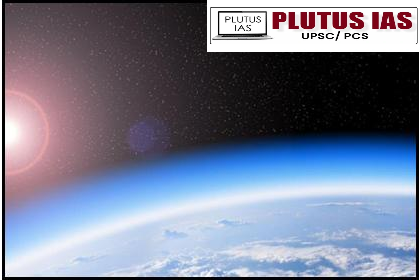
What is Ozone and the Ozone Layer?
Ozone (O₃) is a molecule made of three oxygen atoms, concentrated in the stratosphere between 15–50 km altitude. It acts as Earth’s sunscreen, absorbing harmful UV-B rays that cause skin cancer, cataracts, and crop damage. The ozone layer is a part of the stratosphere, found about 15–50 km above the Earth’s surface, where most atmospheric ozone is concentrated. Ozone is a molecule made of three oxygen atoms, and its special property allows the ozone layer to act like Earth’s sunscreen. It absorbs most of the Sun’s ultraviolet (UV) rays, especially UV-B, which can cause skin cancer, cataracts, damage to crops, materials, and marine life. Without the ozone layer, life on Earth could not have developed as it has.
Causes of Ozone Depletion
1. Ozone depletion results from the release of man-made chemicals that persist in the atmosphere and reach the stratosphere, where sunlight breaks them down to release chlorine and bromine atoms that destroy ozone molecules.
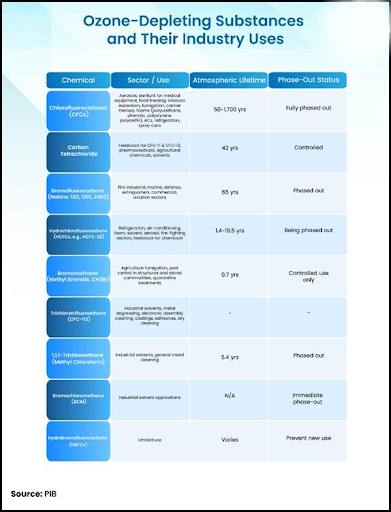
2. CFCs, Halons, HCFCs, Carbon Tetrachloride, and Methyl Bromide are the primary ozone-depleting substances (ODS).
3. A single chlorine atom can destroy up to 1,00,000 ozone molecules, creating a chain reaction.
4. 85% of chlorine in the stratosphere is from human activities; natural sources like volcanic eruptions play a smaller role.
5. Events like the 1991 Mount Pinatubo eruption intensified ozone loss by releasing aerosols that enhanced chemical reactions.
Ozone-Depleting Substances and Their Uses
1. CFCs: Used in refrigeration, air-conditioning, and aerosol sprays.
2. Halons: Fire extinguishers, particularly in aircraft and sensitive facilities.
3. HCFCs: Transitional substitutes for CFCs, still harmful but less potent.
4. Carbon Tetrachloride: Solvents, cleaning agents, and fire suppression.
5. Methyl Bromide: Soil fumigation in agriculture.
Environmental Effects of Ozone Depletion
1. Human health risks: WHO estimates that a 1% decrease in ozone increases UV exposure by 2%, causing nearly 2 million cataract cases annually. Higher UV increases skin cancer and immune suppression.
2. Agricultural impact:Crops like wheat, rice, and soybeans show reduced photosynthesis under excess UV-B. FAO studies suggest a 1% rise in UV-B reduces global food production by 1%, affecting food security.
3. Marine ecosystem damage: Plankton, the base of the aquatic food web, are highly sensitive to UV. Reduced plankton growth affects fisheries and ocean biodiversity.
4. Animal health: UV exposure causes eye damage and cancers in livestock and marine animals.
5. Material degradation: UV accelerates the breakdown of plastics, fabrics, wood, and paints, raising the economic costs of replacements.
Global Initiatives to Protect the Ozone Layer
1. Vienna Convention (1985): First global framework to share research and protect ozone.
2. Montreal Protocol (1987): Legally binding treaty ratified by all 198 UN members; phased out nearly 99% of ODS.
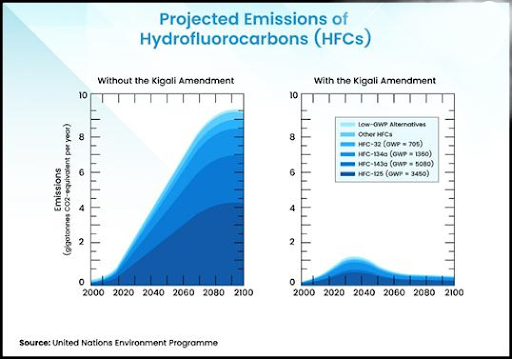
3. Kigali Amendment (2016): Mandates phase-down of HFCs, which are non-ODS but potent greenhouse gases; full compliance could avoid 0.5°C warming.
4. Global Environment Facility (GEF): Provided USD 160 million (1996–2000) to help 17 transition economies phase out ODS; an additional USD 60 million earmarked for HCFCs and methyl bromide.
India’s Initiatives and Achievements
1. ODS Regulation (2000): Prohibited new equipment using CFCs and halons.
2. CFC Phase-Out: Production stopped on 1st Aug 2008, 17 months ahead of schedule.
3. HCFC Phase-Out: Achieved 2013 freeze and 2015 10% reduction under the HCFC Management Plan.
4. India Cooling Action Plan (ICAP, 2019): World’s first; aims to reduce 20–25% cooling demand by 2037–38.
5. HFC Phase-Down Strategy (2023): Prioritizes alternatives in refrigeration, air-conditioning, and cold chains.
6. Capacity building: Over 20,000 RAC technicians trained in ODS-free technologies.
7. Global advocacy: Since 1989, India has pushed for financial and technical support for developing nations, securing the Multilateral Fund in 1990.
Individual Actions to Protect the Ozone Layer
1. Consumers: Buy ozone-friendly appliances (labeled CFC-free/eco-friendly).
2. Homeowners: Dispose of old fridges/ACs properly; recover gases instead of venting.
3. Farmers: Shift to safer alternatives to methyl bromide (e.g., Integrated Pest Management).
4. Technicians: Adopt refrigerant recycling and leak checks.
5. Citizens: Participate in awareness campaigns, especially around World Ozone Day.
Conclusion
World Ozone Day is not just about celebrating past success—it is a reminder that science-driven policies and global unity can solve even the gravest environmental crises. The Montreal Protocol and its amendments remain the most successful environmental treaties, saving millions from disease, protecting ecosystems, and slowing climate change. India’s proactive role—early CFC bans, innovative policies like ICAP, and leadership in global negotiations—proves that developing nations can lead from the front. As the ozone layer heals, the real challenge is ensuring that similar urgency is applied to climate change mitigation, so future generations inherit a safer and healthier planet.
Prelims question:
Q. Which of the following are classified as Ozone-Depleting Substances (ODS) under the Montreal Protocol?
1. Hydrochlorofluorocarbons (HCFCs)
2. Halons
3. Carbon Tetrachloride
4. Ammonia
Select the correct answer using the code below:
(a) 1, 2 and 3 only
(b) 2 and 4 only
(c) 1, 3 and 4 only
(d) 1, 2, 3 and 4
Answer: A
Mains Question:
Q. “The Montreal Protocol is regarded as the most successful global environmental treaty.” Discuss its achievements, with special reference to India’s initiatives and the way forward for linking ozone protection with climate action.
(250 words)

- Europe’s AI Rules May Become India’s Opportunity - August 14, 2026
- Transparency as the Foundation of Trust in Medicine - August 14, 2026
- A Timely Reset for the Food Security Act: From Foodgrain Security to Nutrition Security - August 13, 2026

No Comments