Understanding Lichens: Symbiosis in Nature
1. Composite Organisms: Lichens are formed by a symbiotic association between a fungus and a photosynthetic partner—either green algae or cyanobacteria.
2. Dual Functionality: The fungal component provides structure and protection, while the photobiont performs photosynthesis to provide nutrients for both partners.
3. Colonizers of Extreme Environments: Lichens are capable of growing in harsh and nutrient-poor conditions, such as bare rocks, deserts, and high altitudes.
4. Soil Formation Agents: By breaking down rock surfaces and contributing organic matter, lichens aid in the formation of soil in barren landscapes.
5. Bioindicators of Air Quality: Lichens are highly sensitive to pollutants like sulfur dioxide, making them natural indicators of air and ecosystem health.
6. Ecological Contributions: They play important roles in ecosystems by fixing nitrogen, cycling nutrients, and contributing to overall biodiversity.
7. Food and Shelter for Fauna: Many animals, including insects, birds, and small mammals, depend on lichens for food, nesting material, or camouflage.
Scientific Details of the New Species
1. Taxonomic Classification: The species is classified under the genus Allographa, known for script lichens with complex morphological traits.
2. Species Naming: Named Allographa effusosoredica, derived from its distinctive effuse soredia and morphological features.
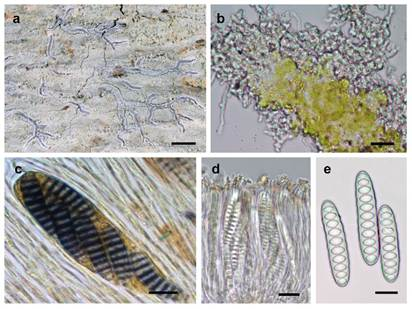
3. Crustose Growth Form: The lichen exhibits a crustose (crust-like) thallus tightly attached to the substrate, a key identification trait.
4. Effuse Soredia: Characterized by widespread, powdery soredia across the surface, which aid in vegetative reproduction.
5. Unique Ascomata Features: The lichen produces lirellae (elongated fruiting bodies), typical of script lichens, but with distinct ornamentation.
6. Chemical Composition: Contains norstictic acid, a rare secondary metabolite detectable via chemical spot tests and chromatography.
7. Diagnostic Traits: Combination of morphology, chemistry, and molecular data confirms its novelty within Allographa.
Methodology and Tools Used
1. Field Surveys: Specimens were collected from specific forest patches of the Western Ghats known for high lichen diversity.
2. Classical Taxonomy: Detailed morphological comparisons were made using existing herbarium records and taxonomic keys.
3. Microscopy Studies: Light microscopy was used to observe reproductive structures, thallus texture, and algal cells.
4. DNA Barcoding: Molecular markers (e.g., ITS region) were sequenced to distinguish the new species from similar taxa.
5. Phylogenetic Analysis: DNA sequences were used to construct evolutionary trees confirming the lichen’s placement within Allographa.
6. Chemical Spot Tests: Reagents like KOH and C were used for preliminary chemical profiling of the lichen substances.
7. Thin-Layer Chromatography (TLC): TLC provided precise identification of secondary metabolites, including norstictic acid.
Significance of the Discovery
1. Enriches Genus Allographa: Adds a new species to this globally distributed genus, expanding its known diversity and range.
2. Strengthens India’s Biodiversity Records: Highlights the rich, underdocumented lichen diversity of the Indian tropics, especially the Western Ghats.
3. Conservation Relevance: Reinforces the ecological value of lesser-known organisms and their habitats for conservation planning.
4. Supports Taxonomic Research: Boosts efforts in cryptogamic botany and fungal taxonomy, areas with limited research attention.
5. Global Scientific Interest: Findings contribute to international lichen databases like Index Fungorum and MycoBank.
6. Promotes Interdisciplinary Research: Combines taxonomy, molecular biology, and chemistry, encouraging cross-disciplinary ecological studies.
7. Baseline for Future Studies: Provides a reference point for ecological monitoring, climate impact studies, and conservation assessments.
Photobiont Partner: Trentepohlia Species
1. Identification of Algal Partner: Microscopic observation and DNA sequencing confirmed Trentepohlia as the photobiont partner.
2. Genus Characteristics: Trentepohlia is a filamentous green alga commonly associated with tropical lichens and known for its orange hue.
3. Mutualistic Role: Provides essential carbohydrates via photosynthesis to the fungal partner in exchange for shelter and moisture.
4. Climate Adaptation Clues: Understanding this photobiont helps decode how lichens survive in warm, humid environments like the Ghats.
5. Ecological Indicator: Presence of Trentepohlia may indicate specific microclimatic or ecological conditions useful for habitat studies.
6. Contribution to Algal Taxonomy: Findings contribute valuable data to the classification and ecology of lichen-forming algae in India.
7. Tool for Climate Resilience Studies: Study of photobionts aids in predicting lichen vulnerability or resilience to climate change and pollution stressors.
Role of Indian Scientific Institutions
1. Leading Research by MACS-ARI: The MACS-Agharkar Research Institute spearheaded the discovery, emphasizing India’s strength in biosystematics.
2. Support from DST: The Department of Science & Technology (DST) funded and promoted this biodiversity research under national science missions.
3. Emphasis on Molecular Tools: Institutions now blend traditional taxonomy with modern techniques like DNA barcoding and phylogenetics.
4. Revival of Classical Taxonomy: Herbarium-based research and field identification are being integrated with molecular data.
5. Capacity Building in Taxonomy: Indian institutions are training the next generation of researchers in lichenology and species discovery.
6. Bioprospecting for Bioactives: Lichens are explored for novel compounds in pharmaceuticals, aided by Indian biotech labs.
7. Strengthening Global Collaboration: Such discoveries connect Indian research to global conservation databases and taxonomic networks.
Lichens as Climate and Pollution Bioindicators
1. Natural Sensitivity to Air Quality: Lichens absorb nutrients from air, making them highly sensitive to pollution levels.
2. Tools for Urban Air Monitoring: They serve as inexpensive and reliable indicators of air quality in cities and industrial zones.
3. Reflect Ecosystem Stress: A decline in lichen diversity signals environmental degradation and climate-related stress.
4. Cost-Effective Monitoring Alternatives: Lichen surveys complement high-tech sensors in remote or protected natural areas.
5. Indicators of Climate Shifts: Changes in their distribution help track the effects of rising temperatures and altered rainfall.
6. Role in Carbon and Nitrogen Cycles: As nitrogen-fixers and organic matter accumulators, lichens reflect changes in nutrient cycling.
7. Influence on Environmental Policy: Their indicator role is valuable for shaping climate resilience and environmental monitoring programs.
Conservation Implications
1. Highlighting Hidden Biodiversity: New species discoveries stress the ecological importance of often-neglected organisms like lichens.
2. Urgent Need for Protection: Lichen habitats are vulnerable to deforestation, mining, and expanding development activities.
3. Conservation of Endemic Species: Many lichens have narrow habitat ranges and are highly susceptible to habitat changes.
4. Inclusion in Protected Areas: Lichen-rich zones must be identified and included in India’s protected biodiversity reserves.
5. Lichens in Climate Action Plans: Their climate sensitivity can inform conservation strategies aligned with climate adaptation.
6. Community Engagement in Conservation: Local communities can be partners in identifying, preserving, and monitoring lichen-rich ecosystems.
7. Data for Biodiversity Policy: Findings support improved biodiversity mapping and threat assessment for better policy implementation.
Conclusion
The discovery of Allographa effusosoredica from the Western Ghats is a testament to India’s growing capabilities in biodiversity research, particularly in the underexplored field of lichenology. It highlights the importance of integrating classical taxonomy with advanced molecular and chemical tools to uncover hidden facets of nature. This breakthrough enriches scientific knowledge and reinforces lichens’ ecological significance as climate and pollution bioindicators. Moreover, it emphasizes the urgency of conserving fragile ecosystems like the Western Ghats, which continue to yield new and valuable insights into global biodiversity.
Prelims Questions





No Comments