


30 May India Clears AMCA Project: A Major Leap in Indigenous Stealth Fighter Development
This article covers “Daily Current Affairs” and the Topic of India Clears AMCA Project: A Major Leap in Indigenous Stealth Fighter Development.
SYLLABUS MAPPING:
GS-3- Science and technology- India Clears AMCA Project: A Major Leap in Indigenous Stealth Fighter Development
FOR PRELIMS
What is the Advanced Medium Combat Aircraft (AMCA) project?
FOR MAINS
Why is it important for India’s defence sector, and what challenges does it face?
Why in the News?
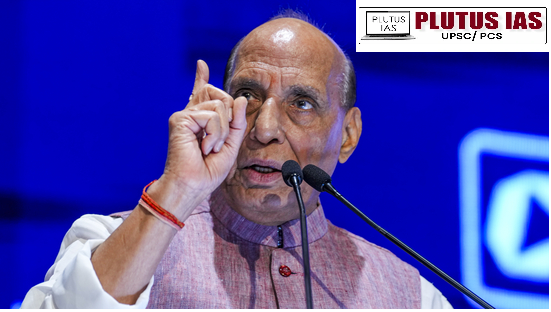
India has taken a significant step towards indigenising its defence capabilities with the Defence Ministry approving the execution model for the development of the fifth-generation stealth fighter jet – the Advanced Medium Combat Aircraft (AMCA). Defence Minister Rajnath Singh, while addressing the CII Business Summit in New Delhi, announced that five prototypes of the AMCA will be developed before it enters series production. This project is noteworthy as it marks the first time that the private sector will collaborate with public sector companies, such as Hindustan Aeronautics Limited (HAL), in a mega defence manufacturing initiative. Highlighting the importance of the Make-in-India initiative in strengthening national security, the minister noted its role in India’s effective counter-terrorism response during Operation Sindoor.
What is a Stealth Fighter?
A stealth fighter is a military aircraft designed to avoid detection by radar, infrared, sonar, and other detection methods used by enemy forces. It uses advanced technologies and design techniques to minimize its visibility, making it harder for adversaries to track or target it.
Key Features of a Stealth Fighter:
1. Low Radar Cross-Section (RCS): The aircraft’s shape and materials are engineered to absorb or deflect radar waves, reducing the chance of being detected.
2. Special Coating and Materials: Stealth fighters are coated with radar-absorbent materials (RAM) that help reduce their radar signature.
3. Internal Weapon Bays: Weapons are carried inside the aircraft rather than on external pylons to avoid increasing radar visibility.
4. Reduced Infrared Signature: Engines are designed to emit less heat, making it harder for heat-seeking missiles to lock onto the jet.
5. Electronic Countermeasures: Some stealth fighters are equipped with advanced systems to jam or deceive enemy radar and tracking systems.
Strategic Significance for India
1 .Technological Sovereignty: The AMCA project marks a critical step toward self-reliance in defence technology by reducing dependency on foreign platforms such as the Rafale and Su-30, thereby enhancing India’s strategic autonomy.
2. Enhanced Air Dominance: It equips the Indian Air Force with fifth-generation stealth capability, crucial to maintaining air superiority and deterring adversaries like China and Pakistan, who are investing in similar technologies.
3. Boost to Defence Exports: The successful development of AMCA could position India as a key player in the global defence market, aligning with its ambition to become a net defence exporter.
4. Strengthening Industry Ecosystem: The project integrates PSUs, private sector firms, MSMEs, and startups, thereby stimulating high-end innovation and deepening the indigenous defence manufacturing ecosystem.
5. Strategic Deterrence: AMCA’s advanced stealth, electronic warfare, and multirole capabilities will significantly enhance India’s deterrence posture in high-threat zones such as the Indo-Pacific and the Himalayan frontiers.
6. Indo-Pacific Security Contribution: By enhancing its indigenous air power, India can play a more assertive role in regional security frameworks like the Quad and other Indo-Pacific partnerships.
7. R&D and Skill Development: The project promotes research and development in cutting-edge domains and creates a skilled workforce in aerospace engineering, avionics, and materials science.
8. Long-Term Cost Efficiency: Indigenous production reduces lifecycle costs of procurement, maintenance, and upgrades while keeping critical technologies under national control.
Public-Private Partnership: A Game Changer
1. Innovative SPV Model: A Special Purpose Vehicle (SPV) will be created, bringing together Hindustan Aeronautics Limited (HAL) and leading private companies to jointly develop the AMCA, marking a structural innovation in Indian defence projects.
2. Private Sector Entry in Core Defence: For the first time, the private sector will co-develop a frontline combat aircraft, gaining experience in highly classified and complex aerospace technologies.
3. Risk Sharing and Accountability: The SPV ensures shared financial and technical risks, promoting accountability, faster decision-making, and better project management.
4. Leveraging Complementary Strengths: HAL contributes institutional knowledge and infrastructure, while private players bring agility, innovation, and efficiency — creating a synergy vital for next-gen platforms.
5. Boost to MSMEs and Startups: The AMCA ecosystem will include a wide range of tier-1 and tier-2 suppliers, fostering the growth of MSMEs, defence startups, and component manufacturers.
6. Attracting Investment and Talent: The partnership opens avenues for FDI, venture capital, and high-skilled employment in aerospace, avionics, and materials science.
7. Precedent for Future Defence Projects: Sets a template for future defence programmes including drones, naval systems, and sixth-generation aircraft, helping India replicate the model in other strategic sectors.
8. Fostering a Defence Tech Ecosystem: Encourages the development of indigenous R&D, university collaboration, and innovation hubs focused on long-term technological capability building.
Challenges and Constraints in AMCA Execution
1. Technical Complexity of Stealth and Avionics Development: Designing and integrating advanced stealth features, next-gen avionics, and sensor fusion systems require cutting-edge expertise and innovation, making development highly challenging.
2. Indigenous Jet Engine Development Delays: The Kaveri engine project, intended to power indigenous fighters, has experienced significant setbacks, necessitating reliance on foreign engines in the short term.
3. Inter-Agency Coordination Issues: Smooth collaboration between multiple stakeholders — DRDO, HAL, private industry, and other government bodies — is essential but often hampered by bureaucratic hurdles and conflicting priorities.
4. Budgetary and Procurement Challenges: Large-scale defence projects face risks of cost overruns, delayed funding, and slow procurement procedures, potentially derailing project timelines.
5. Geopolitical Constraints on Technology Access: Restrictions and export controls from foreign countries on critical technologies such as stealth materials and avionics could limit India’s ability to acquire certain components.
6. Inadequate Test and Validation Infrastructure: The absence of fully equipped indigenous testing facilities for stealth aircraft systems and engine trials delays prototype development and certification.
7. Skilled Workforce Shortage: There is a scarcity of trained aerospace engineers, scientists, and specialists required to innovate and execute highly technical defence projects like AMCA.
8. Export Market and Economic Viability Concerns: Uncertainty in global defence markets, competition, and geopolitical shifts can impact India’s ability to scale production and achieve cost-effectiveness through exports.
Conclusion
The Advanced Medium Combat Aircraft (AMCA) project represents a transformative leap in India’s journey towards self-reliance in defence manufacturing. It not only strengthens national security by equipping the Indian Air Force with cutting-edge stealth technology but also signifies a paradigm shift in defence production through its innovative public-private partnership model. By integrating indigenous R&D, boosting the domestic aerospace ecosystem, and aiming for future export potential, AMCA positions India as a serious contender in the global fifth-generation fighter jet arena. However, success will depend on overcoming technological, institutional, and geopolitical challenges through sustained policy support, streamlined execution, and coordinated efforts among all stakeholders.
Download Plutus IAS Current Affairs (Eng) 30th May 2025
Prelims Questions
Q. Consider the following statements regarding the Advanced Medium Combat Aircraft (AMCA) project:
1.AMCA is India’s first fifth-generation stealth fighter aircraft being developed with private sector participation.
2.The AMCA project is being led by Hindustan Aeronautics Limited (HAL) in collaboration with the Indian Space Research Organisation (ISRO).
3.The AMCA is designed to feature internal weapons bays and low radar cross-section to enhance its stealth capabilities.
Which of the above statements is/are correct?
(a) 1 and 2 only
(b) 1 and 3 only
(c) 2 and 3 only
(d) 1, 2 and 3
Answer: B
Mains Questions
Q. Discuss the significance of the AMCA project in enhancing India’s defence self-reliance, air power capability, and defence industry ecosystem. Also highlight the key challenges that could impact its successful implementation.
(250 words, 15 marks)

- RBI’s Shrinking Real-Rate Cushion Amid Rising Inflation and Strong Demand - September 21, 2026
- India’s NGOs at a New Funding Crossroads - September 21, 2026
- Deep-Sea Discovery, Environmental Responsibility - September 19, 2026

No Comments