


03 Mar India-EU Relations: Navigating a New Era of Collaboration
This article covers “Daily Current Affairs” and Topic details India-EU Relations: Navigating a New Era of Collaboration
SYLLABUS MAPPING:
GS-2-International relations- India-EU Relations: Navigating a New Era of Collaboration
FOR PRELIMS
India -EU bodies trade and technology Council-related facts, BIT agreement, India Middle East European Economic Corridor
FOR MAINS
Why in the news?
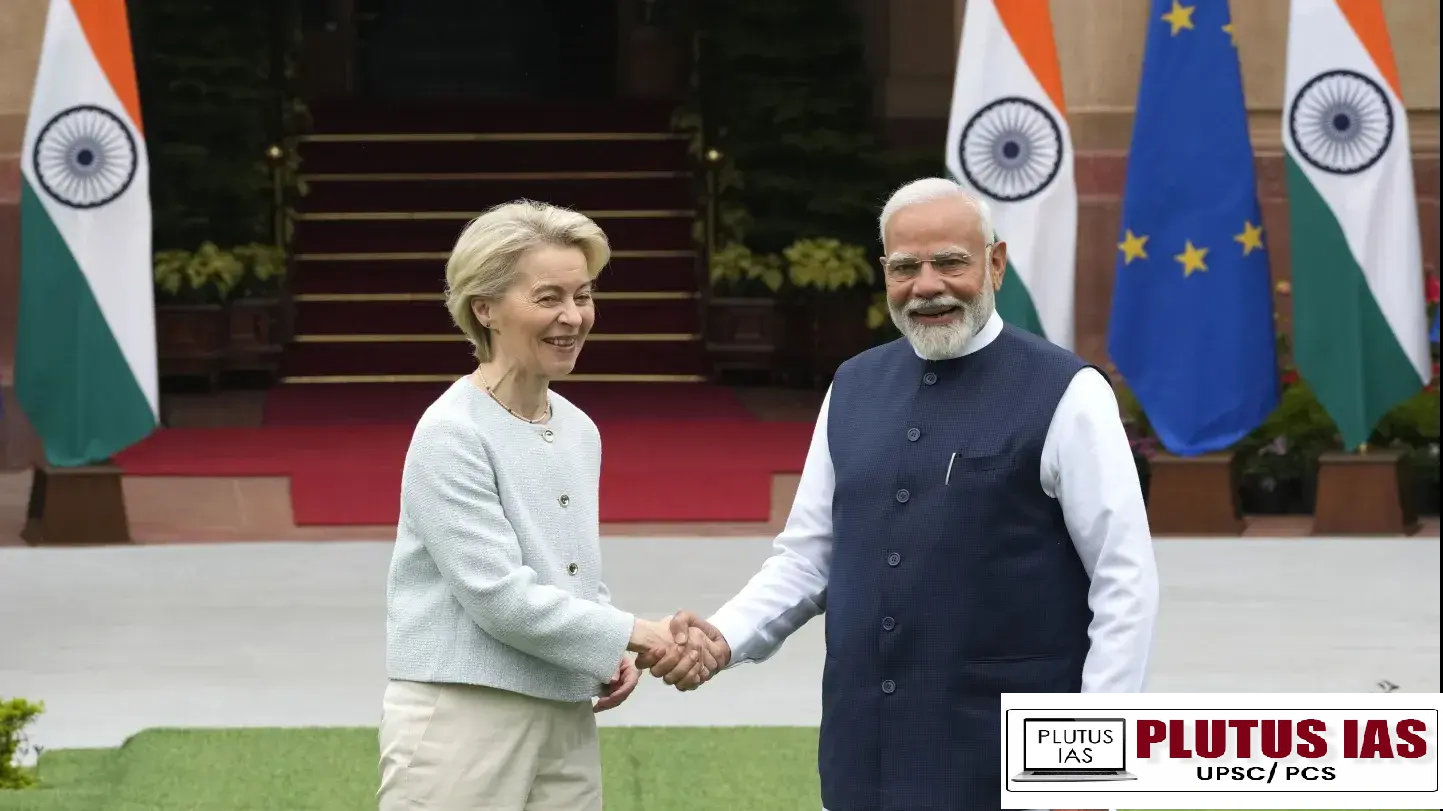
The second meeting of the India-EU Trade and Technology Council (TTC) took place in New Delhi. It was co-chaired on the Indian side by India’s External Affairs Minister, Dr S. Jaishankar; Commerce and Industry Minister Sh ri Piyush Goyal; and Minister for Electronics and Information Technology, Shri Ashwini Vaishnaw. Executive Vice-President for Tech Sovereignty, Security and Democracy Ms. Henna Virkkunen, Commissioner for Trade and Economic Security, Interinstitutional Relations and Transparency Mr. Maros Šefčovič and Commissioner for Startups, Research and Innovation Ms Ekaterina Zaharieva co-chaired on the EU side.
Evolutions of Biletaral ties
1. Early Engagement (1950s-1990s): Diplomatic ties began in the 1960s, with an initial focus on development cooperation and trade. Relations were limited but gradually expanding.
2. Formal Partnership (2000s): The EU-India Strategic Partnership was established in 2004, focusing on political, economic, and cultural cooperation. This period also saw the start of Free Trade Agreement (FTA) negotiations in 2007, deepening economic ties.
3. Strategic Convergence (2010-2020): Both sides recognized shared global challenges, leading to stronger cooperation in areas like climate change, security, and sustainable development. The India-EU Civil Nuclear Agreement (2008) and increased collaboration in sectors like counter-terrorism, trade, and environmental sustainability were notable achievements.
4. TTC and Recent Developments (2022-Present): The launch of the India-EU Trade and Technology Council (TTC) in 2022 marked a significant step in addressing emerging challenges in trade, technology, and security. Cooperation on AI, semiconductors, digital infrastructure, and clean technologies expanded. The relationship now includes joint efforts on sustainable growth, resilient supply chains, and multilateral diplomacy.
Areas of Cooperation
1. Trade and Investment: Focus on reducing trade barriers, promoting investment, and negotiating a Free Trade Agreement (FTA).
2. Technology and Innovation: Cooperation on AI, 6G, semiconductors, and digital infrastructure, with a focus on ethical AI and technological innovation.
3. Clean and Green Technologies: Joint efforts on climate change, renewable energy, battery recycling, and waste-to-hydrogen technologies.
4. Security and Geopolitics: Collaboration on cybersecurity, counter-terrorism, and regional security, with a shared commitment to multilateral diplomacy.
5. Agriculture and Food Security: Research on climate-resilient agriculture and food security solutions.
6. Health and Pharmaceuticals: Enhancing API supply chains and promoting sustainable pharmaceutical practices.
7. Education and Skills Development: Talent exchange, bridging the digital skills gap, and fostering professional development.
8. Multilateral Cooperation: Strengthening the WTO, implementing the Global Digital Compact, and promoting international cooperation.
9. Resilient Supply Chains: Developing secure and diversified supply chains in technology, clean energy, and pharmaceuticals.
Importance of EU for India
1. Trade and Economic Relations: The EU is India’s largest trading partner after China, supporting exports and offering significant FDI. Ongoing FTA negotiations aim to enhance trade and economic ties.
2. Technology and Innovation: The EU collaborates with India in areas like AI, digital infrastructure, and clean energy, aiding technological advancement and R&D.
3. Climate and Sustainability: The EU is a key partner in promoting renewable energy, sustainable practices, and green technologies, helping India meet its climate goals.
4. Security and Geopolitics: The EU supports India’s security interests, especially in the Indo-Pacific, and aids in counter-terrorism, cyber security, and global stability.
5. Cultural and Educational Ties: Shared democratic values strengthen people-to-people connections, while educational exchanges foster skills development and research collaboration.
6. Multilateral Cooperation: India and the EU work together on global issues, including trade reform, UN SDGs, and sustainable growth.
7. Strategic Partnership: Both sides share strategic interests in shaping global governance, trade, and security, reinforced by initiatives like the India-EU Trade and Technology Council (TTC).
Significance of India For EU
1. Enhancing Trade Relations: Concluding the Free Trade Agreement (FTA) between India and the EU will help reduce trade barriers, improve market access, and foster stronger economic ties.
2. Deepening Technological Cooperation: Expanding collaboration in high-tech areas like AI, digital infrastructure, and cybersecurity will help both sides benefit from technological advancements and foster innovation.
3. Joint Initiatives on Climate Change: Strengthening partnerships on renewable energy, sustainable development, and green technologies can help both India and the EU meet their climate goals and address environmental concerns.
4. Promoting Investment and Business Partnerships: Addressing issues like intellectual property rights, investment protection, and ease of doing business can increase EU investments in India, benefiting both economies.
5. Collaboration on Global Governance: Working together on multilateral issues, such as WTO reform, global digital governance, and UN Security Council reforms, will ensure a strong collective voice on global challenges.
6. People-to-People Exchanges: Expanding educational exchanges, cultural diplomacy, and tourism can foster deeper mutual understanding, strengthening long-term ties between India and the EU.
Areas of concern
1. Economic Partnership: India is a major trade partner, offering a growing market for EU goods while benefiting from EU exports in machinery, chemicals, and automobiles.
2. Geopolitical Role: India plays a key role in regional stability, particularly in the Indo-Pacific, and is vital for the EU’s security and global governance efforts.
3. Shared Values: Both share democratic values, strengthening cooperation on issues like human rights, climate change, and the rule of law.
4. Climate Action: India’s role in global climate efforts makes it crucial for the EU’s green transition and sustainability goals.
5. Cultural Ties: Growing cultural exchanges and educational partnerships deepen people-to-people connections.
Way to Further Cooperation
1. Trade Barriers: High tariffs and regulatory challenges still hinder smooth trade between India and the EU.
2. Investment Climate: Concerns over intellectual property rights and ease of doing business in India may deter EU investments.
3. Regulatory Differences: Divergence in standards and certifications complicates trade in sectors like pharmaceuticals and food safety.
4. Geopolitical Differences: India’s geopolitical stance, especially regarding Russia and China, may sometimes conflict with EU policies.
5. Environmental Standards: India’s development priorities might clash with the EU’s environmental expectations.
Conclusion
India-EU relations are steadily evolving, with key areas of cooperation spanning trade, technology, climate action, and security. The India-EU Trade and Technology Council (TTC) has proven to be a vital platform for addressing emerging challenges and fostering collaboration in areas such as AI, clean energy, digital infrastructure, and resilient supply chains. By addressing concerns like trade barriers, regulatory differences, and geopolitical tensions, both sides can further enhance their strategic partnership, promoting mutual growth and global stability. Moreover, strengthening multilateral cooperation and aligning efforts on issues like climate change, digital governance, and global trade reforms will ensure that India and the EU can effectively navigate the evolving global geopolitical landscape.
Prelims Questions:
Q.With reference to the India-EU Trade and Technology Council (TTC), consider the following statements:
1. The first meeting of the TTC was held in New Delhi in February 2025.
2. The TTC was established to address challenges at the intersection of trade, technology, and security.
3. The second meeting of the TTC took place in Brussels in November 2023.
How many of the above-given statements are correct?
A. Only one
B. Only two
C. All three
D. None
Answer: B
Mains Questions:
(250 words, 15 marks)

- RBI’s Shrinking Real-Rate Cushion Amid Rising Inflation and Strong Demand - September 21, 2026
- India’s NGOs at a New Funding Crossroads - September 21, 2026
- Deep-Sea Discovery, Environmental Responsibility - September 19, 2026

No Comments