


04 Nov India–New Zealand Free Trade Agreement: Renewed Momentum in Bilateral Economic Relations
This article covers “Daily Current Affairs” and From India–New Zealand Free Trade Agreement: Renewed Momentum in Bilateral Economic Relations
SYLLABUS MAPPING
GS– 2 – International Relations- India–New Zealand Free Trade Agreement: Renewed Momentum in Bilateral Economic Relations
FOR PRELIMS
What is the India–New Zealand FTA about?
FOR MAINS
What is the main objective of the India–New Zealand Free Trade Agreement (FTA)?
Why in the News?
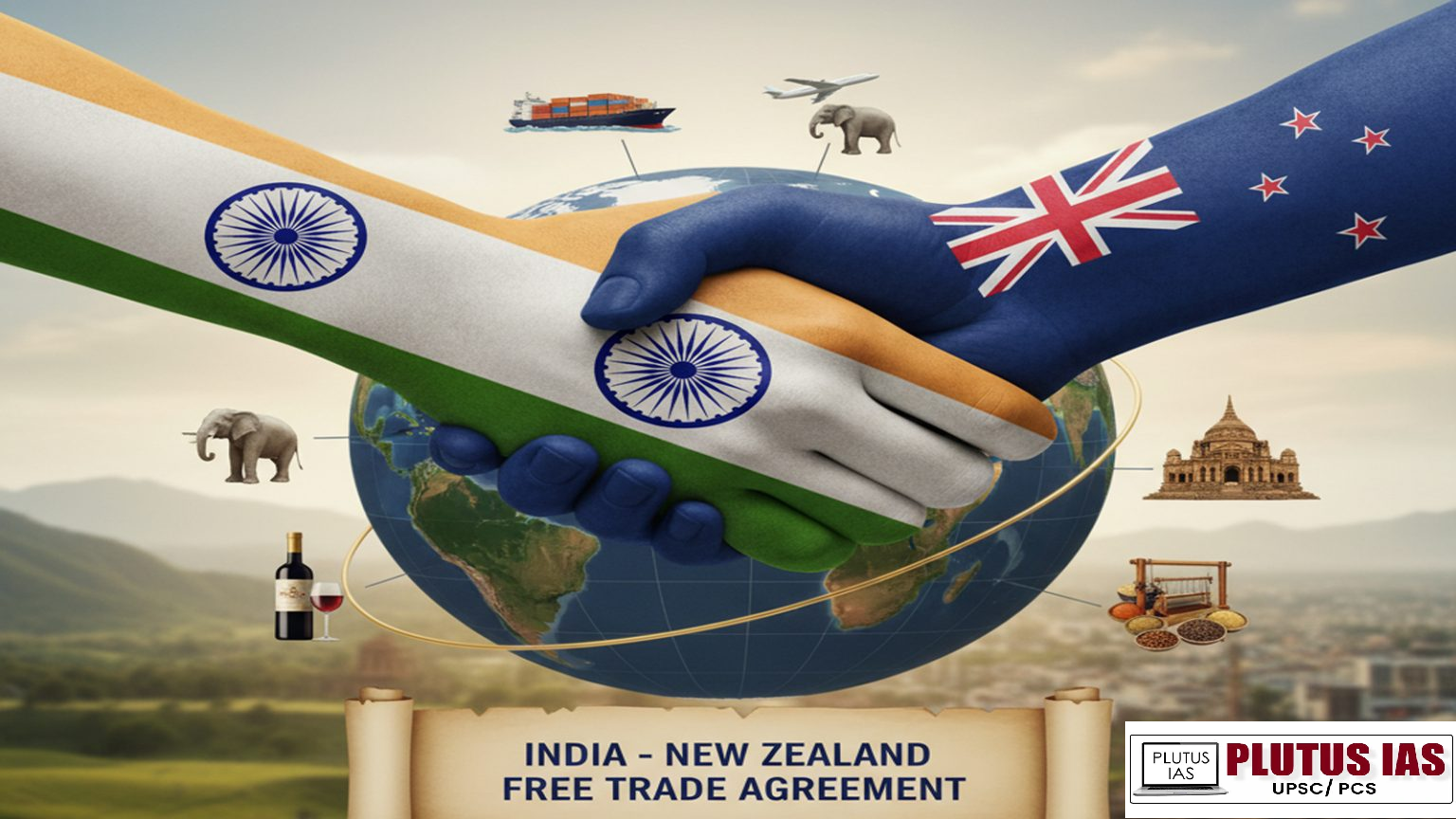
India and New Zealand have begun the fourth round of negotiations for their proposed Free Trade Agreement (FTA) in Auckland from November 3 to 7, 2025. This round aims to accelerate progress toward a balanced, comprehensive, and mutually beneficial partnership between the two nations.
Background
India and New Zealand have shared cordial relations based on Commonwealth ties, democratic values, and people-to-people connections. However, bilateral trade has remained modest despite complementarities between the two economies.
The formal launch of the FTA process took place on March 16, 2025, following the visit of New Zealand Prime Minister Christopher Luxon to India. During the meeting between Commerce and Industry Minister Piyush Goyal and New Zealand’s Trade and Investment Minister Todd McClay, both sides reaffirmed their commitment to deepen economic and trade engagement.
Focus Areas of the Fourth Round
The current negotiation round is centered on:
1. Trade in Goods: Market access, tariff reduction, and export facilitation.
2. Trade in Services: Mobility of professionals, recognition of qualifications, and service sector cooperation.
3. Rules of Origin: Frameworks to determine the national source of a product to ensure fair trade.
Officials from both sides are working to resolve pending issues from previous rounds and lay the groundwork for early conclusion of the agreement.
Significance of the Proposed FTA
1. Enhanced Market Access: The agreement will open new opportunities for Indian exports in agriculture, technology, pharmaceuticals, and IT services.
2. Investment Flows: It is expected to attract more foreign direct investment (FDI), particularly in clean energy, agri-tech, and education.
3. Diversification of Trade Partners: Strengthening economic ties with New Zealand supports India’s efforts to diversify export markets beyond traditional partners.
4. Sustainable and Inclusive Growth: Both nations aim to include environmental and social dimensions in the trade framework, aligning with global sustainability goals.
5. Boost to Indo-Pacific Cooperation: A stronger India–New Zealand partnership contributes to economic stability and cooperation in the broader Indo-Pacific region.
Challenges Ahead
1. Agricultural Market Sensitivities: New Zealand’s competitive dairy and agricultural sectors raise concerns for India’s domestic farmers and cooperatives. India seeks to protect its dairy market from potential import surges.
2. Tariff and Non-Tariff Barriers: Both sides differ on tariff reduction schedules and standards related to quality, packaging, and safety—posing hurdles in finalizing tariff lines.
3. Services Liberalization: India is keen on greater mobility for IT professionals and skilled workers, while New Zealand’s visa policies remain restrictive. This divergence complicates negotiations on trade in services.
4. Regulatory Harmonization: Differences in technical standards, sanitary and phytosanitary measures, and certification systems create compliance challenges for exporters.
5. Protection of Domestic Industries: India emphasizes the need to ensure the FTA does not harm small manufacturers, MSMEs, and rural producers through sudden import competition.
6. Geographical Distance and Logistics Costs: The long transit routes between India and New Zealand add to trade costs, reducing competitiveness in perishable and time-sensitive goods.
Way Forward
1. Balanced and Inclusive Approach: The agreement must balance offensive and defensive interests, ensuring fair access while safeguarding sensitive sectors such as agriculture and dairy.
2. Deepening Sectoral Cooperation: Collaboration in agri-tech, renewable energy, digital innovation, and education can serve as new engines of growth for both economies.
3. Facilitating Services Mobility: Streamlining visa norms and mutual recognition of professional qualifications can enhance movement of students, experts, and skilled workers.
4. Enhancing Trade Infrastructure: Both countries should improve logistics, connectivity, and customs cooperation to reduce trade costs and ensure timely delivery of goods.
5. Strengthening Institutional Mechanisms: Creating joint working groups and technical committees can help resolve regulatory issues and monitor implementation effectively.
6. Sustained Diplomatic and Business Engagement: Regular high-level meetings and business-to-business interactions will maintain political momentum and encourage private sector participation in realizing FTA benefits.
Conclusion
The India–New Zealand FTA negotiations mark a crucial step in expanding India’s trade footprint in the Pacific region. A well-calibrated and mutually beneficial agreement can significantly enhance trade, investment, and technology collaboration while strengthening the broader Indo-Pacific economic architecture. The success of this FTA would not only deepen bilateral ties but also advance India’s vision of “Atmanirbhar Bharat with Global Integration.”
Prelims question:
Q. With reference to the proposed India–New Zealand Free Trade Agreement (FTA), consider the following statements:
1. The FTA negotiations focus on Trade in Goods, Trade in Services, and Rules of Origin.
2. The agreement aims to enhance India’s trade engagement in the Indo-Pacific region.
3. The FTA was formally launched during the visit of the Indian Prime Minister to New Zealand in 2025.
Which of the statements given above are correct?
(a) 1 and 2 only
(b) 2 and 3 only
(c) 1 and 3 only
(d) 1, 2, and 3
Answer: A
Mains Question:
Q. Discuss the significance of the proposed India–New Zealand Free Trade Agreement (FTA) in strengthening bilateral and Indo-Pacific economic cooperation. What are the major challenges that need to be addressed for its successful conclusion? (250 words)

- Europe’s AI Rules May Become India’s Opportunity - August 14, 2026
- Transparency as the Foundation of Trust in Medicine - August 14, 2026
- A Timely Reset for the Food Security Act: From Foodgrain Security to Nutrition Security - August 13, 2026

No Comments