


28 Sep Kerala modernises minority youth training centres for UPSC & PCS exams
✎ The modernisation of minority youth training centres in Kerala integrates digital infrastructure and advanced technologies to enhance skill development and employability among minority youth, aligning with national initiatives…
Subject Relevance — Where This Topic Fits
- GS Paper II — Social Justice (Welfare Schemes for Vulnerable Sections) | GS Paper III — Skill Development and Employment
- Prelims: Minority welfare schemes, Skill India Mission, National Skill Development Corporation (NSDC), Kerala State Minorities Commission, Digital Square Project, Artificial Intelligence in Education, Robotics in School Curriculum
- Essay: The Role of Technology in Bridging Educational Divides, Inclusive Growth: Balancing Equity and Efficiency in Public Policy
Quick Revision: The modernisation of minority youth training centres in Kerala integrates digital infrastructure and advanced technologies to enhance skill development and employability among minority youth, aligning with national initiatives like Skill India Mission and the state’s Digital Square Project.
Why is this in the news?
The Government of Kerala has announced the modernisation of minority youth training centres across the state as part of its 100-day action programme, with a focus on digital and technological infrastructure enhancement. This initiative underscores the state’s commitment to equipping minority youth with contemporary skills, aligning with broader national efforts in skill development and digital inclusion.
Background
- Kerala has historically maintained high human development indicators, yet socio-economic disparities persist among minority communities, necessitating targeted interventions.
- The state government, through its 100-day action programme, has prioritised educational and socio-economic advancement for marginalised groups, including minorities.
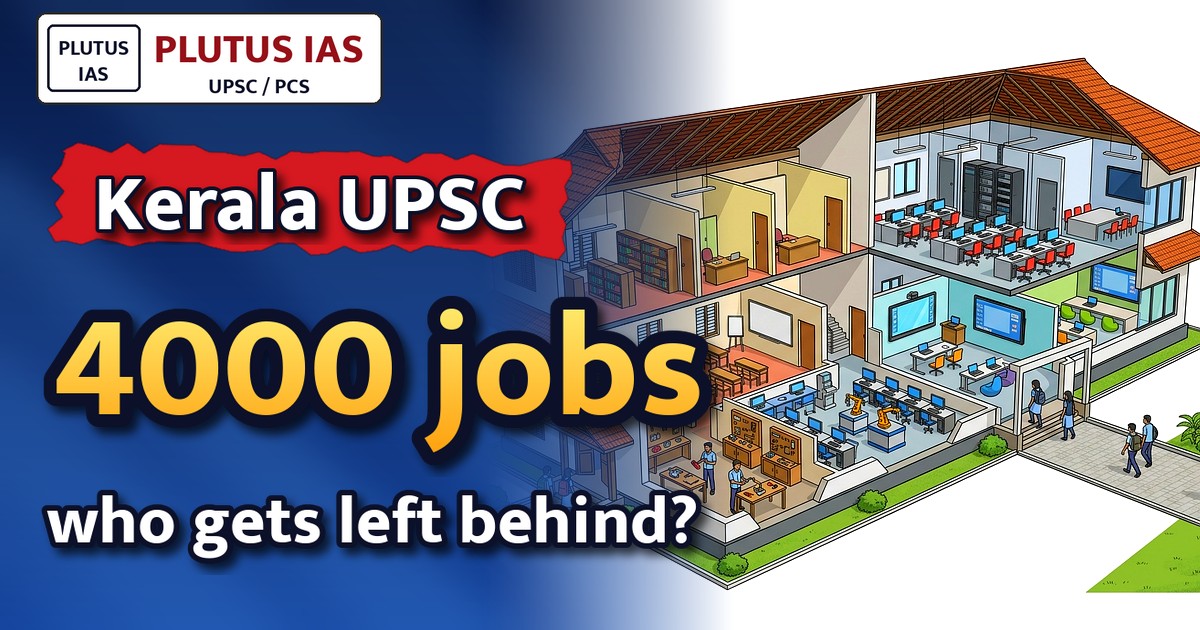
- Existing minority youth training centres in Kerala, numbering 24 with 17 sub-centres, have facilitated employment for over 4,000 individuals, highlighting their role in skill development.
- The modernisation drive includes the introduction of CCTV surveillance and digital facilities, reflecting a shift towards technologically integrated vocational training.
- At the national level, schemes such as the Skill India Mission and initiatives by the National Skill Development Corporation (NSDC) aim to enhance employability through skill training.
- Kerala’s Digital Square Project and integration of AI, robotics, and science programmes in schools exemplify the state’s proactive approach to digital literacy and futuristic education.
What are Minority Youth Training Centres in Kerala?
- These centres are state-run vocational training institutions established to provide skill development opportunities to youth from minority communities in Kerala.
- The primary objective is to enhance employability by offering courses aligned with industry demands, thereby facilitating socio-economic mobility.
- Traditionally, these centres have focused on conventional trades such as tailoring, computer applications, and electronics, but the modernisation drive introduces advanced technological domains.
- The modernisation initiative includes the integration of digital infrastructure, such as CCTV surveillance, online learning platforms, and computer labs, to enhance accessibility and quality of training.
- The Digital Square Project, implemented in lower and upper primary schools, aims to foster early digital literacy, while AI, robotics, and science programmes are being introduced at the high school level.
- The initiative is part of a broader strategy to align Kerala’s education system with global standards, ensuring that students are equipped to compete in a technology-driven job market.
- The modernisation also includes the establishment of new centres, such as the Chavakkad Centre for Continuing Education and Minority Youth Training (CCMY), as part of the state’s 100-day action programme.
Key Features
| Feature | Significance |
|---|---|
| Modernisation of minority youth training centres | Enhances employability by aligning training with contemporary technological and digital skill demands, thereby addressing structural unemployment in minority communities. |
| Integration of CCTV surveillance and digital facilities | Improves institutional transparency, safety, and operational efficiency while enabling remote monitoring and data-driven decision-making. |
| Digital Square project in lower and upper primary schools | Introduces foundational digital literacy and computational thinking at an early stage, fostering long-term technological adaptability. |
| Promotion of AI, robotics, and science programmes in high schools | Equips students with advanced STEM skills required for emerging job markets, particularly in automation and data-driven sectors. |
| 100-day action programme of the State government | Demonstrates a focused, time-bound governance intervention to achieve measurable outcomes in education and skill development. |
Why it Matters
Economic
- Bridges skill gaps in minority youth, enhancing their participation in formal and high-growth sectors, thereby contributing to inclusive economic growth.
- Reduces underemployment and unemployment by providing industry-relevant training, potentially lowering dependency on low-skilled labour markets.
- Strengthens Kerala’s human capital base, which is critical for attracting investment and sustaining economic competitiveness in a globalised job market.
Social
- Advances socio-economic mobility for minority communities by providing equitable access to skill development and employment opportunities.
- Promotes social cohesion by reducing disparities in educational and economic outcomes across demographic groups.
- Empowers marginalised youth through targeted interventions, aligning with constitutional principles of equality and non-discrimination.
Governance
- Illustrates the role of state-led initiatives in addressing structural inequalities through targeted policy interventions.
- Demonstrates the use of technology in governance to enhance service delivery, accountability, and transparency in public institutions.
- Highlights the importance of periodic programme reviews and action plans in achieving measurable developmental outcomes.
Educational
- Aligns skill development with global educational standards, preparing students for international examinations and competitive job markets.
- Fosters a culture of continuous learning and adaptability, essential for navigating rapid technological disruptions.
- Integrates digital literacy and STEM education, addressing the evolving demands of the 21st-century workforce.
Challenges
1. Equitable Access and Inclusion
- Ensuring that modernised training centres reach the most marginalised sections of minority communities, including those in remote or socio-economically disadvantaged areas.
- Addressing potential digital divides, such as limited internet connectivity or lack of access to devices, which may hinder participation.
UPSC Link: GS2: Social Justice
2. Quality Assurance and Curriculum Relevance
- Maintaining the relevance of training programmes to evolving industry demands, particularly in fast-changing sectors like AI and robotics.
- Ensuring that the quality of education and training meets national and international benchmarks to enhance employability.
UPSC Link: GS2: Education
3. Institutional Capacity and Resource Mobilisation
- Scaling up infrastructure and faculty capabilities to accommodate increased enrolment and advanced training modules.
- Securing sustained funding and public-private partnerships to support long-term modernisation and operational costs.
UPSC Link: GS2: Governance
4. Monitoring and Evaluation
- Developing robust mechanisms to track employment outcomes, skill acquisition, and socio-economic impact of the training programmes.
- Ensuring transparency in data collection and utilisation to assess programme effectiveness and make evidence-based adjustments.
UPSC Link: GS4: Ethics
5. Community Engagement and Trust
- Building trust among minority communities to encourage participation in skill development programmes, particularly in areas with historical underrepresentation.
- Addressing cultural and linguistic barriers that may deter youth from engaging with modernised training facilities.
UPSC Link: GS2: Social Justice
Challenges — UPSC Perspective
| Issue | Concern |
|---|---|
| Digital Divide | Limited access to internet and devices among minority youth may exclude them from digital training programmes. |
| Curriculum Obsolescence | Risk of training content becoming outdated due to rapid technological advancements in AI, robotics, and digital tools. |
| Infrastructure Gaps | Inadequate physical and digital infrastructure in training centres may hinder effective implementation of modernised programmes. |
| Faculty Shortages | Shortage of trained instructors in advanced technological fields may compromise the quality of education. |
| Employment Linkages | Weak industry partnerships may limit job placement opportunities for trained youth despite skill acquisition. |
| Monitoring Gaps | Lack of real-time data on programme outcomes may impede evidence-based policy adjustments. |
Government Initiatives — Must-Memorise for Prelims
- State government’s 100-day action programme for skill development and education
- Digital Square project for digital literacy in primary schools
- Minority Youth Training Centres initiative under the State government’s socio-economic advancement programmes
Way Forward
- Conduct a baseline survey to identify specific skill gaps and training needs among minority youth in Kerala, ensuring targeted interventions.
- Establish partnerships with industry leaders to design curriculum content that aligns with current and projected job market demands in AI, robotics, and digital technologies.
- Develop a faculty training programme to upskill instructors in advanced technological domains, ensuring high-quality instruction.
- Expand digital infrastructure in training centres, including high-speed internet, smart classrooms, and access to devices for students.
- Implement a robust monitoring and evaluation framework to track employment outcomes, skill acquisition, and socio-economic impact of the programmes.
- Launch awareness campaigns in minority communities to build trust and encourage participation in modernised training programmes.
- Introduce scholarships and stipends to support economically disadvantaged youth in accessing training programmes.
- Explore public-private partnerships to secure sustained funding and resources for long-term programme sustainability.
UPSC Value Addition
Keywords for Mains Answer-Writing
Minority youth skill development · Kerala’s 100-day action programme · Digital Square project · Artificial intelligence in school education · Public education and global competitiveness · Minority welfare schemes in India · Vocational training centres under State government · CCTV surveillance in educational institutions · Technology integration in school curriculum · Socio-economic advancement of minorities
Concept Flow
Identification of skill gaps in minority youth through state-led assessments → → Design of modernised training programmes with digital and technological integration → → Implementation of programmes through upgraded infrastructure and faculty training → → Monitoring of outcomes to ensure relevance and effectiveness → → Employment and socio-economic advancement of trained youth → → Feedback loop to refine programmes and address emerging challenges → → Contribution to inclusive growth and equitable development in Kerala.
Prelims Practice Questions
Q1. Consider the following statements regarding the Digital Square project in Kerala:
1. It is a centrally sponsored scheme aimed at digital literacy in higher education institutions.
2. It has been introduced in lower primary and upper primary schools as part of the 100-day action programme.
3. The project includes the integration of artificial intelligence and robotics in high school education.
How many of the above statements are correct?
- Only one
- Only two
- All three
- None
Answer: All three — Statements 2 and 3 are correct. Statement 1 is incorrect as the Digital Square project is a State government initiative, not centrally sponsored.
Q2. Assertion (A): The modernisation of minority youth training centres in Kerala includes the introduction of CCTV surveillance and digital facilities.
Reason (R): The objective is to equip youth with skills for a changing job market and enhance employability.
Options:
A. Both A and R are true, and R is the correct explanation of A.
B. Both A and R are true, but R is not the correct explanation of A.
C. A is true, but R is false.
D. A is false, but R is true.
Answer: ? — Both the assertion and reason are true, and the reason correctly explains the assertion as the modernisation measures are aimed at skill development and employability.
Q3. Match the following initiatives with their respective objectives:
Column I (Initiative) | Column II (Objective)
A. Digital Square project | 1. Integration of AI and robotics in high school education
B. Chavakkad Centre for Continuing Education and Minority Youth Training | 2. Modernisation of minority youth training centres
C. 100-day action programme | 3. Rapid skill development and employability for minority youth
D. CCTV surveillance in training centres | 4. Enhancing digital and technological infrastructure in schools
- A-4, B-2, C-3, D-1
- A-4, B-3, C-2, D-1
- A-2, B-3, C-4, D-1
- A-1, B-2, C-3, D-4
Answer: A-4, B-3, C-2, D-1 — Correct matches are: A-4 (Digital Square project enhances digital infrastructure in schools), B-3 (Chavakkad Centre focuses on minority youth training and employability), C-2 (100-day action programme includes modernisation of training centres), D-1 (CCTV surveillance is part of modernisation but not directly linked to AI/robotics).
Mains Practice Question
✍ The State government of Kerala has initiated a 100-day action programme to modernise minority youth training centres by integrating digital infrastructure and vocational training. Critically examine the significance of such initiatives for the socio-economic advancement of minority communities in India. Also, discuss the constitutional and policy framework that supports minority welfare and skill development programmes in the country. (15 Marks)
Approach: MODEL-ANSWER SKELETON:
1. Introduction (2 marks):
– Briefly define minority communities in India (Constitution’s 5th and 6th Schedule, National Commission for Minorities Act, 1992).
– Contextualise Kerala’s initiative within the broader framework of minority welfare and skill development.
2. Significance of the initiative (5 marks):
– Socio-economic empowerment: Addressing unemployment, underemployment, and skill gaps among minority youth (cite NSSO/KPMG data on minority unemployment).
– Digital inclusion: Bridging the digital divide through CCTV, AI, robotics, and computer education (link to National Education Policy 2020 and Digital India Mission).
– Employability: Enhancing access to formal and informal job markets (reference to 4,000+ placements via existing centres).
– Inclusivity: Ensuring equitable access to education and training for marginalised groups (Article 15(4) and 16(4) of the Constitution).
– State’s role: Kerala’s proactive governance model in minority welfare (Kerala State Minorities Commission, State Minorities Development Finance Corporation).
3. Constitutional and policy framework (5 marks):
– Constitutional provisions: Fundamental Rights (Articles 14, 15, 16, 29, 30) and Directive Principles (Articles 38, 39, 41, 46).
– Statutory bodies: National Commission for Minorities (NCM), State Minorities Commissions, and their functions.
– Central schemes: Maulana Azad National Fellowship (MANF), Naya Savera, Seekho aur Kamao, and USTTAD (Upgrading the Skills and Training in Traditional Arts/Crafts for Development).
– State schemes: Kerala’s State Minorities Development Finance Corporation, scholarship schemes, and vocational training programmes.
– Judicial precedents: Landmark judgments on minority rights (T.M.A. Pai Foundation v. State of Karnataka, 2002; P.A. Inamdar v. State of Maharashtra, 2005).
4. Challenges and way forward (3 marks):
– Challenges: Funding constraints, regional disparities, quality of training, and ensuring last-mile delivery.
– Way forward: Strengthening public-private partnerships, leveraging technology for outreach, and aligning with national skill frameworks (NSQF, PMKVY).
– Conclusion: Kerala’s initiative as a model for other States to emulate, emphasising the need for sustained investment in minority welfare.
Source: The Hindu
Generated by AanyaAi for educational purpose.
Related guides on our sites
- Current affairs for upsc 2026
- Best sociology optional coaching for upsc
- Which is best sociology optional coaching for upsc
- Best economics optional coaching for upsc

- Rajasthan Panchayati Raj Elections: New Rules, Fines & Disqualification - September 28, 2026
- सेना प्रमुख का बड़ा बयान: जीत जमीन से ही तय होती है, तकनीक नहीं बदल सकती युद्ध की प्रकृति - September 28, 2026
- UPSC Alert: Government Cracks Down on Patwaris for SVAMITVA Scheme Refusals - September 28, 2026

No Comments