


04 Sep Kerala’s Night-Time Hydropower Shift: KSERC’s Plan to Cut Costly Power Purchases
✎ Hydropower scheduling flexibility is a critical tool for balancing variable renewable energy integration with peak demand management, as demonstrated by Kerala’s case.
Subject Relevance — Where This Topic Fits
- GS Paper III — Indian Economy: Energy, Infrastructure, and Sustainable Development | GS Paper III — Environment and Disaster Management: Climate Change and Renewable Energy Integration
- Prelims: Hydropower generation scheduling, Peak demand management, Renewable Energy Certificate (REC), Day-ahead market (DAM) in electricity trading, Electricity Regulatory Commissions (ERCs), Prosumer, Renewable Purchase Obligation (RPO), Round-the-Clock (RTC) power contracts
- Essay: Energy transition and grid stability: Balancing renewable integration with conventional power systems, Sustainable infrastructure development: Challenges and opportunities in India’s power sector
Quick Revision: Hydropower scheduling flexibility is a critical tool for balancing variable renewable energy integration with peak demand management, as demonstrated by Kerala’s case.
Why is this in the news?
The Kerala State Electricity Regulatory Commission (KSERC) has directed the Kerala State Electricity Board (KSEB) to examine the feasibility of shifting hydropower generation from daytime to night to address evening peak electricity shortages. This directive arises against the backdrop of Kerala’s growing solar power capacity, which has created a daytime surplus but a persistent evening deficit, necessitating costly power purchases. The commission’s rationale hinges on leveraging Kerala’s hydropower flexibility to mitigate grid imbalances and reduce financial burdens on consumers.
Background
- Kerala’s electricity demand exhibits a pronounced diurnal pattern, with peak consumption occurring in the evening hours (6 p.m. onwards), driven by domestic, commercial, and industrial usage.
- The state has witnessed a significant expansion of solar power capacity in recent years, leading to daytime surpluses that exceed local demand, necessitating the surrender of contracted power from other sources to accommodate solar injections.
- Hydropower, a key component of Kerala’s renewable energy mix, operates primarily during daytime, aligning with solar generation patterns rather than peak demand periods.
- Evening shortages have historically been addressed through expensive short-term power purchases from external sources, increasing the financial burden on the state’s electricity consumers.
- The Kerala State Electricity Regulatory Commission (KSERC), established under the Electricity Act, 2003, regulates the state’s electricity sector and ensures compliance with renewable energy policies.
- Kerala’s power sector operates under the framework of the Electricity Act, 2003, which mandates the integration of renewable energy while ensuring grid stability and affordability.
What is Hydropower Generation Scheduling and Its Relevance to Grid Management?
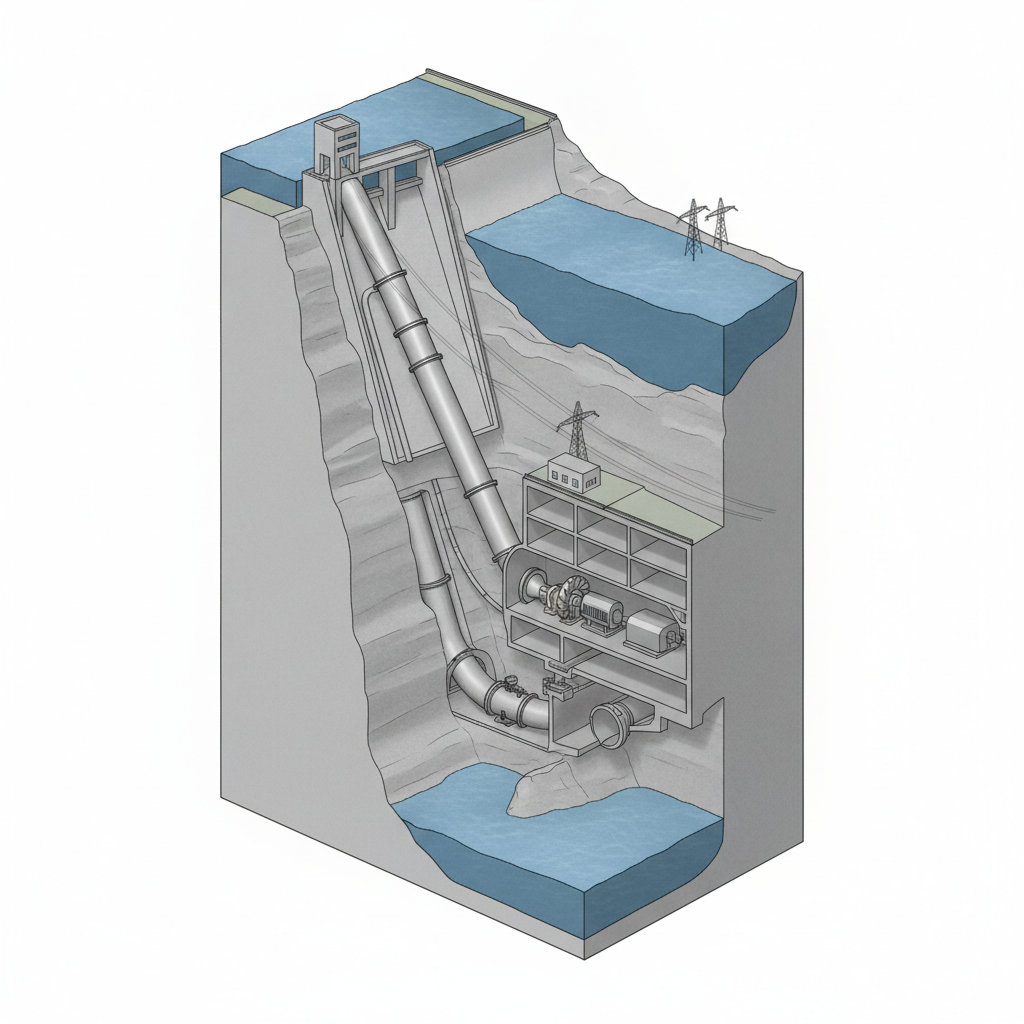
- Hydropower generation scheduling refers to the strategic allocation of hydropower resources to meet demand fluctuations, balancing generation with load requirements across different times of the day.
- Hydropower plants, particularly those with reservoir-based storage, possess inherent flexibility, enabling operators to adjust generation in response to grid conditions and demand patterns.
- Daytime hydropower generation in Kerala has been traditionally aligned with solar power injections to maximize renewable energy utilization, but this has contributed to evening peak shortages.
- Shifting hydropower generation to night hours could help Kerala address evening peak demand by leveraging the stored water potential of reservoirs, thereby reducing reliance on expensive power purchases.
- The Electricity Act, 2003, empowers State Electricity Regulatory Commissions (SERCs) to regulate generation, transmission, and distribution, including the scheduling of power resources to ensure grid stability.
- Kerala’s hydropower potential is primarily concentrated in the Western Ghats, with major projects such as the Idukki, Sabarigiri, and Kuttiyadi hydroelectric plants contributing significantly to the state’s energy mix.
- The integration of variable renewable energy (VRE) sources like solar necessitates dynamic grid management strategies, including flexible generation sources such as hydropower, to maintain supply-demand equilibrium.
- The KSERC’s directive underscores the importance of adaptive regulatory frameworks to incentivize flexible generation practices that align with evolving renewable energy landscapes.
Key Features
| Feature | Significance |
|---|---|
| Hydropower generation flexibility | Enables reallocation of power generation from daytime to night to align with demand peaks, reducing reliance on expensive external procurement. |
| Solar power surplus during daytime | Keralam’s increased solar capacity leads to daytime grid surpluses, necessitating surrender of contracted power, which can be re-optimised. |
| Evening peak demand shortages | Evening hours witness a sharp rise in electricity demand, often unmet by local generation, leading to costly power purchases. |
| Kerala State Electricity Regulatory Commission (KSERC) | Regulatory body directing KSEB to explore generation adjustments to mitigate shortages and financial inefficiencies. |
| Kerala State Electricity Board (KSEB) operations | State utility managing generation, procurement, and distribution, facing challenges in balancing surplus and deficit periods. |
Why it Matters
Economic
- Reduces expenditure on high-cost power purchases (₹1,190 crore in April-August 2026) by optimising local generation.
- Minimises financial burden on consumers through avoidance of surcharges linked to expensive procurement.
- Enhances grid stability by aligning generation with demand patterns, reducing volatility in power procurement costs.
Strategic/Operational
- Leverages existing hydropower infrastructure for demand-side management, enhancing system resilience.
- Reduces dependency on external power sources during peak hours, improving energy security.
- Facilitates integration of renewable energy (solar) by optimising complementary generation sources.
Environmental
- Potential reduction in carbon footprint by lowering reliance on fossil-fuel-based power procurement during shortages.
- Supports Kerala’s renewable energy targets by better utilisation of solar surplus and hydropower flexibility.
Regulatory
- Demonstrates the role of independent regulators (KSERC) in directing utilities toward efficient resource utilisation.
- Highlights the need for dynamic tariff structures to incentivise generation adjustments during surplus/deficit periods.
Challenges
1. Technical feasibility of hydropower reallocation
- Hydropower reservoirs have limited storage capacity, restricting overnight generation shifts without adequate water release planning.
- Potential operational constraints in ramping up/down hydropower stations to match demand fluctuations.
- Impact on downstream ecosystems due to altered water release schedules for power generation.
UPSC Link: GS-III: Energy, Environment
2. Grid integration challenges
- Need for advanced forecasting tools to predict solar surplus and evening demand accurately.
- Risk of grid instability if hydropower reallocation disrupts frequency and voltage parameters.
- Coordination required between hydropower, solar, and other generation sources to ensure seamless grid operation.
UPSC Link: GS-III: Grid Management
3. Financial and contractual constraints
- Existing power purchase agreements (PPAs) may not permit unilateral reallocation of generation schedules.
- Surrendering contracted power to accommodate solar surplus may lead to penalties or loss of revenue for KSEB.
- High upfront costs for retrofitting hydropower stations to enable flexible operation.
UPSC Link: GS-III: Power Sector Economics
4. Policy and regulatory gaps
- Lack of dynamic pricing mechanisms to incentivise generation adjustments during surplus/deficit periods.
- Need for clearer guidelines on balancing renewable energy integration with conventional generation.
- Absence of a state-level energy storage policy to complement generation adjustments.
UPSC Link: GS-II: Governance
5. Public and stakeholder resistance
- Potential opposition from local communities affected by altered water release schedules for hydropower.
- Consumer resistance to changes in power procurement practices if it leads to perceived service disruptions.
- Industrial stakeholders may resist shifts in generation if it affects their operational reliability.
UPSC Link: GS-IV: Public Policy
Challenges — UPSC Perspective
| Issue | Concern |
|---|---|
| Water availability for hydropower | Limited reservoir capacity restricts overnight generation shifts without compromising ecological flow requirements. |
| Grid stability risks | Fluctuations in generation schedules may destabilise frequency and voltage parameters, requiring robust control systems. |
| Contractual obligations | Existing PPAs may not permit reallocation of generation, leading to financial penalties or loss of revenue. |
| Forecasting inaccuracies | Errors in predicting solar surplus or evening demand may exacerbate shortages or lead to over-procurement. |
| Public acceptance | Altered water release schedules for hydropower may face resistance from downstream communities and environmental groups. |
| Regulatory compliance | KSERC’s directives must align with national grid codes and environmental regulations, adding complexity to implementation. |
Way Forward
- Conduct feasibility studies to assess hydropower reservoir storage capacity and operational flexibility for night-time generation.
- Develop dynamic pricing models to incentivise generation adjustments during surplus/deficit periods.
- Enhance grid forecasting tools to improve accuracy in predicting solar surplus and evening demand peaks.
- Review and renegotiate power purchase agreements (PPAs) to allow for flexible generation schedules where feasible.
- Invest in energy storage solutions (e.g., pumped hydro, batteries) to complement hydropower flexibility and reduce reliance on external procurement.
- Strengthen inter-state coordination to optimise power exchanges during peak demand periods.
- Engage with local communities and environmental groups to address concerns over altered water release schedules.
- Implement pilot projects to test hydropower reallocation strategies before full-scale rollout.
UPSC Value Addition
Keywords for Mains Answer-Writing
Kerala State Electricity Regulatory Commission · Kerala State Electricity Board · hydropower generation scheduling · solar power surplus integration · electricity demand management · power procurement costs · grid balancing · renewable energy integration · electricity regulatory commissions in India · State Electricity Regulatory Commissions (SERCs) · power purchase agreements · round-the-clock (RTC) power contracts · prosumer-led solar generation · peak demand management · electricity grid stability · energy storage and shifting · cost-effective power procurement · State electricity regulatory frameworks
Concept Flow
Increased solar power capacity → Daytime grid surplus → KSEB surrenders contracted power → Evening peak demand shortages → KSERC directs KSEB to explore hydropower reallocation → Technical, financial, and regulatory challenges arise → Need for feasibility studies, dynamic pricing, and storage solutions → Potential reduction in external power procurement and consumer burden.
Prelims Practice Questions
Q1. Consider the following statements regarding the Kerala State Electricity Regulatory Commission (KSERC):
1. KSERC is a statutory body established under the Electricity Act, 2003.
2. The primary function of KSERC is to regulate tariffs and promote competition in the electricity sector.
3. KSERC has the authority to direct the Kerala State Electricity Board (KSEB) on operational matters such as generation scheduling.
How many of the above statements are correct?
- Only one
- Only two
- All
- None
Answer: All — Statements 1 and 2 are correct. KSERC is indeed a statutory body under the Electricity Act, 2003, and its functions include regulating tariffs and promoting competition. Statement 3 is also correct, as KSERC can issue directions to KSEB on operational matters, including generation scheduling, as evidenced by the directive to explore shifting hydropower generation to night.
Q2. Assertion (A): The Kerala State Electricity Board (KSEB) has been surrendering round-the-clock (RTC) power contracts to accommodate surplus solar power during daytime.
Reason (R): The surplus solar power generated by prosumers is exported to the grid, necessitating the surrender of pre-contracted power to balance the grid.
In the context of the above statements, which of the following is correct?
- Both A and R are true, and R is the correct explanation of A
- Both A and R are true, but R is not the correct explanation of A
- A is true, but R is false
- A is false, but R is true
Answer: Both A and R are true, and R is the correct explanation of A — Both Assertion (A) and Reason (R) are true, and Reason (R) correctly explains Assertion (A). The surplus solar power from prosumers during daytime requires KSEB to surrender pre-contracted RTC power to maintain grid stability, as reported in the directive by KSERC.
Q3. Match the following pairs related to electricity regulation and generation in Kerala:
Column I (Entity/Concept) | Column II (Description)
1. Kerala State Electricity Regulatory Commission (KSERC) | A. Statutory body regulating tariffs and promoting competition in the electricity sector
2. Kerala State Electricity Board (KSEB) | B. State-owned utility responsible for electricity generation, transmission, and distribution
3. Round-the-clock (RTC) power contracts | C. Long-term power purchase agreements ensuring continuous supply
4. Prosumers | D. Consumers who both produce and consume electricity, often through rooftop solar
Select the correct match:
- 1-A, 2-B, 3-C, 4-D
- 1-B, 2-A, 3-D, 4-C
- 1-C, 2-D, 3-A, 4-B
- 1-D, 2-C, 3-B, 4-A
Answer: 1-A, 2-B, 3-C, 4-D — The correct matches are: 1-A (KSERC is a statutory regulatory body), 2-B (KSEB is the state-owned utility), 3-C (RTC contracts ensure continuous power supply), and 4-D (Prosumers are consumers who also produce electricity, often via rooftop solar).
Mains Practice Question
✍ The integration of renewable energy sources, particularly solar power, has led to surplus generation during daytime in several Indian states. Critically examine the challenges and opportunities presented by this surplus for grid stability and electricity procurement policies. Also, discuss the role of State Electricity Regulatory Commissions (SERCs) in addressing these challenges, with reference to the directive issued by the Kerala State Electricity Regulatory Commission (KSERC) to the Kerala State Electricity Board (KSEB) to explore shifting hydropower generation to night. (15 Marks)
Approach: MODEL-ANSWER SKELETON:
1. **Introduction (2 marks)**
– Define surplus solar power generation and its causes (prosumer-led rooftop solar, government push for renewables).
– State the directive by KSERC to KSEB as a contemporary example of addressing surplus-induced challenges.
2. **Challenges posed by surplus solar power (4 marks)**
– Grid stability issues: variability and intermittency of solar power.
– Need for grid balancing: surplus during daytime and deficit during evening peak hours.
– Financial implications: surrendering pre-contracted RTC power, leading to higher procurement costs during peak hours.
– Data: Reference to KSEB surrendering 6-10 MU of RTC power daily and up to 1,000 MW from CGS contracts (April 2026).
3. **Opportunities for grid management (3 marks)**
– Energy storage solutions: pumped hydro storage, battery storage (mention National Mission on Transformative Mobility and Battery Storage).
– Demand-side management: shifting hydropower generation to night to align with peak demand (KSERC directive).
– Integration with other renewables: hybrid solar-hydro systems for stable supply.
4. **Role of State Electricity Regulatory Commissions (SERCs) (4 marks)**
– Statutory mandate under the Electricity Act, 2003: tariff regulation, promotion of competition, and ensuring grid stability.
– Powers to issue directives: KSERC’s authority to direct KSEB on operational matters (generation scheduling).
– Balancing consumer interests: avoiding high-cost power procurement and ensuring affordable electricity.
– Coordination with central agencies: SERCs work with CEA, POSOCO, and NLDC for grid stability.
5. **Conclusion (2 marks)**
– Emphasise the need for a multi-pronged approach: storage, demand management, and regulatory interventions.
– Highlight the importance of SERCs in ensuring a sustainable and affordable electricity ecosystem in the context of renewable energy integration.
Source: The Hindu
Kerala PCS (Kerala PSC (KAS)) — State PCS Practice
Prelims: As per the Kerala State Electricity Regulatory Commission (KSERC), what is the primary challenge in shifting hydropower generation to night hours in Kerala?
- A. Insufficient water storage capacity in reservoirs
- B. Lack of demand for electricity during night hours
- C. Technical limitations in turbine operation
- D. Environmental concerns over night-time water release
Answer: A. Insufficient water storage capacity in reservoirs — The KSERC highlighted that Kerala’s hydropower reservoirs lack sufficient storage capacity to sustain generation during night hours due to limited water storage infrastructure.
Mains: Analyze the feasibility of shifting hydropower generation to night hours in Kerala, considering the constraints highlighted by the Kerala State Electricity Regulatory Commission (KSERC) and the potential implications for grid stability and energy security. Suggest policy measures to address the identified challenges.
Generated by AanyaAi for educational purpose.
Related guides on our sites
- Best PSIR optional coaching for upsc
- Best PSIR optional teacher for upsc
- Best teacher of PSIR optional for upsc
- Best PSIR optional coaching in delhi for UPSC

- फिल्म महोत्सवों के लिए सेंसर छूट बन गई बाधा: 31 फिल्में हुईं प्रभावित - September 21, 2026
- Censor Exemption Denial: How Film Festivals Face Roadblocks in India - September 21, 2026
- कस्तूरीरंगन रिपोर्ट लागू करने की मांग: पश्चिमी घाट संरक्षण पर सरकार से अपील - September 20, 2026

No Comments