


03 Sep NAMASTE Scheme: First Batch of Safety Training for DurgaPur Sanitation Workers
✎ NAMASTE aims to eliminate manual scavenging through worker profiling, PPE provision, occupational safety training, and mechanised sanitation deployment, with CSIR-CMERI and NSKFDC as key technical and financial partners.
Subject Relevance — Where This Topic Fits
- GS Paper II — Governance, Transparency and Accountability | GS Paper III — Environment and Urbanisation
- Prelims: NAMASTE scheme, manual scavenging, sanitation workers, CSIR-CMERI, PPE kits, NSKFDC, urban local bodies, sewer and septic tank workers, occupational safety, mechanised sanitation
- Essay: Urban governance and worker dignity, Technology-driven public health reforms
Quick Revision: NAMASTE aims to eliminate manual scavenging through worker profiling, PPE provision, occupational safety training, and mechanised sanitation deployment, with CSIR-CMERI and NSKFDC as key technical and financial partners.
Why is this in the news?
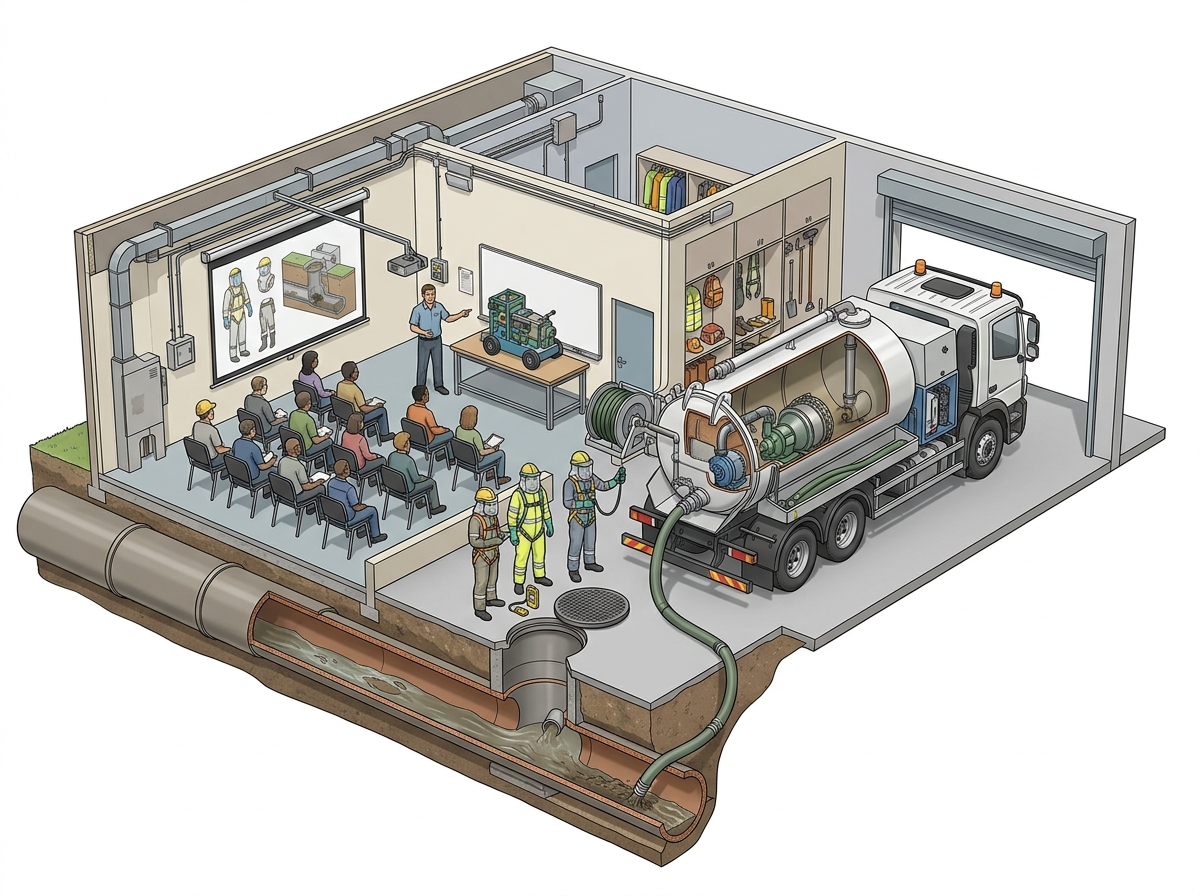
The launch of the first batch of occupational safety training under the National Action for Mechanised Sanitation Ecosystem (NAMASTE) scheme for sanitation workers in Durgapur Municipal Corporation, West Bengal, marks a critical governance intervention aimed at eliminating hazardous manual cleaning practices through skill development, mechanisation, and institutional safeguards. This initiative, supported by CSIR-CMERI and coordinated with state urban agencies, underscores the Union Government’s commitment to formalising and professionalising sanitation work while ensuring worker safety and dignity.
Background
- Manual scavenging, the hazardous practice of manually cleaning human excreta from sewers and septic tanks, remains a grave violation of human rights and dignity despite its constitutional prohibition under Article 21 and legislative bans such as the Prohibition of Employment as Manual Scavengers and their Rehabilitation Act, 2013.
- West Bengal has identified 7,630 sewer and septic tank workers, a significant proportion of whom operate in high-risk environments, necessitating targeted occupational safety interventions.
- The scheme is implemented in partnership with CSIR-CMERI for technology development, National Safai Karamchari Finance and Development Corporation (NSKFDC) for financial support, and State Urban Development Agencies for local coordination.
- Prior to this training initiative, awareness workshops were conducted across 124 municipalities and three cantonment boards in West Bengal to sensitise stakeholders and prevent hazardous cleaning practices.
- Emergency preparedness measures, including the compilation of blood group data and creation of an emergency database for sanitation workers, reflect the scheme’s focus on crisis response and worker welfare.
What is the NAMASTE Scheme?
- The scheme operates on five pillars: identification and profiling of sanitation workers, provision of personal protective equipment (PPE), skill training and certification, promotion of mechanised sanitation technologies, and rehabilitation support including livelihood assistance.
- A key objective is to transition sanitation workers from hazardous manual cleaning to mechanised cleaning roles, thereby reducing occupational fatalities and health risks associated with sewer and septic tank entry.
- NSKFDC acts as the nodal agency for financial inclusion, skill development funds, and credit linkages for sanitation workers, enabling their economic rehabilitation.
- The scheme mandates the registration of all sanitation workers in urban local bodies (ULBs) through a digital portal, enabling real-time monitoring of safety compliance and service delivery.
- Under NAMASTE, ULBs are required to deploy mechanised equipment for sewer cleaning and adopt standard operating procedures (SOPs) to eliminate manual intervention in hazardous cleaning tasks.
- The scheme includes a grievance redressal mechanism and a dedicated helpline for sanitation workers to report safety violations or emergencies, ensuring accountability and rapid response.
Key Features
| Feature | Significance |
|---|---|
| Five-day residential training programme | Ensures systematic skill development in occupational safety, PPE use, and mechanised sanitation operations for sewer and septic tank workers. |
| Personal Protective Equipment (PPE) kit distribution | Provides essential safety gear to mitigate health risks associated with hazardous sanitation work. |
| Emergency database creation | Facilitates rapid response in case of accidents by recording blood group details and other critical health data of sanitation workers. |
| Identification card issuance | Formalises the role of sanitation workers, enhances their social recognition, and aids in access to welfare schemes. |
| Certification and stipend provision | Incentivises participation and completion of training, improving employability and career progression within the sanitation sector. |
Why it Matters
Social Justice and Inclusion
- Addresses systemic neglect of sanitation workers by institutionalising safety protocols and dignity-enhancing measures.
- Aligns with constitutional directive principles under Article 41 and 42, which mandate state responsibility for ensuring just and humane conditions of work.
- Promotes social inclusion by recognising sanitation workers as integral stakeholders in urban governance and public health infrastructure.
Public Health and Urban Governance
- Reduces occupational hazards in sanitation work, thereby lowering incidence of diseases among workers and improving urban public health outcomes.
- Encourages mechanisation of sanitation processes, reducing human exposure to hazardous environments and improving operational efficiency.
- Strengthens municipal capacity for implementing national sanitation policies through structured training and standardised safety practices.
Economic Empowerment
- Enhances employability and skill sets of sanitation workers, potentially leading to better wages and career advancement within the sector.
- Facilitates access to welfare schemes and social security benefits by formalising worker identities through identification cards.
- Reduces long-term economic burden on state exchequer by preventing accidents and occupational diseases among sanitation workforce.
Technological and Institutional Collaboration
- Demonstrates multi-institutional synergy between central ministries (Social Justice and Empowerment), research bodies (CSIR-CMERI), state agencies, and municipal corporations.
- Showcases the role of scientific institutions in developing context-specific solutions for occupational safety in sanitation work.
- Highlights the importance of data-driven governance in designing targeted interventions for vulnerable occupational groups.
Challenges
1. Scalability and Geographical Coverage
- Ensuring equitable access to training across all municipal bodies, including smaller towns and remote areas.
- Addressing logistical challenges in transporting PPE kits and training materials to dispersed sanitation workforce.
- Maintaining consistency in training quality across different batches and locations.
UPSC Link: GS-II: Urban Local Bodies
2. Behavioural and Cultural Barriers
- Overcoming resistance among sanitation workers to adopt mechanised tools due to familiarity with traditional methods.
- Changing societal perceptions to reduce stigma and discrimination against sanitation workers.
- Ensuring sustained compliance with safety protocols beyond the training period.
UPSC Link: GS-IV: Ethics in Governance
3. Resource Mobilisation and Funding
- Securing long-term financial commitments from state and central governments for scaling the programme.
- Balancing budgetary allocations between training infrastructure, PPE procurement, and stipend disbursements.
- Exploring public-private partnerships to augment resources for mechanised sanitation solutions.
UPSC Link: GS-III: Government Budgeting
4. Monitoring and Evaluation
- Developing robust mechanisms to track post-training outcomes, including accident reduction and skill retention.
- Ensuring transparency in certification processes to prevent misuse or falsification.
- Conducting periodic audits to assess the effectiveness of training modules and safety protocols.
UPSC Link: GS-II: Governance and Accountability
5. Interdepartmental Coordination
- Facilitating seamless collaboration between municipal corporations, state agencies, and central ministries for programme implementation.
- Resolving jurisdictional ambiguities in responsibility for sanitation worker welfare across different administrative tiers.
- Harmonising data systems to avoid duplication and ensure comprehensive coverage of sanitation workforce profiles.
UPSC Link: GS-II: Federalism
Challenges — UPSC Perspective
| Issue | Concern |
|---|---|
| Limited awareness among workers | Low participation rates due to lack of information about programme benefits and registration processes. |
| Inadequate infrastructure for mechanised sanitation | Shortage of tools and equipment in municipal bodies, hindering adoption of safer practices. |
| High attrition rates in sanitation workforce | Frequent turnover reduces the impact of training and complicates long-term planning. |
| Regional disparities in safety standards | Variations in enforcement of safety protocols across different states and municipalities. |
| Data privacy concerns in emergency databases | Potential misuse of sensitive health information collected for emergency response. |
| Cultural resistance to formalisation | Reluctance among workers to adopt identification cards or formal employment records due to informal labour practices. |
Government Initiatives — Must-Memorise for Prelims
- National Action for Mechanised Sanitation Ecosystem (NAMASTE)
Way Forward
- Expand the training programme to cover all municipal bodies in West Bengal through a phased rollout, prioritising high-risk areas.
- Develop a centralised digital platform for tracking sanitation workforce profiles, training completion, and PPE distribution across states.
- Institutionalise mandatory safety audits for municipal bodies to ensure compliance with training outcomes and mechanisation targets.
- Launch awareness campaigns in local languages to educate sanitation workers about the benefits of PPE, mechanisation, and certification.
- Collaborate with vocational training institutes to integrate occupational safety modules into long-term skill development programmes for sanitation workers.
- Establish a grievance redressal mechanism for sanitation workers to report safety violations and seek timely intervention.
- Encourage state governments to allocate dedicated funds in annual budgets for scaling NAMASTE-like initiatives.
- Conduct longitudinal studies to evaluate the programme’s impact on accident reduction, worker health, and urban sanitation outcomes.
UPSC Value Addition
Keywords for Mains Answer-Writing
NAMASTE Scheme · Manual Scavenging Prevention · Occupational Safety of Sanitation Workers · Mechanised Sanitation Ecosystem · Personal Protective Equipment (PPE) · CSIR-CMERI · NSKFDC · Urban Sanitation Governance · Dignity of Labour · Sewer and Septic Tank Workers · Skilling and Certification for Informal Workers · Mechanised Cleaning Technologies · Right to Life under Article 21 · Social Justice and Empowerment Ministry · Urban Local Bodies (ULBs) · Vocational Safety Training Programs
Constitutional & Policy Linkages
- Article 41: Right to Public Assistance in Cases of Unemployment, Old Age, Sickness, and Disablement
- Article 42: Provision for Just and Humane Conditions of Work
Concept Flow
Urbanisation and inadequate sanitation infrastructure → Increased occupational hazards for sanitation workers → Launch of NAMASTE scheme → Training and PPE distribution → Adoption of mechanised sanitation tools → Reduction in accidents and health risks → Improved public health and worker dignity → Formalisation of sanitation workforce → Long-term social and economic empowerment.
Prelims Practice Questions
Q1. Consider the following statements regarding the NAMASTE Scheme in India:
1. The NAMASTE Scheme is implemented by the Ministry of Social Justice and Empowerment.
2. It aims to eliminate manual scavenging through mechanised sanitation solutions.
3. The scheme provides vocational safety training exclusively to municipal sanitation workers.
4. The National Safai Karamchari Finance and Development Corporation (NSKFDC) is a nodal agency under the scheme.
How many of the above statements are correct?
- Only one
- Only two
- Only three
- All four
Answer: All four — Statements 1, 2, and 4 are correct. Statement 3 is incorrect as the scheme covers all sanitation workers including sewer and septic tank workers, not exclusively municipal workers.
Q2. Assertion (A): The NAMASTE Scheme mandates the provision of Personal Protective Equipment (PPE) kits to all sanitation workers.
Reason (R): The scheme aims to ensure occupational safety and dignity of sanitation workers by reducing exposure to hazardous conditions.
Choose the correct option from the following:
- Both A and R are true, and R is the correct explanation of A
- Both A and R are true, but R is NOT the correct explanation of A
- A is true, but R is false
- A is false, but R is true
Answer: Both A and R are true, and R is the correct explanation of A — Both A and R are true, and R correctly explains A. The scheme explicitly provides PPE kits to sanitation workers as part of its occupational safety framework.
Q3. Match the following initiatives with their respective implementing agencies under the NAMASTE Scheme:
Column I (Initiative) | Column II (Agency)
———————————————–|—————————————
A. Vocational Safety Training Programs | 1. CSIR-CMERI
B. Mechanised Sanitation Technologies | 2. NSKFDC
C. Financial Assistance for Workers | 3. Ministry of Social Justice and Empowerment
D. Policy Framework and Scheme Implementation | 4. Urban Local Bodies (ULBs)
Select the correct match:
- A-1, B-2, C-3, D-4
- A-2, B-1, C-4, D-3
- A-3, B-1, C-2, D-4
- A-1, B-2, C-4, D-3
Answer: A-2, B-1, C-4, D-3 — A-2: NSKFDC provides financial assistance to workers. B-1: CSIR-CMERI develops mechanised sanitation technologies. C-4: Urban Local Bodies (ULBs) implement mechanised cleaning. D-3: The Ministry of Social Justice and Empowerment formulates the policy framework.
Mains Practice Question
✍ The NAMASTE Scheme represents a paradigm shift in urban sanitation governance by prioritising the occupational safety, dignity, and mechanisation of sanitation work. Examine the constitutional, statutory, and policy foundations that underpin this scheme. Also, analyse the challenges in its implementation, particularly in ensuring universal coverage and behavioural change among stakeholders. (15 Marks)
Approach: MODEL-ANSWER SKELETON:
1. **Constitutional and Statutory Foundations** (4 Marks):
– **Article 21 (Right to Life)**: Emphasise the right to a life of dignity and safe working conditions.
– **Article 42 (Provision for just and humane conditions of work)**: Highlight the state’s obligation to ensure safe working environments.
– **Manual Scavengers and their Rehabilitation Act, 2013**: Discuss the legal framework prohibiting manual scavenging and mandating rehabilitation.
– **Prohibition of Employment as Manual Scavengers and their Rehabilitation (Amendment) Act, 2020**: Note the amendments strengthening mechanisation and safety protocols.
2. **Policy Framework and Institutional Mechanisms** (5 Marks):
– **NAMASTE Scheme (National Action for Mechanised Sanitation Ecosystem)**: Outline its objectives, key components (mechanisation, skilling, PPE, database creation), and implementing agencies (Ministry of Social Justice and Empowerment, NSKFDC, CSIR-CMERI, ULBs).
– **Role of CSIR-CMERI**: Highlight its technical contributions in developing mechanised cleaning technologies and training infrastructure.
– **Database of Sewer and Septic Tank Workers**: Discuss the significance of profiling workers for targeted interventions and emergency preparedness.
– **Vocational Safety Training Programs**: Explain the structure, duration, and certification mechanism under the scheme.
3. **Challenges in Implementation** (6 Marks):
– **Behavioural and Cultural Barriers**: Discuss resistance to mechanisation due to entrenched practices, caste-based occupational hierarchies, and stigma associated with sanitation work.
– **Infrastructural Gaps**: Highlight the lack of mechanised equipment in smaller ULBs, inadequate training facilities, and logistical challenges in remote areas.
– **Financial and Administrative Constraints**: Note the budgetary limitations, delays in fund disbursement, and coordination issues among multiple agencies.
– **Data Gaps and Emergency Preparedness**: Discuss the challenges in maintaining accurate worker databases and ensuring timely emergency response.
– **Monitoring and Evaluation**: Emphasise the need for robust monitoring mechanisms to assess the scheme’s impact and address implementation gaps.
4. **Way Forward** (Optional, if time permits):
– Suggest measures such as incentivising mechanisation, strengthening ULB capacities, and promoting public-private partnerships for scaling up the scheme.
Source: PIB (Press Information Bureau)
Chhattisgarh PCS (CGPSC) — State PCS Practice
Prelims: Which of the following initiatives was recently launched in West Bengal under the NAMASTE scheme for occupational safety training of sanitation workers?
- A. First batch of occupational safety training for sanitation workers of Durgapur Municipal Corporation
- B. Skill development program for urban waste management in Kolkata
- C. Financial assistance scheme for sanitation workers in Siliguri
- D. Health insurance scheme for municipal employees in Asansol
Answer: A. First batch of occupational safety training for sanitation workers of Durgapur Municipal Corporation — The NAMASTE scheme’s occupational safety training was launched for sanitation workers of Durgapur Municipal Corporation in West Bengal.
Mains: Discuss the significance of the NAMASTE scheme for occupational safety and dignity of sanitation workers in India, with special reference to Chhattisgarh’s efforts in improving sanitation workforce conditions.
Generated by AanyaAi for educational purpose.
Related guides on our sites
- Best PSIR optional coaching for upsc
- Best sociology optional coaching for upsc
- Which is best sociology optional coaching for upsc
- Best PSIR optional teacher for upsc


No Comments