


08 Jul PM MODI’S THREE-NATION VISIT — JULY 2026 : Indonesia → Australia → New Zealand
GS PAPER II GS PAPER III PRELIMS
Why Is This Visit Important?
Prime Minister Narendra Modi’s 6-day visit (6–11 July 2026) to Indonesia, Australia and New Zealand is one of India’s most significant diplomatic engagements in the Indo-Pacific in 2026. The visit aims to deepen strategic partnerships, expand defence and trade cooperation, secure critical mineral supply chains, strengthen maritime security, and reinforce India’s Act East Policy and MAHASAGAR (Mutual and Holistic Advancement for Security and Growth Across Regions) vision.
|
🔔 IMPORTANT FOR UPSC This single tour links almost every major GS-II and GS-III theme in one current-affairs event — treat it as a model case study for Indo-Pacific & maritime diplomacy questions. |
Countries Visited — Snapshot
|
Country |
Main Focus |
|
🇮🇩 Indonesia |
Defence, maritime security, critical minerals, ASEAN |
|
🇦🇺 Australia |
QUAD, Indo-Pacific, critical minerals, education, defence |
|
🇳🇿 New Zealand |
Trade, FTA, Indo-Pacific, diaspora, education |
Chronology (Timeline)
6 July 2026 — Indonesia
|
Major Outcomes |
|
▸ Defence agreements ▸ BrahMos missile export ▸ Astra missile cooperation ▸ Critical minerals partnership ▸ AI & Digital Economy cooperation ▸ Maritime Security ▸ UPI expansion ▸ IIM campus proposal ▸ Indian diaspora address — “1.4 billion aspirations in motion” |
8–10 July 2026 — Australia
|
Expected Focus |
|
▸ QUAD cooperation ▸ Maritime security ▸ Defence interoperability ▸ Critical minerals ▸ Clean Energy ▸ Education ▸ Supply-chain resilience ▸ Indo-Pacific strategy |
10–11 July 2026 — New Zealand
|
Expected Focus |
|
▸ India–New Zealand Free Trade Agreement negotiations ▸ Dairy and agriculture ▸ Technology cooperation ▸ Indian diaspora ▸ Education ▸ Indo-Pacific coordination |
Why This Tour Is Significant
1. Strengthening the Indo-Pacific Strategy
The three countries lie across the Indo-Pacific maritime space. Together they help India protect sea lanes, ensure freedom of navigation, maintain a rules-based maritime order, and counter strategic instability.
2. Act East Policy
The visit demonstrates that India’s Act East Policy has evolved beyond economic engagement to include Defence, Maritime cooperation, Digital economy, Supply chains, and Connectivity.
3. MAHASAGAR Vision
This visit operationalizes India’s maritime vision through cooperation on blue economy, ports, disaster relief, coast guard coordination, and maritime domain awareness.
4. Defence Diplomacy
One of the biggest achievements is the reported BrahMos missile deal with Indonesia, strengthening India’s defence exports and strategic partnerships.
5. Critical Minerals
Australia and Indonesia are among the world’s major sources of nickel and other critical minerals essential for EV batteries, semiconductors, renewable energy and electronics. Diversifying supplies reduces India’s dependence on any single source.
Country-wise Relations with India
🇮🇩 Indonesia
|
Importance |
|
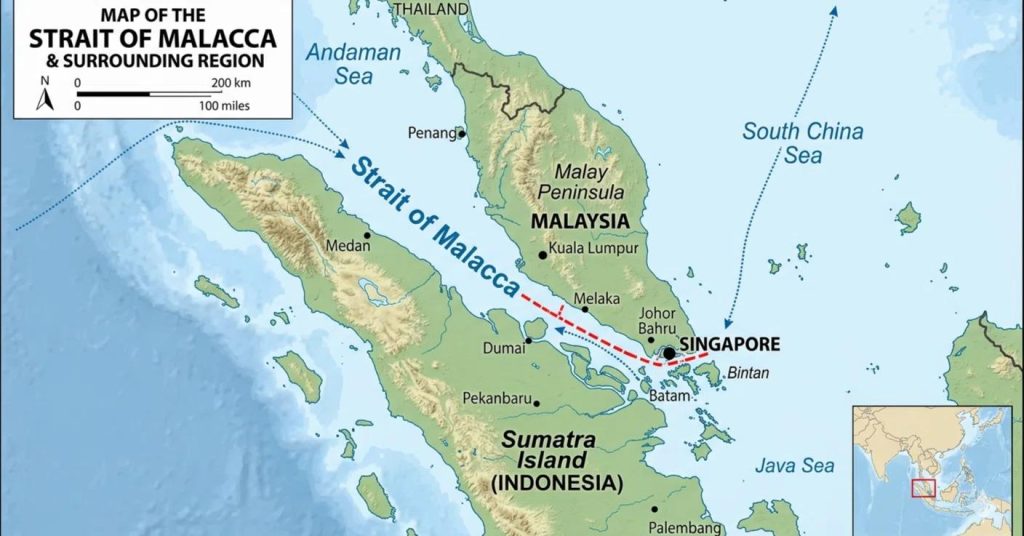
▸ Largest ASEAN economy ▸ Near the Strait of Malacca ▸ Maritime neighbour ▸ Shared civilizational heritage ▸ Key Indo-Pacific partner |
|
Major Areas of Cooperation |
|
▸ Defence ▸ Trade ▸ Palm oil ▸ Coal ▸ Pharmaceuticals ▸ Maritime security ▸ Blue Economy ▸ Critical Minerals ▸ Space ▸ AI |
|
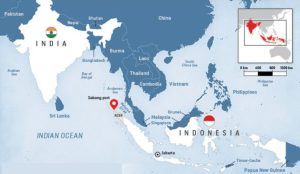
★ UPSC Keywords — Indonesia ASEAN | Sabang Port | Strait of Malacca | Andaman & Nicobar | Act East Policy |
🇦🇺 Australia
Australia is India’s QUAD partner, critical mineral supplier, defence partner, education partner, and Indo-Pacific ally.
|
Major Areas of Cooperation |
|
▸ Critical minerals ▸ Maritime security ▸ Naval exercises ▸ Education ▸ Clean Energy ▸ Supply chains ▸ Cyber Security |
|
Important Agreements |
|
▸ Comprehensive Strategic Partnership ▸ Economic Cooperation and Trade Agreement (ECTA) |
|
★ UPSC Keywords — Australia QUAD | AUKUS (distinct from QUAD) | Indo-Pacific Oceans Initiative | Critical Minerals |
🇳🇿 New Zealand
Although smaller economically, New Zealand is important for Indo-Pacific engagement, agriculture, dairy cooperation, education, Indian diaspora ties, and trade diversification.
|
Major Areas of Cooperation |
|
▸ FTA negotiations ▸ Technology ▸ Food processing ▸ Education ▸ Renewable energy |
|
★ UPSC Keywords — New Zealand Indo-Pacific | CPTPP (background knowledge) | Agriculture | Dairy sector |
Important Chronology for UPSC
|
Year |
Event |
|
1992 |
Launch of Look East Policy |
|
2014 |
Look East becomes Act East Policy |
|
2018 |
India–Indonesia Comprehensive Strategic Partnership |
|
2021 |
QUAD Leaders’ Summit institutionalized |
|
2022 |
India–Australia ECTA signed |
|
2023 |
India launches MAHASAGAR vision in maritime diplomacy (concept later expanded) |
|
2026 |
Three-nation Indo-Pacific visit: Indonesia–Australia–New Zealand |
Map-Based Areas to Revise
|
Locate These on the Map |
|
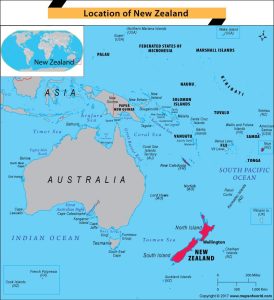
▸ Strait of Malacca ▸ Andaman & Nicobar Islands ▸ Sabang Port ▸ Timor Sea ▸ Coral Sea ▸ Tasman Sea ▸ Indian Ocean ▸ Pacific Ocean ▸ South China Sea |
Possible Themes for UPSC Mains
|
Mains Answer-Writing Themes |
|
▸ India’s Indo-Pacific strategy ▸ Act East Policy ▸ Maritime Security ▸ Critical Minerals ▸ Defence Diplomacy ▸ Supply Chain Resilience ▸ QUAD ▸ ASEAN centrality ▸ India’s role as a net security provider |
High-Probability UPSC Prelims Questions (2027)
Practice these four model questions built directly from this current-affairs event.
|
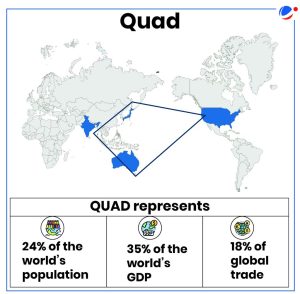
QUESTION 1 With reference to the QUAD, consider the following statements: 1. It consists of India, Australia, Japan and the United States. 2. It is a formal military alliance under a treaty. 3. One of its objectives is to promote a free, open and inclusive Indo-Pacific. Which of the statements given above is/are correct? 1. 1 only 2. 1 and 3 only 3. 2 and 3 only 4. 1, 2 and 3
✔ ANSWER: B — 1 and 3 only Explanation: Statements 1 and 3 are correct. QUAD is an informal strategic grouping, not a treaty-based military alliance. |
|
QUESTION 2 Which of the following countries border the Strait of Malacca? 1. Indonesia 2. Malaysia 3. Singapore 4. Thailand Select the correct answer using the code below. 1. 1 and 2 only 2. 1, 2 and 3 only 3. 2, 3 and 4 only 4. 1, 2, 3 and 4
✔ ANSWER: B — 1, 2 and 3 only Explanation: The Strait of Malacca is bordered by Indonesia, Malaysia and Singapore. Thailand does not directly border the strait. |
|
QUESTION 3 The term ‘Critical Minerals’, often seen in the context of India’s foreign policy, is primarily associated with: 1. Textile manufacturing 2. Minerals essential for advanced technologies such as batteries, semiconductors and renewable energy systems 3. Radioactive waste disposal 4. Marine fisheries
✔ ANSWER: B Explanation: Critical minerals such as lithium, nickel, cobalt and rare earth elements are essential for electric vehicles, clean energy, electronics and defence technologies. |
|
QUESTION 4 Consider the following statements regarding India’s Act East Policy: 1. It was announced in 2014 as an upgrade of the Look East Policy. 2. It focuses only on economic cooperation with ASEAN. 3. It includes strategic, defence, connectivity and cultural engagement. Which of the statements given above is/are correct? 1. 1 only 2. 1 and 3 only 3. 2 and 3 only 4. 1, 2 and 3
✔ ANSWER: B — 1 and 3 only Explanation: Statement 1 is correct, as Act East Policy was launched in 2014. Statement 2 is incorrect because the policy goes beyond economics to include defence, security, connectivity and people-to-people ties. Statement 3 is correct. |
UPSC 2027 Exam Takeaway
|
🔔 KEY TAKEAWAY This three-nation tour brings together almost every major International Relations theme that UPSC frequently tests — treat it as a single, high-yield current-affairs capsule. |
|
GS Paper II |
|
▸ India–ASEAN relations ▸ India–Australia relations ▸ India–New Zealand relations ▸ Act East Policy ▸ Indo-Pacific ▸ QUAD ▸ Maritime security and defence diplomacy |
|
GS Paper III |
|
▸ Critical minerals ▸ Supply-chain resilience ▸ Defence exports ▸ Clean energy ▸ Digital public infrastructure |
|
Prelims Focus |
|
▸ Map locations: Strait of Malacca, Andaman & Nicobar, Indian and Pacific Oceans ▸ Organizations: ASEAN, QUAD ▸ Major bilateral agreements ▸ Current developments: BrahMos export, critical minerals cooperation |


No Comments