


07 Oct Representation of the People Act, 1951: Strengthening Democracy and Electoral Integrity
This article covers “Daily Current Affairs” and the Representation of the People Act, 1951: Strengthening Democracy and Electoral Integrity
SYLLABUS MAPPING:
GS-2- Polity- Representation of the People Act, 1951: Strengthening Democracy and Electoral Integrity
FOR PRELIMS
What is the role of the Election Commission of India?
FOR MAINS
What problems exist in the RPA, 1951 and how can they be fixed?
Why in the News?
The Election Commission of India has announced the schedule for the Bihar Assembly Elections 2025, which will be held in two phases on November 6 and 11, with the counting of votes on November 14. With this announcement, the Model Code of Conduct has come into effect in the state. The elections will decide 243 assembly seats, and over 7.43 crore voters are expected to participate across more than 90,700 polling booths.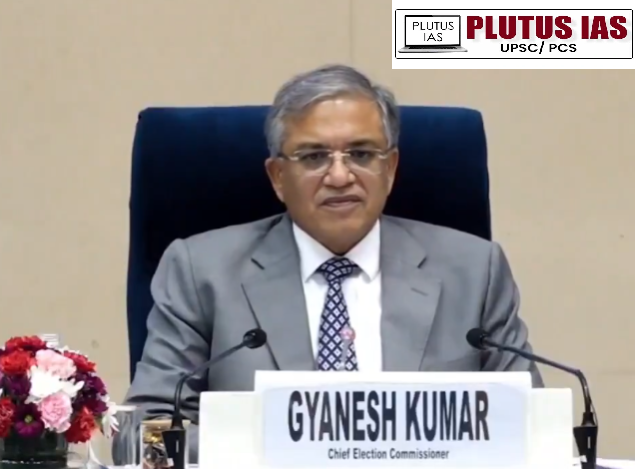
Representation of the People Act (RPA), 1951
The Representation of the People Act, 1951, is a key legislation enacted by the Provisional Parliament of India under Article 327 of the Constitution. It was introduced by Dr. B. R. Ambedkar to provide a legal framework for conducting free and fair elections to the Parliament and State Legislatures in India. The Act also defines the qualifications and disqualifications for membership, corrupt practices, election offences, and the mechanism for resolving election disputes. It complements the Representation of the People Act, 1950, which deals primarily with the preparation of electoral rolls and the allocation of seats.
Key Features of the Representation of the People Act (RPA), 1951
| Feature | Description |
|---|---|
| 1. Conduct of Elections | Procedures for free and fair elections to Lok Sabha and State Assemblies, including nomination, polling, and counting. Empowers the Election Commission of India (ECI). |
| 2. Qualifications for Membership | Must be an Indian citizen. Age: 25 years (Lok Sabha/Assembly) and 30 years (Rajya Sabha/Council). |
| 3. Disqualifications for Membership | Conviction of crimes, holding office of profit, unsound mind, undischarged insolvent, or engaging in corrupt practices. |
| 4. Corrupt Practices & Election Offences | Includes bribery, undue influence, impersonation, promoting caste/religion enmity, booth capturing, and false statements. |
| 5. Election Disputes | Election results can be challenged in High Courts; appeals lie with Supreme Court. Election Tribunals abolished by 1966 Amendment. |
| 6. Registration of Political Parties (Sec 29A) | Parties must register with ECI, submit constitution & list of office-bearers. Recognition allows allocation of symbols. |
| 7. Disqualification on Conviction (Sec 8) | Conviction for serious offences (corruption, rape, terrorism) leads to immediate disqualification. Lily Thomas v. Union of India (2013) reinforced this. |
| 8. Filing of Election Expenses (Sec 10A) | Candidates must submit detailed expenditure statements within prescribed time; failure can lead to up to 3-year disqualification. |
| 9. Office of Profit (Sec 9A) | Legislators holding government posts for personal gain face disqualification. |
| 10. Role in Democratic Accountability | Ensures transparency, fairness, and ethical conduct in elections; strengthens electoral integrity and democracy. |
Amendments to the RPA, 1951
| Year & Amendment | Key Provision / Change | Significance |
|---|---|---|
| 1966 Amendment | Abolished Election Tribunals; transferred election disputes to High Courts; appeals to Supreme Court. | Simplified and strengthened judicial mechanism for election disputes. |
| 2002 Amendment | Mandatory disclosure of candidates’ criminal, educational, and financial background (based on SC directive in PUCL v. Union of India). | Increased transparency and informed voting. |
| 2010 Amendment | Granted voting rights to overseas Indians (NRIs) by allowing voter registration. | Expanded the electoral base. |
| 2013 Amendment & Validation Act | Attempted to protect convicted lawmakers from immediate disqualification; withdrawn after backlash following Lily Thomas case. | Reinforced immediate disqualification of convicted representatives. |
| 2020 Finance Act-linked Amendment | Enabled Electoral Bonds for political funding. | Formalized donations but raised transparency concerns. |
Success of the Representation of the People Act (RPA), 1951
1. Ensured Free and Fair Elections: Established legal framework for elections under the Election Commission of India (ECI). India conducted 18 General Elections (1952–2024) and numerous state polls peacefully.
2. Strengthened Democracy: Operationalized universal adult suffrage. Ensured every eligible citizen could vote, making democracy inclusive and participatory.
3. Regulated Qualifications and Disqualifications: Defined clear criteria for candidates. Maintained integrity of elected representatives and barred those convicted of serious crimes.
4. Controlled Corrupt Practices: Penalized practices like bribery, undue influence, and booth capturing. Strengthened electoral ethics.
5. Promoted Transparency and Accountability: Introduced provisions on election expenditure and candidate declarations (amended in 2002). Increased public awareness and accountability of candidates.
6. Registration of Political Parties: Section 29A provides structured registration process for political parties. Ensures transparency and regulation in India’s multi-party system.
7. Judicial Oversight of Election Disputes: 1966 Amendment allowed High Courts and Supreme Court to hear election disputes. Ensured speedier and fairer judicial review.
8. Inclusion of Young Voters (18 Years): 61st Constitutional Amendment Act, 1988 reduced voting age from 21 to 18. Example: 1989 General Elections saw millions of first-time voters aged 18–21 participate, empowering youth in democracy.
9. Empowerment of Marginalized Sections: Reservation of seats for Scheduled Castes (SC) and Scheduled Tribes (ST). Ensured representation and inclusivity in governance.
Issues with the Representation of the People Act (RPA), 1951:
1. Criminalization of Politics: Many candidates with criminal charges continue to contest elections despite disqualifications being limited to convictions. Delays in trial and appeals allow such candidates to remain active in politics.
2. Election Expenditure Loopholes: Caps on election expenses are often ignored. Political parties find ways to fund campaigns through unaccounted channels.
3. Influence of Money and Muscle Power: Wealthy and influential candidates dominate elections, affecting fairness. Corrupt practices like vote-buying still occur.
4. Delayed Disqualification: Disqualification for corrupt practices or illegal activities is often slow due to lengthy judicial processes.
5. Representation of Women: Despite provisions for inclusivity, women’s political representation remains low. No direct reservation for women in Parliament and state legislatures (except local bodies).
6. Enforcement Challenge: Monitoring violations like bribery, booth capturing, or misuse of official machinery is difficult. Electoral rolls sometimes have errors, leading to disenfranchisement.
7. Political Party Regulation: While Section 29A regulates party registration, internal democracy in parties remains weak. Parties can ignore internal elections and candidate selection is often opaque.
8. Technological Concerns: EVMs and VVPATs improved transparency, but doubts and controversies over tampering occasionally arise.
How the Representation of the People Act (RPA), 1951 can be made more comprehensive and inclusive
1. Strengthen Measures Against Criminalization of Politics: Disqualify candidates immediately upon filing charges for serious crimes, not just upon conviction. Fast-track trials for politicians to prevent misuse of legal loopholes.
2. Enhance Transparency in Election Financing: Introduce stricter monitoring of campaign expenses and party funding. Make all donations above a minimal threshold publicly disclosed.Use technology to track political donations and expenditures in real-time.
3. Promote Women’s Representation: Introduce reservation for women in Parliament and State Legislatures (similar to local bodies). Incentivize parties to field more women candidates through additional recognition or funding.
4. Ensure Youth Participation: Promote voter awareness campaigns targeting youth (18–25 years). Include provisions for easier online voter registration and verification for young citizens.
5. Strengthen Internal Democracy in Political Parties: Mandate regular internal elections for party offices. Ensure transparency in candidate selection processes. Make party constitutions and election processes publicly accessible.
6. Improve Electoral Roll Accuracy: Use biometric and digital verification to remove duplicate, outdated, or fake entries. Periodic updating of rolls to ensure every eligible citizen can vote.
7. Leverage Technology Further: Expand secure digital voting options while maintaining EVM and VVPAT systems. Use AI and blockchain to detect anomalies or fraud in elections.
8. Empower Marginalized Communities: Consider reserved seats for underrepresented groups beyond SC/ST, including minorities and differently-abled citizens. Introduce targeted voter awareness campaigns in rural and tribal areas.
9. Speedy Judicial Mechanism for Election Disputes: Establish special fast-track benches for election-related cases to avoid prolonged litigation.
Conclusion
The RPA, 1951, has been fundamental in ensuring free, fair, and inclusive elections in India, strengthening democracy and electoral accountability. However, addressing criminalization, financial transparency, gender inclusivity, and technological improvements can make it more comprehensive, transparent, and participatory for the modern electoral landscape.
Prelims question:
Q. Consider the following statements: [2020]
1. According to the Constitution of India, a person who is eligible to vote can be made a minister in a State for six months even if he/she is not a member of the Legislature of that State.
2. According to the Representation of People Act, 1951, a person convicted of a criminal offence and sentenced to imprisonment for five years is permanently disqualified from contesting an election even after his release from prison.
Which of the statements given above is/are correct?
a) 1 only
b) 2 only
c) Both 1 and 2
d) Neither 1 nor 2
Answer: D
Mains Question:
Q. Discuss the role of the Election Commission of India in the light of the evolution of the Model Code of Conduct. (UPSC 2022)
(250 words)

- RBI’s Shrinking Real-Rate Cushion Amid Rising Inflation and Strong Demand - September 21, 2026
- India’s NGOs at a New Funding Crossroads - September 21, 2026
- Deep-Sea Discovery, Environmental Responsibility - September 19, 2026

No Comments