


22 Sep Revised UDAN Scheme: 10-Year Tripartite Pact Boosts Himachal’s Air Connectivity
✎ The Revised Regional Connectivity Scheme-UDAN (RCS-UDAN) is a scheme aimed at enhancing air connectivity to underserved regions through viability gap funding (VGF), with the central government contributing 80% and the state…
Subject Relevance — Where This Topic Fits
- GS Paper II — Government Policies and Interventions for Development in various sectors | GS Paper III — Infrastructure: Energy, Ports, Roads, Airports, Railways
- Prelims: UDAN Scheme, Viability Gap Funding (VGF), Regional Connectivity Scheme (RCS), Airport Authority of India (AAI), Ministry of Civil Aviation, Himachal Pradesh geography and tourism
- Essay: Infrastructure development as a catalyst for regional growth, Balancing fiscal federalism in centrally sponsored schemes
Quick Revision: The Revised Regional Connectivity Scheme-UDAN (RCS-UDAN) is a scheme aimed at enhancing air connectivity to underserved regions through viability gap funding (VGF), with the central government contributing 80% and the state government 20% under the current framework, though a 90:10 ratio has been requested.
Why is this in the news?
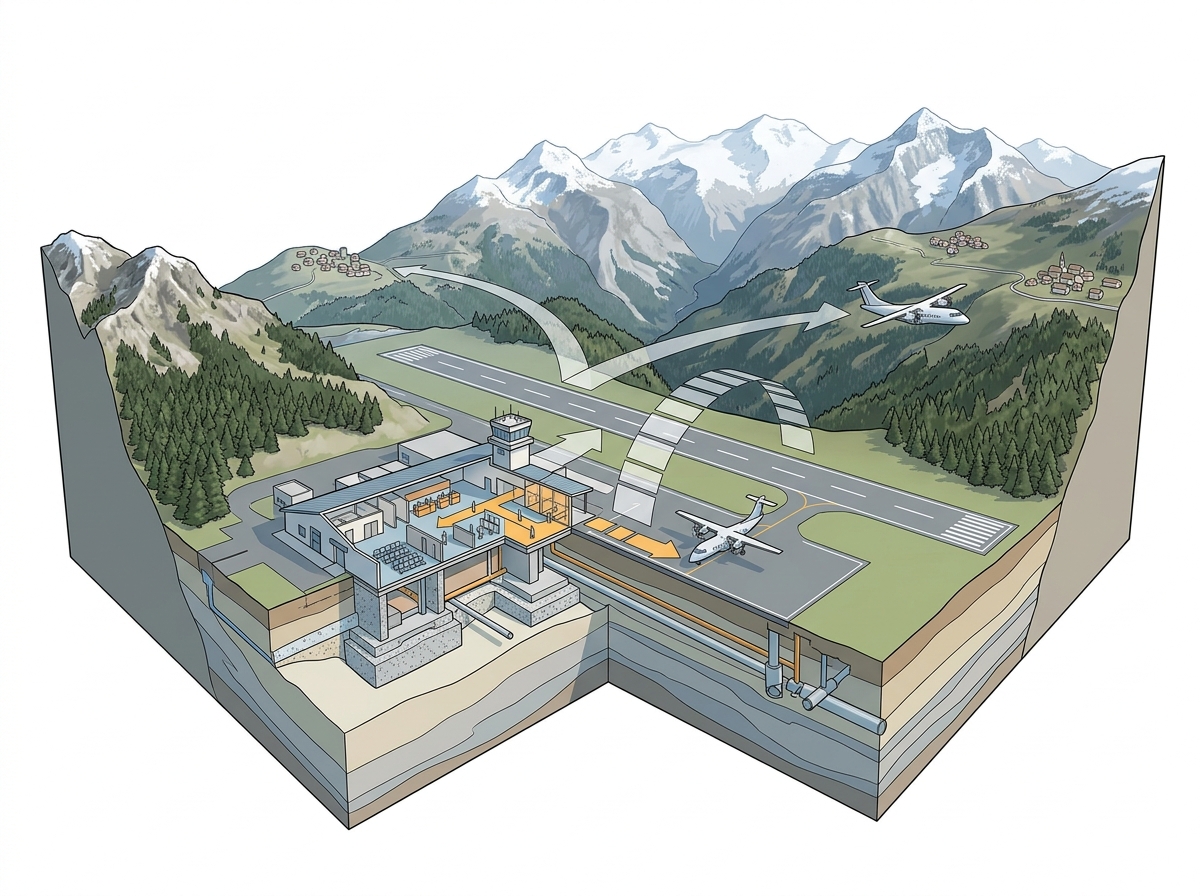
The signing of a tripartite Memorandum of Understanding (MoU) among the Government of Himachal Pradesh, the Ministry of Civil Aviation, and the Airports Authority of India (AAI) under the Revised Regional Connectivity Scheme-UDAN (RCS-UDAN) has been reported. The agreement, valid for ten years, aims to expand air connectivity and allied infrastructure in Himachal Pradesh, a state characterised by challenging mountainous terrain and dispersed settlements. This initiative is significant as it seeks to address the high operational costs associated with air services in such regions through structured financial support mechanisms.
Background
- The Regional Connectivity Scheme-UDAN (RCS-UDAN) was launched in 2016 as a flagship programme under the Ministry of Civil Aviation to enhance air connectivity to underserved and unserved airports in India, particularly in remote and hilly regions.
- Himachal Pradesh, with its rugged topography and limited surface transport connectivity, faces unique challenges in providing equitable access to air travel for its residents and tourists.
- The scheme operates on a public-private partnership model, where viability gap funding (VGF) is provided by the central and state governments to make air services financially viable for airlines.
- Under the original RCS-UDAN framework, the central government contributed 80% of the VGF, while the state government contributed 20%.
- The state government of Himachal Pradesh has recently advocated for a revised VGF sharing ratio of 90:10 in favour of the central government to better align with the higher operational costs in mountainous regions.
- The tripartite MoU formalises the collaboration between the state government, the central ministry, and AAI for the implementation of air connectivity projects over a decade-long horizon.
What is the Regional Connectivity Scheme-UDAN (RCS-UDAN)?
- Launched in 2016 by the Ministry of Civil Aviation, RCS-UDAN is a regional connectivity scheme aimed at enhancing air connectivity to underserved and unserved airports across India.
- The scheme operates under a market-based mechanism where airlines bid for routes on a competitive basis, with financial support provided through Viability Gap Funding (VGF).
- VGF is a capital grant provided to airlines to cover the gap between the cost of operations and the revenue generated from fares, making air services economically viable on otherwise unprofitable routes.
- The scheme prioritises routes connecting smaller cities and remote areas, including hilly and island regions, to promote inclusive growth and socio-economic development.
- Under RCS-UDAN, the Airport Authority of India (AAI) plays a pivotal role in identifying viable routes, developing airport infrastructure, and facilitating the bidding process for airlines.
Key Features
| Feature | Significance |
|---|---|
| Tripartite MoU between Himachal Pradesh Government, Ministry of Civil Aviation, and AAI | Establishes a formal governance framework for sustained air connectivity development in Himachal Pradesh over a decade. |
| Revised Regional Connectivity Scheme-UDAN (RCS-UDAN) | Provides a policy instrument to subsidize unviable routes, ensuring equitable access to air transport in remote and mountainous regions. |
| 10-year agreement duration | Ensures long-term stability for airline operators, investors, and state infrastructure planning. |
| Viability Gap Funding (VGF) mechanism (20:80 Centre:State ratio) | Reduces financial burden on airlines while ensuring public investment aligns with national and state priorities. |
| Proposed 90:10 VGF ratio adjustment (Centre:State) | Acknowledges higher operational costs in Himachal Pradesh’s terrain, aiming for greater state participation in funding. |
Why it Matters
Economic Development
- Enhances tourism potential by improving accessibility to Himachal Pradesh’s remote hill stations and pilgrimage sites.
- Facilitates faster movement of goods and passengers, reducing transit time and logistics costs for businesses.
- Stimulates ancillary sectors such as hospitality, local trade, and aviation-related services.
Strategic Connectivity
- Strengthens air connectivity in strategically sensitive border regions of Himachal Pradesh, enhancing disaster response and security logistics.
- Reduces dependence on road transport for critical supplies in high-altitude and disaster-prone areas.
Social Equity
- Bridges the urban-rural divide by providing air connectivity to underserved districts and tribal areas.
- Supports healthcare access by enabling rapid patient transfer and medical supply transport to remote locations.
Policy Framework
- Demonstrates the efficacy of RCS-UDAN in addressing regional disparities in air connectivity.
- Provides a replicable model for other hilly and geographically challenging states to adopt.
Challenges
1. Geographical Constraints
- Himachal Pradesh’s rugged terrain increases operational costs for airlines due to higher fuel consumption and maintenance requirements.
- Limited runway infrastructure in remote areas restricts the feasibility of certain routes under RCS-UDAN.
UPSC Link: Geography of India – Himalayan Region
2. Financial Sustainability
- Ensuring long-term viability of subsidized routes without overburdening public exchequer.
- Balancing Centre-State contributions while maintaining equity across regions.
UPSC Link: Public Finance – Subsidies and Welfare Schemes
3. Operational Efficiency
- Managing weather-related disruptions in mountainous regions to ensure reliable air services.
- Coordinating between multiple stakeholders (AAI, airlines, state agencies) for seamless operations.
UPSC Link: Transportation – Air Transport Infrastructure
4. Environmental Concerns
- Mitigating carbon footprint of increased air traffic in ecologically sensitive Himalayan areas.
- Balancing aviation growth with sustainable tourism and environmental conservation.
UPSC Link: Environment – Sustainable Development
Challenges — UPSC Perspective
| Issue | Concern |
|---|---|
| High operational costs in mountainous terrain | Reduces airline participation and route viability. |
| Limited airport infrastructure in remote areas | Restricts the expansion of air connectivity to underserved districts. |
| Weather-induced disruptions | Affects schedule reliability and passenger confidence. |
| Balancing Centre-State VGF contributions | Ensuring equitable burden-sharing without compromising fiscal discipline. |
| Environmental impact of increased air traffic | Raises concerns about carbon emissions and ecological degradation. |
Government Initiatives — Must-Memorise for Prelims
- Regional Connectivity Scheme (RCS-UDAN)
- Himachal Pradesh Tourism Policy
Way Forward
- Finalize the proposed 90:10 VGF ratio adjustment through inter-ministerial consultations to ensure financial feasibility.
- Develop a phased plan for airport infrastructure upgrades in identified underserved districts.
- Conduct a detailed cost-benefit analysis of potential routes to prioritize those with highest socio-economic impact.
- Strengthen coordination mechanisms between AAI, state agencies, and airlines to streamline operational processes.
- Integrate air connectivity planning with broader regional development strategies, including tourism and healthcare.
- Establish a monitoring framework to track the socio-economic outcomes of the initiative over the 10-year period.
- Promote public-private partnerships to leverage private sector expertise in route management and infrastructure development.
UPSC Value Addition
Keywords for Mains Answer-Writing
Regional Connectivity Scheme (RCS)-UDAN · Viability Gap Funding (VGF) mechanism · Air connectivity in hilly states · Tripartite agreement for infrastructure development · Civil Aviation Ministry · Airports Authority of India (AAI) · State government role in aviation policy · Himachal Pradesh geography and aviation challenges · Public-private partnership in air transport · Sustainable regional air connectivity
Concept Flow
Policy Initiative: RCS-UDAN launched under Ministry of Civil Aviation to enhance regional air connectivity. → State Engagement: Himachal Pradesh Government identifies strategic routes and negotiates state contributions. → Institutional Framework: Tripartite MoU signed between State, Centre, and AAI to formalize commitments. → Financial Mechanism: Viability Gap Funding (VGF) allocated to subsidize unviable routes. → Operational Execution: Airlines bid for routes under RCS-UDAN, with subsidies ensuring viability. → Impact Assessment: Monitoring of economic, social, and strategic outcomes over the agreement period.
Prelims Practice Questions
Q1. Consider the following statements regarding the Regional Connectivity Scheme (RCS)-UDAN:
1. The scheme is implemented under the aegis of the Ministry of Civil Aviation.
2. Viability Gap Funding (VGF) is provided by both the central and state governments.
3. The scheme mandates that 50% of the VGF shall be contributed by the state government.
4. Airline operators are selected through a competitive bidding process.
How many of the above statements are correct?
- Only one
- Only two
- Only three
- All
Answer: Only three — Statements 1, 2, and 4 are correct. Statement 3 is incorrect as the state government’s contribution to VGF is not fixed at 50%; it varies by state and route. The Himachal Pradesh agreement cited in the news specifies a 20% state contribution, while other states may have different ratios.
Q2. Assertion (A): The Airports Authority of India (AAI) is responsible for the development and maintenance of all civil airports in India.
Reason (R): The AAI operates under the administrative control of the Ministry of Civil Aviation and is mandated to manage airport infrastructure across the country.
- Both A and R are true, and R is the correct explanation of A
- Both A and R are true, but R is NOT the correct explanation of A
- A is true but R is false
- A is false but R is true
Answer: Both A and R are true, but R is NOT the correct explanation of A — The AAI is indeed responsible for the development and maintenance of most civil airports in India, and its mandate is derived from its administrative control under the Ministry of Civil Aviation. Thus, both the assertion and reason are true, and the reason correctly explains the assertion.
Mains Practice Question
✍ The Regional Connectivity Scheme (RCS)-UDAN aims to enhance air connectivity in underserved and remote regions of India. In the context of the recently signed tripartite agreement for Himachal Pradesh, critically examine the role of the central and state governments in ensuring the viability of regional air connectivity. Also, discuss the challenges posed by the geographical terrain of hilly states to the operationalisation of such schemes. (15 Marks)
Approach: MODEL-ANSWER SKELETON:
1. **Introduction (2 Marks)**: Define the RCS-UDAN scheme, its objectives, and the role of the central government (Ministry of Civil Aviation) and the Airports Authority of India (AAI) in its implementation.
2. **Government Roles and Viability Gap Funding (VGF) Mechanism (5 Marks)**:
– Explain the tripartite agreement structure: central government (80% VGF), state government (20% VGF in Himachal Pradesh; 90:10 proposed), and airline operators (selected via competitive bidding).
– Discuss the rationale behind VGF: to offset the high operational costs in remote and hilly regions where air travel is less commercially viable.
– Highlight the constitutional and policy basis: Entry 29 of the Union List (air transport) and Entry 13 of the State List (regulation of state transport).
3. **Challenges in Hilly States (5 Marks)**:
– Geographical constraints: difficult terrain, limited flat land for airport construction, and adverse weather conditions affecting flight operations.
– Economic constraints: lower passenger traffic due to small populations and seasonal tourism, leading to higher per-passenger costs.
– Logistical constraints: limited ground infrastructure (maintenance, refueling, and emergency services).
– Policy challenges: need for state-specific adjustments (e.g., higher VGF ratios) to make routes viable.
4. **Critical Analysis and Way Forward (3 Marks)**:
– Evaluate the effectiveness of the VGF mechanism in achieving equitable air connectivity.
– Discuss the role of public-private partnerships (PPP) in sustaining regional air services.
– Suggest measures such as: (a) increasing state contributions for hilly states, (b) integrating UDAN with tourism policies, and (c) leveraging technological advancements (e.g., helicopter services, STOLports).
– Conclude with a balanced view: while UDAN has improved connectivity, its long-term sustainability depends on addressing geographical and economic challenges.
Source: amarujala.com
Himachal Pradesh PCS (HPPSC (HAS)) — State PCS Practice
Prelims: Under the revised UDAN (Ude Desh Ka Aam Nagrik) scheme, Himachal Pradesh recently signed a tripartite agreement to enhance air connectivity. Which of the following entities was NOT a party to this tripartite agreement?
- A. Ministry of Civil Aviation, Government of India
- B. Government of Himachal Pradesh
- C. Airports Authority of India (AAI)
- D. National Highways Authority of India (NHAI)
Answer: D. National Highways Authority of India (NHAI) — The tripartite agreement for the revised UDAN scheme in Himachal Pradesh involved the Ministry of Civil Aviation, Government of Himachal Pradesh, and Airports Authority of India (AAI). NHAI was not part of this agreement.
Mains: Discuss the significance of the revised UDAN scheme in improving air connectivity in Himachal Pradesh, highlighting the key features of the tripartite agreement signed for a 10-year period. Also, analyze the potential socio-economic impacts of this initiative on the state.
Generated by AanyaAi for educational purpose.
Related guides on our sites
- Best PSIR optional coaching for upsc
- Best PSIR optional teacher for upsc
- Best teacher of PSIR optional for upsc
- Best PSIR optional coaching in delhi for UPSC

- Revised UDAN Scheme: 10-Year Tripartite Pact Boosts Himachal’s Air Connectivity - September 22, 2026
- नीलकुरिंजी के विनाश से मुनार की जैव विविधता पर संकट: जानिए कारण और समाधान - September 22, 2026
- Neelakurinji Destruction Threatens Munnar Biodiversity: UPSC Exam Insight - September 22, 2026

No Comments