


24 Nov SC Upholds Tribal Land Rights, Quashes Odisha Mining Acquisition
✎ The Supreme Court's decision reaffirms that prior Gram Sabha consent is a mandatory prerequisite for land acquisition in Scheduled Areas under the LARR Act, 2013, safeguarding tribal rights and promoting participatory governance.
Subject Relevance — Where This Topic Fits
- GS Paper II — Governance, Constitution, Social Justice | GS Paper III — Environment, Land Reforms
- Prelims: Right to Fair Compensation and Transparency in Land Acquisition, Rehabilitation and Resettlement Act, 2013, Scheduled Areas, Gram Sabha, Panchayats (Extension to Scheduled Areas) Act, 1996 (PESA), Tribal land rights, Fifth Schedule of the Constitution, Eminent Domain, Land acquisition for private companies
- Essay: Tribal rights and development challenges in India, Balancing economic development with environmental and social justice, The role of judicial review in upholding constitutional principles
Quick Revision: The Supreme Court’s decision reaffirms that prior Gram Sabha consent is a mandatory prerequisite for land acquisition in Scheduled Areas under the LARR Act, 2013, safeguarding tribal rights and promoting participatory governance.
Why is this in the news?
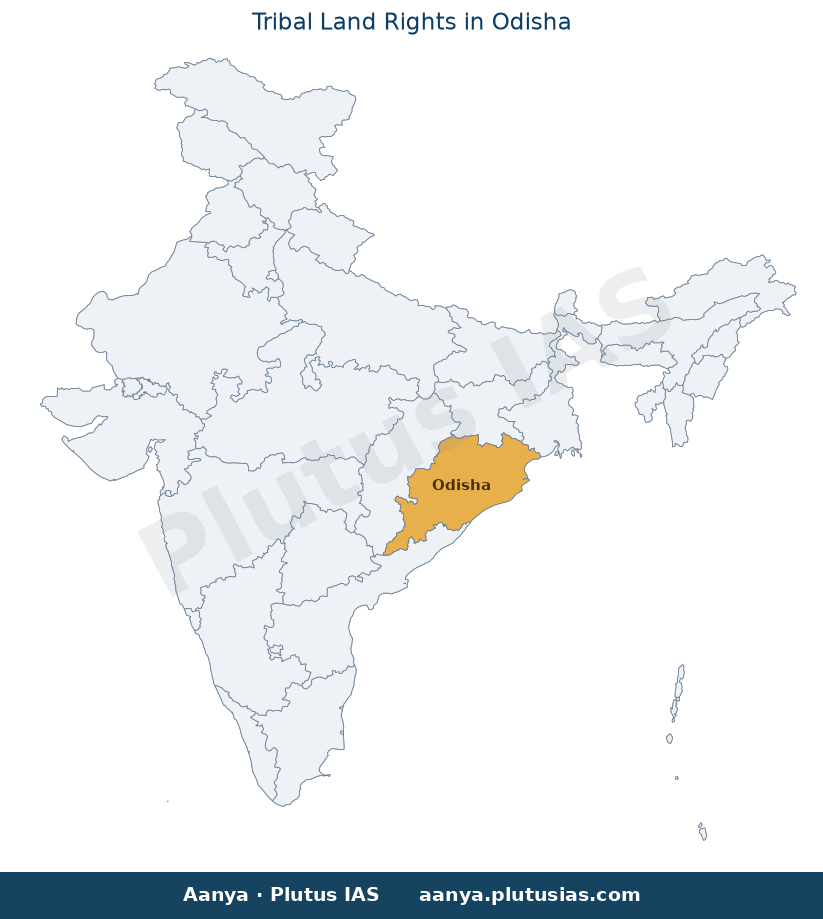
The Supreme Court of India recently quashed a land acquisition process in Odisha’s Sundargarh district, initiated for a limestone mining project by Dalmia Cement Bharat Limited. The Court ruled that prior consent from the concerned Gram Sabha is mandatory for land acquisition in Scheduled Areas, as stipulated by Section 41 of the Right to Fair Compensation and Transparency in Land Acquisition, Rehabilitation and Resettlement Act, 2013. This decision underscores the paramount importance of tribal land rights and the statutory requirement of community participation in developmental projects affecting their traditional territories.
Background
- The case originated from a challenge by residents of Kukuda, Bihabandha, and Lanjiberna villages in Sundargarh district against the Odisha government’s acquisition of 273.57 hectares for mining operations.
- The State Government had granted a mining lease to Dalmia Cement Bharat Limited, extended until February 2040, necessitating the acquisition of surface rights.
- The Orissa High Court had previously held that prior consent was not required as the acquisition was by the State, and that the consent process could be continuous, with a significant number of affected persons having given consent in Form J.
- The petitioners argued that the provisions for prior consent are mandatory, particularly for land acquisition by a private company for a public purpose, as per Section 2(2)(b)(i) of the 2013 Act and Odisha Rules 20 and 21.
- The Supreme Court’s ruling overturned the High Court’s decision, emphasizing the mandatory nature of Gram Sabha consent in Scheduled Areas.
- The Fifth Schedule of the Constitution of India deals with the administration and control of Scheduled Areas and Scheduled Tribes in any state other than the four states of Assam, Meghalaya, Tripura, and Mizoram.
Right to Fair Compensation and Transparency in Land Acquisition, Rehabilitation and Resettlement Act, 2013 (LARR Act, 2013)
- The LARR Act, 2013, replaced the Land Acquisition Act, 1894, aiming to provide a humane, participative, informed, and transparent process for land acquisition.
- It mandates fair compensation to land owners, rehabilitation and resettlement (R&R) provisions for affected families, and safeguards for their livelihoods.
- Key features include provisions for Social Impact Assessment (SIA), consent requirements, and special provisions for Scheduled Areas.
- Section 41 of the Act specifically addresses land acquisition in Scheduled Areas, requiring prior consultation with the Gram Sabha or the Panchayats at the appropriate level.
- For acquisition by private companies or for public-private partnership projects, the Act mandates the consent of at least 80% of the affected families.
- The Act defines ‘public purpose’ broadly to include strategic national projects, infrastructure, industrial corridors, and housing for the poor.
- It also includes provisions for return of unutilized land to the original owners if not used for the stated purpose within a specified period.
- The Panchayats (Extension to Scheduled Areas) Act, 1996 (PESA), further empowers Gram Sabhas in Scheduled Areas, granting them control over natural resources and development plans.
Key Features
| Feature | Significance |
|---|---|
| Gram Sabha Consent (Section 41, RFCTLARR Act, 2013) | Mandatory for land acquisition in Scheduled Areas, ensuring local self-governance and protection of tribal rights. |
| Scheduled Areas | Regions predominantly inhabited by tribal communities, granted special constitutional protections to preserve their culture and land. |
| Right to Fair Compensation and Transparency in Land Acquisition, Rehabilitation and Resettlement Act, 2013 (RFCTLARR Act) | Legislation governing land acquisition in India, emphasizing fair compensation, rehabilitation, and resettlement, with specific provisions for tribal lands. |
| Acquisition by Private Company for Public Purpose (Section 2(2)(b)(i), RFCTLARR Act) | Requires prior consent of at least 80% of affected families, highlighting the enhanced protection for communities when land is acquired for private entities. |
| Surface Rights for Mining Operations | Essential for initiating mining activities, often necessitating land acquisition and impacting local communities, particularly in resource-rich tribal areas. |
Why it Matters
Legal and Constitutional
- Reaffirms the paramountcy of Gram Sabha consent in Scheduled Areas for land acquisition, strengthening the legal framework for tribal land rights.
- Upholds the spirit of the Fifth Schedule of the Constitution, which provides for the administration and control of Scheduled Areas and Scheduled Tribes.
- Clarifies the interpretation of the RFCTLARR Act, 2013, particularly concerning the mandatory nature of prior consent provisions in tribal regions.
Socio-Cultural
- Protects the traditional landholdings and cultural identity of tribal communities, whose livelihoods are intrinsically linked to their ancestral lands.
- Empowers local self-governance institutions, such as the Gram Sabha, in decision-making processes affecting their land and resources.
- Mitigates potential displacement and disruption of tribal life, which often results from large-scale development or industrial projects.
Economic and Governance
- Establishes a precedent for responsible industrial development, emphasizing adherence to legal and ethical standards in resource extraction.
- Highlights the need for robust due diligence and stakeholder consultation by both government and private entities before initiating projects in tribal areas.
- Contributes to improved governance by ensuring transparency and accountability in land acquisition processes, reducing conflicts and litigation.
Challenges
1. Balancing Development Needs with Tribal Rights
- Reconciling the imperative for industrial development and resource extraction with the constitutional and human rights of indigenous communities.
- Ensuring that development projects in Scheduled Areas are genuinely inclusive and provide equitable benefits to the local tribal population.
UPSC Link: Governance; Social Justice
2. Effective Implementation of Land Acquisition Laws
- Ensuring uniform and strict adherence to the provisions of the RFCTLARR Act, 2013, particularly those pertaining to consent and rehabilitation.
- Addressing ambiguities and varying interpretations of legal provisions by different state authorities and judicial bodies.
UPSC Link: Indian Polity; Governance
3. Empowerment of Gram Sabhas
- Strengthening the capacity of Gram Sabhas in Scheduled Areas to effectively exercise their statutory powers, including informed consent.
- Protecting Gram Sabhas from undue influence or coercion by external actors during land acquisition negotiations.
UPSC Link: Panchayati Raj; Social Justice
4. Preventing Illegal Land Alienation
- Vigilance against surreptitious methods of land acquisition or transfer that bypass legal safeguards designed for tribal lands.
- Ensuring accurate and updated land records in tribal areas to prevent fraudulent transactions and protect ownership rights.
UPSC Link: Land Reforms; Social Justice
Challenges — UPSC Perspective
| Issue | Concern |
|---|---|
| Interpretation of ‘Prior Consent’ | Ambiguity in defining the precise stage and method for obtaining Gram Sabha consent, leading to legal disputes. |
| Vulnerability of Tribal Communities | Lack of awareness regarding their rights and susceptibility to pressure from powerful entities during land negotiations. |
| Project Delays and Cost Overruns | Legal challenges and public resistance to land acquisition can significantly delay projects and escalate costs, impacting economic development. |
| Rehabilitation and Resettlement Efficacy | Ensuring that rehabilitation and resettlement packages genuinely improve the lives of affected families, rather than merely compensating them. |
| Monitoring and Compliance | Ensuring continuous oversight by government agencies to ensure that acquired land is used for the stated public purpose and legal conditions are met. |
Way Forward
- Strengthen legal awareness campaigns among tribal communities regarding their land rights and the provisions of the RFCTLARR Act, 2013.
- Develop clear, standardized operating procedures for obtaining Gram Sabha consent in Scheduled Areas, ensuring transparency and informed decision-making.
- Enhance the capacity of Gram Sabhas and local tribal bodies to effectively participate in and monitor land acquisition processes.
- Implement robust independent social impact assessments (SIAs) for all projects in Scheduled Areas, with active community involvement.
- Ensure timely and fair compensation, rehabilitation, and resettlement packages that are culturally appropriate and improve the socio-economic status of affected tribal families.
- Promote alternative models of development that minimize displacement and prioritize sustainable resource management in tribal regions.
- Establish effective grievance redressal mechanisms accessible to tribal communities to address concerns related to land acquisition.
UPSC Value Addition
Keywords for Mains Answer-Writing
Right to Fair Compensation and Transparency in Land Acquisition, Rehabilitation and Resettlement Act, 2013 · Gram Sabha consent · Scheduled Areas · Panchayats (Extension to Scheduled Areas) Act, 1996 (PESA) · tribal land rights · mining projects · Fifth Schedule · land acquisition process · public purpose · private company acquisition · Orissa High Court · Supreme Court judgment · sustainable development
Constitutional & Policy Linkages
- {‘article’: ‘Fifth Schedule’, ‘note’: ‘Administration of Scheduled Areas and Tribes’}
- {‘article’: ‘Article 244’, ‘note’: ‘Administration of Scheduled and Tribal Areas’}
- {‘article’: ‘Article 243M’, ‘note’: ‘Exemption of Scheduled Areas from Panchayats’}
Concept Flow
Mining project proposed in Scheduled Area. → Land acquisition initiated by state for private company. → Gram Sabha consent not obtained as per law. → Affected tribal communities challenge acquisition. → Supreme Court upholds mandatory Gram Sabha consent. → Land acquisition quashed, tribal rights affirmed.
Prelims Practice Questions
Q1. Consider the following statements regarding the Right to Fair Compensation and Transparency in Land Acquisition, Rehabilitation and Resettlement Act, 2013 (LARR Act, 2013):
1. The Act mandates prior consent of the Gram Sabha for land acquisition in Scheduled Areas.
2. The Act applies only to land acquisitions by the State for public infrastructure projects.
3. For acquisition by a private company for public purpose, the Act requires prior consent of at least 80% of the affected families.
How many of the above statements are correct?
- Only one
- Only two
- Only three
- None
Answer: Only two — Statement 1 is correct: Section 41 of the LARR Act, 2013, specifically mandates prior consent of the Gram Sabha for land acquisition in Scheduled Areas. Statement 2 is incorrect: The Act also covers land acquisition for private companies or public-private partnerships. Statement 3 is correct: Section 2(2)(b)(i) read with Rule 21 of the Odisha Rules (based on the Act) specifies this requirement for private company acquisition for public purpose.
Q2. Which of the following provisions or legislations primarily aims to safeguard the rights of tribal communities over their land and natural resources, particularly in Scheduled Areas?
1. The Forest Rights Act, 2006
2. The Panchayats (Extension to Scheduled Areas) Act, 1996 (PESA)
3. The Wildlife Protection Act, 1972
4. The Right to Fair Compensation and Transparency in Land Acquisition, Rehabilitation and Resettlement Act, 2013
Select the correct answer using the code given below:
- 1 and 2 only
- 2, 3 and 4 only
- 1, 2 and 4 only
- 1, 2, 3 and 4
Answer: 1, 2 and 4 only — The Forest Rights Act, 2006, recognizes and vests forest rights and occupation in forest dwelling Scheduled Tribes and other traditional forest dwellers. PESA, 1996, extends provisions of Part IX of the Constitution to Scheduled Areas, granting significant powers to Gram Sabhas, including mandatory consultation for land acquisition. The LARR Act, 2013, specifically mandates Gram Sabha consent in Scheduled Areas for land acquisition. The Wildlife Protection Act, 1972, primarily focuses on the protection of wild animals, birds, and plants, and while it may indirectly impact tribal communities, its primary aim is not tribal land rights.
Mains Practice Question
✍ Critically examine the significance of Gram Sabha consent in land acquisition processes, particularly in Scheduled Areas, with reference to the Right to Fair Compensation and Transparency in Land Acquisition, Rehabilitation and Resettlement Act, 2013, and recent judicial pronouncements. (15 Marks)
Approach: MODEL-ANSWER SKELETON:
1. Introduction: Briefly define Gram Sabha and its role, especially in Scheduled Areas. Introduce the LARR Act, 2013, as a key legislation governing land acquisition.
2. Constitutional and Legal Basis for Gram Sabha Consent:
a. Fifth Schedule of the Constitution: Provisions for administration and control of Scheduled Areas.
b. Panchayats (Extension to Scheduled Areas) Act, 1996 (PESA): Mandates Gram Sabha’s role in approving development projects and land acquisition in Scheduled Areas.
c. LARR Act, 2013: Specifically Section 41, which makes prior consent of Gram Sabha mandatory for land acquisition in Scheduled Areas.
d. Forest Rights Act, 2006: Recognizes community forest rights and requires Gram Sabha consent for diversion of forest land.
3. Significance of Gram Sabha Consent:
a. Protection of Tribal Rights: Safeguards the land, livelihood, and cultural identity of tribal communities.
b. Participatory Governance: Ensures local self-governance and democratic decision-making at the grassroots level.
c. Prevention of Displacement: Acts as a check against arbitrary land acquisition and involuntary displacement.
d. Sustainable Development: Promotes development projects that are sensitive to local needs and environmental concerns.
e. Empowerment of Marginalized Communities: Strengthens the voice of vulnerable groups in development processes.
4. Recent Judicial Pronouncements (e.g., Bibol Toppo vs. Odisha government and others): Discuss how the Supreme Court has upheld the mandatory nature of Gram Sabha consent, reinforcing the legal framework.
5. Challenges and Criticisms:
a. Implementation Gaps: Issues in effective implementation of PESA and LARR Act provisions.
b. Bureaucratic Hurdles: Delays and complexities in obtaining consent.
c. Conflict of Interest: Potential for manipulation or undue influence.
d. Balancing Development and Rights: The challenge of reconciling industrial development needs with tribal rights.
6. Conclusion: Reiterate the importance of Gram Sabha consent as a cornerstone of tribal rights and inclusive development, emphasizing the need for robust implementation and judicial oversight.
Source: The Hindu
Odisha PCS (OPSC (OAS)) — State PCS Practice
Prelims: The recent Supreme Court judgment upholding tribal land rights and quashing mining-linked acquisition specifically pertains to which state in India?
- Jharkhand
- Chhattisgarh
- Odisha
- Madhya Pradesh
Answer: Odisha — The Supreme Court’s ruling directly addressed mining-linked land acquisition issues in Odisha, reinforcing tribal land rights.
Mains: Examine the implications of the Supreme Court’s recent judgment on tribal land rights and mining-linked acquisition in Odisha, particularly in the context of the state’s development goals and the welfare of its tribal population. (Answer in 150 words)
Generated by AanyaAi for educational purpose.
Related guides on our sites
- Current affairs for upsc 2026
- Best PSIR optional coaching for upsc
- Best PSIR optional teacher for upsc
- Best teacher of PSIR optional for upsc

- SC Upholds Tribal Land Rights, Quashes Odisha Mining Acquisition - November 24, 2026
- ग्रीन इंडिया मिशन: विफलता के कारण और नियंत्रक एवं महालेखा परीक्षक की रिपोर्ट - November 24, 2026
- COP31 Fails on Fossil Fuel Phase-Out & Climate Finance - November 24, 2026

No Comments