

SHANTI Bill, 2025: A Paradigm Shift in India’s Nuclear Energy Policy

SHANTI Bill, 2025: A Paradigm Shift in India’s Nuclear Energy Policy

This article covers “Daily Current Affairs” and From  SHANTI Bill, 2025: A Paradigm Shift in India’s Nuclear Energy Policy

SYLLABUS MAPPING  

GS-2-Polity-  SHANTI Bill, 2025: A Paradigm Shift in India’s Nuclear Energy Policy

FOR PRELIMS

What is the SHANTI Bill, 2025?

FOR MAINS

What are the main features of the SHANTI Bill?

Why in the News? 
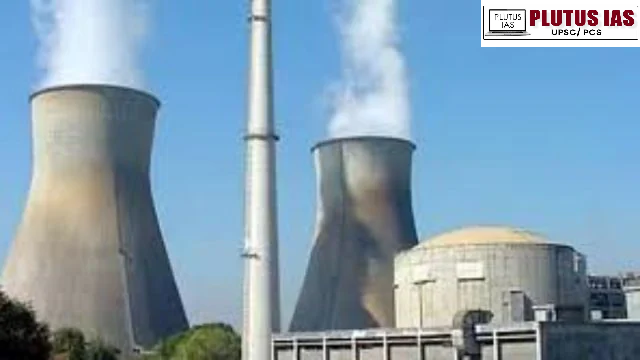
 India has taken a historic step towards restructuring its nuclear energy ecosystem with the introduction of the Sustainable Harnessing and Advancement of Nuclear Energy for Transforming India Bill, 2025 (SHANTI Bill) in Parliament. Introduced by the Minister of State for Science & Technology, Dr. Jitendra Singh, the Bill seeks to repeal the Atomic Energy Act, 1962 and the Civil Liability for Nuclear Damage Act, 2010, thereby opening India’s highly restricted nuclear power sector to private participation. The Bill marks a paradigm shift in India’s energy policy, aligning nuclear power with India’s clean energy transition, energy security needs, and net-zero ambitions.

Why SHANTI Bill?

India’s nuclear sector has historically been state-dominated, with generation, fuel fabrication, and reactor operations restricted to government entities like NPCIL. Two major challenges persisted:
1. Limited nuclear capacity growth despite rising energy demand
2. Deterrence to foreign and private investment due to stringent supplier liability provisions under the CLND Act, 2010
At a time when India aims to achieve net zero emissions by 2070, nuclear energy is increasingly seen as a reliable, clean and base-load power source complementing intermittent renewables.

Key Features of the SHANTI Bill, 2025

Aspect Provisions under SHANTI Bill, 2025 Significance
1. Opening Nuclear Sector to Private Participation • Allows private companies, JVs, PPPs and permitted entities to build, own, operate and decommission nuclear power plants
• Permits import, export, possession and transportation of nuclear fuel
• Enables fabrication of nuclear fuel including conversion, refining and enrichment of Uranium-235 (within prescribed thresholds)
Ends state monopoly; attracts private & foreign investment; expands nuclear capacity
2. Repeal of Supplier Liability Clause • Introduces a pragmatic civil liability regime
• Removes Section 46 of the Civil Liability for Nuclear Damage Act, 2010
• Aligns India’s liability framework with international nuclear conventions
Removes major deterrent for US, French and global nuclear firms; boosts investor confidence
3. Promotion of Small Modular Reactors (SMRs) • Encourages large-scale deployment of SMRs
• Focus on reactors with lower capital costs and enhanced safety
• Suitable for remote areas, data centres and industrial clusters
Enables distributed and flexible energy systems; supports 24×7 clean power
4. Robust Regulatory Framework • Establishes a strong and independent nuclear regulatory architecture
• Centralised licensing and oversight
• Clear norms on safety, security, and radiation protection
Balances liberalisation with safety; improves public trust and regulatory clarity
5. Nuclear Liability & Insurance Mechanism • Operators must arrange insurance or financial security
• Liability capped at ₹300 million per nuclear incident
• Central Government installations exempted
Ensures predictability, risk management and victim compensation
6. Specialised Nuclear Tribunal • Creation of a dedicated nuclear energy tribunal
• Excludes civil courts’ jurisdiction
• Faster resolution of disputes
Improves governance efficiency; strengthens investor confidence

Multi-Dimensional Significance of the SHANTI Bill, 2025

Dimension Key Significance Relevance for India
1. Energy Security • Provides 24×7 base-load power
• Reduces dependence on fossil fuel imports
• Supports energy-intensive sectors such as data centres, AI hubs and manufacturing
Ensures round-the-clock clean electricity; strengthens national energy security (as highlighted by Commerce Minister Piyush Goyal)
2. Clean Energy & Climate Commitments • Low-carbon and non-intermittent energy source
• Complements solar and wind to stabilise the grid
• Essential for clean and reliable power mix
Helps achieve India’s climate goals and net-zero pathway; Solar + Wind + Nuclear = 24×7 clean power
3. Economic & Investment • Attracts private and foreign investment
• Boosts high-technology manufacturing
• Generates skilled employment
• Reduces government’s capital burden
Signals India’s readiness for next-generation energy investments; strengthens industrial growth
4. Strategic & Geopolitical • Reinforces India’s image as a responsible nuclear power
• Enables deeper cooperation with US, France, Russia and Japan
• Enhances global clean-energy leadership
Improves strategic partnerships and global standing in nuclear governance
5. Technological & Innovation • Encourages indigenous reactor design and nuclear R&D
• Promotes innovation in SMRs, fuel cycle and safety technologies
• Expands nuclear applications in healthcare, agriculture, water and industry
Strengthens self-reliance in advanced technologies and peaceful nuclear applications
6. Governance & Regulatory Reform • Modernises outdated 1960s-era nuclear laws
• Enhances clarity, transparency and accountability
• Demonstrates reform-oriented governance in strategic sectors
Improves ease of doing business in nuclear sector while ensuring safety and regulation

Challenges & Concerns of the SHANTI Bill

1. Nuclear Safety and Environmental Risks: Expansion of nuclear facilities increases risks of radiation leaks, waste management issues, and ecological damage. Long-term disposal of radioactive waste remains a major environmental challenge.
2. Public Perception and Local Resistance: Fear of nuclear accidents and displacement leads to opposition from local communities. Inadequate public consultation and awareness aggravate trust deficits.
3. Regulatory and Institutional Capacity Constraints:Effective implementation requires a strong, independent nuclear regulator. Existing institutions may face limitations in oversight, monitoring, and enforcement.
4. Skilled Manpower and Technical Expertise Gap: Nuclear expansion demands highly trained scientists, engineers, and safety professionals. Shortage of specialised human resources can affect safety and operational efficiency.
5. Non-Proliferation and Strategic Concerns: Safeguarding nuclear materials is critical to prevent diversion for non-peaceful purposes. Compliance with international non-proliferation commitments must be ensured.
6. Cyber-Security and Critical Infrastructure Protection: Increasing digitalisation exposes nuclear systems to cyber-attacks. Robust cyber-security frameworks are essential to protect sensitive data and operations.

Way Forward for the SHANTI Bill

1. Strengthen Independent Nuclear Regulation: Establish a fully autonomous and empowered nuclear regulatory authority with adequate technical expertise to ensure strict safety oversight and compliance.
2. Invest in Human Resource and Skill Development: Expand specialised education and training in nuclear science, safety engineering and cyber-security through universities, research institutions and international cooperation.
3. Ensure Transparent Public Communication and Participation: Build public confidence through regular disclosure of safety standards, impact assessments and meaningful engagement with local communities.
4. Integrate Nuclear Power into National Energy Planning: Align nuclear expansion with India’s clean energy transition, grid modernisation and long-term energy security goals.
5. Strengthen Security, Safeguards and Cyber Resilience: Enhance physical security, non-proliferation safeguards and cyber-defence mechanisms to protect critical nuclear infrastructure.

Conclusion

The SHANTI Bill, 2025 represents a watershed moment in India’s nuclear energy journey, shifting from a closed, state-centric model to a modern, investment-friendly and innovation-driven framework. By enabling private participation, promoting SMRs, reforming liability norms and strengthening regulation, the Bill aligns nuclear energy with India’s energy security, climate goals and economic aspirations. If implemented prudently, SHANTI could become a cornerstone of India’s clean, reliable and resilient energy future.

Prelims question:

Q. With reference to the Sustainable Harnessing and Advancement of Nuclear Energy for Transforming India Bill, 2025 (SHANTI Bill), consider the following statements:

1. The SHANTI Bill proposes to repeal both the Atomic Energy Act, 1962 and the Civil Liability for Nuclear Damage Act, 2010.
2. The Bill allows private sector entities to build, own and operate nuclear power plants in India.
3. It removes the supplier liability provision under Section 46 of the CLND Act to align India’s nuclear liability regime with international conventions.
4. The Bill completely abolishes the requirement of insurance or financial security for nuclear operators.
Which of the statements given above are correct?
(a) 1, 2 and 3 only
(b) 1, 2 and 4 only
(c) 2, 3 and 4 only
(d) 1, 2, 3 and 4

Answer: A

Mains Question:

QThe SHANTI Bill, 2025 marks a paradigm shift in India’s nuclear energy policy. Discuss its key features and examine its multi-dimensional significance for India’s energy security, clean energy transition and economic growth. Also highlight the challenges associated with its implementation.

                                                                                                                                                                                                                                                                                                                                                                                                                                                                                                                                                                                                                                                                                                                                                                                                                                                                                                                                                      (250 words)

No Comments

Post A Comment
