


22 Nov Supreme Court Strikes Down Tribunal Reforms Act Provisions to Protect Judicial Independence
This article covers “Daily Current Affairs” and From Supreme Court Strikes Down Tribunal Reforms Act Provisions to Protect Judicial Independence
SYLLABUS MAPPING
GS- 2 – Polity- Supreme Court Strikes Down Tribunal Reforms Act Provisions to Protect Judicial Independence
FOR PRELIMS
What is the National Tribunal Commission (NTC)?
FOR MAINS
What were the concerns raised by the petitioners regarding the Tribunal Reforms Act, 2021?
Why in the News?
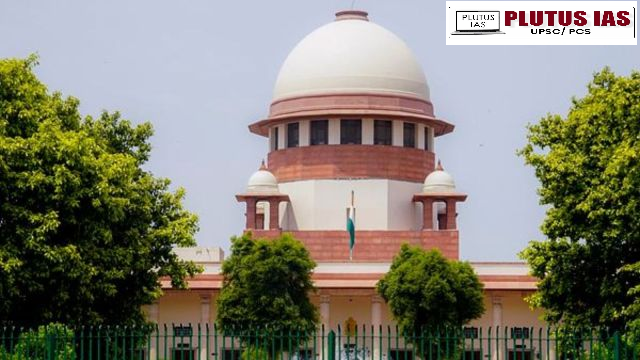
In a landmark ruling, the Supreme Court has once again reaffirmed the constitutional principles governing tribunals in India. A Bench of Chief Justice B.R. Gavai and Justice K. Vinod Chandran struck down multiple provisions of the Tribunal Reforms Act, 2021, declaring them unconstitutional for undermining judicial independence and violating the doctrine of separation of powers.
The Court also directed the Centre to establish the long-pending National Tribunal Commission (NTC) within four months, marking a major step toward ensuring autonomy and accountability in the tribunal system.
Background: Tribunal Reforms Act, 2021 – What It Sought to Do
The Tribunal Reforms Act, 2021 aimed to overhaul India’s tribunal ecosystem by reorganising existing tribunals, altering appointment processes, and giving the executive a greater role in fixing service conditions.
Key features of the 2021 Act included:
1. Minimum age of 50 years for appointment as tribunal member.
2. Four-year tenure, with possible extension.
3. Search-cum-Selection Committees that included two serving government secretaries, even though these ministries were often litigants before those tribunals.
4. Extensive rule-making powers to the Centre regarding tenure, salaries, allowances, and administrative control.
5. Reintroduction of several provisions previously struck down in 2021 by the Supreme Court.
Supreme Court’s Core Findings
1. Violation of Judicial Independence: The Court held that tribunals perform essential judicial functions and must be free from executive dominance. Executive influence over appointments, tenure, and service conditions compromises impartiality, especially since the government is the largest litigant before tribunals.
2. Breach of Separation of Powers: The Court emphasised that Parliament cannot legislatively undo a judicial decision by reintroducing invalidated provisions with cosmetic modifications. Any law affecting the judicial structure must respect constitutional boundaries.
3. Constitutional Supremacy: Reiterating judicial review as a basic feature of the Constitution, the Court noted: “The Constitution is what the Court says it is; Parliament cannot merely restate or repackage an invalidated provision.” Thus, re-enacting struck-down provisions amounted to a deliberate attempt to circumvent constitutional scrutiny.
Provisions Invalidated by the Supreme Court
The Court struck down provisions of the Act that:
1. Gave the Centre power to fix tenure and impose the minimum age of 50 years.
2. Allowed government secretaries, who may be litigants, to sit on selection committees.
3. Prescribed short, four-year terms, creating insecurity and inhibiting independence.
4. Delegated excessive rule-making authority to the executive regarding appointments and service conditions.
Directions to Establish the National Tribunal Commission
In a significant directive, the Court ordered the Union Government to set up the National Tribunal Commission (NTC) within four months.
Mandate of the NTC:
1. Oversee appointments of tribunal members
2. Regulate service conditions
3. Manage administrative and infrastructural requirements
4. Standardise tribunal functioning
5. Ensure transparency and autonomy across the tribunal ecosystem
The Court termed the NTC an “essential structural safeguard” to prevent persistent executive interference.
Issues Highlighted by Petitioners
Petitioners argued that the 2021 Act:
1. Attempted a “sly revival” of provisions earlier held unconstitutional
2. Enabled executive dominance over bodies adjudicating cases where the Centre is a party
3. Was passed without adequate legislative debate
4. Abolished nine specialised tribunals, burdening already stretched High Courts
The Supreme Court found these arguments credible, highlighting the need for genuine reform rather than superficial legislative changes.
Significance of the Judgment
1. Strengthens Judicial Independence: Ensures tribunals function without executive domination, safeguarding impartial adjudication.
2. Prevents Legislative Overreach: Reinforces that Parliament cannot re-enact or repackage provisions already struck down by the Court.
3. Maintains Tribunal Neutrality: Reduces executive involvement in appointments and service conditions, ensuring fairness for litigants.
4. Mandates Creation of National Tribunal Commission (NTC): Provides an institutional mechanism for transparent appointments, uniform service conditions, and improved administration.
5. Supports Long-Term Institutional Reform: Lays the groundwork for standardised processes, improved infrastructure, and reduced case backlog across tribunals.
6. Upholds the Basic Structure Doctrine: Protects judicial review and separation of powers—foundational principles of India’s constitutional framework.
Challenges Ahead
1. Complexity in Establishing the NTC: Setting up the National Tribunal Commission requires extensive inter-ministerial coordination and clear legislative backing.
2. Administrative and Financial Constraints: Creating a centralised body like the NTC demands substantial administrative restructuring and dedicated funding.
3. Higher Burden on High Courts: With tribunal vacancies and structural transitions, High Courts may face increased caseloads, worsening delays.
4. Ensuring Compliance Across Governments: Both Centre and States must uniformly implement the Court’s directives, requiring robust monitoring and periodic review.
5. Need for Harmonisation of Future Laws: Any future amendments to tribunal laws must align with judicial precedents to avoid fresh constitutional violations.
6. Maintaining Tribunal Efficiency During Transition: Until new appointments and procedures stabilise, tribunals may face operational disruptions affecting case disposal
Prelims question:
Q. Consider the following statements regarding the Supreme Court’s judgment on the Tribunal Reforms Act, 2021:
1. The Court struck down provisions allowing government secretaries to be part of the selection committee for tribunal appointments.
2. The Court upheld the minimum age requirement of 50 years for appointment as tribunal members.
3. The Court directed the establishment of a National Tribunal Commission.
Which of the above statements is/are correct?
(a) 1 and 3 only
(b) 2 and 3 only
(c) 1 only
(d) 1, 2 and 3
Answer: A
Mains Question:
Q. The Supreme Court’s recent judgment striking down provisions of the Tribunal Reforms Act, 2021 has reaffirmed judicial independence and constitutional supremacy. Discuss the key aspects of the judgment, the rationale behind it, and its implications for the future of India’s tribunal system. (250 words)

- RBI’s Shrinking Real-Rate Cushion Amid Rising Inflation and Strong Demand - September 21, 2026
- India’s NGOs at a New Funding Crossroads - September 21, 2026
- Deep-Sea Discovery, Environmental Responsibility - September 19, 2026

No Comments