


11 Sep Tamil Nadu Police CCTV Footage: 1,071 Stations Now Store Data for 18 Months
✎ The Supreme Court’s 2021 directive mandates police stations to retain CCTV footage for 18 months, and Tamil Nadu has completed upgrades in 1,071 of 2,100 stations, with phased implementation ongoing.
Subject Relevance — Where This Topic Fits
- GS Paper II — Governance, Transparency and Accountability | GS Paper III — Science and Technology in Governance
- Prelims: CCTV surveillance, digital evidence, Supreme Court directives, police reforms, Tamil Nadu Police, ELCOT, IP cameras, storage capacity
- Essay: The Role of Technology in Strengthening Democratic Accountability, Balancing Surveillance and Privacy: A Governance Imperative
Quick Revision: The Supreme Court’s 2021 directive mandates police stations to retain CCTV footage for 18 months, and Tamil Nadu has completed upgrades in 1,071 of 2,100 stations, with phased implementation ongoing.
Why is this in the news?
The Madras High Court sought a status report from the Tamil Nadu Director General of Police (DGP) on the compliance of police stations with the Supreme Court’s directive to retain CCTV footage for 18 months. As of September 2026, 1,071 out of 2,100 police stations in Tamil Nadu have been equipped with enhanced storage facilities, while the remaining are under phased implementation. This development underscores the intersection of judicial oversight, technological adoption, and institutional reform in policing.
Background
- The Supreme Court of India, in its 2021 directive, mandated all police stations across the country to install CCTV cameras and retain footage for a minimum of 18 months to ensure transparency, accountability, and preservation of digital evidence in criminal investigations.
- Prior to the Supreme Court directive, the storage capacity of CCTV footage in Tamil Nadu police stations ranged between 15 to 45 days, which was insufficient for long-term investigations or legal proceedings.
- The State government accorded financial sanction in December 2024 to upgrade storage capacity in 1,567 police stations, with work completed in 1,071 stations by the financial year 2025-26.
What is CCTV Surveillance in Police Stations?
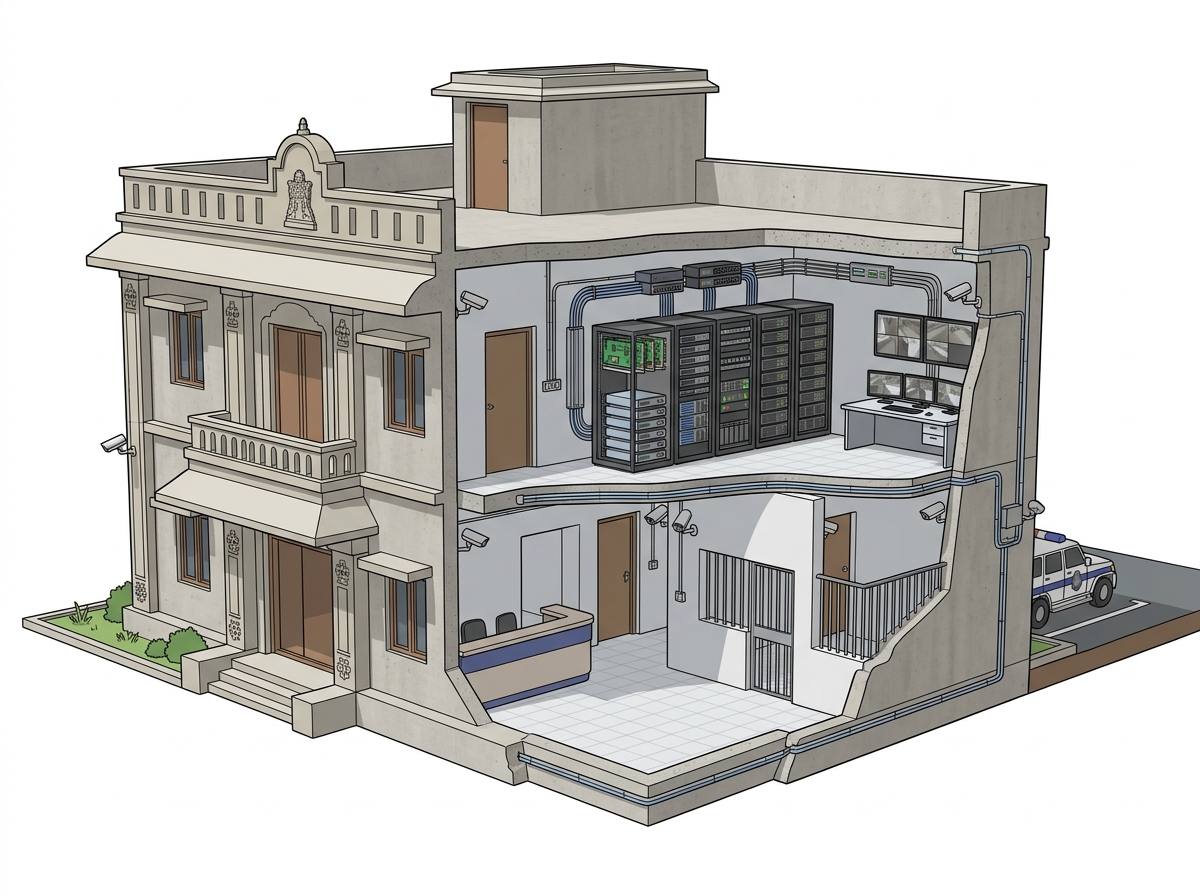
- CCTV surveillance in police stations involves the deployment of Internet Protocol (IP) cameras equipped with night vision, audio, and video recording capabilities to monitor key areas such as reception, lock-up rooms, and offices of senior officers.
- The primary objective is to ensure transparency, deter custodial misconduct, and preserve digital evidence for investigations and legal proceedings.
- The Supreme Court’s 2021 directive mandates a minimum retention period of 18 months for CCTV footage to facilitate thorough scrutiny by investigating agencies, courts, and oversight bodies.
- Storage infrastructure includes digital video recorders (DVRs) or network-attached storage (NAS) systems with sufficient capacity to retain high-definition footage for the stipulated duration.
- The deployment of IP cameras enables remote monitoring, real-time alerts, and integration with other security systems, enhancing operational efficiency.
- Compliance with judicial directives is monitored by High Courts and Supreme Courts through periodic status reports submitted by state police departments.
- The use of technology in policing aligns with broader governance reforms aimed at reducing human rights violations and improving public trust in law enforcement agencies.
- Challenges include ensuring uninterrupted power supply, cybersecurity of stored data, and periodic maintenance of surveillance infrastructure.
Key Features
| Feature | Significance |
|---|---|
| Installation of IP cameras with night vision | Enables 24×7 surveillance in critical areas of police stations, including lock-ups and interrogation rooms, ensuring transparency and deterring custodial misconduct. |
| 18-month footage retention capability | Aligns with Supreme Court directives to preserve evidence for extended periods, facilitating thorough investigations into delayed complaints or appeals. |
| Phased deployment across 2,100 police stations | Ensures systematic coverage of all law enforcement units, including special units like Economic Offences Wing and Prohibition Enforcement, enhancing accountability. |
| Use of ELCOT for implementation | Leverages state-owned Electronics Corporation of Tamil Nadu for technical execution, ensuring standardisation and cost-efficiency in procurement and deployment. |
| Audio-video recording integration | Captures both visual and auditory evidence, providing a comprehensive record of interactions within police stations for legal and administrative scrutiny. |
Why it Matters
Judicial and Legal Framework
- Demonstrates compliance with the Supreme Court’s 2021 directive in *Paramvir Singh Saini v. Baljit Singh*, mandating CCTV surveillance in police stations to curb human rights violations.
- Enhances evidentiary integrity by ensuring long-term storage of surveillance footage, reducing risks of tampering or loss of critical evidence.
- Supports the right to fair investigation under Article 21 of the Constitution, as interpreted in *DK Basu v. State of West Bengal* (1997).
Administrative Governance
- Strengthens institutional accountability by mandating transparent recording of all interactions within police stations, including those in lock-ups and interrogation rooms.
- Facilitates post-incident reviews and training by providing auditable records of police station operations.
- Promotes standardisation in surveillance practices across diverse police station types, including All Women Police Stations and Railway Police Stations.
Technological and Digital Governance
- Advances the state’s digital infrastructure for law enforcement, aligning with the *National e-Governance Plan* and *Digital India* initiatives for secure data management.
- Demonstrates the use of state-owned entities (ELCOT) for critical technology deployment, ensuring control over procurement and quality assurance.
- Sets a precedent for interoperable surveillance systems, which may be scaled to other public institutions for security and transparency.
Human Rights and Public Trust
- Acts as a deterrent against custodial violence and abuse of authority, reinforcing public confidence in law enforcement agencies.
- Provides an objective record in cases of complaints against police personnel, enabling fair adjudication by courts or oversight bodies.
- Aligns with the *National Human Rights Commission’s* guidelines on police reforms and accountability mechanisms.
Challenges
1. Resource Allocation and Fiscal Constraints
- High capital and operational expenditure for deploying advanced IP cameras and storage infrastructure across 2,100 locations.
- Need for sustained funding for maintenance, upgrades, and periodic audits of surveillance systems to ensure functionality.
UPSC Link: GS3: Infrastructure & Financial Constraints
2. Technical and Operational Hurdles
- Ensuring uniform quality of footage across diverse police station environments, including high-traffic areas and remote locations.
- Managing data storage and retrieval systems to prevent corruption, deletion, or unauthorised access to sensitive footage.
UPSC Link: GS3: Digital Governance & Cyber Security
3. Legal and Ethical Dilemmas
- Balancing surveillance with privacy rights of individuals, particularly in sensitive areas like lock-ups and interrogation rooms.
- Ensuring that footage is not misused for selective targeting or political purposes, necessitating strict access controls and oversight.
UPSC Link: GS2: Fundamental Rights & DPSP
4. Capacity Building and Training
- Training police personnel in operating, maintaining, and ethically using surveillance systems to avoid circumvention or misuse.
- Sensitising staff to the legal implications of tampering with or failing to preserve footage, including potential contempt of court proceedings.
UPSC Link: GS4: Ethics in Governance
5. Interoperability and Scalability
- Integrating new systems with existing CCTV networks in police stations that were installed prior to 2022, which may have incompatible formats.
- Planning for future expansion to include additional units or higher resolution cameras without disrupting ongoing operations.
UPSC Link: GS3: Technology & Innovation
Challenges — UPSC Perspective
| Issue | Concern |
|---|---|
| Data storage and retrieval | Risk of system overload or corruption, necessitating robust backup and archival mechanisms. |
| Privacy concerns | Potential violation of individual rights if surveillance extends beyond legally permissible areas or is misused. |
| Maintenance and upkeep | High recurring costs for repairs, upgrades, and replacement of hardware/software components. |
| Training deficiencies | Lack of awareness among personnel may lead to operational errors or deliberate circumvention of surveillance protocols. |
| Legal ambiguity | Unclear guidelines on access to footage for third parties (e.g., media, activists) could lead to disputes. |
| Cybersecurity threats | Vulnerability to hacking, ransomware, or unauthorised deletion of footage, compromising evidence integrity. |
Way Forward
- Finalise tenders for remaining 507 police stations and ensure timely installation of CCTV systems with 18-month storage capacity.
- Conduct mandatory training programmes for all police personnel on the ethical and legal use of surveillance systems, including data privacy protocols.
- Establish an independent oversight committee to audit the functioning of CCTV systems, review footage access logs, and investigate any breaches or misuse.
- Develop a standard operating procedure (SOP) for the retrieval, preservation, and sharing of footage in compliance with judicial directives and RTI requests.
- Integrate the Tamil Nadu police CCTV network with state and central databases (e.g., Crime and Criminal Tracking Network & Systems – CCTNS) for seamless data sharing and analysis.
- Allocate dedicated funds in the annual budget for maintenance, upgrades, and periodic replacement of surveillance infrastructure.
- Publish annual reports on the status of CCTV deployment, storage compliance, and incidents of misuse or tampering for public transparency.
- Explore public-private partnerships (PPP) for advanced technologies like AI-based anomaly detection to enhance real-time monitoring and threat assessment.
UPSC Value Addition
Keywords for Mains Answer-Writing
CCTV surveillance in police stations · Madras High Court directives · Supreme Court guidelines on police reforms · Digital evidence retention · Tamil Nadu Police modernisation · Constitutional safeguards in policing · Right to privacy and surveillance · Police accountability mechanisms · Digital forensics in criminal justice · Judicial oversight of executive actions
Constitutional & Policy Linkages
- Article 21 (Right to Life and Personal Liberty) — Ensures fair investigation and protection from custodial abuse.
- Article 14 (Right to Equality) — Mandates non-discriminatory application of surveillance across all police stations.
- Article 32 (Right to Constitutional Remedies) — Provides judicial recourse for violations of surveillance protocols.
Concept Flow
Supreme Court directive (2021) → State government financial sanction (2024) → Phased deployment of CCTV systems (2025-26) → Installation in 1,071 police stations → Long-term storage compliance → Judicial oversight via Madras High Court → Public accountability and transparency
Prelims Practice Questions
Q1. Consider the following statements regarding the Supreme Court’s directives on police station CCTV surveillance:
1. The Supreme Court has mandated retention of CCTV footage for a minimum of 18 months.
2. The directive applies exclusively to police stations in metropolitan cities.
3. The footage must include audio recording capabilities.
4. The directive is part of broader police reforms to enhance accountability.
How many of the above statements are correct?
- Only one
- Only two
- Only three
- All
Answer: All — Statements 1, 3, and 4 are correct as per the Supreme Court’s directives. Statement 2 is incorrect as the directive applies to all police stations, not just metropolitan ones.
Q2. Assertion (A): The Madras High Court, while hearing a PIL, directed the Tamil Nadu Police to enhance CCTV storage capacity in all police stations.
Reason (R): The direction was issued to comply with the Supreme Court’s 2021 directive on police reforms and digital evidence retention.
Codes:
(A) Both A and R are true, and R is the correct explanation of A.
(B) Both A and R are true, but R is not the correct explanation of A.
(C) A is true but R is false.
(D) A is false but R is true.
- A
- B
- C
- D
Answer: A — Both the assertion and reason are true. The Madras High Court’s direction was indeed to comply with the Supreme Court’s 2021 directive on police reforms, including digital evidence retention.
Q3. Match the following pairs related to police surveillance and accountability:
Column I (Directive/Provision) | Column II (Purpose/Feature)
1. Supreme Court directive (2021) | A. Mandates 18-month CCTV footage retention
2. Madras High Court order (2026) | B. Ensures audio-visual recording in police stations
3. Tamil Nadu Police modernisation | C. Phased installation of IP cameras with night vision
4. Right to Information Act | D. Facilitates public scrutiny of police functioning
Options:
1-A, 2-B, 3-C, 4-D
1-B, 2-A, 3-D, 4-C
1-A, 2-C, 3-B, 4-D
1-D, 2-B, 3-A, 4-C
- 1-A, 2-B, 3-C, 4-D
- 1-B, 2-A, 3-D, 4-C
- 1-A, 2-C, 3-B, 4-D
- 1-D, 2-B, 3-A, 4-C
Answer: 1-A, 2-B, 3-C, 4-D — The correct match is: 1-A (Supreme Court directive mandates 18-month retention), 2-B (Madras High Court order ensures audio-visual recording), 3-C (Tamil Nadu Police modernisation involves phased IP camera installation), and 4-D (RTI Act facilitates public scrutiny).
Mains Practice Question
✍ The Supreme Court’s 2021 directive mandating the retention of CCTV footage in police stations for a minimum of 18 months represents a critical step towards enhancing police accountability and transparency. Critically examine the legal, technological, and constitutional dimensions of this directive. Also, analyse its implications for the criminal justice system in India. (15 Marks)
Approach: MODEL-ANSWER SKELETON:
1. **Legal Basis and Context**:
– Supreme Court’s directive in *Prakash Singh v. Union of India* (2006) and subsequent orders.
– Specific provisions under the **Criminal Procedure Code (CrPC), 1973** (Sections 154–176) and **Indian Evidence Act, 1872** (Section 65B for electronic evidence).
– Reference to **Model Police Manual (2019)** and **National Human Rights Commission (NHRC) guidelines**.
2. **Constitutional Dimensions**:
– **Right to Privacy** (Puttaswamy judgment, 2017) and its balance with state surveillance.
– **Article 21** (Right to Life and Personal Liberty) and the need for accountability in custodial environments.
– **Doctrine of Proportionality**: Whether 18-month retention is proportionate to the objective.
3. **Technological and Operational Challenges**:
– **Storage infrastructure**: Cost, scalability, and cybersecurity concerns (e.g., data breaches, tampering).
– **Standardisation**: Uniformity in camera specifications, placement, and recording quality.
– **Accessibility**: Ensuring footage is admissible as evidence under **Section 65B** of the Indian Evidence Act.
4. **Police Accountability and Criminal Justice System**:
– **Deterrence effect**: Reduction in custodial violence and misconduct.
– **Evidentiary value**: Role of CCTV footage in investigations, prosecutions, and acquittals.
– **Judicial oversight**: How courts utilise such evidence in cases like *Nilabati Behera v. State of Orissa* (1993).
5. **Comparative Perspective**:
– Global practices (e.g., UK’s **Police and Criminal Evidence Act (PACE)**, US **Body-Worn Camera policies**).
– Lessons from Tamil Nadu’s phased implementation (1,071/2,100 stations equipped).
6. **Critique and Limitations**:
– **Implementation gaps**: Delayed compliance, lack of uniform standards.
– **Potential misuse**: Surveillance overreach, privacy violations.
– **Resource constraints**: Financial and technical challenges for smaller police stations.
7. **Way Forward**:
– **Centralised monitoring**: Use of AI for real-time analysis and anomaly detection.
– **Legal reforms**: Amendments to CrPC/Indian Evidence Act for clearer admissibility rules.
– **Capacity building**: Training for police personnel on evidence preservation and chain of custody.
Source: The Hindu
Tamil Nadu PCS (TNPSC) — State PCS Practice
Prelims: As per the recent submission by the Director General of Police (DGP) of Tamil Nadu to the Madras High Court, how many police stations in the state have been equipped with CCTV footage retention capability for a period of 18 months?
- 1,071
- 1,171
- 1,000
- 2,100
Answer: 1,071 — The DGP stated that 1,071 out of 2,100 police stations in Tamil Nadu have CCTV footage retention capability for 18 months.
Mains: Critically examine the significance of equipping 1,071 police stations in Tamil Nadu with CCTV footage retention capability for 18 months. Discuss its impact on law enforcement, public safety, and transparency in governance, with a focus on Tamil Nadu’s socio-political context.
Generated by AanyaAi for educational purpose.
Related guides on our sites
- Current affairs for upsc 2026
- Best PSIR optional coaching for upsc
- Best PSIR optional teacher for upsc
- Best teacher of PSIR optional for upsc

- Gurugram’s groundwater extraction exceeds limit by 212%; HC seeks ban - October 4, 2026
- स्वतंत्रता सेनानी श्यामजी कृष्ण वर्मा की जन्म जयंती पर पीएम का श्रद्धांजलि - October 4, 2026
- KWML’s Feasibility Reports for Water Metro in 18 Cities: UPSC & PCS Insights - October 3, 2026

No Comments