



11 Nov Tamil Nadu’s Ramsar Sites: Biodiversity vs. Development
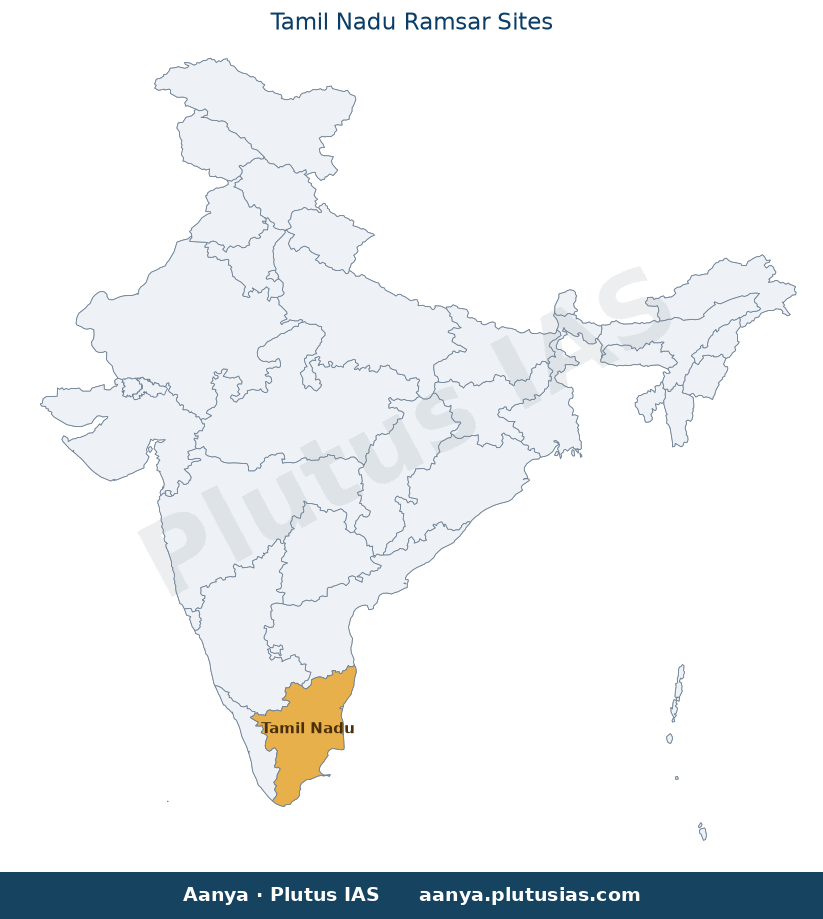
✎ The Ramsar Convention is an international treaty for the conservation and wise use of wetlands, crucial for biodiversity and migratory bird routes like the Central Asian Flyway, necessitating careful consideration in…
Subject Relevance — Where This Topic Fits
- GS Paper I — Geography of India and the World | GS Paper III — Environment and Ecology, Biodiversity, Disaster Management | GS Paper III — Infrastructure: Energy, Ports, Roads, Airports, Railways etc.
- Prelims: Ramsar Convention, Vedanthangal Bird Sanctuary, Karikili Bird Sanctuary, Central Asian Flyway, Wetland conservation, Environmental Impact Assessment, Sustainable development
- Essay: Balancing economic development with environmental conservation, The role of international conventions in national policy-making
Quick Revision: The Ramsar Convention is an international treaty for the conservation and wise use of wetlands, crucial for biodiversity and migratory bird routes like the Central Asian Flyway, necessitating careful consideration in infrastructure development.
Why is this in the news?
The decision by the Tamil Nadu government to scrap the proposed Parandur airport project, thereby safeguarding the ecologically significant Vedanthangal and Karikili bird sanctuaries, has brought the imperative of wetland conservation and the judicious selection of infrastructure development sites into sharp focus. This decision underscores the importance of protecting Ramsar sites and the wider migratory bird landscape along the Central Asian Flyway.
Background
- The Vedanthangal and Karikili bird sanctuaries are recognised as Wetlands of International Importance under the Ramsar Convention.
- These sanctuaries serve as critical habitats for numerous migratory bird species traversing the Central Asian Flyway, a major global migratory route.
- The proposed Parandur airport project, intended to enhance air transport infrastructure, posed a potential threat to the ecological integrity of these bird sanctuaries due to associated developmental activities and environmental disturbances.
- The Central Asian Flyway (CAF) covers a large continental area of Eurasia and includes 30 countries, providing vital breeding, staging, and non-breeding grounds for migratory birds.
- The Ramsar Convention on Wetlands provides a framework for national action and international cooperation for the conservation and wise use of wetlands and their resources.
- Environmental Impact Assessment (EIA) is a crucial tool for evaluating the potential environmental consequences of a proposed project or development, ensuring that these impacts are addressed prior to decision-making.
The Ramsar Convention on Wetlands
- The Ramsar Convention is an intergovernmental treaty that provides the framework for national action and international cooperation for the conservation and wise use of wetlands and their resources.
- It was adopted in the Iranian city of Ramsar in 1971 and came into force in 1975.
- The Convention’s mission is ‘the conservation and wise use of all wetlands through local and national actions and international cooperation, as a contribution towards achieving sustainable development throughout the world’.
- Contracting Parties to the Convention commit to three main pillars: working towards the wise use of all their wetlands; designating suitable wetlands for the List of Wetlands of International Importance (the ‘Ramsar List’) and ensuring their effective management; and cooperating internationally on transboundary wetlands, shared wetland systems and shared species.
- India is a signatory to the Ramsar Convention and has designated numerous sites as Wetlands of International Importance.
- The ‘wise use’ concept of the Convention is defined as ‘the maintenance of their ecological character, achieved through the implementation of ecosystem approaches, within the context of sustainable development’.
- The Montreux Record, maintained as part of the Ramsar List, is a register of Wetland of International Importance where changes in ecological character have occurred, are occurring, or are likely to occur as a result of technological developments, pollution or other human interference.
Key Features
| Feature | Significance |
|---|---|
| Vedanthangal Bird Sanctuary | One of India’s oldest bird sanctuaries, providing critical habitat for migratory birds. |
| Karikili Bird Sanctuary | Adjacent to Vedanthangal, forming a contiguous ecological complex vital for avian biodiversity. |
| Ramsar Sites | Designation signifying wetlands of international importance under the Ramsar Convention. |
| Central Asian Flyway (CAF) | A major global migratory route for numerous bird species, traversing 30 countries. |
| Parandur Airport Project | A proposed infrastructure development project whose original alignment posed a threat to the aforementioned sanctuaries. |
| Biodiversity Conservation | The protection and management of species, ecosystems, and natural habitats, crucial for ecological balance. |
Why it Matters
Environmental Significance
- The decision to prioritize biodiversity over the proposed airport project underscores the critical importance of wetland ecosystems for migratory bird species.
- Ramsar site designation enhances the global recognition and protection status of Vedanthangal and Karikili, facilitating international cooperation in conservation efforts.
- Safeguarding these sanctuaries ensures the continued viability of the Central Asian Flyway, a vital migratory route for numerous avian species, contributing to global biodiversity.
- Preservation of these wetlands helps maintain ecological services such as water purification, flood control, and climate regulation.
Governance and Policy Significance
- The decision reflects a commitment to balancing developmental aspirations with environmental sustainability, aligning with national and international environmental commitments.
- It demonstrates the effectiveness of environmental impact assessments and public consultations in influencing large-scale infrastructure projects.
- The case sets a precedent for integrating biodiversity conservation into regional planning and infrastructure development strategies.
- Highlights the role of governmental bodies in upholding environmental regulations and protecting designated conservation areas.
Socio-Cultural Significance
- The sanctuaries serve as important sites for ecotourism, birdwatching, and environmental education, fostering local livelihoods and public awareness.
- Preservation contributes to the cultural heritage associated with natural landscapes and traditional ecological knowledge.
- Ensures the continued availability of natural resources and ecosystem services for local communities dependent on these wetlands.
Challenges
1. Balancing Development and Conservation
- The inherent conflict between the demand for infrastructure development (e.g., airports, industrial zones) and the imperative to protect ecologically sensitive areas.
- Ensuring that economic growth does not lead to irreversible environmental degradation, particularly in biodiversity hotspots.
UPSC Link: Environmental Impact Assessment; Sustainable Development
2. Effective Implementation of Environmental Regulations
- Challenges in strictly enforcing environmental protection laws and regulations against powerful developmental lobbies.
- Ensuring that environmental clearances are robust and that mitigation measures are effectively implemented and monitored.
UPSC Link: Environmental Law; Governance
3. Threats to Wetland Ecosystems
- Wetlands face continuous threats from encroachment, pollution (industrial, agricultural, domestic), altered hydrology, and climate change impacts.
- Maintaining the ecological character of Ramsar sites requires continuous monitoring, management, and protection from anthropogenic pressures.
UPSC Link: Wetland Conservation; Climate Change Impacts
4. Inter-sectoral Coordination
- Lack of seamless coordination between various government departments (e.g., aviation, environment, urban development) can lead to conflicts over land use.
- Achieving integrated planning that considers environmental, social, and economic dimensions simultaneously.
UPSC Link: Public Administration; Policy Formulation
Challenges — UPSC Perspective
| Issue | Concern |
|---|---|
| Habitat Fragmentation | Large infrastructure projects can fragment critical habitats, isolating wildlife populations and reducing genetic diversity. |
| Noise and Air Pollution | Airport operations generate significant noise and air pollution, detrimental to avian species and surrounding ecosystems. |
| Hydrological Alterations | Construction activities can disrupt natural water flow patterns, affecting wetland hydrology and dependent flora and fauna. |
| Human-Wildlife Conflict | Increased human activity near wildlife sanctuaries can lead to escalated conflicts, impacting both wildlife and local communities. |
| Loss of Ecosystem Services | Degradation of wetlands results in the loss of vital services like water purification, flood regulation, and carbon sequestration. |
| Compliance with International Commitments | Failure to protect Ramsar sites undermines India’s commitments under international conventions like the Ramsar Convention. |
Government Initiatives — Must-Memorise for Prelims
- National Plan for Conservation of Aquatic Ecosystems (NPCA)
- Wetlands (Conservation and Management) Rules, 2017
Way Forward
- Promote integrated land-use planning that strategically identifies and protects ecologically sensitive zones from developmental pressures.
- Strengthen Environmental Impact Assessment (EIA) processes to ensure comprehensive evaluation of project impacts and robust mitigation strategies.
- Invest in sustainable infrastructure alternatives and green technologies that minimize ecological footprints.
- Enhance inter-ministerial coordination to facilitate holistic decision-making that balances economic development with environmental sustainability.
- Increase public awareness and participation in conservation efforts, fostering a sense of shared responsibility for natural heritage.
- Strengthen monitoring and enforcement mechanisms for environmental regulations, ensuring compliance and accountability.
- Explore innovative financing mechanisms for biodiversity conservation, including green bonds and public-private partnerships.
- Prioritize research and development in ecological restoration and climate change adaptation strategies for vulnerable ecosystems.
UPSC Value Addition
Keywords for Mains Answer-Writing
Ramsar Sites · Wetland Conservation · Central Asian Flyway · Migratory Birds · Environmental Impact Assessment · Sustainable Development · Biodiversity Protection · Ecological Sensitivity · Coastal Regulation Zone · Wildlife Protection Act · International Conventions · Ecosystem Services
Constitutional & Policy Linkages
- Article 48A: Protection and improvement of environment
- Article 51A (g): Duty to protect and improve natural environment
Concept Flow
Proposed Parandur Airport Project → Threat to Vedanthangal & Karikili Bird Sanctuaries → Sanctuaries are Ramsar Sites & Central Asian Flyway points → Ecological significance and international commitments highlighted → Decision to prioritize biodiversity conservation → Scrapping/relocation of airport project → Safeguarding of wetland ecosystems and migratory birds
Prelims Practice Questions
Q1. Consider the following statements regarding Ramsar Sites in India:
1. The Convention on Wetlands, known as the Ramsar Convention, is an intergovernmental treaty that provides the framework for national action and international cooperation for the conservation and wise use of wetlands and their resources.
2. Vedanthangal Bird Sanctuary and Karikili Bird Sanctuary are newly designated Ramsar Sites in Tamil Nadu, known for supporting migratory bird populations along the Central Asian Flyway.
3. The designation of a wetland as a Ramsar Site automatically places it under the highest level of legal protection under Indian environmental laws, superseding all other national regulations.
How many of the above statements are correct?
- Only one
- Only two
- Only three
- None
Answer: Only two — Statement 1 is correct: The Ramsar Convention is indeed an intergovernmental treaty for wetland conservation and wise use. Statement 2 is correct: Vedanthangal and Karikili Bird Sanctuaries have been designated as Ramsar Sites and are crucial for migratory birds along the Central Asian Flyway. Statement 3 is incorrect: While Ramsar designation encourages conservation, it does not automatically supersede all national legal protections; national laws like the Wildlife Protection Act, 1972, and the Environment (Protection) Act, 1986, continue to govern such areas.
Q2. Which of the following international agreements primarily focuses on the conservation and sustainable use of wetlands?
- Convention on Biological Diversity (CBD)
- Convention on Migratory Species (CMS)
- Ramsar Convention
- CITES (Convention on International Trade in Endangered Species of Wild Fauna and Flora)
Answer: Ramsar Convention — The Ramsar Convention, formally known as ‘The Convention on Wetlands of International Importance especially as Waterfowl Habitat’, is the primary international agreement dedicated to the conservation and wise use of wetlands.
Mains Practice Question
✍ Critically examine the significance of Ramsar Site designation for wetland conservation in India, particularly in the context of balancing developmental projects with ecological preservation. (15 Marks)
Approach: Introduction: Briefly define Ramsar Sites and their purpose. Part 1 – Significance of Ramsar Designation: Discuss the ecological importance (biodiversity, ecosystem services, migratory bird habitats like Central Asian Flyway), international recognition, enhanced conservation efforts, potential for funding, and role in national policy formulation. Part 2 – Balancing Development and Conservation: Analyze the challenges posed by developmental projects (e.g., infrastructure, urbanization, industrialization) on designated Ramsar Sites and other wetlands. Discuss the role of Environmental Impact Assessments (EIAs), Coastal Regulation Zone (CRZ) notifications, and the Wildlife Protection Act, 1972. Provide examples of conflicts and resolutions (e.g., the Parandur airport project decision). Conclude with recommendations for integrated management, inter-sectoral coordination, and promoting sustainable development practices that prioritize ecological integrity.
Source: The Hindu
Tamil Nadu PCS (TNPSC) — State PCS Practice
Prelims: Which of the following statements regarding Ramsar sites in Tamil Nadu is/are correct?
1. Tamil Nadu has the highest number of Ramsar sites among all Indian states.
2. Ramsar sites are designated under the Convention on Wetlands of International Importance, signed in Ramsar, Iran.
3. The designation of a Ramsar site primarily focuses on marine biodiversity.
Select the correct option:
- A. 1 only
- B. 2 only
- C. 1 and 2 only
- D. 1, 2 and 3
Answer: C. 1 and 2 only — Statement 1 and 2 are correct. Statement 3 is incorrect as Ramsar sites focus on wetlands, which include various types of aquatic ecosystems, not just marine.
Mains: Discuss the ecological and socio-economic significance of designating Ramsar sites in Tamil Nadu, particularly in the context of the state’s biodiversity conservation efforts and sustainable development goals.
Generated by AanyaAi for educational purpose.
Related guides on our sites
- How to prepare for GS paper 1 for UPSC CSE mains exam
- Best UPSC coaching for IFOS exam
- Best geography optional coaching
- Best geography optional coaching

- Tamil Nadu’s Ramsar Sites: Biodiversity vs. Development - November 11, 2026
- किम जु ऐ: क्या किम जोंग उन उत्तर कोरिया में चौथी पीढ़ी का शासन तैयार कर रहे हैं? - November 11, 2026
- Bharat Parv: Celebrating India’s Cultural Heritage - November 11, 2026

No Comments