


11 Nov Tata’s OSAT Centre in Assam: A Major Boost to India’s Semiconductor Mission
This article covers “Daily Current Affairs” and From Tata’s OSAT Centre in Assam: A Major Boost to India’s Semiconductor Mission
SYLLABUS MAPPING
GS- 3- Economic- Tata’s OSAT Centre in Assam: A Major Boost to India’s Semiconductor Mission
FOR PRELIMS
What is the India Semiconductor Mission (ISM)?
FOR MAINS
What benefits will the Northeast get from the new semiconductor project in Jagiroad?
Why in the News?
Finance Minister Nirmala Sitharaman recently visited the upcoming Outsourced Semiconductor Assembly and Test (OSAT) centre being developed by Tata Electronics at Jagiroad in Morigaon district, Assam. She was accompanied by Assam Chief Minister Himanta Biswa Sarma.
The visit marks a significant milestone in Assam’s transformation into a major hub for advanced electronics and semiconductor manufacturing in Northeast India.
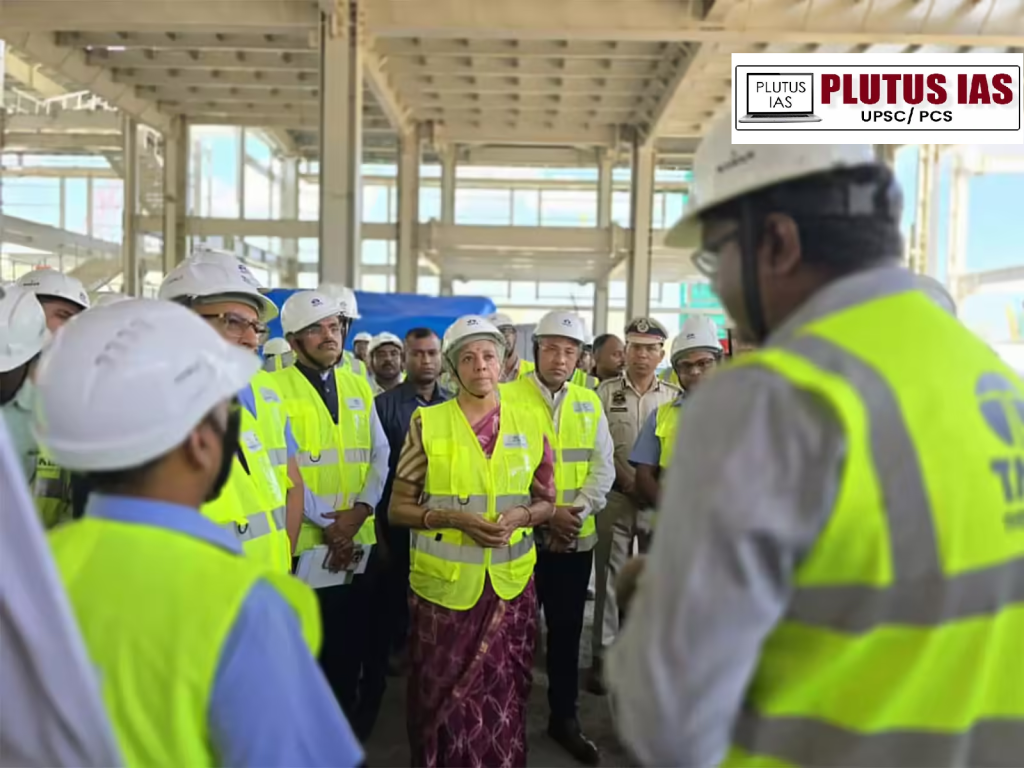
Overview of the TATA OSAT Centre
The Tata OSAT Centre at Jagiroad is envisioned as a crucial component of India’s semiconductor manufacturing strategy. The project strengthens Assam’s emergence as an industrial destination in the Northeast.
During the visit, Randhir Thakur, CEO of Tata Electronics, presented the progress of the project and highlighted how the facility will reshape Assam’s industrial landscape.
Key highlights of the project:
1. Investment: ₹27,000 crore
2. Capacity: 48 million semiconductor chips per day
3. Technology: Advanced packaging technologies
4. Commissioning (Phase 1): April 2026
5. Employment: 15,000 direct and 11,000–13,000 indirect jobs
Significance for Assam & the Northeast
1. Industrial Transformation of the Region: The OSAT Centre will position Assam as a high-technology manufacturing hub, shifting the state’s economic profile from traditional sectors to advanced electronics and semiconductor industries.
2. Massive Direct and Indirect Employment Generation: With around 15,000 direct and 11,000–13,000 indirect jobs, the project will create a new workforce ecosystem in the Northeast, reducing migration and boosting regional income levels.
3. Expansion of Skill Development and Technical Training: The semiconductor facility will catalyse specialised training in chip packaging, testing, clean-room operations, and electronics manufacturing—strengthening Assam’s technical talent pool.
4. Boost to Startup and Innovation Ecosystem: Minister Sitharaman’s interaction with students and entrepreneurs highlights emerging opportunities for electronics startups, MSMEs, component suppliers, and local innovators to integrate into the semiconductor supply chain.
5. Increase in Private and Global Investments: The presence of Tata Electronics is expected to attract additional domestic and foreign investors to the Northeast, improving industrial confidence and diversifying the region’s economic base.
6. Infrastructure and Connectivity Development: To support the high-tech facility, the region will witness accelerated development of power supply, logistics, industrial parks, and digital infrastructure, benefiting nearby districts as well.
7. Regional Economic Integration and Inclusivity: The project will integrate Assam and the Northeast more deeply into national manufacturing networks, creating inclusive growth, local entrepreneurship opportunities, and a stronger role for the region in India’s high-value technology sectors.
India’s Semiconductor Mission: Progress So Far
1. Strong Policy Push through the ₹76,000 Cr PLI Scheme: The Government launched a comprehensive semiconductor incentives package of ₹76,000 crore to attract global chipmakers.A major portion of the financial outlay has already been allotted to approved units, signalling rapid policy execution and investor confidence.
2. India’s First Fully Assembled Chip (2025): On 28 August 2025, CG-Semi successfully produced the first “Made in India” semiconductor chip at the Sanand OSAT pilot facility in Gujarat. Marks India’s transition from design-centric strength to actual chip manufacturing and assembly capacity.
3. Rapid Scaling of Chip Manufacturing Infrastructure: The Government has approved 10 semiconductor projects within four years of ISM’s launch. Total committed investment has reached ₹1.60 lakh crore, demonstrating India’s emergence as a serious global player.
4. Broad Geographical Spread Across Six States: Facilities approved in Gujarat, Assam, Uttar Pradesh, Punjab, Odisha, and Andhra Pradesh. Ensures balanced regional development, reduces cluster risk, and integrates the Northeast and eastern states into the technology supply chain.
5. OSAT & Fab Ecosystem Expansion: Multiple OSAT (Outsourced Semiconductor Assembly and Testing) and display fabs are being established. Creates forward linkages with electronics manufacturing and backward linkages with materials, chemicals, and equipment industries.
6. Semicon 2.0 – India’s Next Leap:
MeitY is already working on Semicon 2.0, centred on:
High-volume chip manufacturing
Advanced packaging and testing
Strengthening domestic supply chains
Attracting global fab leaders
Building a complete semiconductor ecosystem (fab → OSAT → ATMP → design)
7. Global Partnerships & Strategic Positioning: India is deepening collaborations with the US, Japan, Taiwan, EU, and South Korea under technology partnerships and supply-chain agreements. Enhances India’s role in global semiconductor diversification amid geopolitics and supply chain realignment.
Strategic Importance of the Tata OSAT Project in Assam
1. Strengthens India’s Semiconductor Ecosystem: Adds critical packaging and testing capacity, helping build a complete domestic semiconductor value chain.
2. Reduces Import Dependency: Cuts reliance on foreign OSAT facilities and enhances supply chain security for electronics, defence, and telecom sectors.
3. Boosts Local Industries & MSMEs: Generates strong backward linkages with local suppliers, promoting electronics clusters in Assam and the Northeast.
4. Builds High-Tech Skilled Workforce: Creates thousands of jobs and training opportunities, positioning the Northeast as an emerging semiconductor talent hub.
5. Drives Regional Economic Transformation: With a ₹27,000 crore investment, the project brings major industrial momentum and attracts further high-tech investments.
6. Supports India’s Technological Sovereignty: Increases domestic capability in critical technologies essential for defence, space, AI, and digital infrastructure.
7. Aligns with the ₹1 Lakh Crore R&D Push: Reinforces the national focus on innovation and strengthens industry–academia partnerships for advanced semiconductor research.
Conclusion
The Tata OSAT Centre in Assam marks a major leap in integrating the Northeast into India’s semiconductor value chain.” Discuss the significance of the project for regional development and India’s semiconductor self-reliance
Prelims question:
Q. Consider the following statements regarding the Tata OSAT Centre at Jagiroad, Assam:
1. It is being developed as part of India’s semiconductor manufacturing strategy under the India Semiconductor Mission (ISM).
2. The project is expected to produce 48 million semiconductor chips per day once operational.
3. It is the first semiconductor fabrication (fab) unit established in Northeast India.
4. The project involves an investment of around ₹27,000 crore.
Which of the above statements is/are correct?
(a) 1 and 2 only
(b) 1, 2 and 4 only
(c) 1 and 4 only
(d) 1, 2, 3 and 4
Answer: B
Mains Question:
Q. The Tata OSAT Centre in Assam marks a major leap in integrating the Northeast into India’s semiconductor value chain.” Discuss the significance of the project for regional development and India’s semiconductor self-reliance.
(250 words)

- Europe’s AI Rules May Become India’s Opportunity - August 14, 2026
- Transparency as the Foundation of Trust in Medicine - August 14, 2026
- A Timely Reset for the Food Security Act: From Foodgrain Security to Nutrition Security - August 13, 2026

No Comments