


21 Jan The speaker: Guardian of Parliament
SYLLABUS MAPPING:
GS-2- Polity and Governance- The speaker: Guardian of Parliament
FOR PRELIMS:
Constitutional provisions related to the office of the speaker. Origin and Background, power and the constitutional role of the Speaker in parliament democracy
FOR MAINS
The role of the presiding officer is to maintain the decorum in the houses and issues related to the functioning of presiding officers. Recommendations to improve the functioning and power of the presiding officer.
Why in the news?
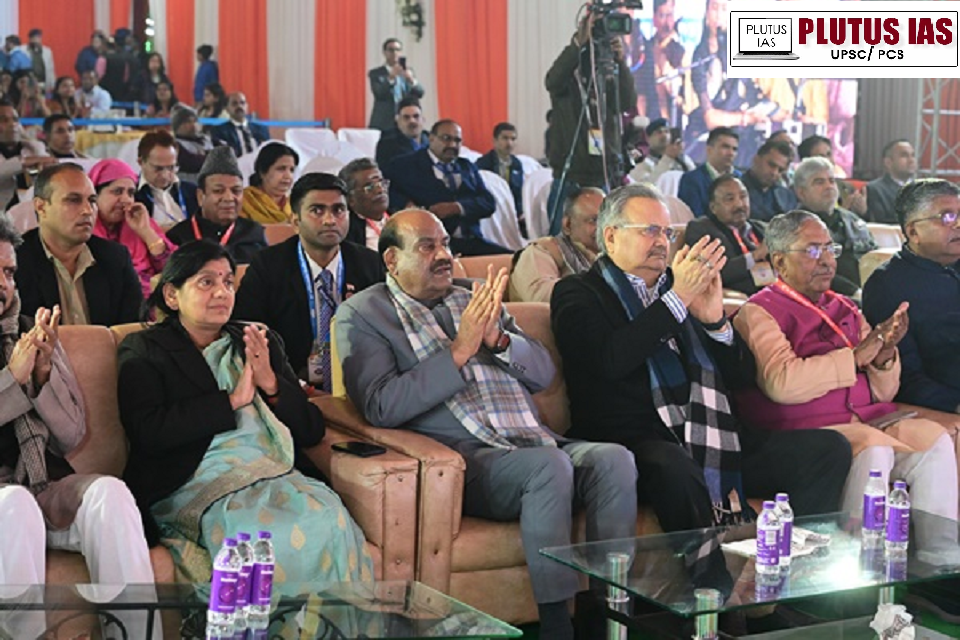
The office of the speaker:
1. Constitutional provisions:
The office of the Speaker of the Lok Sabha is established under the Constitution of India. The primary constitutional provisions relating to the Speaker are found in Article 93 and other related provisions:
Article 93: This article deals with the election of the Speaker and Deputy Speaker of the Lok Sabha. It stipulates that the Lok Sabha must elect a Speaker and a Deputy Speaker as soon as it convenes after its first meeting following the general elections.
Article 94: This article outlines the conditions under which the Speaker can vacate office, including resignation or removal through a resolution passed by a majority of the Lok Sabha.
Article 95: Deals with the role of the Deputy Speaker in the absence of the Speaker.
Article 105: This article provides for the privileges and powers of members of Parliament, including the Speaker, who has the authority to maintain order and discipline in the House.
Article 100: Concerns the proceedings of the Lok Sabha, including how voting is conducted, which the Speaker oversees.
2. Background and Origin of the Office
The office of the Speaker of the Lok Sabha has its origins in the British colonial era, and its evolution reflects the growing demands for legislative independence and democratic representation in India.
1. Pre-Independence Era: The Government of India Act of 1919 (Montague-Chelmsford Reforms) created the positions of President and Deputy President of the Legislative Assembly (now the Lok Sabha). These officials were the precursors to the modern-day Speaker and Deputy Speaker. In the Government of India Act of 1935, the titles were changed to Speaker and Deputy Speaker, aligning them with the British parliamentary system.
2. Post-Independence: The first Speaker of independent India was GV Mavalankar, who served from 1952 to 1956. He helped set the foundation for the role and function of the Speaker in the newly-formed Lok Sabha.
3. Constitutional Role: The office was formally institutionalized in the Constitution of India when it was adopted in 1950, giving the Speaker a central role in maintaining the legislative processes and the integrity of the parliamentary system in India
3. Independence of the Office
1. Security of Tenure: The Speaker’s tenure is tied to the life of the Lok Sabha, typically lasting for five years unless the Lok Sabha is dissolved earlier. The Speaker cannot be easily removed or displaced, providing security of tenure to ensure their independence.
2. Removal Process: The Speaker can only be removed by a resolution passed by a majority of the Lok Sabha members. This ensures that the Speaker’s removal is a democratic process and requires broad support within the House. The Speaker can also resign voluntarily by submitting their resignation to the Deputy Speaker.
3. Impartiality: The Speaker must act impartially, even though they are typically from the ruling party. Once elected, the Speaker is expected to rise above party politics and ensure fair treatment of all members of the Lok Sabha. The Speaker’s conduct cannot be criticized or discussed in the Lok Sabha unless through a substantive motion, ensuring they are shielded from partisan attacks.
4. Casting Vote: The Speaker’s casting vote is used only in the event of a tie during voting. This decision is made impartially, and the Speaker does not use their vote to influence outcomes unless necessary to break a deadlock.
5. Salary and Benefits: The Speaker’s salary and allowances are fixed by Parliament and are paid from the Consolidated Fund of India, ensuring the Speaker’s financial independence from external influences.
Role of Speaker in Parliamentary proceeding:
1. Presiding Over Sessions: The Speaker chairs the Lok Sabha sessions, ensuring orderly debates and maintaining decorum.
2. Ruling on Points of Order: The Speaker is the final authority on points of order, clarifying procedural matters during debates.
3. Impartiality: The Speaker must act neutrally, treating all members equally, regardless of party affiliation.
4. Casting Vote: In case of a tie-in voting, the Speaker casts a deciding vote to break the deadlock.
5. Certifying Money Bills: The Speaker certifies Money Bills, ensuring they follow special procedures and are introduced only in the Lok Sabha.
6. Disqualifying Members: The Speaker decides on the disqualification of members under the Anti-Defection Law (Tenth Schedule).
7. Referring Bills to Committees: The Speaker refers bills to committees for detailed review and appoints committee chairpersons.
8. Representing the Lok Sabha: The Speaker acts as the spokesperson for the Lok Sabha in external matters and formal events.
Issues with the office of the speaker:
1. Partisanship: The Speaker is sometimes seen as biased toward the ruling party, compromising impartiality.
2. Use of Discretion: Criticism arises when the Speaker’s discretion in decisions like disqualification or time allocation appears arbitrary or biased.
3. Lack of Transparency: The decision-making process, especially on disqualification or bill certification, can seem non-transparent.
4. Delayed Decisions on Disqualification: Delays in deciding on disqualification cases, particularly under the Anti-Defection Law, affect the integrity of the House.
5. Handling of Disruptions: The Speaker’s response to disruptions and disorderly conduct can sometimes be insufficient.
6. Judicial Review: The Supreme Court has intervened in the Speaker’s decisions, indicating concerns about impartiality.
7. Perception of Weakness: The Speaker is sometimes viewed as ineffective in managing disruptions or ensuring smooth proceedings.
8. Political Pressures: The office may be influenced by political pressures, affecting the Speaker’s independence.
Suggestion to strengthen the office of the speaker:
1. Independent Selection Process: Ensure a transparent, neutral election process for the Speaker to reduce political bias.
2. Clearer Disqualification Rules: Establish transparent, timely procedures for disqualification under the Anti-Defection Law.
3. Judicial Oversight: Allow limited judicial review of the Speaker’s decisions to improve accountability.
4. Better Handling of Disruptions: Implement stronger guidelines for managing disruptions and maintaining order in the House.
5. Training and Capacity Building: Provide regular training for the Speaker to enhance impartiality and procedural knowledge.
6. Conflict-of-Interest Framework: Establish policies to prevent partisan influence on the Speaker’s decisions.
7. Transparency in Decision-Making: Improve communication of the Speaker’s rulings to enhance public trust.
8. Active Role in Committees: Empower the Speaker to ensure parliamentary committees function impartially and efficiently.
Download Plutus IAS Current Affairs (Eng) 21th Jan 2025
Conclusion:
The Speaker of the Lok Sabha is vital for maintaining order and impartiality in parliamentary proceedings, as outlined in the Constitution of India (Articles 93-100). Originating from the British era, the office was formalized post-independence. However, it faces challenges such as partisanship, lack of transparency, delayed decisions, and political pressures, which undermine its neutrality. To strengthen the office, suggestions include an independent selection process, clearer disqualification rules, judicial oversight, and better management of disruptions. These reforms would ensure that the Speaker can function more impartially and efficiently, fostering better governance. Speaker Om Birla’s recent appeal for political parties to adopt codes of conduct and leverage digital tools emphasizes the need for modernization and accountability in the role.
Prelims Question:
Q. With reference to the office of the Speaker of the Lok Sabha, consider the following statements:
1. The Speaker is elected by the members of the Rajya Sabha, not the Lok Sabha.
2. The Speaker has the authority to certify Money Bills before they are presented to the President.
3. The Speaker’s tenure is tied to the life of the Lok Sabha, typically lasting five years unless the Lok Sabha is dissolved earlier.
How many of the above-given statements are correct?
A. Only one
B. Only two
C. All three
D. None
Answer: B
Mains Question:
(250 words, 15 marks)

- RBI’s Shrinking Real-Rate Cushion Amid Rising Inflation and Strong Demand - September 21, 2026
- India’s NGOs at a New Funding Crossroads - September 21, 2026
- Deep-Sea Discovery, Environmental Responsibility - September 19, 2026

No Comments