


18 Jul U.S. Delivers Another MH-60R Seahawk to the Indian Navy : Strengthening India’s Maritime Shield
|
GS-II: India-US Relations | GS-III: Defence Technology | Prelims: Military Hardware | Essay: National Security |
WHY IS THIS IN NEWS?
The Story
|
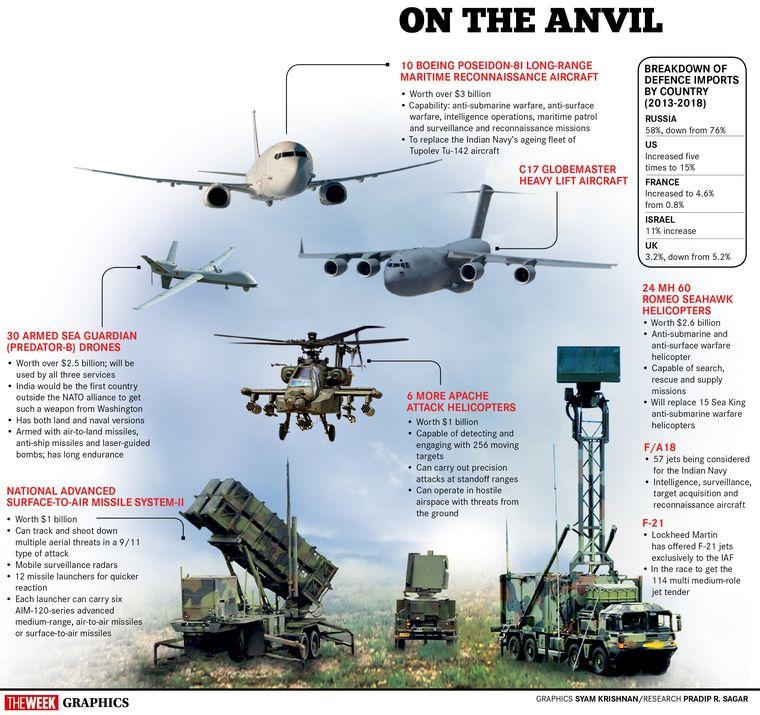
The United States has delivered another MH-60R Seahawk (“Romeo”) multi-role naval helicopter to the Indian Navy. Meanwhile, two more are expected shortly per the U.S. Embassy, as part of India’s 24-helicopter procurement programme under the Foreign Military Sales (FMS) route — a deal that boosts anti-submarine warfare, anti-surface warfare, surveillance, and search-and-rescue capability. |
PRELIMS MAINS Remember: the fleet is nearing completion, with remaining helicopters expected by end of 2026.
PLATFORM PROFILE
About the MH-60R Seahawk
|
Feature |
Details |
|
Manufacturer |
Sikorsky (Lockheed Martin) |
|
Nickname |
Romeo |
|
Type |
Multi-role Naval Helicopter |
|
Main Role |
Anti-Submarine Warfare (ASW) |
|
Secondary Role |
Anti-Surface Warfare (ASuW) |
|
Maximum Speed |
~270 km/h |
|
Operational Range |
~830 km |
|
Crew |
4 |
|
Operates From |
Aircraft carriers, destroyers, frigates |
PRELIMS This entire table is high-yield objective-question material — expect statement-based questions on role, range, crew, and platforms it operates from.
MAJOR CAPABILITIES
Beyond anti-submarine work, the MH-60R also handles several other mission types:
• Anti-Submarine Warfare (ASW)
• Anti-Surface Warfare (ASuW)
• Maritime surveillance
• Search and Rescue (SAR)
• Medical Evacuation (MEDEVAC)
• Vertical Replenishment (VERTREP)
• Special Forces insertion
IMPORTANT EQUIPMENT
To perform these missions, it additionally carries a dedicated set of sensors and weapons:
• Sonobuoys
• Dipping Sonar
• Surface Search Radar
• Electro-Optical Sensors
• MK-54 Torpedoes
• Hellfire Missiles
• Machine Guns
• Secure Data Links
STRATEGIC RATIONALE
Why the MH-60R Matters
The Indian Ocean is witnessing rising submarine deployments, making anti-submarine capability a top priority. As a result, the MH-60R can detect, track, and engage submarines using advanced sensors and weapons; in turn, it complements the Navy’s P-8I maritime patrol aircraft, widening surveillance and strike reach.
|
Force-Multiplier Network: MH-60R + P-8I Poseidon + Destroyers + Frigates + Aircraft Carriers |
BILATERAL FRAMEWORK
India-US Defence Cooperation
FOUNDATIONAL AGREEMENTS
Together, several bilateral agreements underpin this cooperation:
• LEMOA (2016) — Logistics support
• COMCASA (2018) — Secure communications
• BECA (2020) — Geospatial intelligence
• DTTI — Defence Technology & Trade Initiative
• iCET — Initiative on Critical & Emerging Technology
WHAT THESE ENABLE
As a result, these agreements collectively enable:
• Logistics support
• Secure military communications
• Intelligence sharing
• Maritime cooperation
• Interoperability
PRELIMS Match-the-agreement-to-its-function is a classic UPSC format here — LEMOA ↔ logistics, COMCASA ↔ communications, BECA ↔ geospatial intel.
NATIONAL INTEREST
Strategic Importance for India
• 1. Maritime Security — Protects India’s vast coastline and Exclusive Economic Zone (EEZ).
• 2. Countering Submarine Threats — Additionally, it enhances monitoring of underwater activity amid rising regional deployments.
• 3. Indo-Pacific Strategy — Moreover, it strengthens India’s role as a net security provider in the Indo-Pacific.
• 4. Force Multiplier — Furthermore, it works alongside P-8I aircraft, destroyers, frigates and carriers.
• 5. Faster Disaster Response — Finally, it proves useful during cyclones, floods, and humanitarian assistance missions.
MAP-BASED PRELIMS PREP
Important Maritime Chokepoints
Frequently tested in both Prelims and Mains due to strategic and energy-security significance:
• Strait of Hormuz
• Bab-el-Mandeb
• Strait of Malacca
• Lombok Strait
• Sunda Strait
PRELIMS Locate each on a map and know one energy/trade fact about it — a recurring UPSC pattern.
CONCERNS & ROADMAP
Challenges & Way Forward
CHALLENGES
However, the programme still faces a few notable hurdles:
• High acquisition and maintenance costs
• Dependence on imported defence equipment
• Need for greater indigenous capability (Atmanirbhar Bharat)
• Training and logistics requirements
• Integration with existing naval platforms
GOVERNMENT’S WAY FORWARD
In response, the government is pursuing several corrective steps:
• Expand indigenous naval helicopter programmes
• Promote technology transfer
• Strengthen domestic defence manufacturing
• Improve underwater domain awareness
• Integrate AI-enabled surveillance systems
• Increase cooperation via exercises like Malabar
MAINS Excellent GS-III material for questions on defence self-reliance and Atmanirbhar Bharat.
QUICK RECALL
Indian Navy Aviation Assets
|
Platform |
Role |
|
P-8I Poseidon |
Long-range maritime reconnaissance aircraft |
|
MH-60R Seahawk |
Anti-submarine helicopter |
|
ALH Dhruv (Naval Variant) |
Utility helicopter |
|
Sea King 42B |
Existing ASW helicopter |
PRELIMS Platform-to-role matching questions are a UPSC favourite — memorise this table cold.
SYLLABUS MAPPING
Significance for UPSC
PRELIMS
• MH-60R Seahawk specifications
• Anti-Submarine Warfare (ASW)
• India-US defence agreements
• Indian Ocean maritime security
• Naval aviation platforms
MAINS
• India-US Strategic Partnership (GS-II)
• Indo-Pacific cooperation (GS-II)
• Maritime Security (GS-III)
• Defence Modernisation (GS-III)
• National Security (GS-III)
• Atmanirbhar Bharat in Defence (GS-III)
PRACTICE ZONE
Prelims Practice Questions
Q1. WITH REFERENCE TO THE MH-60R SEAHAWK HELICOPTER, CONSIDER THE FOLLOWING STATEMENTS:
• It is primarily designed for Anti-Submarine Warfare.
• This helicopter can operate only from aircraft carriers.
• Additionally, it is equipped with dipping sonar and sonobuoys.
Which of the statements given above is/are correct?
A. 1 and 3 only B. 2 only C. 1, 2 and 3 D. 3 only
|
Answer: A. Statement 1 ✔ — premier ASW helicopter. The second statement ✘ — it actually operates from carriers, destroyers and frigates. The third ✔ — it uses dipping sonar and sonobuoys for detection. |
Q2. WHICH OF THE FOLLOWING AGREEMENTS ENABLES INDIA AND THE UNITED STATES TO EXCHANGE GEOSPATIAL INTELLIGENCE FOR MILITARY PURPOSES?
A. LEMOA B. COMCASA C. BECA D. DTTI
|
Answer: C. BECA facilitates geospatial intelligence sharing for targeting, navigation, and operations. LEMOA covers logistics; COMCASA covers secure communications; DTTI promotes technology collaboration. |
ANSWER-WRITING PRACTICE
Mains Practice Question (250 words)
|
GS-II / GS-III “India’s maritime security increasingly depends upon advanced surveillance and anti-submarine warfare capabilities. Discuss the strategic significance of the MH-60R Seahawk helicopters in strengthening India’s naval preparedness and India–U.S. defence cooperation.” |
CONCLUSION
|
Overall, the induction of another MH-60R Seahawk marks more than a routine military acquisition — it strengthens anti-submarine warfare capability, enhances maritime domain awareness across the Indian Ocean Region, and deepens strategic defence cooperation with the United States. Consequently, for UPSC aspirants, this topic combines International Relations, Defence Technology, Internal Security, and Geography of the Indian Ocean Region, making it a high-value entry for both Prelims 2027 and GS-II/GS-III Mains. |

- RBI’s Shrinking Real-Rate Cushion Amid Rising Inflation and Strong Demand - September 21, 2026
- India’s NGOs at a New Funding Crossroads - September 21, 2026
- Deep-Sea Discovery, Environmental Responsibility - September 19, 2026

No Comments