


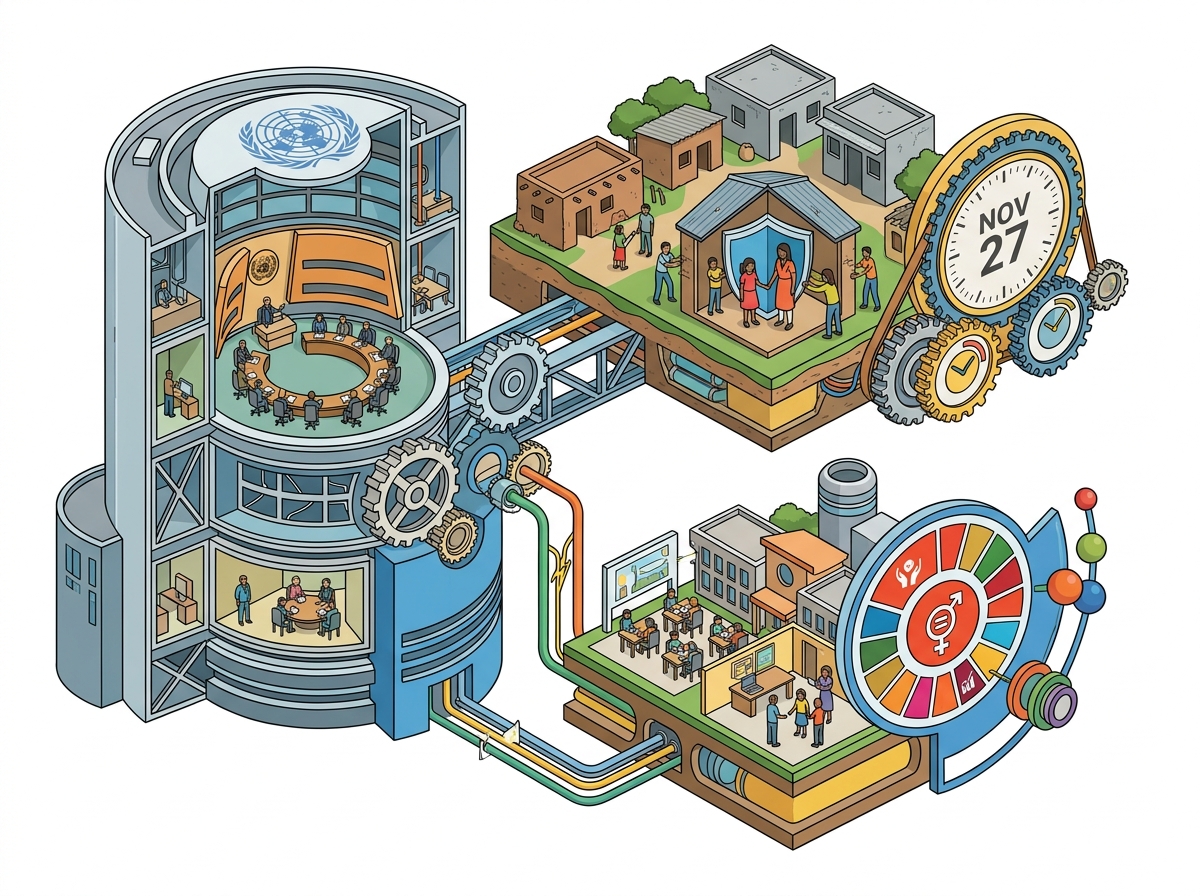
06 Sep UN Declares Nov 27 as Global Day Against Child Marriage: UPSC Analysis
✎ The Global Day Against Child Marriage (November 27) emphasizes the synergy between international commitments and domestic policy implementation to eliminate child marriage through legal, social, and community-based interventions.
Subject Relevance — Where This Topic Fits
- GS Paper I — Social Issues and Vulnerable Sections | GS Paper II — International Organisations and Global Governance
- Prelims: Child Marriage Prohibition Act, 2006, Bal Vivah Mukt Bharat Abhiyan, UN Sustainable Development Goal 5.3, National Commission for Protection of Child Rights (NCPCR), Prohibition of Child Marriage Act (Amendment) Bill 2021, Sustainable Development Goal Target 5.3, Global Partnership to End Violence Against Children
- Essay: The interplay between global commitments and grassroots implementation in addressing social evils, The role of civil society in shaping and enforcing public policy for vulnerable populations
Quick Revision: The Global Day Against Child Marriage (November 27) emphasizes the synergy between international commitments and domestic policy implementation to eliminate child marriage through legal, social, and community-based interventions.
Why is this in the news?
The United Nations’ adoption of November 27 as the Global Day Against Child Marriage on September 4, 2026, marks a significant international recognition of the issue. This development underscores the global consensus on the urgency of eliminating child marriage and highlights India’s proactive role in both policy formulation and grassroots implementation through partnerships with civil society organisations such as Just Rights for Children (JRC) and its affiliated networks.
Background
- Child marriage remains a global human rights violation, disproportionately affecting girls in low- and middle-income countries, with an estimated 12 million girls married annually before the age of 18 (UNICEF, 2023).
- The UN General Assembly adopted the Sustainable Development Goal 5.3 in 2015, which explicitly targets the elimination of all harmful practices, including child marriage, by 2030.
- India has historically grappled with high prevalence rates of child marriage, particularly in states like Rajasthan, Bihar, and Andhra Pradesh, despite legislative measures such as the Prohibition of Child Marriage Act, 2006.
- Civil society organisations have played a pivotal role in bridging the gap between policy and implementation, often operating at the grassroots level to prevent child marriages and rehabilitate affected children.
- The UN’s declaration of November 27 as the Global Day Against Child Marriage symbolizes international solidarity and shared commitment to this cause.
What is the Global Day Against Child Marriage and India’s Response?
- The Global Day Against Child Marriage, designated as November 27, is an international observance adopted by the United Nations General Assembly to raise global awareness and mobilize action against the practice of child marriage.
- The resolution was led by Sierra Leone, with support from 67 countries, including India, and was adopted unanimously on September 4, 2026, marking a historic step in global advocacy for children’s rights.
- The campaign builds on existing legislative frameworks such as the Prohibition of Child Marriage Act, 2006, which criminalizes child marriage and provides for the annulment of such unions, while also mandating the appointment of Child Marriage Prohibition Officers to enforce the law.
- Civil society organisations like Just Rights for Children (JRC) and its partner networks have been instrumental in implementing the campaign at the grassroots level, working across 782 districts in India to prevent over 5.5 lakh child marriages through community mobilization, legal intervention, and rehabilitation of affected children.
- Key strategies employed by these organisations include awareness campaigns in schools and panchayats, community pledges against child marriage, linkage of vulnerable families with welfare schemes, and efforts to reintegrate school dropouts into the education system.
- The role of local enforcement agencies, including police and judicial authorities, is critical in ensuring the implementation of the law, particularly in cases where child marriages are attempted or solemnized despite legal prohibitions.
- The UN’s declaration also serves as a reminder of the need for sustained international cooperation, as child marriage is a transnational issue requiring coordinated efforts across borders to address root causes such as poverty, gender inequality, and lack of access to education.
Key Features
| Feature | Significance |
|---|---|
| UN Declaration of November 27 as Global Day Against Child Marriage | Provides an international framework for coordinated global action to eliminate child marriage, aligning with SDG 5.3 targets. |
| Bal Vivah Mukt Bharat (Child Marriage-Free India) Campaign | A national-level initiative launched by the Government of India to eradicate child marriage through multi-stakeholder engagement and legal enforcement. |
| Grassroots Awareness Programmes by VMM and JRC | Direct community engagement through schools, panchayats, and villages to sensitize stakeholders and prevent child marriages at the local level. |
| Legal Interventions by NGOs | Preventive measures such as filing cases under the Prohibition of Child Marriage Act, 2006, and providing legal support to vulnerable families. |
| Collaboration with Government Welfare Schemes | Linking at-risk families with social protection schemes like PMMVY, Ujjwala Yojana, and education initiatives to reduce economic vulnerabilities driving child marriages. |
Why it Matters
Social Development
- Reinforces India’s commitment to the Sustainable Development Goal (SDG) 5.3, which aims to eliminate all harmful practices, including child marriage, by 2030.
- Elevates the issue to a global platform, ensuring sustained international attention and resource mobilization for prevention efforts.
- Strengthens intergenerational equity by protecting the rights of children, particularly girls, to education, health, and personal development.
Governance and Policy
- Demonstrates the effectiveness of multi-stakeholder partnerships between NGOs, governments, and international bodies in addressing complex social issues.
- Highlights the role of civil society in complementing state-led initiatives, such as the Bal Vivah Mukt Bharat Campaign, to achieve policy objectives.
- Provides a model for translating international commitments into localized action through community-driven interventions.
Legal and Institutional Framework
- Reaffirms the legal framework under the Prohibition of Child Marriage Act, 2006, and the need for its rigorous enforcement at the grassroots level.
- Showcases the role of district-level institutions, including panchayats and police, in preventing child marriages and ensuring compliance with laws.
- Illustrates how NGOs can act as intermediaries between communities and enforcement agencies to bridge implementation gaps.
Economic Implications
- Child marriage perpetuates cycles of poverty by limiting educational and economic opportunities for girls, thereby exacerbating gender inequalities.
- Preventing child marriages can contribute to demographic dividends by enhancing the productivity and well-being of future generations.
- Reduces long-term healthcare costs associated with early pregnancies, maternal and infant mortality, and related socio-economic burdens.
Global Advocacy and Diplomacy
- Underscores India’s proactive role in global advocacy for human rights, aligning with its commitment to multilateralism and the UN system.
- Strengthens diplomatic ties through collaborative initiatives with countries like Sierra Leone, which led the UN resolution.
- Sets a precedent for other nations to adopt similar international commitments and localized action plans.
Challenges
1. Deep-Rooted Social Norms
- Child marriage is often justified by cultural and traditional practices, making it resistant to change despite legal prohibitions.
- Lack of awareness among communities about the legal and health consequences of child marriage perpetuates its prevalence.
- Religious and community leaders may inadvertently endorse or fail to challenge the practice, complicating grassroots interventions.
UPSC Link: GS-I: Role of social norms in perpetuating gender inequalities
2. Implementation Gaps in Legal Framework
- The Prohibition of Child Marriage Act, 2006, faces challenges in enforcement due to weak institutional capacity and delayed judicial processes.
- Lack of uniform implementation across states, particularly in rural and tribal areas, where child marriages are more prevalent.
- Inadequate training and sensitization of law enforcement agencies, including police and local authorities, on child rights and legal provisions.
UPSC Link: GS-II: Challenges in implementing protective legislations
3. Economic Vulnerabilities
- Poverty and financial distress drive families to marry off their daughters early, often as a perceived economic relief or to reduce household burdens.
- Limited access to government welfare schemes in remote areas exacerbates the reliance on child marriage as a coping mechanism.
- Insufficient economic incentives for families to delay marriages, such as conditional cash transfers or skill development programs.
UPSC Link: GS-III: Linkages between poverty and social practices
4. Education and Awareness Deficits
- High dropout rates, particularly among girls, reduce their exposure to awareness campaigns and legal literacy programs.
- Inadequate infrastructure and resources in schools and anganwadis to conduct regular sensitization programs on child rights.
- Limited reach of mass media and digital platforms in rural and tribal areas to disseminate information on the harms of child marriage.
UPSC Link: GS-II: Role of education in social transformation
5. Institutional Coordination Challenges
- Fragmented efforts between government departments, NGOs, and international agencies lead to duplication or gaps in intervention strategies.
- Lack of a centralized monitoring mechanism to track progress and evaluate the impact of anti-child marriage initiatives.
- Bureaucratic delays and red tape in sanctioning funds for grassroots programs hinder timely implementation.
UPSC Link: GS-II: Coordination mechanisms in governance
6. Data and Monitoring Gaps
- Incomplete or outdated data on child marriages due to underreporting, particularly in informal or customary marriages.
- Absence of a robust monitoring framework to assess the effectiveness of prevention programs and identify high-risk areas.
- Limited use of technology, such as GIS mapping or mobile applications, to track and prevent child marriages in real time.
UPSC Link: GS-III: Importance of data-driven policymaking
Challenges — UPSC Perspective
| Issue | Concern |
|---|---|
| Social Norms | Deep-rooted cultural practices justify child marriage, resisting legal and social change. |
| Legal Enforcement | Prohibition of Child Marriage Act, 2006, faces implementation gaps due to weak institutional capacity. |
| Economic Pressures | Poverty drives families to marry off daughters early as a perceived economic relief. |
| Education Gaps | High dropout rates limit exposure to awareness campaigns and legal literacy programs. |
| Institutional Coordination | Fragmented efforts between stakeholders lead to duplication or gaps in interventions. |
| Data Limitations | Underreporting and outdated data hinder accurate assessment of child marriage prevalence and prevention efforts. |
Government Initiatives — Must-Memorise for Prelims
- Bal Vivah Mukt Bharat (Child Marriage-Free India) Campaign
Way Forward
- Strengthen multi-stakeholder partnerships between NGOs, government agencies, and international bodies to ensure coordinated action and resource mobilization.
- Enhance legal literacy and awareness campaigns in schools, panchayats, and communities to sensitize stakeholders about the legal and health consequences of child marriage.
- Expand the reach of government welfare schemes, such as PMMVY and Ujjwala Yojana, to provide economic incentives for families to delay marriages and support girls’ education.
- Invest in digital platforms and mobile applications to track child marriages in real time, monitor high-risk areas, and disseminate awareness materials.
- Improve institutional coordination by establishing a centralized monitoring mechanism to assess the impact of anti-child marriage initiatives and identify gaps.
- Provide targeted training and sensitization programs for law enforcement agencies, including police and local authorities, to ensure rigorous enforcement of the Prohibition of Child Marriage Act, 2006.
- Promote girls’ education through infrastructure development in schools, conditional cash transfers, and skill development programs to reduce dropout rates and economic vulnerabilities.
- Conduct periodic data audits and surveys to update prevalence data on child marriages, ensuring evidence-based policymaking and targeted interventions.
UPSC Value Addition
Keywords for Mains Answer-Writing
Child Marriage Prohibition Act 2006 · Bal Vivah Mukt Bharat Abhiyaan · UN Sustainable Development Goal 5.3 · Prohibition of Child Marriage Act 2006 · National Commission for Protection of Child Rights (NCPCR) · Juvenile Justice (Care and Protection of Children) Act 2015 · Right to Education Act 2009 · Child Marriage Free India initiative · Global Day Against Child Marriage · Multi-sectoral convergence approach
Constitutional & Policy Linkages
- Article 15(3): Empowers the State to make special provisions for women and children.
- Article 21: Right to life and personal liberty, including the right to education and protection from exploitation.
- Article 24: Prohibits employment of children below the age of 14 in hazardous occupations.
- Article 39(f): Directs the State to ensure that children are given opportunities and facilities to develop in a healthy manner.
Concept Flow
Traditional social norms and economic vulnerabilities → Normalization of child marriage in communities → Lack of legal awareness and weak enforcement → Persistence of child marriage despite legal prohibitions → High dropout rates and limited access to welfare schemes → Perpetuation of cycles of poverty and early marriages → NGO and government interventions → Implementation of awareness programs, legal support, and welfare linkages → UN declaration of November 27 as Global Day Against Child Marriage → International recognition and renewed focus on elimination → Multi-stakeholder collaboration → Strengthened enforcement, monitoring, and resource mobilization → Sustainable development and gender equality → Long-term benefits for individuals, families, and society
Prelims Practice Questions
Q1. Consider the following statements regarding the legal framework to prevent child marriage in India:
1. The Prohibition of Child Marriage Act, 2006, defines a child as a person who has not completed eighteen years of age.
2. The Act criminalises the solemnisation of child marriage but does not provide for annulment of such marriages.
3. The Juvenile Justice (Care and Protection of Children) Act, 2015, empowers the Child Welfare Committees to declare child marriages void.
4. The Right to Education Act, 2009, mandates free and compulsory education for all children aged 6 to 14 years, thereby indirectly addressing child marriage by keeping children in school.
How many of the above statements are correct?
- Only one
- Only two
- Only three
- All four
Answer: All four — Statements 1, 3, and 4 are correct. Statement 2 is incorrect because the Prohibition of Child Marriage Act, 2006, provides for the annulment of child marriages upon the request of the child bride or groom.
Q2. Assertion (A): The National Commission for Protection of Child Rights (NCPCR) is empowered to take suo motu cognisance of child marriage cases.
Reason (R): The NCPCR was established under the Commissions for Protection of Child Rights Act, 2005, to monitor the implementation of child rights in India.
Options:
A. Both A and R are true, and R is the correct explanation of A.
B. Both A and R are true, but R is NOT the correct explanation of A.
C. A is true, but R is false.
D. A is false, but R is true.
Answer: ? — Both Assertion (A) and Reason (R) are true. The NCPCR is indeed empowered to take suo motu cognisance of child rights violations, including child marriage, under the CPCR Act, 2005. However, the reason (R) does not directly explain the assertion (A) as the power to take suo motu cognisance is derived from the CPCR Act, not explicitly from the establishment clause.
Q3. Match the following initiatives with their respective objectives:
Column I (Initiative) Column II (Objective)
1. Bal Vivah Mukt Bharat Abhiyaan A. To ensure 100% school enrolment and retention of girls
2. Sarva Shiksha Abhiyan B. To prevent child marriage through multi-sectoral convergence
3. Sabla (Rajiv Gandhi Scheme for Empowerment of Adolescent Girls) C. To provide nutritional support to adolescent girls
4. National Nutrition Mission D. To promote girls’ education and empowerment
Options:
A. 1-B, 2-D, 3-A, 4-C
B. 1-B, 2-A, 3-D, 4-C
C. 1-D, 2-A, 3-B, 4-C
D. 1-C, 2-B, 3-D, 4-A
- A
- B
- C
- D
Answer: B — 1-B: Bal Vivah Mukt Bharat Abhiyaan aims to prevent child marriage through multi-sectoral convergence. 2-A: Sarva Shiksha Abhiyan ensures 100% school enrolment and retention. 3-D: Sabla empowers adolescent girls through education and skill development. 4-C: National Nutrition Mission provides nutritional support to adolescent girls.
Mains Practice Question
✍ The United Nations’ declaration of November 27 as the Global Day Against Child Marriage represents a significant international commitment to address a persistent social evil. Critically examine the efficacy of India’s legal and institutional framework in preventing child marriage, with particular reference to the Prohibition of Child Marriage Act, 2006, and the Bal Vivah Mukt Bharat Abhiyaan. Also, analyse the role of multi-sectoral convergence in achieving the goal of a child marriage-free India. (15 Marks)
Approach: MODEL-ANSWER SKELETON:
1. **Legal Framework**:
– Prohibition of Child Marriage Act (PCMA), 2006: Key provisions (Sections 3, 4, 9, 12), definition of child, penal provisions, and challenges (e.g., low conviction rates, social acceptance).
– Juvenile Justice (Care and Protection of Children) Act, 2015: Role of Child Welfare Committees in declaring child marriages void.
– Right to Education Act, 2009: Link between education and delayed marriage.
2. **Institutional Mechanisms**:
– National Commission for Protection of Child Rights (NCPCR) and State Commissions: Monitoring and suo motu powers.
– Role of District Child Protection Units (DCPUs) and Child Marriage Prohibition Officers.
– Collaboration with local governance institutions (Panchayati Raj Institutions).
3. **Bal Vivah Mukt Bharat Abhiyaan**:
– Launched on November 27, 2024, as a multi-sectoral convergence initiative.
– Objectives: Prevention, protection, prosecution, and partnership.
– Components: Awareness campaigns, school enrolment drives, legal literacy, welfare linkages (e.g., PM Matru Vandana Yojana, Ujjwala Yojana).
– Challenges: Implementation gaps, lack of awareness, socio-cultural barriers.
4. **Multi-sectoral Convergence**:
– Definition and significance: Integration of health, education, social welfare, and law enforcement sectors.
– Examples: Linking vulnerable families to welfare schemes (e.g., PM Kisan Samman Nidhi, Ayushman Bharat), community mobilisation (e.g., self-help groups, religious leaders).
– Case study: Role of NGOs like Just Rights for Children (JRC) and Vasavya Mahila Mandali (VMM) in Andhra Pradesh (prevention of 2,175 child marriages).
5. **Critical Analysis**:
– Strengths: Legal safeguards, institutional frameworks, and convergence models.
– Weaknesses: Low reporting of cases, social stigma, weak enforcement, and lack of inter-departmental coordination.
– Way forward: Strengthening data systems (e.g., Unified District Information System for Education), community-led monitoring, and gender-transformative approaches.
6. **Conclusion**:
– Reiterate the need for sustained political will, grassroots engagement, and international cooperation (e.g., UN SDG 5.3).
– Emphasise that legal and institutional frameworks alone are insufficient without behavioural change and empowerment of girls.
Source: The Hindu
Generated by AanyaAi for educational purpose.
Related guides on our sites
- Best PSIR optional coaching for upsc
- Best PSIR optional teacher for upsc
- Best teacher of PSIR optional for upsc
- Best PSIR optional coaching in delhi for UPSC

- India-Australia AUSTRAHIND 2026 Exercise: Key Highlights for UPSC & State PCS - October 22, 2026
- एससीओ बैठक में भारत का आतंकवाद विरोध: क्षेत्रीय सहयोग पर जोर - October 22, 2026
- SEC Directs Strict SC Order Compliance for Andhra ULB Polls - October 22, 2026

No Comments