


25 Nov UNiTE to End Digital Violence 2025: India’s Comprehensive Framework to Protect Women
This article covers “Daily Current Affairs” and From UNiTE to End Digital Violence 2025: India’s Comprehensive Framework to Protect Women
SYLLABUS MAPPING
GS-2 – Governance- UNiTE to End Digital Violence 2025: India’s Comprehensive Framework to Protect Women
FOR PRELIMS
What is the role of the National Commission for Women (NCW)?
FOR MAINS
What are the main laws in India that protect women from violence?
Why in the News?
November 25 is observed globally as the International Day for the Elimination of Violence against Women, marking the beginning of the 16 Days of Activism against Gender-Based Violence (November 25–December 10). In 2025, the day gains special significance with the UN announcing the global theme “UNiTE to End Digital Violence against All Women and Girls.” The theme highlights the alarming rise of technology-facilitated violence—including cyberstalking, online harassment, deepfakes, doxxing, and misogynistic digital abuse—prompting governments, civil society, and international organisations to intensify efforts toward legal reforms, digital safety, and gender justice. India too has strengthened its laws and support mechanisms to combat both offline and online violence against women.
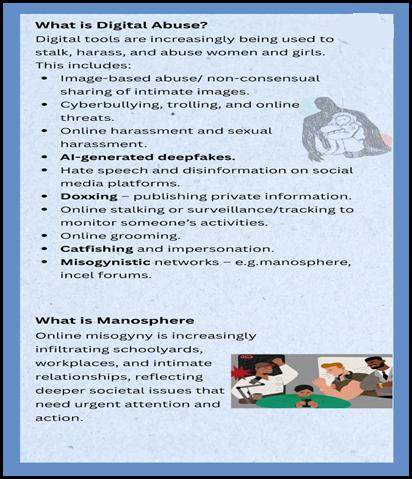
India’s Fight to End Violence Against Women: Laws and Legislations
The Government of India has prioritised the elimination of violence against women through a multi-pronged approach, encompassing robust legal frameworks, institutional support, dedicated helplines, and flagship schemes. These efforts align with the observance of the International Day for Elimination of Violence Against Women (November 25), emphasising not only immediate redressal but also long-term empowerment. The Ministry of Women and Child Development (MWCD) leads these initiatives, integrating safety (Sambal) and empowerment (Samarthya) components under the umbrella Mission Shakti scheme.
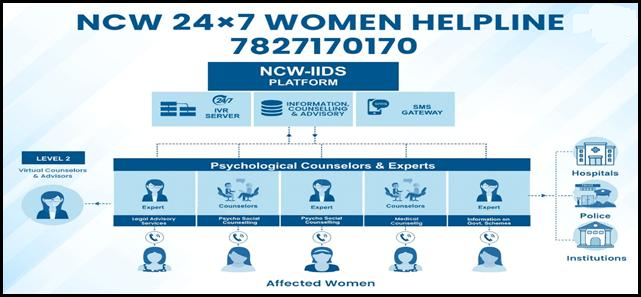
National Commission for Women (NCW)
This Commission was established as a statutory body by the Government of India on January 31, 1992, with the mandate to examine and monitor all constitutional and legal safeguards for women, recommend amendments to existing laws wherever required, and investigate complaints related to the deprivation of women’s rights. Most states have also constituted State Commissions for Women (SCWs) with parallel responsibilities. The NCW receives complaints of violence and rights violations against women, both in writing and online through its portal www.ncw.nic.in and actively processes them to ensure prompt and effective redressal.
Key Legal Provisions for Women’s Safety in India
| Law / Act | Key Features | Coverage / Applicability | Mechanisms & Penalties | Special Provisions |
|---|---|---|---|---|
| Bharatiya Nyaya Sanhita (BNS), 2023 (effective 1 July 2024) | Replaces the IPC; strengthens provisions for sexual crimes | Applicable across India | • Stricter penalties, including life imprisonment for rape of minors (<18) • Fast-track trials for crimes against women/children • Mandatory audio-video recording of victim statements |
• Expanded definition of sexual offences • Priority investigation & trial for women and child-related crimes |
| Protection of Women from Domestic Violence Act (PWDVA), 2005 | Comprehensive law to address domestic violence | Any woman in a domestic relationship (marriage, adoption, family ties, shared household) | Covers physical, sexual, verbal, emotional, and economic abuse, including dowry harassment Provides Protection Orders, Residence Orders, Custody Orders, and Monetary Relief |
• “Aggrieved person” includes any woman living in a shared household • Provides for Protection Officers and Service Providers |
| Sexual Harassment of Women at Workplace (POSH Act), 2013 | Prevents and redresses workplace sexual harassment | All workplaces: public, private, unorganized sectors; all women employees, interns, and visitors | Mandatory Internal Committee (IC) in establishments with 10+ employees Local Committee (LC) for smaller organisations Inquiry to be completed within 90 days |
• SHe-Box portal for online complaints • Mandatory annual report & awareness training • Overseen by Ministry of Women & Child Development (MWCD) |
Mission Shakti – Components and Key Features
| Component | Objective / Purpose | Target Group / Coverage | Key Services / Features | Implementing Agency |
|---|---|---|---|---|
| Swadhar Greh | Provide shelter & support to women in difficult circumstances | Women facing violence, abandonment, family conflict, mental stress, trafficking risk | • Safe shelter • Food & clothing • Counselling & legal aid • Skill training & rehabilitation |
Ministry of Women & Child Development (MWCD) |
| One Stop Centres (OSCs) | Offer integrated support to women affected by violence | All women facing physical, sexual, emotional, digital, or economic violence | • Medical assistance • Police facilitation • Legal aid • Counselling services • Temporary shelter • Available in every district |
MWCD in convergence with Health Dept., Police, Legal Services Authority |
| Stree Manoraksha Project | Strengthen mental health support for women survivors of violence | OSC staff, counsellors, frontline workers | • Capacity-building on psychosocial care • Trauma-informed counselling • Mental health first aid |
NIMHANS (National Institute of Mental Health & Neurosciences) |
| Digital Shakti Campaign | Improve cyber safety and digital literacy among women | Women & girls across schools, colleges, workplaces | • Awareness on cybercrime prevention • Online safety training • Empowering victims to report cybercrimes • Creation of safer online spaces |
National Commission for Women (NCW) |
Q. Technology has emerged as both a tool for empowerment and a space of vulnerability for women. In this context, discuss India’s evolving legal, institutional, and technological measures to combat both offline and online violence against women.”
(250 words)

- RBI’s Shrinking Real-Rate Cushion Amid Rising Inflation and Strong Demand - September 21, 2026
- India’s NGOs at a New Funding Crossroads - September 21, 2026
- Deep-Sea Discovery, Environmental Responsibility - September 19, 2026

No Comments