


02 Aug What To Do After the UPSC Mains Exam?
The UPSC Mains Exam stands as a formidable and very critical phase of the UPSC Civil Services Examination. After months of intense study, writing the papers for a whole week, aspirants often find themselves left in a vacuum—confused as to what to do next. While some feel proud of having given their best, others grow insecure, analysing almost every answer.
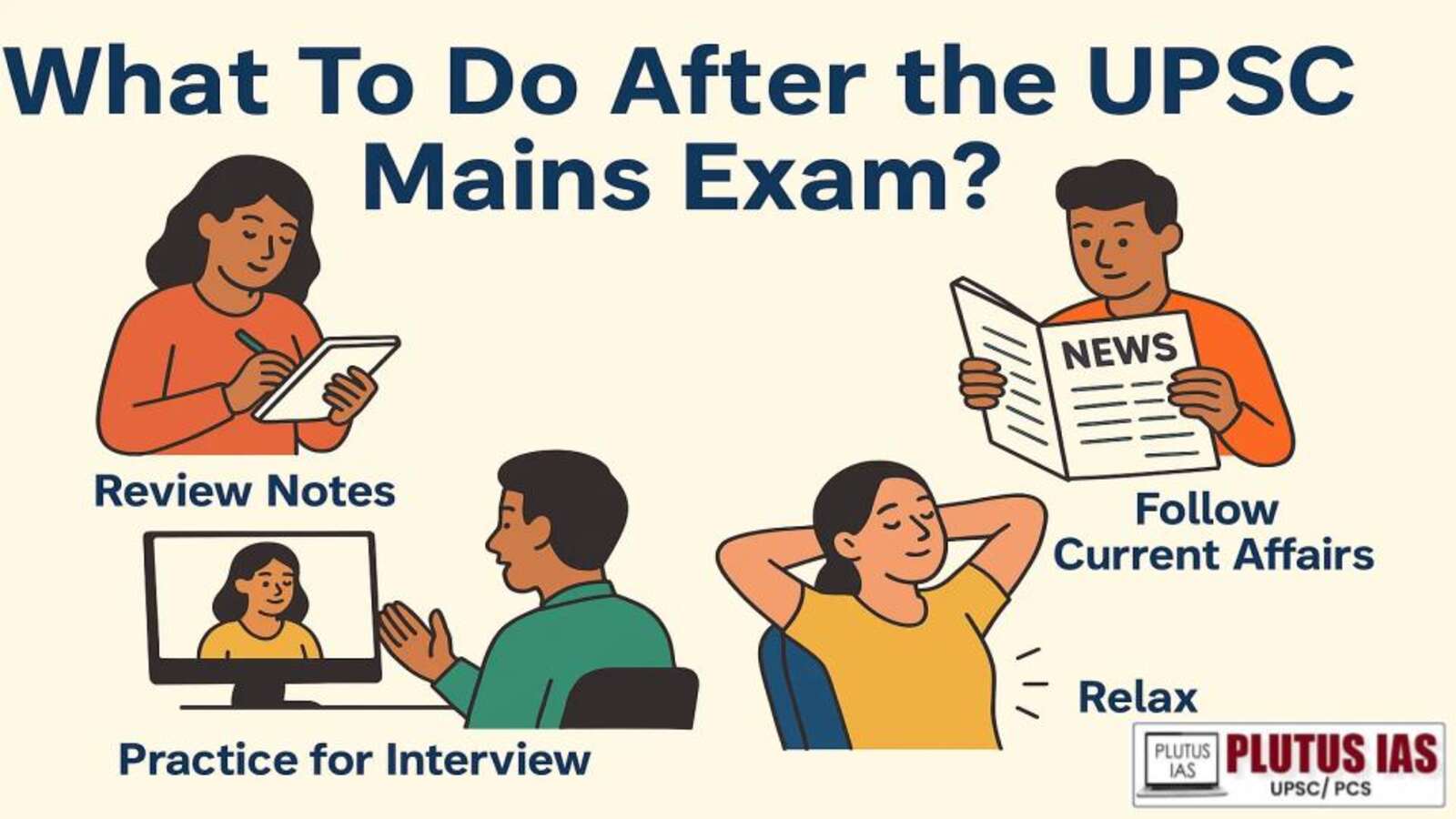
What To Do After the UPSC Mains Exam?
Whatever your frame of mind may be, what you do after the UPSC Mains Exam will go a long way in determining how your journey unfolds. So, whether you are confident of being selected or planning to give it another shot somehow after the mains, a determined strategy should be on your mind to ensure you never lose out on the much-needed momentum.
Covered below is a detailed guide on what to do after writing the UPSC Mains Exam, with expert advice and mentoring support, insights from Plutus IAS:
1. Take a Well-Deserved Break
Once you have mentally stretched yourself and shown discipline for months, the first act is to relax and get rejuvenated. This 7–10 day break will recharge your energy, clarify your mind, and prepare you for the next step—be it a Personality Test or a repeat.
This is something you can:
- Go and spend time with family and friends
- Go on a trip, if you can
- Read some books, but unrelated to UPSC
- Think about how far you have come
Plutus IAS mentors often suggest this pause as a vital “reset period” before moving to the next phase.
2. Start Light Preparation for Personality Test
Once a candidate gets to know he or she is quite definite of a seat in the Mains, there is no point in waiting for the Mains results before starting preparation for the UPSC Interview (Personality Test). Interview preparation is not rote knowledge but the articulation of one’s opinions confidently and ethically.
This is how to begin:
- Go through your DAF-Detailed Application Form
- Follow daily current affairs (especially with special focus on the opinion sections)
- Reflect on personal experiences, hobbies, and academic background
- Engage in mock interviews or group discussions
Plutus IAS offers DAF analysis sessions on a one-to-one basis, mock interviews with expert panellists (including ex-bureaucrats), and personalised mentoring for aspirants to truly hone and present their personality and body language.
3. Objectively look at your Mains-*Performance
Whatever the confidence may be, one must sit to do an appraisal of their answers just for a few minutes:
- Have you attempted most questions in each paper?
- Have you given proper intros and conclusions?
- Have you provided instances, data, etc.?
- The idea is not to create anxiety in yourself, but to create areas to improve on if you find a need to re-do.
Plutus IAS faculty provides post-Mains answer reviews to help aspirants understand scoring patterns and improve writing strategies for future attempts.
4. Stay Updated With Current Affairs
Don’t disconnect fully from news and happenings developments. The usual time for interview preparation after Mains is 3 to 4 months. Keeping abreast of events, mostly related to government policies, international relations, and socio-economic matters, is very important for interview success.
Quick tips:
- One newspaper to be followed regularly from the national category (e.g., The Hindu or Indian Express)
- Follow PIB and PRS for alerts
- Keep an eye on editorials and try to express your opinions about them
Plutus IAS will give you the Interview-oriented Current Affairs Digest, which will make your reading easier, keeping you updated.
5. Working on Your Communication
Most aspirants know their facts but don’t know how to communicate them well to the interview panel. You should now:
- Engage in mock interviews
- Develop your English or Hindi speaking skills
- Work on the modulation of voice and expression through the body
- Record yourself answering questions and reviewing freely
Plutus IAS has a special Interview program including mock interviews with thorough feedback on style of speaking, tone, and clarity.
6. Go Versus Plan for the Future – Whatever the Outcome
If this represents your first or second attempt and you believe that there is a chance you might not clear the main examination, it would be wiser to start preparing for Prelims again without waiting for the results. The UPSC cycle moves fast and in a limited time.
Some tips to follow:
- Revise the NCERT and static portions
- Take 2-3 mock Prelims every week
- Keep in touch with optional subjects
Plutus IAS has an organised Post-Mains cum Prelims Booster Plan, so your interview prep and Prelims revision are balanced.
7. Reflect on and Realign Your UPSC Strategy
If your performance was less-than-expected, issue an analysis of the possible reasons:
- Was it answer writing that delayed you?
- Were you short on time, struggling to complete half of the papers?
Was it your notes or your preparation?
Use this time to rethink how you want to prepare ahead. Plutus IAS offers mentorship calls and customised study plans for all aspirants willing to get back on track with a smarter plan.
Conclusion
It has been quite a milestone to clear the UPSC Mains Exam, but not the finish. Whatever direction one takes now, either to interviews or another, the only thing important is that one retains clarity and confidence during this transition.
Related article
Top UPSC Sociology Optional coaching
Best UPSC Online Coaching Institute
Top Online IAS Coaching Institute

- Effective communication skills For UPSC Preparation - August 20, 2025
- Enhance UPSC CSE Preparation with Spaced Repetition Learning - August 20, 2025
- Digital vs. Handwritten Notes: Which UPSC CSE Notes are perfect for Preparation? - August 14, 2025

No Comments