


01 Dec World AIDS Day 2025: India’s Journey from Crisis Response to Community-Led Action
This article covers “Daily Current Affairs” and From World AIDS Day 2025: India’s Journey from Crisis Response to Community-Led Action
SYLLABUS MAPPING
GS-2- Social Justice and Health- World AIDS Day 2025: India’s Journey from Crisis Response to Community-Led Action
FOR PRELIMS
What steps has India taken to fight HIV/AIDS?”
FOR MAINS
What are the main awareness and prevention efforts for HIV in India?
Why in the News?
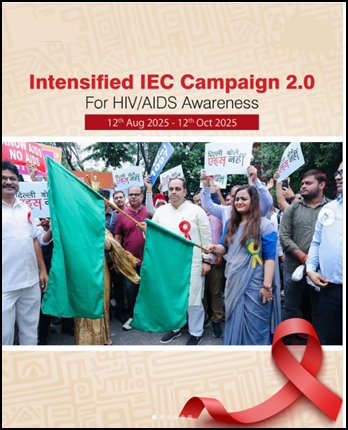
World AIDS Day is a global observance held on December 1 every year to raise awareness about the HIV/AIDS epidemic, remember those who have died from HIV-related illnesses, and support people living with HIV/AIDS. It was first marked in 1988 by the World Health Organization (WHO) and has since become a platform for governments, communities, and individuals to unite in the fight against the disease. The theme for this year is “Overcoming disruption, transforming the AIDS response.” It emphasises the need to not only preserve past progress but transform HIV services to make them more resilient, equitable, and community-led. This theme highlights the urgency of addressing disruptions caused by pandemics, conflicts, and inequalities that limit access to care. India marks World AIDS Day each year through nationwide awareness campaigns, community outreach activities, and renewed government commitments led by the National AIDS Control Organization (NACO) under the Ministry of Health & Family Welfare.
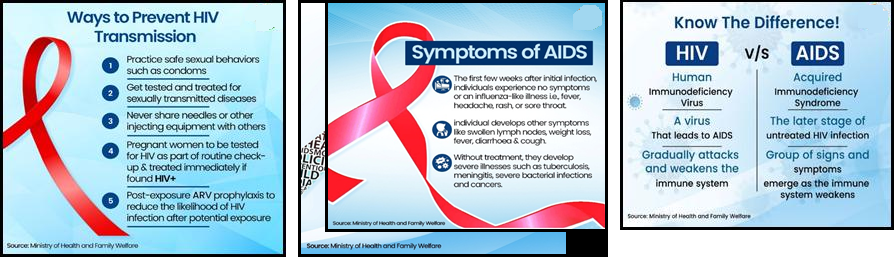
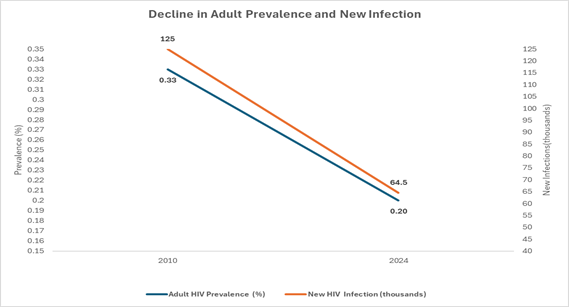
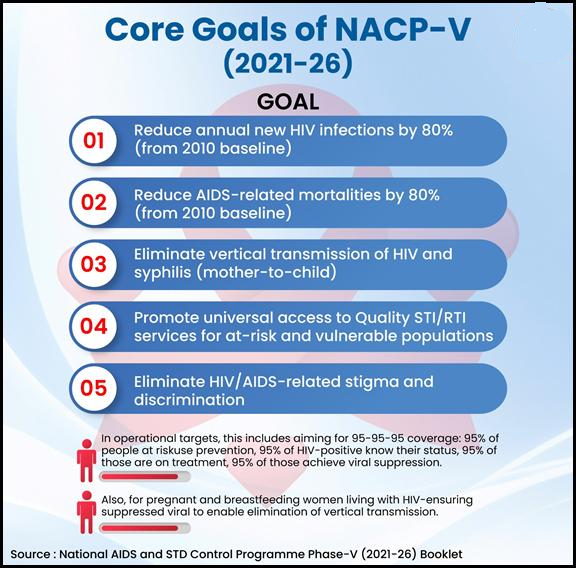
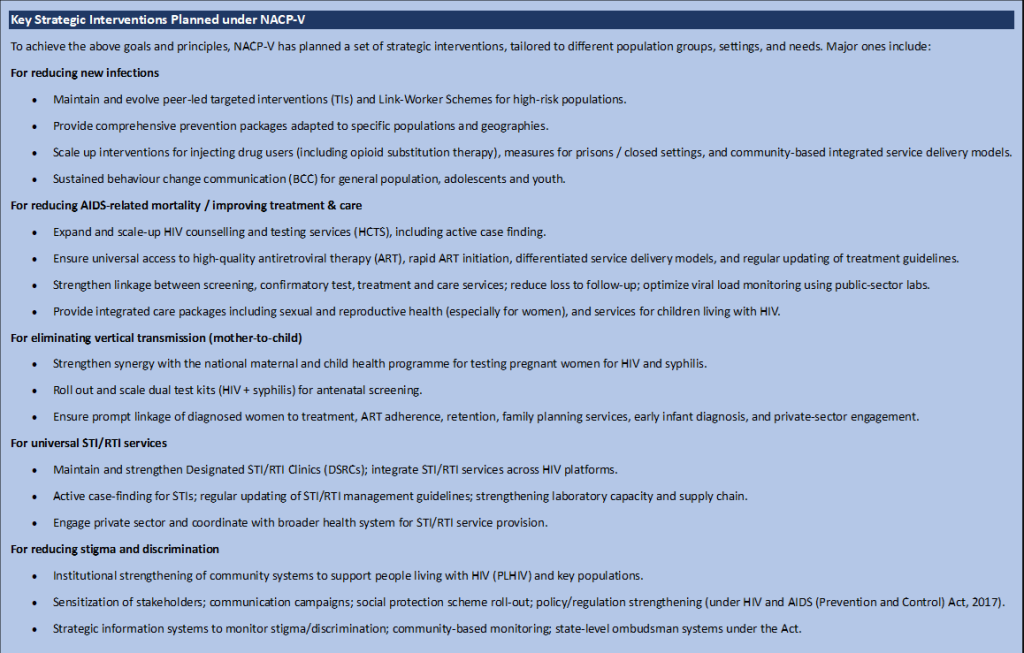
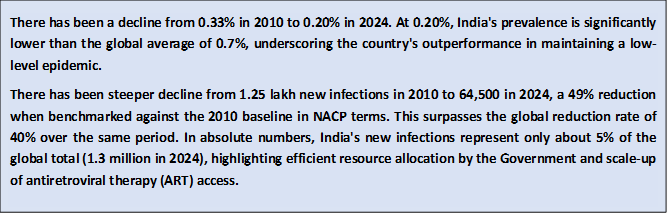 India’s AIDS Control Programme is globally acclaimed as a success story.[1] The initial phase (1985-1991) focused on identifying HIV cases, ensuring safe blood transfusions, and generating targeted awareness. The response gained momentum with the launch of the National AIDS and STD Control Programme (NACP) and the National AIDS Control Organisation (NACO) which was established in 1992 under the Ministry of Health and Family Welfare to coordinate a multi-sectoral national strategy. Over time, the focus of NACP shifted from a national response to a more decentralised response and to increase involvement of NGOs and networks of People Living with HIV (PLHIV).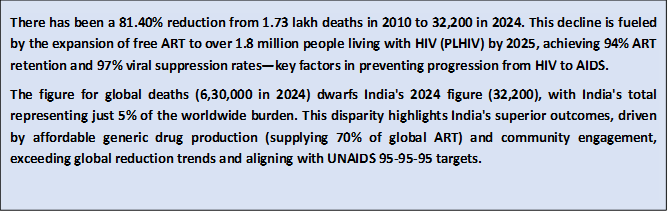

Q. With reference to India’s National AIDS Control Programme (NACP), consider the following statements:
1. The “Test and Treat” policy—ART for all diagnosed PLHIV—was introduced under NACP-III.
2. District AIDS Prevention and Control Units (DAPCUs) were created under NACP-III.
3. NACP-V aims to end AIDS as a public health threat in India by 2030.
Which of the statements given above is/are correct?
(a) 1 and 2 only
(b) 2 and 3 only
(c) 1 and 3 only
(d) 1, 2 and 3
Answer: B
Mains Question:
Q. India’s HIV/AIDS response has transitioned from an emergency-based approach to a decentralised, rights-focused, and community-led public health movement. Discuss the major achievements, policy innovations, and remaining challenges in India’s fight against HIV/AIDS.
(250 words)

- Europe’s AI Rules May Become India’s Opportunity - August 14, 2026
- Transparency as the Foundation of Trust in Medicine - August 14, 2026
- A Timely Reset for the Food Security Act: From Foodgrain Security to Nutrition Security - August 13, 2026

No Comments