


15 Sep 6 राज्यों ने किया किशाऊ परियोजना समझौते पर हस्ताक्षर, जानें पूरा विवरण
✎ The Kishau Multi-Purpose Project is a National Project on the Tons River, aiming to resolve a four-decade-old inter-state water dispute through a 232.6m concrete gravity dam, generating 1,476 million units of clean hydropower and…
Subject Relevance — Where This Topic Fits
- GS Paper II — Functions and Responsibilities of the Union and the States, Issues and Challenges Pertaining to the Federal Structure | GS Paper III — Water Resources, Irrigation and Multi-Purpose Projects, Environmental Impact Assessment
- Prelims: Inter-State Water Disputes Act, 1956, National Projects (Water Resources), Tons River Basin, Yamuna River Basin Management, Concrete Gravity Dam, Irrigation Potential, Hydropower Generation, Environmental Flow Requirements
- Essay: Federalism and Cooperative Federalism in India: Balancing Development and Equity, Sustainable Water Resource Management: Challenges and Solutions in the 21st Century
Quick Revision: The Kishau Multi-Purpose Project is a National Project on the Tons River, aiming to resolve a four-decade-old inter-state water dispute through a 232.6m concrete gravity dam, generating 1,476 million units of clean hydropower and irrigating 97,000 hectares, with 90% central funding.
Why is this in the news?
The signing of the Kishau Multi-Purpose Project Agreement on 15 September 2026 marks a significant governance achievement in resolving a long-standing inter-state water dispute involving six states—Uttar Pradesh, Uttarakhand, Himachal Pradesh, Rajasthan, Delhi, and Haryana. This agreement, facilitated under the aegis of the Union Home and Cooperation Minister and the Union Jal Shakti Minister, demonstrates the efficacy of cooperative federalism in addressing complex water resource challenges through multi-stakeholder consensus.
Background
- The Kishau Multi-Purpose Project has been pending for over four decades, reflecting the protracted nature of inter-state water disputes in India, particularly in the Yamuna and Tons river basins.
- Inter-state water disputes in India are governed by constitutional provisions (Article 262) and the Inter-State Water Disputes Act, 1956, which mandates the establishment of Tribunals for adjudication.
- The Yamuna River Basin spans multiple states, including Uttar Pradesh, Uttarakhand, Himachal Pradesh, Rajasthan, Haryana, and Delhi, necessitating coordinated management for equitable water distribution and conflict resolution.
- The project aligns with the National Perspective Plan for Water Resources Development, which emphasizes the need for multi-purpose river valley projects to address irrigation, hydropower, and water supply deficits.
- The Union Government has prioritized the resolution of long-pending inter-state water disputes since 2018, with ten such disputes resolved under the current administration, including the Kishau Project.
- The Kishau Project is classified as a ‘National Project,’ ensuring central funding and technical support for its implementation.
What is the Kishau Multi-Purpose Project?
- The Kishau Multi-Purpose Project is a National Project located on the Tons River, a tributary of the Yamuna, across the borders of Uttarakhand and Himachal Pradesh.
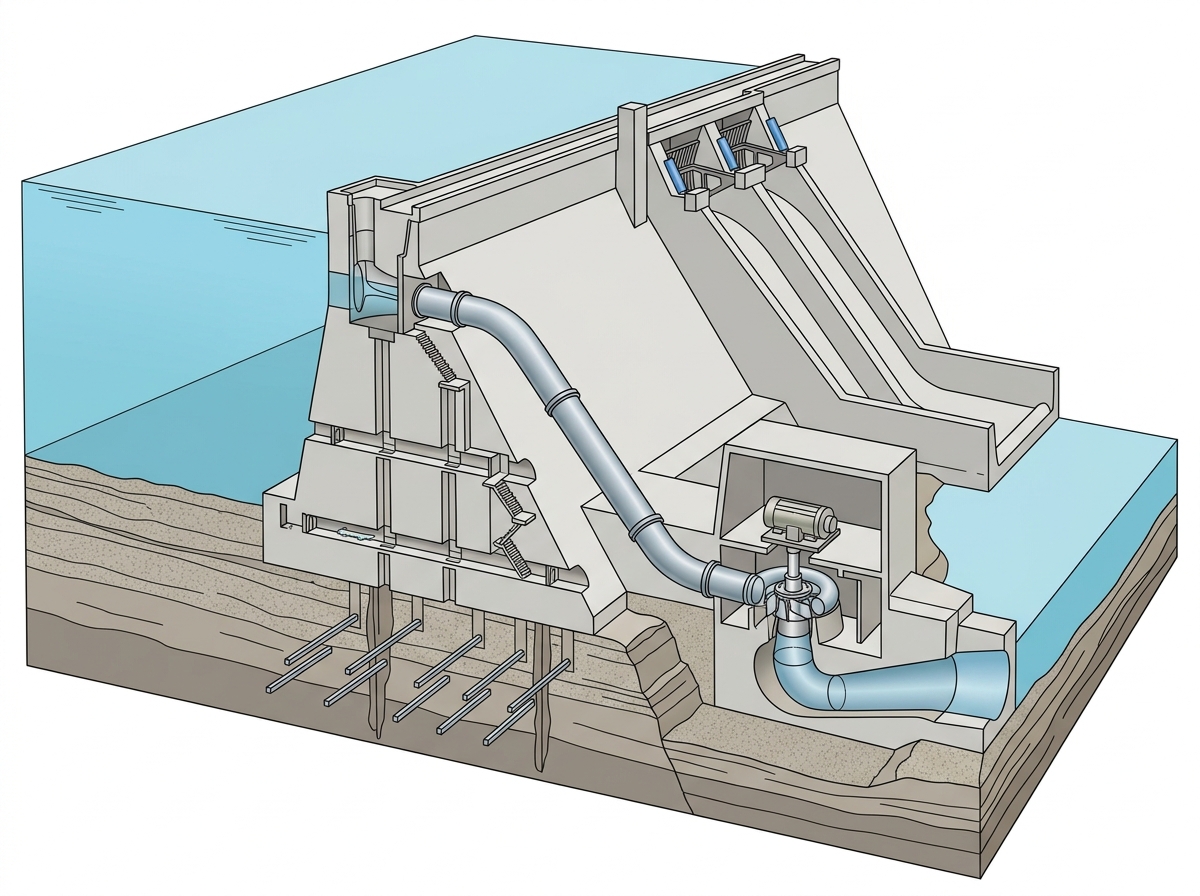
- The project envisages the construction of a 232.6-meter-high concrete gravity dam with a live storage capacity of 1,562 million cubic meters, facilitating multi-purpose utilisation of water resources.
- The dam will generate 1,476 million units of clean hydropower annually, contributing to India’s renewable energy goals and reducing dependence on fossil fuels.
- The project will irrigate 97,000 hectares of land across the participating states, enhancing agricultural productivity and food security in water-scarce regions.
- The project includes provisions for environmental flow management to ensure the ecological sustainability of the Tons and Yamuna river systems.
- The financial outlay for the project is shared between the Union Government (90%) and the participating states (10%), with the Union Government bearing the majority of the cost.
- The agreement was signed by the Chief Ministers of Uttar Pradesh, Uttarakhand, Himachal Pradesh, Rajasthan, Delhi, and Haryana, demonstrating inter-state cooperation in water resource management.
- The project is expected to benefit Delhi significantly by augmenting water supply and addressing urban water scarcity challenges.
Key Features
| Feature | Significance |
|---|---|
| Project Type | A multi-purpose inter-state river valley project under the National Project category, aimed at integrated water resource management. |
| Dam Specifications | A 232.6-metre high concrete gravity dam on the Tons River, with a designed storage capacity of 1,562 million cubic metres. |
| Hydropower Generation | Provision for generating 1,476 million units of clean hydropower, contributing to renewable energy targets. |
| Irrigation Coverage | Potential to irrigate 97,000 hectares of agricultural land across beneficiary states. |
| Financial Arrangement | 90% funding by the Government of India and 10% by the participating states, ensuring equitable burden-sharing. |
Why it Matters
Economic
- Enhances agricultural productivity through assured irrigation, particularly in water-stressed regions of Rajasthan, Haryana, and Uttar Pradesh.
- Augments power generation capacity, supporting industrial and domestic energy needs with clean hydroelectricity.
- Stimulates local economies via employment generation in construction, operation, and maintenance phases.
Environmental
- Promotes sustainable water resource utilisation, reducing over-extraction of groundwater in the Yamuna basin.
- Supports ecological flow management in the Tons and Yamuna rivers, aiding biodiversity conservation.
- Contributes to climate resilience by diversifying water supply sources and reducing drought vulnerability.
Institutional
- Demonstrates cooperative federalism through consensus-based resolution of long-standing inter-state water disputes.
- Sets a precedent for structured multi-state collaboration in large-scale infrastructure projects.
- Strengthens the role of the National Water Resources Council in coordinating basin-level initiatives.
Social
- Improves water security for Delhi, mitigating summer shortages and reducing dependence on ground water.
- Facilitates equitable water allocation among riparian states, balancing developmental and ecological needs.
- Potential for ancillary benefits such as flood moderation and recreational water bodies.
Challenges
1. Technical and Engineering Challenges
- Complex geology of the Tons basin requiring advanced geological surveys and mitigation measures.
- High dam construction demands precision in material selection, seismic design, and spillway capacity.
- Long-term sedimentation management to preserve reservoir storage and operational efficiency.
UPSC Link: Geography: River Valley Projects
2. Environmental and Ecological Concerns
- Risk of submergence of forest and agricultural land, necessitating comprehensive Environmental Impact Assessments.
- Potential disruption to riverine ecosystems and migratory fish species, requiring fish ladders and habitat restoration.
- Need for compliance with the Environmental Protection Act, 1986, and Forest Rights Act, 2006.
UPSC Link: Environment: EIA & Forest Conservation
3. Inter-State Coordination and Legal Framework
- Ensuring adherence to the Inter-State Water Disputes Act, 1956, and the award of the Tribunal (if any).
- Balancing competing demands of upstream and downstream states for water allocation and hydropower sharing.
- Harmonising state-specific water policies with the National Water Policy, 2012.
UPSC Link: Polity: Interstate Relations
4. Financial and Implementation Risks
- Cost overruns due to inflation, material shortages, or regulatory delays impacting project viability.
- Securing timely release of central funds and state contributions to avoid implementation bottlenecks.
- Need for transparent procurement and contract management to prevent corruption and delays.
UPSC Link: Economy: Infrastructure Financing
5. Displacement and Rehabilitation
- Identification and resettlement of project-affected families in compliance with the Land Acquisition Act, 2013.
- Ensuring livelihood restoration for displaced communities, particularly in tribal and rural areas.
- Grievance redressal mechanisms to address compensation and resettlement disputes.
UPSC Link: Social Justice: R&R Policies
Challenges — UPSC Perspective
| Issue | Concern |
|---|---|
| Geological Stability | Seismic activity and foundation stability in the Himalayan foothills. |
| Water Sharing Formula | Equitable distribution of benefits and costs among riparian states. |
| Environmental Clearances | Delays in obtaining NoC from MoEFCC and state forest departments. |
| Land Acquisition | Resistance from local communities and landowners over compensation. |
| Operational Efficiency | Maintenance of dam safety and reservoir operations post-construction. |
| Climate Change Adaptation | Incorporating future climate variability into design and operations. |
Way Forward
- Constitute a High-Level Monitoring Committee with representatives from all beneficiary states and the Ministry of Jal Shakti for periodic progress reviews.
- Fast-track environmental clearances and forest diversions by leveraging the ‘Single Window Clearance’ mechanism under the EIA Notification, 2006.
- Undertake detailed geological and hydrological studies to finalise dam design, spillway capacity, and sedimentation management plans.
- Develop a comprehensive Resettlement and Rehabilitation Policy for project-affected families, ensuring compliance with the Right to Fair Compensation and Transparency in Land Acquisition Act, 2013.
- Establish a transparent financial management system with real-time tracking of funds and expenditures to prevent cost overruns.
- Initiate public consultations and awareness campaigns to address local concerns and foster community ownership.
- Integrate the project with existing irrigation and power distribution networks to ensure seamless integration post-completion.
- Develop a climate resilience plan to address potential impacts of glacial melt, altered precipitation patterns, and extreme weather events.
UPSC Value Addition
Keywords for Mains Answer-Writing
Kishau Multipurpose Project · River Tons · Inter-state Water Disputes · National Project status · Yamuna Basin states · Dam construction · Water sharing agreements · Fiscal federalism · Environmental impact · Hydropower generation · Irrigation infrastructure · Inter-state cooperation · Constitutional provisions for water disputes · River basin management · Multi-state agreements · National Projects in India
Constitutional & Policy Linkages
- Article 262: Adjudication of inter-state water disputes
- Article 263: Coordination between states through inter-state councils
Concept Flow
Long-standing inter-state water disputes → Formation of consensus through multi-lateral negotiations → Signing of MoU/Kishau Project Agreement → Designation as National Project → Financial and technical clearance → Detailed project report and environmental impact assessment → Land acquisition and R&R → Construction and monitoring → Commissioning and operationalisation → Equitable water and power distribution → Socio-economic and environmental benefits
Prelims Practice Questions
Q1. Consider the following statements regarding the Kishau Multipurpose Project:
1. The project involves the construction of a 232.6-meter-high dam on the Tons River.
2. The project has been declared a National Project with 90% funding by the central government.
3. The project will provide 1,476 million units of clean hydropower annually.
4. The project is primarily aimed at resolving water disputes between Tamil Nadu and Karnataka.
How many of the above statements are correct?
- Only one
- Only two
- Only three
- All
Answer: Only three — Statements 1, 2, and 3 are correct. Statement 4 is incorrect as the Kishau project involves states in the Yamuna Basin (Uttar Pradesh, Uttarakhand, Himachal Pradesh, Rajasthan, Delhi, and Haryana), not Tamil Nadu and Karnataka.
Q2. Assertion (A): The Kishau Multipurpose Project has been declared a National Project.
Reason (R): National Projects in India are those where the central government bears 90% of the financial burden, and the remaining 10% is shared by the beneficiary states.
In the context of the above two statements, which one of the following is correct?
- Both A and R are true, and R is the correct explanation of A.
- Both A and R are true, but R is not the correct explanation of A.
- A is true, but R is false.
- A is false, but R is true.
Answer: Both A and R are true, and R is the correct explanation of A. — Both A and R are true. The Kishau Multipurpose Project has been declared a National Project, and National Projects in India are funded 90% by the central government and 10% by beneficiary states. R correctly explains A.
Q3. Match the following river basin projects with their respective states:
Column I (Project) Column II (State/States)
A. Kishau Multipurpose Project 1. Yamuna Basin
B. Ken-Betwa Link Project 2. Narmada Basin
C. Renukaji Multipurpose Project 3. Upper Yamuna Basin
D. Sardar Sarovar Project 4. Chambal Basin
Select the correct match:
- A-1, B-3, C-4, D-2
- A-1, B-4, C-3, D-2
- A-3, B-1, C-2, D-4
- A-2, B-3, C-1, D-4
Answer: A-1, B-3, C-4, D-2 — Kishau Multipurpose Project is in the Yamuna Basin (A-1). Ken-Betwa Link Project involves Madhya Pradesh and Uttar Pradesh (B-4). Renukaji Multipurpose Project is in the Upper Yamuna Basin (C-3). Sardar Sarovar Project is in the Narmada Basin (D-2).
Mains Practice Question
✍ The resolution of inter-state water disputes in India has historically been fraught with challenges, often requiring judicial intervention or prolonged negotiations. In this context, critically examine the significance of the Kishau Multipurpose Project Agreement signed in September 2026, highlighting its potential benefits and the institutional mechanisms that facilitated its conclusion. (15 Marks)
Approach: MODEL-ANSWER SKELETON:
1. **Introduction (2 marks)**
– Define inter-state water disputes in India (e.g., Cauvery, Krishna-Godavari, Yamuna Basin disputes).
– Mention the constitutional framework: Article 262 (Adjudication of disputes relating to waters of inter-State rivers or river valleys) and the Inter-State Water Disputes Act, 1956.
– Highlight the role of the River Boards Act, 1956, and the National Water Policy (2012/2023).
2. **Kishau Multipurpose Project: Key Features (3 marks)**
– Location: Tons River (tributary of Yamuna), boundary between Uttarakhand and Himachal Pradesh.
– Components: 232.6-meter-high dam, 1,562 million cubic meters storage capacity, irrigation for 97,000 hectares, 1,476 million units of hydropower.
– National Project status: 90% central funding, 10% by beneficiary states (Uttar Pradesh, Uttarakhand, Himachal Pradesh, Rajasthan, Delhi, Haryana).
– Environmental safeguards: Impact on flora/fauna, mitigation measures under the Environment Protection Act, 1986.
3. **Institutional Mechanisms Facilitating the Agreement (4 marks)**
– Role of the Union Government: Ministry of Jal Shakti, NITI Aayog’s role in facilitating consensus.
– State-level coordination: Chief Secretaries’ meetings, Chief Ministers’ summits.
– Legal and policy instruments: Use of the Inter-State Water Disputes Tribunal’s recommendations (if any), adherence to the National Mission for Clean Ganga (NMCG) guidelines.
– Political economy: Federalism, cooperative federalism (e.g., GST Council model), and the ‘Sabka Saath, Sabka Vikas’ framework.
4. **Benefits and Challenges (3 marks)**
– **Benefits**:
– Water security for Delhi and adjoining regions.
– Irrigation and hydropower generation.
– Flood control and groundwater recharge.
– Environmental conservation (e.g., reduced Yamuna pollution downstream).
– **Challenges**:
– Ecological impact: Displacement of communities, loss of biodiversity.
– Financial sustainability: O&M costs post-construction.
– Interstate trust deficits: Historical grievances (e.g., Haryana vs. Delhi water disputes).
5. **Comparative Perspective (2 marks)**
– Compare with other resolved disputes: e.g., Krishna-Godavari (Godavari Water Disputes Tribunal Award, 2010), Indus Waters Treaty (1960) with Pakistan.
– Role of judicial intervention vs. negotiated settlements (e.g., Cauvery Water Disputes Tribunal vs. Mahadayi Tribunal).
6. **Conclusion (1 mark)**
– Reiterate the significance of the Kishau agreement as a model for cooperative federalism.
– Emphasize the need for robust institutional mechanisms (e.g., permanent inter-state water councils) to preempt future disputes.
– Acknowledge the role of political will and sustained dialogue in resolving complex water conflicts.
Source: PIB (Press Information Bureau)
Himachal Pradesh PCS (HPPSC (HAS)) — State PCS Practice
Prelims: Recently, a tri-state initiative was launched in Shimla involving Himachal Pradesh, Uttar Pradesh, and Uttarakhand to address which of the following critical water resource challenges?
- A. Integrated River Basin Management for the Ganga-Yamuna system
- B. Revival of traditional water harvesting structures in Himalayan states
- C. Joint monitoring and management of glacier-fed river basins
- D. Establishment of a common water grid for inter-state water transfer
Answer: C. Joint monitoring and management of glacier-fed river basins — The initiative focuses on collaborative glacier and river basin monitoring to enhance water security in Himalayan states, as highlighted during the meeting attended by Union Ministers Amit Shah and C.R. Patil.
Mains: Discuss the significance of inter-state cooperation among Himalayan states like Himachal Pradesh, Uttarakhand, and Uttar Pradesh in addressing climate-induced water resource challenges. Suggest a structured framework for such collaboration, keeping in view the constitutional provisions and ecological sensitivities of the region.
Generated by AanyaAi for educational purpose.
Related guides on our sites
- Anthropology VS PSIR
- Best PSIR optional coaching
- Best PSIR optional coaching online
- Best PSIR optional teacher

- 6 राज्यों ने किया किशाऊ परियोजना समझौते पर हस्ताक्षर, जानें पूरा विवरण - September 15, 2026
- पीएलएफएस अगस्त 2026: श्रम भागीदारी दर में वृद्धि, बेरोजगारी में गिरावट - September 15, 2026
- UPSC Exam Focus: PLFS August 2026 Key Highlights on Employment Trends - September 15, 2026

No Comments