


19 Oct “Revolutionizing Broadcasting: Embracing Immersive Technologies, 5G, and Digital Radio Innovations”
This article covers “Daily Current Affairs” and topic details of the emerging broadcasting technologies and their significance for the Indian economy.
Syllabus mapping:
GS-3: Science and Technology: Recent advancement in communication and broadcasting technologies.
For Prelims:
What are various technologies and their key features and working mechanisms?
For Mains:
Significance of the emerging broadcasting technologies for the Indian economy and irritant to harness the potential; of emerging technologies.
Why in the news?
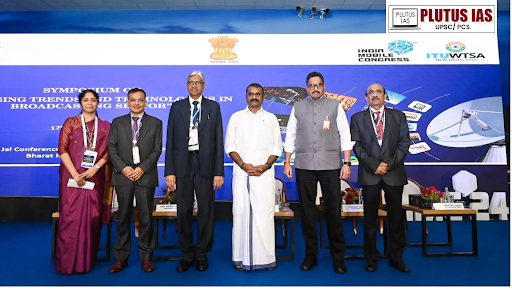
A symposium on ‘Emerging Trends and Technologies in the Broadcasting Sector’ meeting was held on the sidelines of the India Mobile Congress (IMC-2024). The symposium explored the transformative potential and practical applications of emerging technologies within the broadcasting industry, with a particular focus on immersive technologies, D2M 5G broadcasting, and digital radio.
Recent advancement in the Broadcasting Technology:
1. Immersive Technologies: VR and AR enhance viewer engagement with interactive content. The 360-degree video provides a panoramic viewing experience.
2. D2M Broadcasting: Enables personalized content delivery based on user preferences. Facilitates real-time interaction between broadcasters and audiences.
3. 5G Broadcasting: Offers high-speed connectivity for improved streaming quality. Reduces latency, enhancing live event experiences.
4. Digital Radio Technology: Provides clearer audio quality and more reliable reception. Integrates multimedia features with audio broadcasts.
5. HDR (High Dynamic Range) and Wide Color Gamut
Enhances the visual quality of broadcasts by improving contrast and providing richer, more vibrant colors. Elevates the viewing experience, especially for high-definition content like sports, movies, and nature documentaries.
6. Next-Generation TV (ATSC 3.0)
It provides ultra-high-definition (4K) video, enhanced sound, and interactive content, making broadcast television more immersive. It also supports hybrid content delivery, combining over-the-air broadcasting with internet-based services.
7. Cloud-Based Broadcasting
Streamlines content production and distribution by leveraging scalable cloud infrastructure, reducing costs, and increasing flexibility. It also enables remote production and collaboration, enhancing broadcasters’ efficiency.
8. AI-Driven Content Personalization:
Utilizes artificial intelligence to tailor content recommendations and advertisements based on viewer preferences. Enhances user engagement and retention by offering personalized broadcast experiences across platforms.
9. Low-Latency Streaming Protocols (LL-HLS, CMAF)
Reduces delays between live broadcast and online streaming, ensuring near real-time content delivery. Improves viewer experience, especially for live sports, news, and interactive content by synchronizing online and TV feeds.
Significance of Emerging Broadcasting Technology for India’s Economic Growth
1. Improved Information Access: Digital broadcasting enhances access to information, empowering citizens and promoting informed participation in the economy.
2. Creative Economy Boost: The sector fosters job creation in content production, advertising, and marketing, driving economic diversification.
3. Digital Transformation: Aligns with initiatives like Digital India, increasing connectivity and productivity across sectors.
4. Attracting Foreign Investment: Advanced technologies draw FDI into media and entertainment, spurring growth and job creation.
5. Rural Connectivity: Mobile and community radio enhance information access in rural areas, supporting agriculture, health, and education.
6. Entrepreneurship Promotion: Lower barriers for new ventures encourage start-ups in digital content and broadcasting, diversifying the economy.
7. Increased Advertising Revenue: Digital platforms enable targeted ads, boosting revenue for content creators and reducing consumer costs.
8. Cultural Preservation: Broadcasting technologies promote and preserve India’s cultural heritage, enhancing cultural tourism.
9. Employment Generation: The expanding sector creates jobs in production, tech, and marketing, supporting local economies.
Irritants to Harnessing Broadcasting Technology in India
1. Regulatory Challenges:
Complicated licensing processes can take months, deterring new broadcasters. Frequent policy changes create uncertainty, complicating long-term planning.
2. Infrastructure Issues:
Over 600 million people in rural India still lack reliable internet access, hindering digital reach. Many broadcasting facilities use outdated technology, impacting quality.
3. High Adoption Costs:
Upgrading to advanced technologies like 5G requires significant investment, often out of reach for smaller players. Maintenance costs for new technology can strain budgets, especially for regional broadcasters.
4. Content Quality and Diversity:
National broadcasters often overlook local stories, leading to viewer disengagement. The demand for rapid content production can compromise quality and trust.
5. Global Competition:
Platforms like Netflix and Amazon Prime dominate the market, making it challenging for local broadcasters. Piracy remains a significant issue, costing the industry billions in lost revenue.
6. Skilled Workforce Shortage:
Limited training programs focus on digital content creation and broadcasting technology. A lack of qualified technicians hampers innovation.
7. Consumer Awareness:
Nearly 50% of rural audiences need help with digital literacy, limiting their access to new platforms. Educational campaigns about the benefits of digital broadcasting are still underdeveloped.
8. Resistance to Change:
Many viewers prefer traditional media, slowing the transition to digital formats. Some industry professionals resist adopting new technologies because they fear obsolescence.
Ways to Untap the Potential of Broadcasting Technologies in India
1. Leverage PM-WANI Initiative:
Enhance internet connectivity through the Pradhan Mantri Wi-Fi Access Network Interface (PM-WANI) to ensure wider access to digital broadcasting, especially in rural and underserved areas.
2. Supportive Policies and Acts:
Develop comprehensive broadcasting and digital media policies that foster innovation and integrate broadcasting within the framework of the National Digital Communications Policy.
3. Enhance Common Service Centers (CSCs):
Utilize CSCs to deliver digital literacy programs and support local content creation, promoting regional stories and improving access to broadcasting technologies.
4. Encourage Private Sector Participation:
Facilitate public-private partnerships (PPP) to drive infrastructure investments and offer incentives for startups in the media sector, fostering innovation and competitiveness.
5. Strengthen Regulatory Framework:
Implement the pending Broadcasting Bill to create a unified framework for all forms of broadcasting, ensuring fair competition and high content quality standards.
6. Establish Clear Content Regulations:
Utilize the Cable Television Networks (Regulation) Act, 1995 to ensure guidelines for licensing and consumer protection are effectively enforced in the broadcasting sector.
7. Promote Digital India Programme:
Support initiatives under the Digital India Programme to enhance broadcasting infrastructure and accessibility and ensure the use of advanced digital technologies.
8. Combat Piracy Effectively:
Strengthen laws against piracy and launch public awareness campaigns to promote legal content consumption, addressing significant revenue losses in the industry.
9. Accelerate Technological Advancements:
Push for the rapid rollout of 5G technology to improve streaming quality and invest in AI and data analytics to deliver personalized content to viewers.
10. Focus on Content Localization:
Provide subsidies for producing regional content in various languages and collaborate with local creators to engage diverse audiences, enriching the broadcasting landscape.
Conclusion
Emerging broadcasting technologies have the potential to significantly impact India’s economy by enhancing access to information, fostering job creation, and promoting cultural diversity. By leveraging advancements such as 5G, immersive technologies, and digital radio, the country can transform its media landscape and ensure that diverse voices are heard. Addressing current irritants—such as regulatory challenges, infrastructure limitations, and skill shortages—will be essential for fully harnessing this potential.
Download plutus ias current affairs eng med 19th Oct 2024
Prelims Questions:
Q. Which of the following technologies is primarily associated with enhancing viewer engagement in broadcasting through interactive content?
A. Digital Radio Technology
B. Immersive Technologies
C. D2M Broadcasting
D. 5G Broadcasting
Answer: B
MAINS QUESTIONS :
Q. Evaluate the role of public-private partnerships in driving innovation within the Indian broadcasting industry. What strategies can be implemented to attract investment and encourage collaboration among stakeholders?
(Answer in 250 words)

- United Nations in the 21st Century: Relevance, Crisis, and Way Forward - September 22, 2025
- Election Commission of India: Strengthening the Democratic Backbone - September 20, 2025
- India’s Renewable Energy Journey: Towards Energy Self-Reliance and Climate Leadership - September 19, 2025

No Comments