


04 Oct Sacred Stages: Traditional Ritual Theatres of India
This article covers “Daily Current Affairs” and Topic details “Sacred Stages: Traditional Ritual Theatres of India”
SYLLABUS MAPPING
GS–1 – Indian Culture – Salient aspects of Art Forms, Literature, and Architecture from ancient to modern times
FOR PRELIMS
UNESCO recognition of ritual theatres highlights India’s rich cultural heritage
FOR MAINS
Examine the significance of India’s ritual theatres as living embodiments of intangible cultural heritage. Discuss the challenges in their preservation and suggest strategies to sustain them in contemporary society.
Why in the News?
India’s traditional ritual theatres have once again entered the cultural spotlight after UNESCO reaffirmed their place as vital elements of Intangible Cultural Heritage (ICH). Four forms—Kutiyattam and Mudiyettu of Kerala, Ramman of Uttarakhand, and Ramlila of North India—have already been inscribed on UNESCO’s Representative List, giving them international recognition. The recent emphasis on intangible heritage in policy debates and cultural platforms has brought ritual theatres to the forefront of India’s cultural discourse, making them both a matter of pride and a responsibility for future generations.
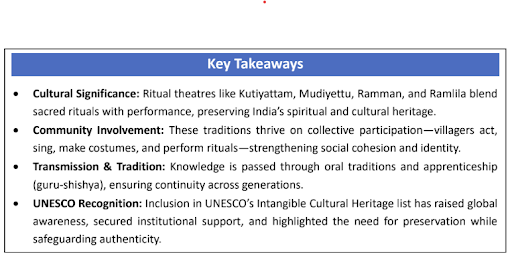
What is Ritual Theatre?
Ritual theatre may be described as a performance that emerges at the intersection of devotion, community, and art. It is not merely meant to entertain, but to sanctify and celebrate collective faith. Performances usually blend multiple artistic elements: dialogue, song, dance, percussion, pantomime, puppetry, and visual symbolism.
A key difference from mainstream theatre is that ritual theatre is staged in sacred or communal spaces such as temple courtyards, village squares, or specially constructed stages (like Kerala’s kuttampalam). The performers are not just actors but also ritual participants, bound by rules of purity and discipline. The audience, too, is part of the sacred process—witnessing, responding, and often participating. In this sense, ritual theatres are “living embodiments” of culture, transmitted orally and experientially through generations.
Intangible Cultural Heritage
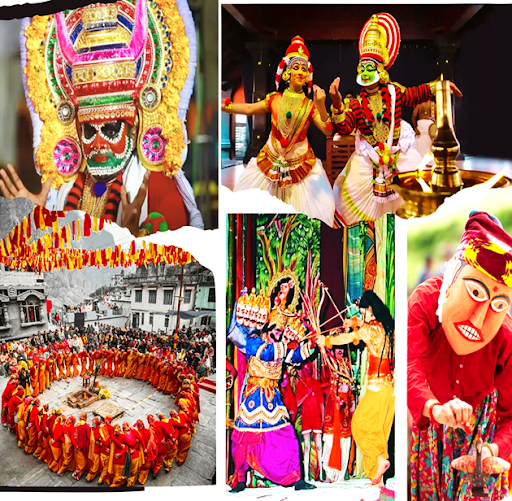
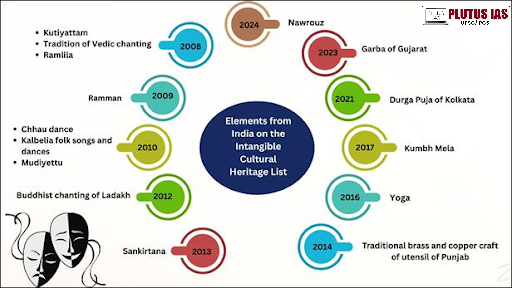
It is both traditional and contemporary, encompassing inherited traditions as well as current rural and urban practices. It is inclusive, shared across communities and evolving through generations, giving people identity, continuity, and social cohesion. It is representative, valued not for exclusivity but for its role in communities, sustained by knowledge and skills passed on over time. Presently, 15 elements of Intangible Cultural Heritage (ICH) have been inscribed on UNESCO’s Representative List, granting them international recognition and a global platform.
UNESCO’s Convention for the Safeguarding of the Intangible Cultural Heritage defines five broad domains of Intangible Cultural Heritage (ICH):
1. Oral Traditions & Expressions Including Language as a Vehicle of the Intangible Cultural Heritage
2. Performing Arts
3. Social Practices, Rituals & Festive Events
4. Knowledge & Practices Concerning Nature & the Universe
5. Traditional Craftsmanship
Ritual Theatres of India in UNESCO’s Intangible Cultural Heritage (ICH) List
India has 15 elements inscribed on UNESCO’s Representative List of ICH, and ritual theatres form an important cluster within this recognition. They include:
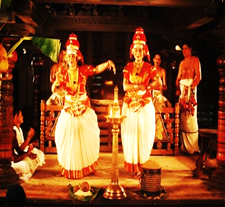
1. Kutiyattam (Kerala) – India’s oldest surviving Sanskrit theatre, over 2,000 years old. It combines classical texts with stylised acting, using highly codified eye and hand gestures (abhinaya). A single act can take days to perform, and entire plays may extend to 40 nights. Traditionally performed in temple theatres, Kutiyattam retains its ritual purity with a sacred lamp symbolising divine presence.
2. Mudiyettu (Kerala) – A ritual dance-drama depicting Goddess Kali’s victory over the demon Darika. Performed annually in Bhagavati Kavus (temple precincts) after the harvest, it involves the entire village—from mask-makers to musicians—making it a true community theatre. The ritual begins with the drawing of a sacred kalam (floor painting of the goddess) and is accompanied by chants, drums, and stylised gestures.
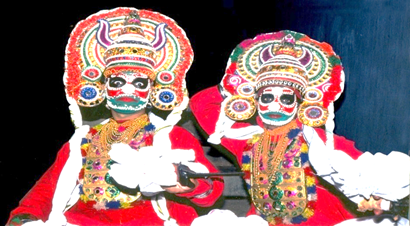
3. Ramman (Uttarakhand) – A unique village festival celebrated in Saloor-Dungra to honour Bhumiyal Devta. The performance fuses masked dances, epic recitations, ritual songs, and community feasts. Every caste in the village has a role, whether as priests, mask-makers, or drummers, ensuring the social fabric is reinforced. Instruments like the dhol, damau, jhanjhar, and bhankora form the soundscape of this festival.
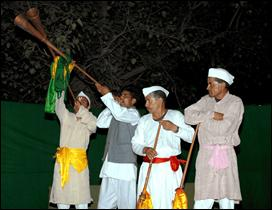
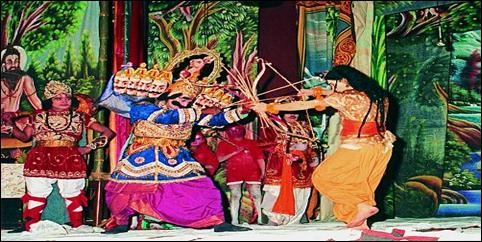
4. Ramlila (North India) – Perhaps the most widespread form of ritual theatre, Ramlila enacts episodes from the Ramayana, especially during the Dussehra festival. Some famous Ramlilas, like those at Ramnagar in Varanasi or Ayodhya, last for weeks and involve elaborate stagecraft, music, and dialogue. Based on Tulsidas’s Ramcharitmanas, these performances democratized access to the epic, as the Sanskrit Ramayana became accessible through vernacular performance.
Role of the Sangeet Natak Akademi
The Sangeet Natak Akademi, established in 1953, is the apex institution for performing arts in India. Its role in preserving ritual theatres is multi-dimensional:
- Documentation and Archiving: It maintains national audio-visual archives of performances, making them accessible for research and posterity.
- Training and Capacity Building: Through workshops, seminars, and guru-shishya programmes, the Akademi ensures knowledge transfer. For instance, young Kutiyattam students are supported with fellowships.
- Recognition and Awards: The Akademi honours masters of ritual theatre with awards like the Sangeet Natak Akademi Puraskar and the Ustad Bismillah Khan Yuva Puraskar.
- Festivals and Platforms: It organizes the National Theatre Festival, Folk Theatre Festivals, and regional showcases, ensuring visibility for local art forms.
- Collaboration with UNESCO: It coordinates India’s nominations to UNESCO’s ICH list and partners with state governments for local preservation, as in the case of Ramman in Uttarakhand.
- Financial Assistance: Provides stipends and grants to artists, helping them overcome resource constraints.
By blending tradition with modern tools of preservation, the Akademi acts as a bridge between ritual theatres and contemporary audiences.
Challenges in Preservation
1. Erosion of Sacredness: Commercialisation for tourism often strips performances of their ritual essence.
2. Decline in Patronage: Urban migration and the collapse of joint community systems reduce participation.
3. Generational Gaps: Young people often view the long training (10–15 years for Kutiyattam) as unviable in today’s fast-paced world.
4. Financial Constraints: Costumes, masks, and musical instruments are expensive, and returns are low.
5. Documentation Deficits: While UNESCO-listed forms are protected, hundreds of local ritual theatres remain undocumented and at risk of fading.
6. Digital Competition: The allure of cinema, OTT platforms, and social media draws audiences away from traditional performances.
Way Forward
1. Community-Led Preservation: Empower local communities as custodians, not just performers, ensuring their economic and social stakes.
2. Integration in Education: Introducing modules on ritual theatres in schools and universities will nurture awareness and respect among youth.
3. Digital Archiving and Innovation: AI, VR, and 3D technologies can recreate immersive experiences, allowing global audiences to engage while safeguarding the original.
4. Funding and Policy Support: Central and state governments should expand schemes like the Kala Sanskriti Vikas Yojana to cover ritual theatres.
5. Tourism with Sensitivity: Promote ritual theatres as part of cultural tourism circuits, but in a way that does not distort their ritual character.
6. Youth Incentives: Scholarships, fellowships, and artist residencies can attract younger generations.
7. Global Collaborations: Learning from other countries—such as Japan’s Noh theatre or Bali’s ritual dances—India can adopt best practices in preservation.
Conclusion
Ritual theatres of India are not relics of the past but living traditions that carry the pulse of community life and faith. They weave together myths, music, movements, and moral values into vibrant expressions of identity. From the subtle abhinaya of Kutiyattam to the fiery battle scenes of Mudiyettu, from the community cohesion of Ramman to the epic grandeur of Ramlila, these theatres embody India’s cultural pluralism and continuity.
Prelims Question
Q. Consider the following statements regarding the Sangeet Natak Akademi:
1. It is India’s apex body for the performing arts and plays a key role in safeguarding ritual theatres.
2. It coordinates India’s nominations to UNESCO’s Intangible Cultural Heritage lists.
3. It was established after Independence in 1965 as an autonomous body under the Ministry of Culture.
Which of the statements given above is/are correct?
(a) 1 and 2 only
(b) 1 and 3 only
(c) 2 and 3 only
(d) 1, 2 and 3
ANSWER: A
Mains Question
Q. Ritual theatres in India are more than just performances. Examine the significance of ritual theatres in preserving India’s intangible cultural heritage. (250 words)

- Elderly in India: Population, Challenges, and Government Initiatives - October 29, 2025
- Jal Jeevan Mission (JJM): Ensuring Tap Water to Every Rural Household - October 27, 2025
- National Blockchain Framework: Strengthening Governance through Blockchain Technology - October 25, 2025

No Comments