


08 Oct Indian Railways: The Engine Driving India’s Development
This article covers “Daily Current Affairs” and Topic details “Indian Railways: The Engine Driving India’s Development”
SYLLABUS MAPPING
GS–3 – Infrastructure – Energy, Ports, Roads, Airports, Railways etc.
FOR PRELIMS
Key infrastructure initiatives like multi-tracking projects, National Rail Plan (NRP), and the role of PM Gati Shakti in enhancing railway connectivity
FOR MAINS
Examine the role of Indian Railways as the “builder of modern India” in terms of connectivity, economic development, and regional integration.
Why in the News?
On 7 October 2025, the Cabinet Committee on Economic Affairs, led by the Prime Minister, approved four multi-tracking projects from the Ministry of Railways. These projects are worth ₹24,634 crore and stretch over 894 km across Maharashtra, Madhya Pradesh, Gujarat, and Chhattisgarh.
| Project Section | Lines | Length (km) | States Covered |
|---|---|---|---|
| Wardha – Bhusawal | 3rd & 4th | 314 | Maharashtra |
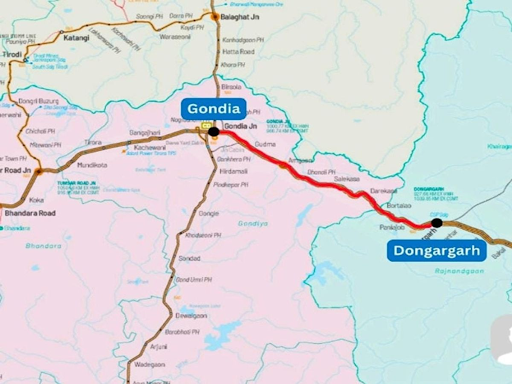
| Gondia – Dongargarh | 4th | 84 | Maharashtra & Chhattisgarh |
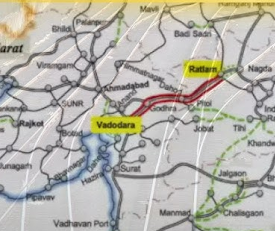
| Vadodara – Ratlam | 3rd & 4th | 259 | Gujarat & Madhya Pradesh |
| Itarsi – Bhopal – Bina | 4th | 237 | Madhya Pradesh |
- They will serve 18 districts and benefit 3,633 villages, with a total population of 85.84 lakh. This includes two Aspirational Districts, Vidisha and Rajnandgaon.
- The projects are expected to generate an additional 78 million tons per annum (MTPA) of freight. They will reduce oil imports by 28 crore litres and cut CO₂ emissions by 139 crore kg, which is like planting 6 crore trees.
- These initiatives are part of the PM Gati Shakti National Master Plan. The plan focuses on improving multimodal connections, making logistics more efficient, and promoting tourism at sites like Sanchi, Bhimbetka, and Satpura Tiger Reserve.
Indian Railways as the Builder of India
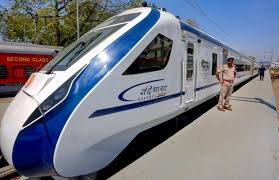
1. Vande Bharat Express: They connect major cities to Tier-2 and Tier-3 cities, cutting travel time. For example, the journey from Delhi to Varanasi takes 8 hours.
2. Amrit Bharat Station Scheme: Upgrading 1,275 stations with modern facilities, including Wi-Fi, lifts, escalators, and making them accessible for everyone.
3. Northeast Connectivity: This reached Meghalaya in 2014, Arunachal Pradesh in 2015, Manipur in 2016, and Mizoram in 2016. Imphal received its first train in 2024.
4. Freight Corridors: The Eastern (1,337 km) and Western (1,506 km) Dedicated Freight Corridors are 97% operational. This will increase the frequency of freight trains from 247 in the year 2023-24 to 352 by February 2025.
5. Engineering Marvels:
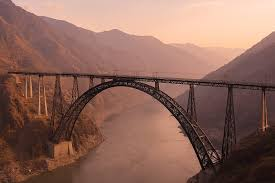
– Chenab Bridge is the world’s highest railway bridge, standing 359 meters above the river.
– Bogibeel Bridge is India’s longest rail-cum-road bridge, measuring 4.94 km.
Importance of Railway Infrastructure
1. Economic Backbone:
– Transports over 8 billion passengers each year.
– Handles more than 3.5 million tonnes of freight daily, with coal accounting for about 50% of freight revenue (CAG 2021-22).
– Lowers logistics costs, as India’s logistics costs are 13-14% of GDP. Efficient rail can bring this down to 8-9%.
2. Social Integration & Inclusion:
– Links rural and tribal areas to urban centers, providing access to education, healthcare, and jobs.
– Examples include expansion into the Northeast and features for differently-abled passengers at upgraded stations.
3. Environmental Sustainability:
– Electrified routes produce 80% less greenhouse gas emissions than road freight.
– Electrification is ongoing in 14 states and Union Territories, with a goal of net zero carbon by 2030.
– More than 80,000 coaches have bio-toilets, improving sanitation.
4. Strategic & Security Role:
– Border rail projects in Arunachal Pradesh and Ladakh allow for quick troop movement.
– Dedicated Freight Corridors support military logistics and emergency relief.
5. Urban Mobility & Tourism
– Over 1,000 km of metro lines are in operation, while suburban expansions ease city congestion.
– Bharat Gaurav trains encourage cultural travel, featuring routes like Ramayana Yatra and South India Darshan.
Key Initiatives by Indian Railways
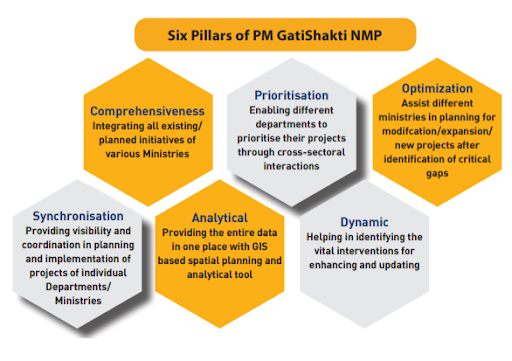
1. PM Gati Shakti National Master Plan: This initiative connects the railway network with ports, highways, and airports to allow smooth multi-modal connectivity. It also aims to speed up project implementation through better planning and quicker clearances.
2. National Monetisation Pipeline (NMP): Under the NMP, Indian Railways is generating funds by monetizing assets like stations, freight terminals, and surplus land for infrastructure expansion and modernization.
3. Dedicated Freight Corridors (DFCs): DFCs are being developed to relieve congestion on passenger routes, lower logistics costs, and boost the average speed of freight trains to 100 km/h, making rail freight more competitive.
4. Amrit Bharat Station Scheme: This scheme aims to upgrade railway stations into modern transport hubs that offer better passenger amenities and improved integration with other forms of transport.
5. Technological Modernisation: The railways are using modern technology such as the Indian-made Kavach Automatic Train Protection (ATP) system to improve safety. They are also implementing IoT-based asset monitoring and AI-driven predictive maintenance to enhance operational efficiency and reliability.
6. Green Initiatives: Various steps are being taken to encourage sustainable operations. These include installing solar rooftops at stations, issuing green bonds, running pilot projects for hydrogen trains, and electrifying railway lines on a large scale.
7. Public-Private Partnership (PPP) Models: PPPs are being used for station redevelopment projects like Habibganj and Gandhinagar stations, developing logistics parks, and running private trains on selected routes.

Issues and Challenges
1. Financial Stress: The operating ratio stood at 107.39% in 2021, indicating that expenditures exceed revenues. Heavy cross-subsidization between passenger and freight services has made rail freight less competitive.
2. Aging Infrastructure and Safety Gaps: Incidents like the Balasore triple train accident in 2023 exposed serious signaling failures. There is a significant asset renewal backlog amounting to ₹34,318 crore.
3. Slow Kavach Rollout: The implementation of the Kavach safety system is limited to select routes, slowing down network-wide safety upgrades.
4. Freight Market Share Decline: Railways’ share in the freight market has dropped from 85% in 1951 to 27% in 2022, with an overreliance on coal as the primary commodity transported.
5. Environmental Gaps: Despite efforts to electrify, diesel locomotives are still used in some areas, and waste management practices are inadequate.
6. High-Speed Rail Delays: Projects like the Mumbai–Ahmedabad bullet train are progressing slowly, with only about 30% completion so far due to land acquisition issues and funding problems.
7. PSU Inefficiencies: Public Sector Undertakings related to the railways have seen a decline in Return on Equity (RoE) from 9.17% in 2017 to 7.53% in 2019, reflecting operational shortcomings.
8. Crowd Management Issues: The stampede at New Delhi Railway Station in February 2025 highlighted serious design flaws and poor crowd management at major stations.
Way Forward
1. Financial Reforms: Implementing dynamic fare pricing, streamlining tariffs, monetizing land assets, and increasing public-private partnership participation, as recommended by the Bibek Debroy Committee, can improve financial health.
2. Accelerate Safety Modernization: The rollout of Kavach should expand across the entire network. This should go hand in hand with signaling upgrades and predictive maintenance to improve safety.
3. Freight Diversification and Integration: Railways must go beyond coal. They should promote containerization, develop automobile logistics, and improve port connectivity to regain freight market share.
4. Technological Leapfrogging: Using new technologies like IoT and blockchain for freight operations, along with integrated digital platforms, can change operational efficiency for the better.
5. Sustainable Mobility: More integration of renewable energy, the introduction of hydrogen trains, and green financing mechanisms will help support India’s climate goals.
6. High-Speed Rail and Indigenous Manufacturing: Speeding up the bullet train project and investing in Make-in-India rolling stock will increase domestic capacity and modern transport options.
7. Urban Rail Integration: Smooth connectivity between Indian Railways, metro systems, Rapid Regional Transit Systems (RRTS), and bus networks is crucial for creating a unified urban mobility ecosystem.
8. Institutional Reforms: Restructuring public sector undertakings, developing workforce skills, and decentralizing project implementation will enhance governance and delivery efficiency.
Conclusion
Indian Railways represents India’s unity, ambition, and resilience. It has transformed from colonial infrastructure into a driver of economic growth and green mobility. The recent approval of multi-tracking projects shows how rail infrastructure can enhance connectivity, boost freight, promote tourism, create jobs, and meet climate goals at the same time.
With structural reforms, technological adoption, and sustainable financing, Indian Railways can help propel India toward becoming a $5 trillion economy and a leader in global green logistics, truly reflecting the vision of “Railways as the Engine of New India.”
Prelims Question
Q. With reference to recent infrastructure initiatives of Indian Railways, consider the following statements:
1. The multi-tracking projects approved in October 2025 will increase the railway network by over 800 km across four states.
2. The projects are aligned with the PM Gati Shakti National Master Plan to enhance multi-modal connectivity.
3. The Vadodara–Ratlam section is one of the approved railway line expansions under this initiative.
Which of the statements given above are correct?
(a) 1 and 2 only
(b) 2 and 3 only
(c) 1 and 3 only
(d) 1, 2 and 3
ANSWER: A
Mains Question
Q. Indian Railways has historically played a transformative role in nation-building. Evaluate how the recent infrastructure initiatives are reshaping India’s economic geography. (250 words)

- Elderly in India: Population, Challenges, and Government Initiatives - October 29, 2025
- Jal Jeevan Mission (JJM): Ensuring Tap Water to Every Rural Household - October 27, 2025
- National Blockchain Framework: Strengthening Governance through Blockchain Technology - October 25, 2025

No Comments