


09 Oct Urban Transport for Viksit Bharat: Connecting Cities, Empowering People
This article covers “Daily Current Affairs” and Topic details Urban Transport for Viksit Bharat: Connecting Cities, Empowering People
SYLLABUS MAPPING
GS–3 – Infrastructure – Transport Urban Transportation, Metro Rail, Airports, Non-Motorized Transport, etc.
FOR PRELIMS
Key urban mobility initiatives like Navi Mumbai International Airport (NMIA), Metro Rail Policy (2017), Bus Rapid Transit Systems (BRTS)
FOR MAINS
What are the key components of a people-centric and sustainable urban transport policy for India?
Why in the News?
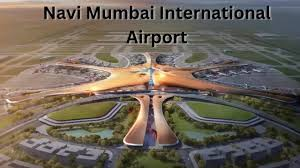
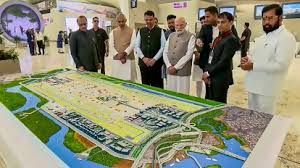
Prime Minister Narendra Modi inaugurated Phase 1 of the Navi Mumbai International Airport (NMIA), which cost ₹19,650 crore and spans 1,160 hectares. This Greenfield project will relieve congestion at Mumbai’s overloaded Chhatrapati Shivaji Maharaj International Airport and aims to be Asia’s largest connectivity hub.
The airport will support regional economic growth by linking Maharashtra’s farmers to markets in the Middle East and Europe. It will attract investments and connect the city to the global logistics network. This project reflects India’s broader goal to update urban transportation infrastructure for a “Viksit Bharat.”
What is Urban Transportation?
Urban transportation refers to the systems, methods, and infrastructure that allow people and goods to move within cities. This includes public transport, private vehicles, non-motorized options, and freight systems.
An efficient urban transport system is key for economic productivity, environmental health, and social inclusion. It directly impacts jobs, quality of life, and access to opportunities.
Major Modes of Urban Transport in India
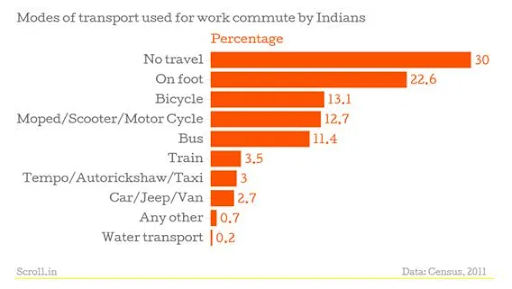
1. Buses: Buses are the main option for both intra-city and inter-city travel, providing affordable mobility to millions. However, lower ridership due to overcrowding, delays, and competition from private vehicles has weakened their effectiveness.
2. Metro Rail: Metro systems operate in 17 cities, with Delhi having the largest network. Metros offer fast, reliable, and congestion-free travel, significantly helping to reduce road traffic and promote sustainable urban mobility.
3. Suburban Rail & Trams: Cities like Mumbai, Kolkata, and Chennai have extensive suburban rail networks that serve daily commuters. Kolkata’s tram system is the only functioning tramway in India, representing both heritage and sustainable transport.
4. Intermediate Public Transport (IPT): Modes like auto rickshaws, taxis, shared vans, and cycle rickshaws fill essential connectivity gaps, especially for last-mile access. They are often informal and flexible, making them critical despite regulatory hurdles.
5. Non-Motorized Transport (NMT): Walking and cycling are important for short trips, especially for low-income groups. However, poor pedestrian infrastructure, unsafe roads, and a lack of dedicated lanes limit their use.
Government Initiatives to Strengthen Urban Transport
1. JNNURM (2005–2014): Offers financial support for urban mobility plans, bus fleets, and infrastructure, forming the basis for modern city transport systems.
2. National Urban Transport Policy, 2006: Aims to make urban transport safe, affordable, and sustainable through multi-modal systems and improved planning.
3. Green Urban Transport Scheme, 2016: Promotes non-motorized transport, clean energy, and Intelligent Transport Systems (ITS) to make cities more eco-friendly and accessible.
4. Metro Rail Policy, 2017: Standardizes planning, financing, and execution of metro projects to ensure better collaboration and effective implementation.
5. BRTS (Bus Rapid Transit System): Establishes dedicated bus corridors to speed up travel, decrease congestion, and enhance safety. Successful examples include Ahmedabad’s BRTS.
6. Transit-Oriented Development Policy, 2017: Promotes urban development around mass transit corridors to shorten travel distances and encourage compact cities.
7. Sustainable Urban Transport Project (SUTP): Initiated with UNDP support to encourage environmentally friendly urban mobility through pilot projects and capacity building.
8. National Public Bicycle Scheme (2011): Assists cities in setting up public bike-sharing systems; Mysuru’s Trin Trin was the first initiative in India.
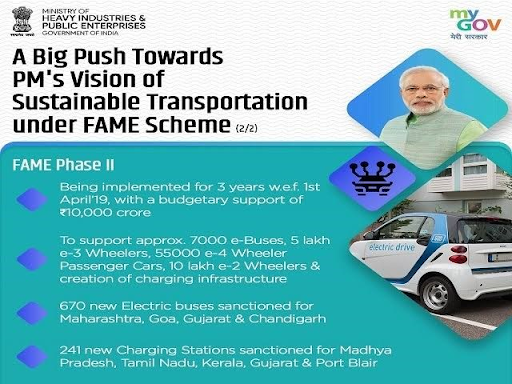
9. Promotion of Electric Vehicles (FAME): Provides subsidies and incentives for EVs and charging infrastructure to lessen reliance on fossil fuels and decrease urban pollution.
Key Issues in Urban Transportation
1. Explosive Motorization: The number of registered vehicles soared from 5.4 million in 1981 to 210 million in 2015, greatly outpacing public transport infrastructure growth and leading to traffic jams and pollution.
2. Inadequate Public Transport: Only 63 cities have formal bus systems, and India has just 1.2 buses for every 1,000 people. Public transport is often overcrowded, unreliable, and poorly integrated, pushing people toward private cars.
3. Urban Congestion & Pollution: Cities like Delhi and Bengaluru rank among the most congested in the world, with average speeds in Bengaluru at just 17 km/h. Vehicle emissions are a major cause of air pollution, with 14 of the 15 most polluted cities globally located in India.
4. Road Safety Crisis: In 2023, more than 172,000 deaths occurred on Indian roads—averaging 474 per day. Poor road maintenance, weak traffic management, and unsafe vehicles make Indian roads some of the most dangerous worldwide.
5. Equity & Affordability Gaps: The urban poor often reside in outlying areas with long commutes and high transportation costs. The Delhi Metro ranks as the second least affordable system globally for low-income individuals, with 22% of their monthly income devoted to fares.
6. Gendered Mobility Challenges: 79% of women report facing harassment in public spaces, creating safety issues. Overcrowded and poorly designed transport systems exacerbate insecurity.
7. Institutional Challenges: Multiple agencies with overlapping roles create a fragmented governance system that delays projects. Issues with land acquisition, funding delays, lack of skilled workers, and insufficient data collection further hinder effective planning.
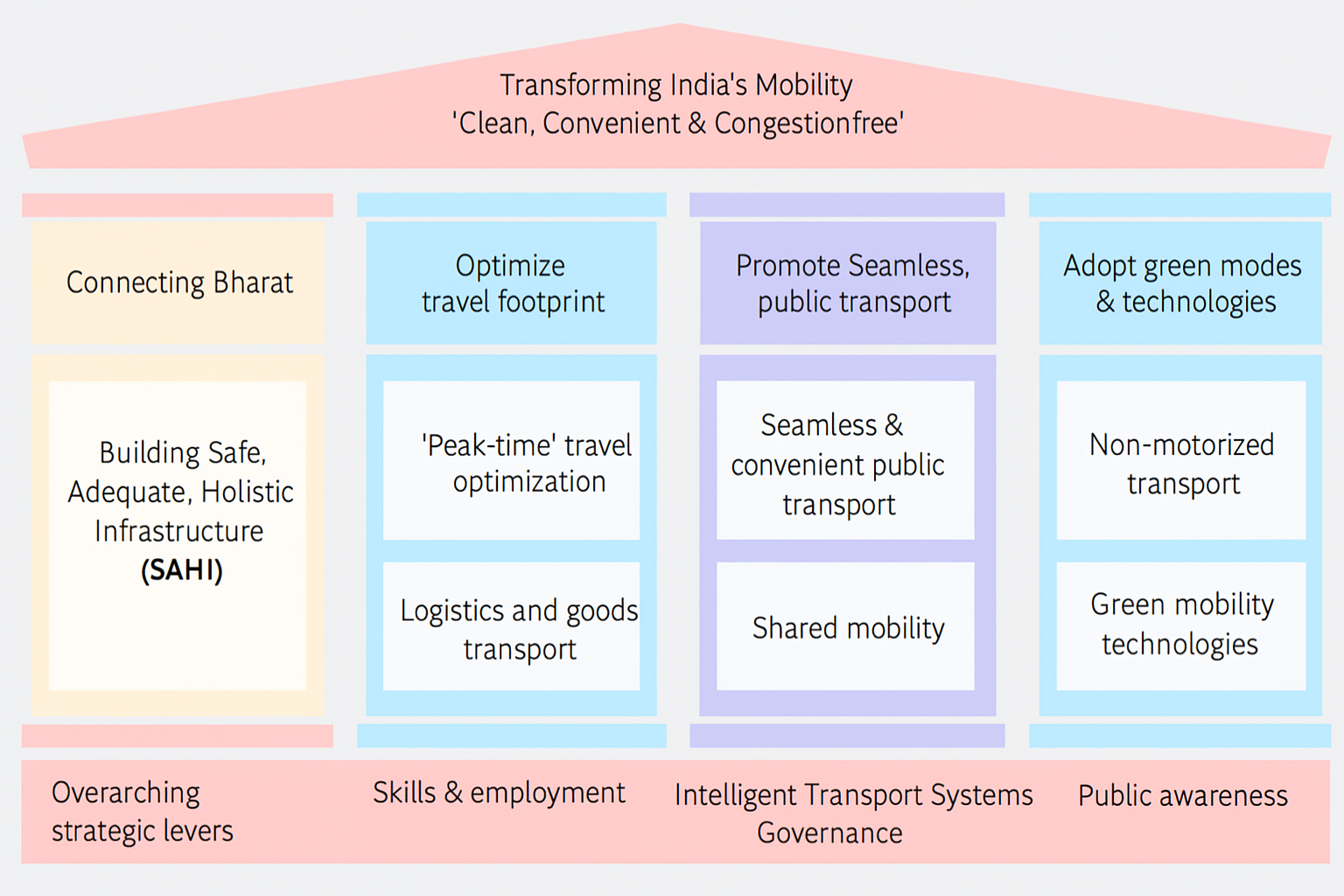
NITI Aayog’s 3C Framework: Clean, Convenient, Congestion-Free
1. Connect Bharat: Focuses on creating safe, adequate infrastructure that integrates roads, railways, waterways, and ropeways to serve everyone, including women and the elderly.
2. Optimize Travel Footprint: Stresses the need for integrated land use, data-driven traffic management, and Intelligent Transport Systems to reduce unnecessary travel and congestion.
3. Promote Seamless Public Transport: Advocates for a modal hierarchy that prioritizes non-motorized transport, followed by public and then private transport. This encourages multi-modal integration and affordable systems, using tools like single smart cards for easy transfers.
4. Adopt Green Modes & Technologies: Encourages quick EV adoption, better infrastructure for pedestrians and cyclists, and developing a domestic green mobility ecosystem to reduce pollution and oil imports.
Way Forward
1. Strengthen Institutional Coordination: Create unified metropolitan transport authorities to coordinate planning, streamline land acquisition, and ensure timely funding for projects.
2. Manage Demand and Discourage Private Cars: Use parking regulations, congestion pricing, and low-emission zones to reduce car reliance and encourage public transport use.
3. Prioritize Safety and Inclusivity: Build infrastructure that considers gender, such as dedicated spaces for women, helplines, surveillance, and bright station lighting to improve safety for everyone.
4. Enhance Non-Motorized Transport: Create bike lanes, pedestrian-only areas, and integrate NMT with metro and bus systems to support short, eco-friendly journeys.
5. Ensure Multi-Modal Integration: Provide seamless last-mile connectivity and interoperable payment systems like London’s Oyster Card to make transfers between different modes simpler.
6. Push for Green and Affordable Mobility: Expand EV fleets, promote clean fuels, and ensure that pricing remains affordable for low-income groups to make transportation both sustainable and inclusive.
Conclusion
Urban transportation in India is changing quickly with metro expansions, airport projects like Navi Mumbai, and new policies. However, issues like congestion, pollution, safety problems, and fragmented institutions still pose major challenges. By embracing NITI Aayog’s 3C framework, integrating various modes, prioritizing green technologies, and focusing on inclusivity, India can build urban transport systems that are efficient, affordable, and ready for the future. The shift from congestion to clean, convenient mobility requires ongoing investment, strong governance, and planning centered around citizens’ needs.
Prelims Question
Q. Consider the following statements about urban transportation in India:
1. The Green Urban Transport Scheme promotes non-motorized transport and use of clean energy in cities.
2. The Metro Rail Policy, 2017 aims to ensure standardized planning, financing, and execution of metro projects.
3. The National Urban Transport Policy, 2006 focuses on providing infrastructure mainly for private vehicle users.
Which of the statements given above is/are correct?
(a) 1 and 2 only
(b) 2 and 3 only
(c) 1 and 3 only
(d) 1, 2, and 3
Answer: A
Mains Question
Q. Urban transport is key to achieving the goals of “Viksit Bharat” by 2047. Discuss the challenges faced by India’s urban transport sector and suggest a strategy to overcome them. (250 words)

- Elderly in India: Population, Challenges, and Government Initiatives - October 29, 2025
- Jal Jeevan Mission (JJM): Ensuring Tap Water to Every Rural Household - October 27, 2025
- National Blockchain Framework: Strengthening Governance through Blockchain Technology - October 25, 2025

No Comments