


13 Nov Chanakyapuri and the Emergence of Delhi as India’s Luxury Capital: A Historical and Urban Analysis
How Delhi Became India’s Luxury Capital
In an unexpected turn for a city better known for politics and monuments, Delhi has quietly emerged as India’s luxury capital. This was not the result of random growth or wealth alone, but the legacy of a deliberate 1950s city plan. In the early years after Independence, a 6-square-kilometre zone in South Delhi was carved out exclusively for foreign embassies and high commissions¹. Named Chanakyapuri (after the ancient diplomat Chanakya), this enclave was built with wide ceremonial boulevards and expansive green spaces from the start². Decades later, those design choices – tight zoning, locked-in scarcity of land, and a steady flow of international visitors – set the stage for Delhi’s high-end retail boom. Today, Delhi hosts flagship stores of Hermès, Chanel, Rolex, and more, and racks up some of the highest per-capita luxury spending in India³.
Chanakyapuri: A Diplomatic Enclave by Design
The story begins with Chanakyapuri itself. In the 1950s, the Central Public Works Department (CPWD) undertook Delhi’s first major expansion beyond the Lutyens’ Cantonment area¹. They cleared roughly 6.0 square kilometres of land on what had been village territory and built a wide central vista known as Shanti Path, lined with parks and green belts². This district was explicitly reserved for embassies, high commissions, and ambassadorial residences – commercial and mass housing projects were not allowed. Chanakyapuri was created for protocol and prestige, not traffic or malls².
Over time, Chanakyapuri’s design reflected its elite purpose. Shanti Path and its side streets were built extra-wide, with lawns and trees separating lanes – literally a green buffer around every embassy complex². In 1969, the government added Nehru Park (80 acres) within Chanakyapuri for the families of diplomats². Even today, Chanakyapuri’s boulevards carry more palms and flowerbeds than hawkers and billboards. This lush planning communicated power and discretion: diplomats could move in motorcades along Shanti Path’s lawns, sheltered from the city’s bustle. The effect was symbolic as much as aesthetic².
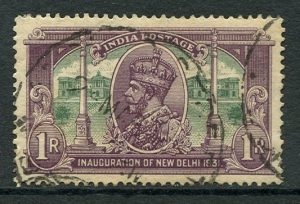
Inauguration of New Delhi 1931
Schools, Markets, and Neighbors: Building an Elite Hub
As Chanakyapuri grew, other amenities were added – but still in an exclusive way. Within the enclave and its immediate vicinity, the government allowed a few markets, colleges, and schools, mainly to serve the diplomatic community³. For example, two commercial markets and two college campuses were developed near Chanakyapuri³. International schools run by embassies also took root: The British School and the American Embassy School were established in the late 1960s³. These institutions catered to expatriate families, further planting Chanakyapuri into a global network.
As the enclave’s prestige rose, senior Indian officials and business leaders began coveting the area around it³. Even if outsiders could not enter Chanakyapuri proper, they wanted to be close. Wealthy bureaucrats, executives, and tycoons sought proximity to the enclave³. This spillover pushed up property values in neighboring South Delhi neighborhoods, including Vasant Vihar, Shanti Niketan, and Anand Niketan³. Chanakyapuri became a nucleus whose gravity lifted land prices citywide.
The Real Estate “Holy Grail” of Scarcity
Scarcity is key to luxury real estate. In a luxury environment, demand rises while the amount of top-tier land or addresses stays capped. Chanakyapuri delivered this locked-in scarcity³. Because embassy plots and parks were allocated once and for all, no new competitors could appear. Commercial developers had nowhere to expand within the enclave³. Fixed allocations and “locked-in scarcity” became the holy grail of luxury environments³.
Chanakyapuri’s exclusivity fed on itself. Its diplomatic aura attracted even more influence and investment. Each new foreign embassy in the 1960s added a touch of international flair to Delhi’s power map³. From the 1960s onward, New Delhi housed a steady stream of foreigners and Indians accustomed to global luxury standards – long before India’s economic liberalization of the 1990s³. Constellations of wealthy, cosmopolitan patrons are exactly who luxury brands target³.
When Retail Luxury Arrived
Chanakyapuri and its neighbors created the conditions for luxury demand, but retail supply came decades later. Domestic affluence grew in the 2000s, and by 2008 developers launched DLF Emporio in Vasant Kunj⁴. This was marketed as India’s first “true” luxury mall. Emporio’s design was opulent: marble floors, gold chandeliers, and velvet ropes set the tone⁴. Inside, it debuted flagship boutiques for dozens of world-class brands, including Armani, Dior, Fendi, Cartier, Tiffany & Co., and Chopard⁴.
Emporio proved Delhi’s elite base could sustain full-scale luxury retail⁴. Crucially, it was located adjacent to Chanakyapuri, making it easy for diplomats and officials to visit. The mall’s strategy was literally “sales associates served not footfall but exclusivity”⁴. The success of Emporio sent a signal to international brands: Delhi could be a premier stop in India, not just a profitable option⁴.
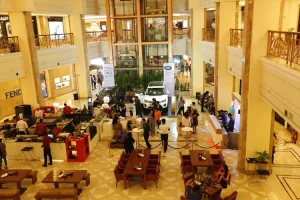
Chanakya Cinema Hall
The Chanakya Mall: Luxury in the Diplomatic Core
In 2017, The Chanakya opened inside Chanakyapuri⁴. Unlike Emporio’s grand public spaces, The Chanakya was a boutique luxury mall designed for maximum prestige and privacy⁴. Anchors included a two-story Hermès and one of India’s few Rolex boutiques⁴. Other tenants were exclusively quiet-luxe labels like Brunello Cucinelli⁴. The Chanakya normalized shopping “at home” for Delhi’s affluent, allowing diplomats and locals to browse luxury brands within the enclave⁴.
Three Forces Converge: Why Delhi is Unique
Luxury centers thrive where several conditions coincide:
Scarcity of prime real estate: Chanakyapuri’s land was earmarked exclusively for embassies and residences⁴. No competing commercial development was allowed. Concentration of influence: Diplomats, bureaucrats, and business tycoons clustered nearby, creating social demand for luxury goods⁴. International exposure and footfall: Constant global visitors ensured Delhi had a built-in audience for international brands⁴. These three forces created a “gravitational pull” on luxury retailers⁴.
Wealth, Consumption, and Culture
Delhi’s elite social culture prizes grand hospitality, gifting, and presentation. Weddings, family celebrations, and festivals often involve ostentatious displays of wealth⁵. Private clubs and social functions are steeped in presentation. Luxury purchases in Delhi are seen as signaling belonging to a certain circle of power⁵.
A comparison with Mumbai and Bengaluru shows why Delhi is unique. Mumbai has more billionaires, and Bengaluru boasts new tech millionaires, but Delhi leads in luxury retail infrastructure and consistent demand⁵.
India’s Luxury Market Context
India’s personal luxury goods market is projected to reach US$12.1 billion by 2025⁶, growing at roughly 10% annually. Delhi plays an outsized role, hosting flagship stores of top international brands. Even luxury car companies consider Delhi a key market⁶.
Bottom Line: A Diplomatic Blueprint for Luxury
Delhi’s leadership in luxury emerged from a diplomatic blueprint. Chanakyapuri’s broad avenues, strict zoning, and international residents created unique conditions for luxury retail⁴. By the time malls like Emporio (2008) and The Chanakya (2017) arrived, the audience of diplomats, industrialists, and political elites was already primed⁴. The city’s exclusive neighborhoods, born from post-Independence urban design, continue to draw global attention and domestic wealth, securing Delhi’s position as India’s luxury capital⁴.
Endnotes
- Central Public Works Department urban planning reports, Delhi, 1950s.
- Government of India, Ministry of Urban Development, History of New Delhi Expansion, 1960.
- NDTV analysis on Chanakyapuri and South Delhi neighborhoods, 2022.
- Luxury retail news coverage, Hindustan Times and Business Standard, 2008–2018.
- Hurun India report on millionaire households and luxury consumption patterns, 2024.
- Euromonitor International, India Luxury Market Outlook, 2025.

- Alauddin Khalji’s Revolutionary Price Control Policy: How One Sultan Reinvented the Medieval Indian Economy - November 24, 2025
- From Chains to Crown: The Rise of the Mamluk Sovereigns in Delhi - November 20, 2025
- Reconstructing Medieval India: Chronicles, Narratives, and the People’s Perspective - November 19, 2025

No Comments