


19 Dec Postal System Modernization in India: The Gen Z Post Office Initiative
This article covers “Daily Current Affairs” and From Postal System Modernization in India: The Gen Z Post Office Initiative
SYLLABUS MAPPING
GS-3 –Infrastructure: Logistics and services – India–Postal System Modernization in India: The Gen Z Post Office Initiative
FOR PRELIMS
Discuss the role of India Post in strengthening digital governance with reference to the Gen Z Post Office.
FOR MAINS
Why is it necessary to modernize traditional public institutions like post offices
Why in the News?
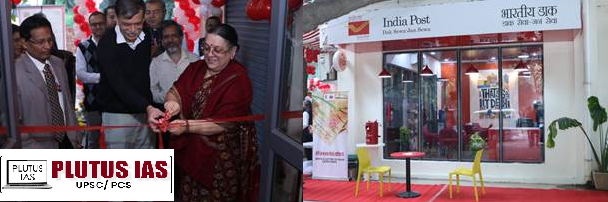
India Post, established in 1854, has been a cornerstone of India’s administrative and communication architecture. With over 1.55 lakh post offices, it is the world’s most extensive postal network and a critical instrument for financial inclusion, service delivery, and state presence in remote areas. However, the rise of digital communication, private logistics players, and fintech platforms has challenged the relevance of traditional postal systems. Against this backdrop, the Gen Z Post Office initiative represents a strategic shift from a legacy institution to a modern, citizen-centric public service platform, aligned with India’s demographic realities and governance reforms.
Understanding the Gen Z Post Office Concept
A Gen Z Post Office is a reimagined postal facility designed to meet the expectations of young, digitally native citizens, while retaining the core mandate of India Post.
It is not merely a cosmetic makeover but a functional transformation, combining:
1. Postal services
2. Digital banking and insurance
3. Financial inclusion services
4. Customer-friendly infrastructure
Recent launches, including the first Gen Z Post Office at AIIMS Vijaypur (J&K), signal the institutionalization of this model.
Key Features of the Gen Z Post Office
| Feature Area | Key Components | Governance / UPSC Relevance |
|---|---|---|
| 1. Digital Transformation of Services | • Cashless transactions via UPI & QR codes • Integration with India Post Payments Bank (IPPB) • Digital account opening, bill payments, DBT facilitation • Reduced paperwork and faster grievance redressal | • Digital governance • Ease of Doing Business • Service delivery reforms • Use of fintech in public institutions |
| 2. Integrated Service Delivery Model | • Postal and logistics services • Savings accounts, insurance, pension schemes • E-commerce parcel handling & last-mile delivery • Government scheme facilitation (DBT, small savings) | • Whole-of-government approach • Administrative efficiency • Financial inclusion • Convergence of services |
| 3. Youth-Centric Infrastructure and Design | • Contemporary interiors & open layouts • Informal seating & interactive spaces • Creative artwork, modern branding • Wi-Fi-enabled premises | • Design thinking in governance • Citizen-centric public services • Behavioural change in service usage |
| 4. Campus-Based and Urban Outreach | • Located in IITs, IIMs, AIIMS, universities • Targets students & young professionals • Promotes early adoption of savings, insurance & digital banking | • Demographic dividend utilisation • Formalisation of economy • Youth engagement in governance |
Why Was This Reform Necessary
1. Structural Decline in Traditional Postal Functions: India Post has been witnessing a steady decline in its traditional services such as letter delivery and money orders. The rapid digitisation of communication, coupled with the rise of private courier companies and digital payment platforms, has eroded the relevance of conventional postal functions. In this context, reform became essential to reinvent India Post’s role from a legacy service provider to a modern, multifunctional public institution aligned with the needs of a digital economy.
2. Leveraging India’s Demographic Dividend: With over 65% of India’s population below the age of 35, the expectations of citizens—especially Gen Z—are rapidly evolving. This demographic values speed, transparency, and seamless digital interfaces in service delivery. For public institutions like India Post to remain credible, relevant, and accessible, adapting to these changing behavioural patterns was imperative. The reform responds to this generational shift by redesigning postal services to match contemporary user expectations.
3. Reinforcing the Financial Inclusion Architecture: India Post already serves as a critical pillar of India’s financial inclusion ecosystem through its involvement in Jan Dhan accounts, Direct Benefit Transfers (DBT), and the delivery of pension and insurance schemes. The reform, particularly through Gen Z–oriented Post Offices, strengthens this role by making financial services more aspirational, user-friendly, and digitally accessible. This ensures deeper penetration of formal financial services while sustaining trust among last-mile beneficiaries.
Governance and Administrative Significance
Citizen-Centric Governance
- Focus shifts from rules and procedures to user experience
- Enhances trust in public institutions
- Encourages voluntary participation rather than forced compliance
Digital India and E-Governance
- Supports cashless economy and paperless governance
- Bridges the digital divide by offering assisted digital access
- Strengthens last-mile delivery of government services
Institutional Innovation in the Public Sector
- Demonstrates that legacy institutions can innovate without privatization
- Sets a precedent for modernization of other public utilities (railways, banks, municipalities)
Socio-Economic Impact of the Reform
Youth-Centric Financial Awareness: The reform actively engages young citizens by familiarising them with formal financial systems at an early stage. By presenting postal financial services in a modern and relatable manner, it promotes a culture of savings, improves awareness of government-backed financial instruments, and encourages responsible financial behaviour among the youth.
Deepening Financial Inclusion: By simplifying access to savings accounts, insurance, and small investment products, the initiative strengthens financial inclusion. It reduces entry barriers for first-time users, particularly students and young earners, thereby integrating a wider section of society into the formal economy.
Employment Generation in the Digital Economy: The modernisation of postal services increases the demand for a digitally skilled workforce. This transition opens up new employment opportunities in technology-enabled service delivery, data handling, and customer facilitation within the postal system.
Upskilling and Capacity Building of Postal Employees: The reform necessitates continuous upskilling of existing postal staff in digital tools, fintech platforms, and customer-centric service delivery. This enhances workforce productivity and ensures that public sector employees remain relevant in a rapidly evolving service environment.
Strengthening Service-Oriented Public Administration: By shifting focus from purely transactional functions to citizen-centric services, the initiative creates demand for service-oriented administrative roles. This transformation contributes to a more responsive, efficient, and people-friendly public service delivery model.
Challenges and Concerns
Risk of Urban-Centric Implementation: The concentration of modernised or Gen Z–oriented Post Offices in urban areas, campuses, and cities raises concerns of urban bias. Such a focus may inadvertently sideline rural post offices, limiting access for rural youth and undermining the inclusive mandate of India Post.
Unequal Access for Rural Youth: Rural youth, who could benefit significantly from improved financial and digital services, may not receive equal exposure due to infrastructural constraints and slower rollout in remote regions. This risks widening existing rural–urban disparities rather than bridging them.
Persistent Digital Literacy Gap: While technological upgrades are essential, technology alone cannot guarantee meaningful inclusion. Without parallel investments in digital literacy, handholding, and capacity building, vulnerable sections may struggle to use new interfaces effectively, reducing the reform’s overall impact.
Sustainability, Scale, and Institutional Commitment: The long-term success of the initiative depends on its ability to scale uniformly across regions. This requires sustained funding, continuous policy support, and strong institutional commitment to avoid the reform remaining a limited pilot rather than a nationwide transformation.
Way Forward
Balanced and Inclusive Expansion: Extend Gen Z Post Office features to rural and semi-urban areas through a hybrid model that combines digital interfaces with assisted service delivery.
Bridging the Digital Divide: Complement technological upgrades with on-ground digital literacy initiatives to ensure effective usage by first-time and vulnerable users.
Integration with National Missions: Align Gen Z Post Offices with Digital India, Skill India, and Startup India to transform post offices into hubs of financial awareness and grassroots entrepreneurship.
Continuous Capacity Building: Provide regular training to postal staff in digital tools, fintech platforms, and citizen-centric service delivery.
Incentivising Service Quality: Introduce performance-based incentives to encourage efficiency, innovation, and improved customer experience in postal services.
Conclusion
The Gen Z Post Office initiative is a powerful example of adaptive governance, where a 170-year-old institution reinvents itself to meet contemporary needs. By integrating technology, service convergence, and citizen-centric design, India Post is repositioning itself as a modern public service platform rather than a relic of the past
Prelims question:
Q. With reference to the “Gen Z Post Office” initiative, consider the following statements:
1. It aims to modernize post offices by integrating digital payment and banking services.
2. It is implemented by the Ministry of Electronics and Information Technology.
3. It seeks to increase youth engagement with postal and financial services.
Which of the statements given above is/are correct?
(a) 1 and 3 only
(b) 1 only
(c) 2 and 3 only
(d) 1, 2 and 3
Answer: A
Mains Question:
Q. Evaluate the role of India Post’s modernization in strengthening financial inclusion and last-mile service delivery in India.

- PRAGATI: A Decade of Cooperative, Outcome-Driven Governance - January 15, 2026
- Iran’s Large-Scale Protests: Political Stability, Public Dissent and Regional Implications - January 14, 2026
- India–Oman CEPA: A Strategic Trade Pact for Jobs, Exports and Regional Integration - January 10, 2026

No Comments