


24 Dec Punjab’s Declaration of Three Holy Cities: A Milestone in Sikh History
This article covers “Daily Current Affairs” and From Punjab’s Declaration of Three Holy Cities: A Milestone in Sikh History
SYLLABUS MAPPING
GS- 1 – Indian History & Culture – Punjab’s Declaration of Three Holy Cities: A Milestone in Sikh History
FOR PRELIMS
Evaluate the constitutional and administrative implications of declaring cities as “holy cities” by a State government.
FOR MAINS
Discuss the role of state legislatures in preserving religious and cultural heritage within India’s federal framework.
Why in the News?
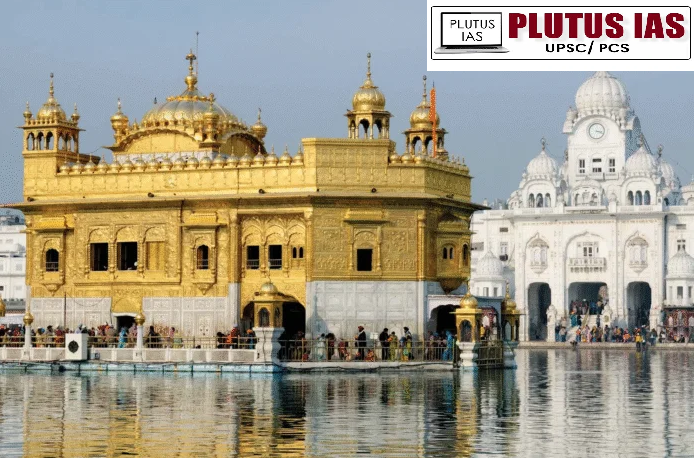
In a landmark decision reflecting India’s commitment to preserving its religious and cultural heritage, the Punjab Legislative Assembly unanimously declared three cities—Amritsar, Sri Anandpur Sahib, and Talwandi Sabo—as Holy Cities of Sikhism. This move recognizes their unparalleled role in the evolution of Sikh religious, spiritual, and socio-political traditions.
Historical Significance of the Three Holy Cities
| Holy City | Founder / Associated Guru | Key Significance |
|---|---|---|
| Amritsar (Walled City) | Guru Ram Das | Spiritual centre of Sikhism; home to Golden Temple and Akal Takht symbolising Miri–Piri |
| Sri Anandpur Sahib | Guru Tegh Bahadur; Guru Gobind Singh | Site of Khalsa Panth’s foundation (1699); birthplace of Sikh martial tradition |
| Talwandi Sabo (Takht Sri Damdama Sahib) | Guru Gobind Singh | Final compilation of Guru Granth Sahib; centre of doctrinal consolidation |
Religious and Cultural Importance in Sikhism
Seats of Supreme Sikh Authority (Takht Tradition): These cities collectively house three of the five Takhts, the highest institutional authorities in Sikhism. Takhts function as centres of both spiritual guidance and temporal decision-making, embodying the Sikh doctrine of Miri–Piri. They play a decisive role in maintaining religious discipline, issuing collective resolutions, and preserving Sikh unity across regions.
Association with Sikh Gurus and Sacred Lineage: The cities are directly linked with the lives and teachings of Sikh Gurus, who shaped Sikh theology, social values, and institutions here. Several formative developments—ranging from doctrinal articulation to community organisation—took place at these locations, lending them enduring sanctity and historical significance within Sikh tradition.
Sites of Transformative Historical Events: These cities witnessed landmark events such as resistance to political oppression, martyrdoms, and the strengthening of Sikh collective identity. Such episodes transformed Sikhism from a purely spiritual movement into a socio-religious force committed to justice, equality, and self-respect, reinforcing their importance in Sikh historical consciousness.
Global Centres of Pilgrimage and Faith: Serving as major pilgrimage destinations, these cities attract Sikhs from across the world. Pilgrimage (yatra) to these sites deepens spiritual commitment, reinforces shared heritage, and sustains transnational connections among the Sikh diaspora, making them focal points of global Sikh religious life.
Living Hubs of Sikh Culture and Identity: Beyond religious worship, these cities function as vibrant centres of Sikh culture, preserving traditions such as langar, kirtan, festivals, and community service (seva). They act as custodians of Sikh values and collective memory, ensuring the transmission of Sikh identity, ethics, and cultural practices to future generations.
Legal and Administrative Implications of “Holy City” Status
Statutory Prohibitions on Intoxicants and Non-Vegetarian Items: The declaration of a “Holy City” entails legal restrictions on the sale and consumption of alcohol, tobacco, meat, and other intoxicants within notified municipal or heritage zones. Such prohibitions are enforced through state excise laws, municipal bye-laws, and special government notifications. The objective is to maintain religious sanctity and moral decorum, particularly in areas surrounding major shrines, pilgrimage routes, and sacred water bodies.
Creation of Special Regulatory and Heritage Zones: Holy City status often leads to the demarcation of special religious or heritage zones where construction activities, commercial establishments, signage, and land use are strictly regulated. Urban planning norms are modified to protect the architectural, cultural, and spiritual character of the city. This may include height restrictions on buildings, conservation of heritage structures, and regulation of tourism-related infrastructure.
Enhanced Role of Urban Local Bodies and District Administration: Local governments—municipal corporations, development authorities, and district administrations—are entrusted with expanded administrative responsibilities. They must ensure compliance with religious regulations, manage pilgrim inflows, oversee sanitation, and coordinate law enforcement. This necessitates capacity building of local bodies and closer coordination between civil administration, police, and religious institutions.
Balancing Development with Religious Sensitivities: A key administrative challenge lies in reconciling urban development needs—such as infrastructure expansion, employment generation, and tourism promotion—with spiritual and cultural sensitivities. Authorities must adopt a calibrated approach that allows economic activity without undermining the sacred character of the city. This often involves stakeholder consultations with religious leaders, residents, traders, and civil society.
Legal Challenges and Rights-Based Considerations: The imposition of restrictions in Holy Cities can raise constitutional and legal questions, particularly related to the right to trade, personal liberty, and equality under Articles 14 and 19 of the Constitution. Administrations must ensure that regulations are reasonable, proportionate, and non-discriminatory, backed by clear legal mandates to withstand judicial scrutiny.
Significance from a Governance and Federal Perspective
Assertion of State Autonomy in Cultural and Religious Domains: The decision to accord special status to cities on religious or cultural grounds reflects the autonomy of states under India’s federal structure. Culture, public order, and local governance fall primarily within the State List and Concurrent List, allowing states to frame policies that align with regional religious sentiments and historical contexts. Such measures demonstrate how states can operate within the constitutional framework to protect and promote their distinctive cultural heritage.
Federal Flexibility within the Constitutional Framework: India’s federal system is characterised by asymmetry and flexibility, enabling states to adopt differentiated governance models based on local needs. Granting special status to holy cities illustrates the adaptive nature of Indian federalism, where uniformity is not imposed at the cost of cultural diversity. At the same time, these actions remain subject to constitutional principles such as secularism, rule of law, and judicial review.
Role of Legislative Consensus and Democratic Process: The use of legislative consensus—often through state assembly resolutions or special laws—highlights the democratic legitimacy of such decisions. Broad political agreement signals social acceptance and reduces the risk of conflict in sensitive cultural matters. It also underscores the importance of legislatures as forums for negotiating identity, heritage preservation, and public interest within a plural society.
Interface between Religious Regulations and Fundamental Rights: Special religious regulations inevitably raise questions about their compatibility with Fundamental Rights, particularly Articles 14 (equality before law), 19 (freedoms), and 25 (freedom of religion). Governments must ensure that restrictions are reasonable, proportionate, and non-arbitrary, serving legitimate public purposes such as heritage conservation or public morality, while avoiding excessive intrusion into individual liberties.
Governance Challenges in Urban Administration: From an administrative standpoint, integrating religious regulations into urban governance presents practical challenges. Urban local bodies must reconcile zoning laws, economic activity, tourism management, and service delivery with spiritual sensitivities. This requires innovative governance mechanisms, inter-departmental coordination, and stakeholder engagement to ensure that religious considerations enhance, rather than hinder, inclusive and sustainable urban development.
Socio-Economic and Tourism Implications
Expansion of Religious Tourism: Holy City status is likely to attract a larger number of pilgrims and heritage tourists, strengthening the city’s position on national and international religious tourism circuits.
Growth of the Heritage Economy: Increased footfall can stimulate demand for heritage-linked activities such as guided tours, cultural performances, museums, and interpretation centres, contributing to a diversified local economy.
Employment Generation: Tourism-led growth can create jobs in hospitality, transport, tour services, sanitation, security, and pilgrim management, benefiting both skilled and semi-skilled workers.
Boost to Traditional Handicrafts and Local Enterprises: Greater tourist inflow provides markets for local artisans, craftsmen, souvenir producers, and small traders, helping preserve traditional skills while enhancing incomes.
Development of Sustainable Pilgrimage Infrastructure: The status offers an opportunity to invest in eco-friendly accommodation, pedestrian corridors, waste management, and water conservation, aligning tourism growth with sustainability goals.
Improvement in Urban Amenities: Enhanced tourism revenues can justify better roads, public transport, sanitation, healthcare, and digital services, improving quality of life for residents alongside pilgrims.
Regional Economic Spillover Effects: Tourism growth can generate multiplier effects in surrounding areas by encouraging ancillary businesses, regional travel circuits, and rural linkages, promoting balanced regional development.
Contemporary Relevance and Positive Aspects
Strengthening Cultural Identity: Holy City recognition deepens collective cultural consciousness and reinforces the historical continuity of faith-based traditions.
Inter-generational Heritage Transmission: Institutional support helps transmit religious values, rituals, and collective memory to younger generations in a rapidly modernising society.
Promotion of Pluralism: It reinforces India’s image as a pluralistic civilisation that respects and protects diverse faith traditions within a constitutional framework.
Soft Power and Cultural Diplomacy: Such initiatives enhance India’s cultural soft power by projecting tolerance, spiritual heritage, and civilisational depth globally.
Community Cohesion: Shared reverence for sacred spaces can strengthen social bonds and collective responsibility among community members.
Heritage Conservation: Formal recognition often leads to better protection of historical structures, manuscripts, and intangible cultural heritage.
Revival of Traditional Practices: Encourages revival of traditional arts, music, festivals, and rituals associated with the sacred geography.
Educational and Research Value: Holy Cities can emerge as centres for religious studies, history, philosophy, and cultural research.
Challenges
Ensuring Inclusive Governance: Administrations must safeguard the rights and interests of residents from diverse religious and socio-economic backgrounds.
Risk of Over-Commercialisation: Excessive tourism-driven development can commodify sacred spaces, undermining their spiritual essence.
Balancing Urban Needs with Religious Norms: Integrating modern urban requirements—housing, mobility, employment—with religious regulations remains complex.
Economic Exclusion: Regulatory restrictions may disproportionately affect small traders, informal workers, and marginalised groups.
Administrative Capacity Constraints: Local bodies may lack resources and expertise to manage increased responsibilities effectively.
Legal and Constitutional Challenges: Regulations may face judicial scrutiny on grounds of equality, freedom of trade, and personal liberty.
Environmental Stress: Large pilgrim inflows can strain water resources, waste management systems, and local ecosystems.
Political Sensitivities: Decisions linked to religion can become politically contentious, affecting social harmony and governance neutrality.
Way Forward
Inclusive and Participatory Governance: Administrations should adopt consultative mechanisms involving residents, religious bodies, traders, minorities, and civil society to ensure policies are inclusive and socially acceptable.
Regulated and Responsible Tourism Development: A clear framework for heritage-sensitive and low-impact tourism should be enforced to prevent over-commercialisation while preserving the spiritual sanctity of sacred spaces.
Integrated Urban Planning Approach: Urban development plans must harmonise housing, mobility, livelihoods, and public services with religious norms through zoning regulations, mixed-use planning, and smart city principles.
Protection of Livelihoods and Economic Inclusion: Special provisions should be made for small traders, informal workers, and local entrepreneurs, including alternative livelihood options, skill training, and financial support.
Strengthening Administrative Capacity: Capacity building of urban local bodies through financial devolution, technical expertise, and digital governance tools is essential for effective implementation.
Constitutionally Sound Legal Frameworks: Regulations must be clearly codified, proportionate, and rights-compliant to withstand judicial scrutiny and uphold constitutional values.
Environmentally Sustainable Pilgrimage Management: Adoption of green infrastructure, waste-to-energy systems, water conservation, and crowd management technologies can mitigate environmental stress.
Depoliticisation and Consensus-Based Decision Making: Policy decisions should be guided by institutional neutrality, inter-party consensus, and constitutional morality to maintain social harmony and public trust.
Conclusion
The declaration of Amritsar, Sri Anandpur Sahib, and Talwandi Sabo as Holy Cities is not merely a symbolic gesture but a significant civilisational assertion. It reinforces Sikhism’s historical legacy while posing new governance challenges. If managed sensitively, the initiative can become a model for heritage-led development rooted in constitutional values.
Q. How does the declaration of holy cities reflect the balance between cultural autonomy of states and constitutional secularism in India?

- PRAGATI: A Decade of Cooperative, Outcome-Driven Governance - January 15, 2026
- Iran’s Large-Scale Protests: Political Stability, Public Dissent and Regional Implications - January 14, 2026
- India–Oman CEPA: A Strategic Trade Pact for Jobs, Exports and Regional Integration - January 10, 2026

No Comments